
Success uncertain, but Israelis continue to back ‘heroic’ war with Iran
Israelis remain overwhelmingly supportive of military action against Iran, even as experts question the war’s strategy, effectiveness, and long-term consequences.

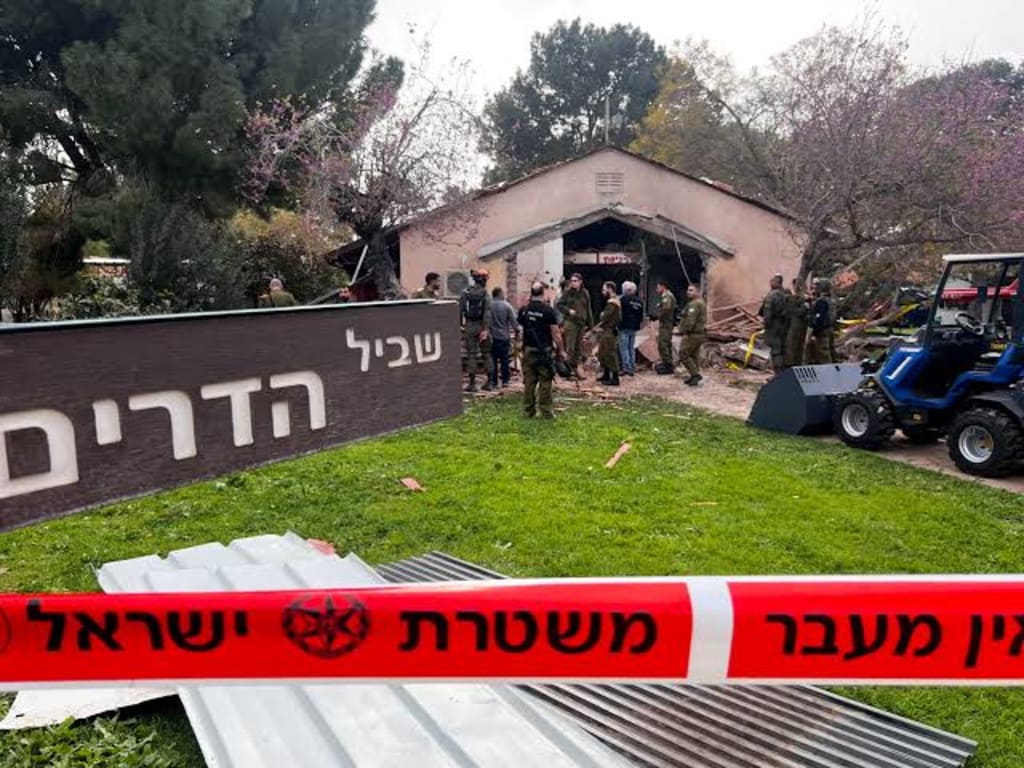
Tens of thousands of Israelis continue to express strong support for their country’s military campaign against Iran, even as doubts grow about the war’s ultimate objectives, costs and outcomes.
According to a March 2026 poll by the Israel Democracy Institute, roughly 82 – 93 % of Israelis — particularly Jewish Israelis — support the ongoing conflict with Iran, a level of consensus that crosses traditional political divides. That backing includes many who have historically opposed Prime Minister Benjamin Netanyahu’s government, who now describe the campaign as a necessary defence against Tehran’s long‑standing threats.
A Nation Rallying Around the Flag
The war, which escalated after a series of Israeli strikes deep inside Iranian territory, has largely united public opinion behind the government. Within Israel, many citizens view the campaign not only as a defence of national security but as a “heroic” initiative to dismantle Iran’s capabilities and prevent future threats. Mainstream political parties, including many in the centre and moderate right, now publicly support the war effort — often with little political dissent.
Political analysts describe this phenomenon as a classical “rally‑round‑the‑flag” effect, where public opinion consolidates during wartime irrespective of the government’s overall popularity. Within Israeli society, foreign policy and security threats — particularly those tied to Iran’s nuclear and missile programmes — have long dominated the national consciousness.
In Tel Aviv, veteran activist Alon‑Lee Green of the Palestinian‑Jewish advocacy group Standing Together noted that efforts to protest the war were met with rapid police intervention, reflecting both the high level of public support and a sensitive atmosphere around dissent during active conflict.
Leadership Frames War as Existential and Historic
Prime Minister Netanyahu, speaking from Jerusalem, has repeatedly framed the operation against Iran as not just a tactical military endeavour but a defining moment in Israel’s history. In public addresses, he has described the campaign as one that will be “recorded in the annals of Israel” and one fought for the security of future generations. In these speeches, the struggle against Iran is often placed in existential terms — as defending the nation from decades of hostile rhetoric and regional interference.
Netanyahu’s messaging resonates particularly strongly among older generations who remember repeated threats from Iran’s leadership and proxy militias. For many Israelis, memories of past wars and missile attacks from Lebanon and Gaza inform their acceptance of expansive military action.
Uncertainty and the Lack of Clear Endgame
Despite overwhelming public support, there is growing unease — among experts and some politicians — about the lack of a well‑defined strategy for achieving long‑term goals in Iran. Even within Israeli security circles, questions have emerged about how a prolonged campaign, focused on airstrikes and targeted operations, might lead to meaningful regime change in Tehran, or whether the country could instead become entrenched in a drawn‑out conflict with unpredictable regional consequences.
Israeli officials themselves acknowledge that success is not guaranteed. While military operations have reportedly degraded Iran’s nuclear and missile‑related infrastructure, analysts point out that dismantling these capabilities entirely — let alone securing the collapse of Iran’s political leadership — remains uncertain. Iranian authorities, despite suffering high‑profile losses, including the killing of Supreme Leader Ali Khamenei in late February, have maintained internal control and continued retaliatory operations.
More broadly, strategic analysts say that Tehran’s decentralised defence doctrine — designed to absorb shocks from heavy bombardment and stay operational — makes it unlikely that short‑term military actions will achieve decisive victory. Instead, these analysts argue that Iran may be prepared for a long, attritional conflict that external military force alone cannot quickly resolve.
Political and Regional Implications
The domestic political landscape in Israel has also shifted. Opposition figure Yair Lapid has publicly said that he no longer intends to pursue no‑confidence motions against Netanyahu’s government amidst the war, reflecting how national security concerns have overshadowed traditional partisan disputes.
Regionally, the conflict has triggered broader instability. Israel’s ongoing military activities have overlapped with fighting in Lebanon, where the militant group Hezbollah has escalated hostilities, and tensions continue across the Middle East as neighbouring states grapple with the conflict’s ripple effects.
Internationally, leaders have responded with mixed messaging. While the United States, under President Donald Trump, has expressed support for Israel’s actions and claimed progress in degrading Iran’s capabilities, several European leaders have urged a return to diplomacy to avoid a wider regional conflagration.
A War Without a Clear Ending in Sight
For ordinary Israelis, the war’s human and economic costs — compounded by global energy market volatility and regional civilian casualties — are often viewed through the prism of long‑term national security. Yet beneath widespread support lies a complex calculus: a recognition that decisive victory may be elusive and that the path to a stable Middle East might require more than military force.
As the campaign continues, both the government and the public are left to weigh short‑term achievements against the uncertainties of an open‑ended war, where the outcome is not predetermined and the consequences echo far beyond Israel’s borders.
About the Creator
Fiaz Ahmed
I am Fiaz Ahmed. I am a passionate writer. I love covering trending topics and breaking news. With a sharp eye for what’s happening around the world, and crafts timely and engaging stories that keep readers informed and updated.
Keep reading
More stories from Fiaz Ahmed and writers in The Swamp and other communities.
US Army Awards Anduril Contract Worth as Much as $20 billion
The United States Army has awarded a groundbreaking enterprise contract to defense technology firm Anduril Industries that could be worth as much as $20 billion, marking one of the largest deals between the U.S. military and a private defense startup in recent history. The deal — announced publicly this week — aims to consolidate procurement of cutting‑edge software, hardware, and support services under a single framework designed to accelerate the delivery of modern capabilities to warfighters and streamline how the Army acquires advanced technologies. Officials said the overarching purpose of the new contract is to replace a patchwork of more than 120 separate agreements for Anduril’s technologies with a single enterprise arrangement. By eliminating redundant administrative fees and reducing procedural hurdles, the Army hopes to hasten the deployment of advanced systems that integrate sensor data, command‑and‑control functions, autonomous platforms, and artificial intelligence‑enabled software into battlefield operations. A New Era in Military Procurement Traditionally, the U.S. Army’s contracting process has involved numerous individual purchases spread across different programs and units. This fragmented system often results in lengthy timelines from contract award to deployment, especially for emerging technologies that evolve rapidly. Under the newly consolidated enterprise contract, the Army can more efficiently requisition and scale Anduril’s solutions — from battlefield software to integrated hardware infrastructure — across multiple mission areas. “This enterprise contract is a critical step in establishing a common framework,” said one senior Army official, noting that the streamlined approach will reduce administrative overhead and ensure soldiers have more rapid access to advanced capabilities. While the total potential value of the contract is up to $20 billion over 10 years, the actual amount the Army spends each year will depend on specific procurement decisions and operational needs. Nevertheless, this award represents a vote of confidence by the Pentagon in Anduril’s technology portfolio and its ability to meet the Army’s strategic priorities. What Anduril Brings to the Table Founded in 2017 by a group of Silicon Valley veterans including Palmer Luckey, Anduril has positioned itself as a disruptive force in the defense industry, leveraging artificial intelligence, autonomous systems, and software‑first approaches to solve complex military problems. The company’s Lattice operating system — an open architecture platform that ingests data from sensors, drones, and legacy systems — has become central to its pitch to the Department of Defense. Anduril’s offerings include AI‑driven battlefield management software, unmanned aerial systems, autonomous ground vehicles, and command‑and‑control solutions sought by the Army, Marine Corps, and other U.S. military branches. Integrating these technologies under a unified procurement contract reflects the Army’s broader push to modernize its force and reduce reliance on legacy systems that were not designed for 21st century warfare. Industry analysts say the scale of this contract signals a broader shift in Pentagon procurement: the defense establishment is increasingly willing to make large bets on companies that emerged from the tech startup ecosystem rather than just traditional defense giants. This trend has been building over the past decade as the nature of conflict evolves with the rise of autonomous systems and software‑driven platforms. Strategic and Operational Impact The enterprise contract is expected to strengthen the Army’s operational capabilities in contested environments where speed, adaptability, and data integration are critical. By consolidating procurement for Anduril’s solutions, military planners believe they can create more interoperable systems that give commanders a common operating picture — a real‑time understanding of the battlefield, including friendly forces, enemy positions, and emerging threats. Such integrated capabilities are particularly valuable in scenarios involving unmanned systems, electronic warfare, and multi‑domain operations where coordination across air, land, sea, space, and cyber domains is essential. As global competitors invest in similar technologies, the U.S. Army’s investment in agile and scalable systems could help maintain a technological edge. Critics and Concerns Despite broad support among some defense leaders, the contract has drawn scrutiny from watchdog groups and critics who caution that such large, long‑term commitments carry risk. Some argue that heavy reliance on a single private firm could create dependencies or stifle competition in vital technology areas. There are also concerns about transparency given that startups like Anduril are not publicly traded, making independent scrutiny of financials and corporate strategy more difficult. Nonetheless, supporters contend that the contract’s structure — with performance metrics and deliverables tied to deployment outcomes — ensures accountability and encourages continuous innovation. For the Army’s leadership, staying ahead of rapidly changing battlefield technologies is paramount, and streamlined contracts like this one are seen as essential tools for achieving that goal. The Broader Defense Tech Landscape Anduril’s big contract comes amid an ongoing transformation in the U.S. defense industrial base, where venture‑backed tech startups are increasingly competing with established defense contractors for Pentagon dollars. The result is a growing “arms‑tech” market where software and autonomous technologies — once peripheral — are now core elements of military planning and procurement. For Anduril, securing such a significant enterprise contract not only cements its role as a key defense partner but also could influence how future military technologies are sourced, integrated, and fielded. As global security challenges evolve, the U.S. Army’s investment in agile, software‑driven solutions may set a precedent for other services and allies looking to modernize their forces. In sum, the $20 billion enterprise contract awarded to Anduril represents a major milestone in U.S. defense procurement and a signal of future military modernization efforts centered on artificial intelligence, autonomy, and rapid technology deployment.
By Fiaz Ahmed about 7 hours ago in The Swamp
Parallel Protests
I haven't written for quite some time, but I have A LOT of thoughts about yesterday's protest rally against our government's involvement and complicity in America's war on Iran, on the harbourside of my home city Bristol, and I need to put them somewhere. My gorgeous girlfriend is always a loving and listening ear and sharing it all with her will always be a healthy and happy way of processing the mental and emotional weight, but getting it straight in my brain to share means writing it all down in straight lines, so, here we are and thanks for being here.
By Steph Cole11 days ago in The Swamp
FBI Alerts California Law Enforcement to Potential Iranian Drone Threat
Federal authorities alerted California law enforcement that Iran may have explored launching drone attacks against the U.S. West Coast from offshore vessels. The warning came through an FBI intelligence bulletin distributed to law enforcement agencies and highlights concerns that escalating tensions in the Middle East could have broader security implications for the United States.
By Jacqueline Bowser3 days ago in The Swamp
Top tipple tricks
Been thinking a lot about drinking, lately. Not least because of a recent episode of over-indulgence and the inevitable after effects. Some readers may recall the earlier articles I wrote about beating the booze. Here I set out an experiment in techniques for cutting down on my alcohol intake. The experiment was successful, the techniques worked, and I have armed myself with an arsenal of weapons in the war against the demon drink. I have yet to fire the first round however. It's all a question of timing (perhaps procrastination).
By Raymond G. Taylor5 days ago in Psyche




Comments
There are no comments for this story
Be the first to respond and start the conversation.