
Supporters of Iraqi Shi’ite Armed Groups Rally in Baghdad After Killing of Iran’s Supreme Leader
Demonstrators gather near Baghdad’s Green Zone as anger and grief spread across Iraq following the Iranian leader’s death.
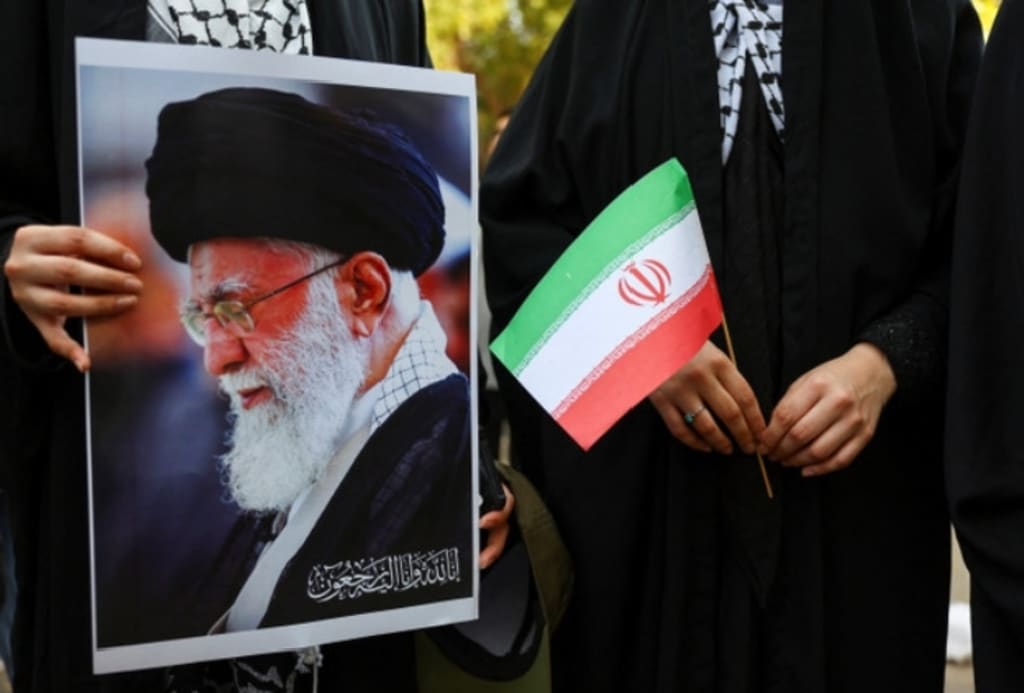
Hundreds of supporters of Iraqi Shi’ite armed groups gathered in the heart of Baghdad on Sunday, staging large and tense demonstrations near the entrance to the heavily fortified Green Zone after news spread of the killing of Iran’s Supreme Leader Ayatollah Ali Khamenei in a joint United States–Israeli airstrike. The unrest marked one of the most significant reactions within Iraq following the dramatic and unprecedented death of one of the Middle East’s most powerful political figures, unleashing grief, anger and calls for revenge across the capital.
The protesters, many of them aligned with or supportive of Iraqi Shi’ite armed factions linked politically and ideologically to Tehran, assembled near the fortified Green Zone — the area in Baghdad that houses key government buildings and foreign embassies, including the U.S. Embassy — waving flags and shouting slogans condemning Western nations. Eyewitnesses said demonstrators attempted to advance toward the U.S. diplomatic mission, but Iraqi security forces deployed in large numbers to block their path and prevent a breach.
Clashes and Security Response
As the demonstrations intensified, riot police used tear gas and other crowd-control measures to disperse portions of the crowd. Videos circulating on social media showed protesters throwing stones and banners fluttering in the early morning wind, while security officials stood behind reinforced barriers to keep demonstrators at bay. Footage also showed some individuals tending to injured companions, highlighting the raw emotion and volatility of the protests.
The unrest came shortly after Iraqi authorities announced a three-day nationwide period of mourning for Khamenei’s death, a reflection of Iran’s influence in Iraqi politics and the deep religious and political ties between Tehran and various Shi’ite factions in Iraq. Government officials and clerical leaders expressed sorrow over the Iranian leader’s death, while urging restraint and respect for public ord
As
Despite the official calls for calm, the demonstrations illustrated the anger and grief felt by many supporters who view Khamenei as a symbolic leader of the broader Shi’ite Muslim community and a defender of resistance against Western influence in the region
Historical and Political Context
Iran has long been a major political and spiritual influence in Iraq, particularly among Shi’ite groups that rose to prominence after the 2003 U.S. invasion toppled Saddam Hussein. Iraqi Shi’ite militias and political coalitions have developed strong ties to Tehran over the past two decades, including through coordinated military efforts against the Islamic State group and shared ideological frameworks rooted in Shi’ite Islam.
Groups such as the Popular Mobilization Forces (PMF) and associated militias have both political and armed wings that remain influential in Iraq’s complex political landscape. While many of these formations were initially formed to counter insurgent threats such as ISIS, their relationship with Iran has broadened their scope and ties, extending into political, economic, and security arenas.
In recent years, Iraq has oscillated between competing pressures from Western powers — especially the United States, which maintains a diplomatic presence and some military cooperation — and Iran, which exerts deep cultural and religious influence. Khamenei’s decades-long leadership helped shape this balance, nurturing alliances with Iraqi Shi’ite parties and armed groups, and providing ideological guidance to movements across the region
Public Reaction and Grief
At protests near Baghdad’s Green Zone, many participants held religious flags and portraits of Khamenei, and chanted slogans against the United States and its allies. Some demonstrators attempted to mobilize toward the embassy area, though their efforts were met with resistance from security forces determined to prevent violent escalation near diplomatic facilities.
In addition to public demonstrations, Baghdad — like several other cities in Iraq — announced official mourning measures. Clerical figures such as Ali Sistani and political coalitions expressed sorrow and solidarity with the Iranian people while seeking to channel the grief into collective unity rather than lawlessness.
Many ordinary Iraqis, interviewed by news outlets and social media correspondents, described deep sadness at the news of Khamenei’s death, while also acknowledging the potential for further instability in the region. Some emphasized their desire for peaceful remembrance, even as others expressed intense calls for accountability and resistance against perceived foreign aggression.
Regional Implications and International Reactions
The protests in Baghdad were part of broader regional responses following Khamenei’s killing. Demonstrations and gatherings were also reported in other countries with significant Shi’ite populations, including Pakistan, where violent confrontations at diplomatic compounds resulted in fatalities.
Regional governments and world leaders reacted with a mix of caution and diplomatic concern. Some condemned the airstrikes that killed Khamenei, calling for de-escalation and restraint to prevent wider conflict, while others urged adherence to international law and protection of civilians.
Analysts warn that the current volatility could further destabilize an already fragile Middle East, where overlapping conflicts, sectarian divisions, and great-power rivalries persist. Iraq, positioned at the crossroads of these tensions, faces the immediate challenge of maintaining internal security while navigating external pressures from powerful neighbors and international actors.
Looking Ahead
As Iraq mourns and the region processes the shock of Khamenei’s death, the demonstrations in Baghdad underscore the complexities of political identity, foreign influence, and grassroots mobilization in the country. The government’s approach to handling protests — balancing security concerns with respect for public sentiment — will likely shape the coming weeks and month
Despite the emotional intensity of the current period, observers say that Iraq’s long-term stability will depend on broader political reconciliation, economic reforms, and effective governance that can address the diverse needs and aspirations of its people
In the meantime, the world watches as Baghdad and other regional capitals react to events that could have lasting implications for Middle Eastern geopolitics, sectarian dynamics, and international relations in an already turbulent era.
About the Creator
A Gathering of Evil Bosses
“I’m the queen of chin jutting while I smooth my hair, attacking, insulting, and deflecting to protect my appointer.” “Oh, please, Blondi, my hair is curled, highlighted, and longer than yours. I feature television commercials telling immigrants that we will give them a free plane ride home, and if they voluntarily turn themselves in, they will be allowed to legally apply for re-entry. It runs everywhere, and I look good in it! You can’t compete because of your blond hair. Mine is nicer, and my lips are prettier than yours.”
By Andrea Corwin 13 days ago in The Swamp
UN’s Türk Urges Dialogue After Deadly Clashes on Afghan-Pakistan Border
Deadly clashes along the volatile border between Afghanistan and Pakistan have once again exposed the fragility of regional stability, prompting urgent calls for restraint and diplomacy. Volker Türk, the United Nations High Commissioner for Human Rights, has urged both sides to engage in meaningful dialogue, warning that continued violence risks escalating tensions and worsening humanitarian conditions for civilians living in the conflict zone.
By Jameel Jamali5 days ago in The Swamp
I wanted to title this something different, but worried that my chosen title might cause problems entering the United States in the future so this is the new title. It's the greatest title. No one has ever written a title better than this. (All titles unrelated to content).
Let me be honest. I am finding this difficult. Now, I like a challenge, a stretch, a bit of an obstacle course. “Write about the decline of the British Empire in the form of a narrative poem in which your protagonist is an artichoke” I read, and flex my fingers. “Write a haiku to evoke the sensation of sibilance using only the first half of the alphabet.” “Well”, I think to myself, “this should be fun.” But “write about a system that isn’t working”? A system that isn’t working? Now? In 2026? ONE system? My favourite system that isn’t working? The sexiest system that isn’t working? The one giving me the most angst day to day? The one giving me the most existential dread? I am, as I say, finding this difficult. I will own that I have contemplated writing a thousand words on why the steady “all on” setting on my fairy lights is the EIGHTH of seven options which must be sequentially activated to get there, because that is a system that some fool came up with and it definitely doesn’t work, and now who is paying the price, eh? But how can I write about my fairy lights when…. When…. When….
By Hannah Moore5 days ago in Humans



Comments
There are no comments for this story
Be the first to respond and start the conversation.