
Three Ships Attacked in Strait of Hormuz
Fresh attacks on commercial vessels in the Strait of Hormuz raise fears over maritime security, global oil supplies, and escalating tensions in the Gulf region.

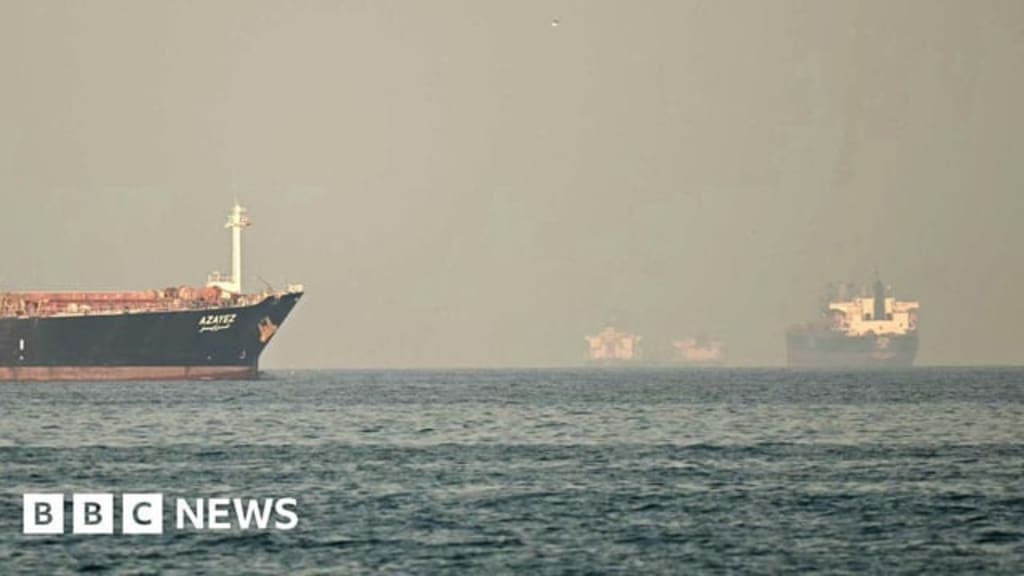
Tensions in the Middle East escalated sharply after three commercial vessels were reportedly attacked in the Strait of Hormuz, one of the world’s most critical maritime chokepoints. The incidents, which occurred within a short span of time, have reignited global concerns over the safety of international shipping routes and the potential for wider regional conflict. Authorities confirmed that the ships suffered damage but that their crews were safely evacuated without fatalities.
The Strait of Hormuz is a narrow waterway connecting the Persian Gulf to the Arabian Sea and is responsible for transporting nearly one-fifth of the world’s oil supply. Any disruption in this corridor has immediate implications for global energy markets and international trade. The attacks come amid heightened political and military tensions involving regional powers and Western allies, raising fears that maritime security in the area could further deteriorate.
According to preliminary reports from maritime security agencies, the vessels were struck by explosive devices or drones while navigating international waters. Emergency response teams were dispatched to assist the ships, and nearby naval patrols increased surveillance following the incidents. While responsibility for the attacks has not been officially claimed, investigations are ongoing, and intelligence officials are examining possible links to ongoing regional conflicts.
One of the vessels was reportedly carrying petroleum products, while the other two were transporting general cargo. The ships were registered under different flags, indicating that the attacks were not directed at a single nation but rather posed a threat to international commerce as a whole. Shipping companies operating in the Gulf region have since raised their security alert levels and begun rerouting some vessels to avoid high-risk zones.
Regional governments expressed deep concern over the incidents. Officials in United Arab Emirates and Saudi Arabia called for restraint and urged all parties to respect international maritime law. Western governments, including the United States and several European nations, also condemned the attacks and emphasized the importance of maintaining freedom of navigation in the Strait of Hormuz.
The attacks have already had an impact on global markets. Oil prices rose sharply in early trading following news of the incidents, reflecting investor anxiety over potential supply disruptions. Analysts warn that continued instability in the strait could lead to prolonged price volatility, which would affect not only fuel costs but also inflation and economic growth worldwide.
Maritime security experts note that the Strait of Hormuz has long been a flashpoint due to its strategic importance and proximity to multiple conflict zones. In recent years, incidents involving tankers, drones, and naval patrols have become more frequent. These events highlight the vulnerability of commercial shipping to asymmetric warfare tactics, such as small explosive-laden boats or unmanned aerial systems, which are difficult to detect and counter.
International organizations have also reacted to the situation. The International Maritime Organization issued a statement urging shipping companies to follow updated security advisories and to coordinate closely with naval forces operating in the region. Insurance providers have begun reassessing risk levels for vessels traveling through the strait, which could result in higher premiums and additional costs for shipping operators.
For seafarers, the incidents have added to growing concerns about personal safety. Crews working in the region already face challenging conditions due to geopolitical tensions, and attacks on commercial ships further complicate their work environment. Maritime unions have called for stronger protective measures and clearer communication between shipping companies and naval authorities.
Diplomatic efforts are now intensifying to prevent further escalation. Several countries have proposed renewed talks focused on maritime security and regional de-escalation. However, analysts caution that unless underlying political disputes are addressed, similar incidents could continue to occur, threatening not only regional stability but also the global economy.
In conclusion, the attacks on three ships in the Strait of Hormuz represent a serious development with far-reaching consequences. The strait’s importance to global energy supplies and trade makes any act of aggression there a matter of international concern. As investigations continue and security measures are strengthened, the world watches closely to see whether diplomacy can prevent further violence in one of the planet’s most vital shipping corridors.
About the Creator
Fiaz Ahmed
I am Fiaz Ahmed. I am a passionate writer. I love covering trending topics and breaking news. With a sharp eye for what’s happening around the world, and crafts timely and engaging stories that keep readers informed and updated.
Keep reading
More stories from Fiaz Ahmed and writers in The Swamp and other communities.
US Hockey Star Hilary Knight Hits Back at Trump’s Joke About Women’s Team During SNL Skit
U.S. women’s hockey star Hilary Knight has publicly responded to a controversial joke made about her team during a recent Saturday Night Live (SNL) skit featuring former President Donald Trump. The incident, which aired on national television, sparked widespread discussion about gender equality in sports, respect for female athletes, and the cultural influence of public figures. The skit, part of SNL’s weekly lineup, included a segment in which Trump was portrayed making remarks about the U.S. women’s hockey team’s recent successes. Critics argued that the jokes undermined the athletes’ accomplishments, portraying them as less serious or relevant compared to their male counterparts. Knight, an Olympic gold medalist and one of the most recognizable figures in women’s hockey, quickly voiced her objection, emphasizing the need to treat women’s sports with the same respect and recognition as men’s competitions. In a statement shared on social media, Knight said, “It’s disappointing when achievements of women in sports are minimized for humor. We work just as hard, train just as intensely, and represent our country with pride. Jokes at our expense perpetuate outdated stereotypes and fail to acknowledge our dedication and success.” Her comments resonated with a wide audience, drawing support from fellow athletes, fans, and advocacy groups promoting gender equality in athletics. Hilary Knight’s response also highlighted the broader cultural context in which female athletes operate. Women’s sports have historically received less media coverage, lower salaries, and fewer sponsorship opportunities than men’s sports. Although progress has been made in recent years, incidents like the SNL skit underscore how pervasive biases can remain, particularly when public figures use humor to downplay women’s achievements. Sports analysts noted that Knight’s outspoken defense of her team was consistent with her career-long advocacy for gender equity in hockey. She has been a vocal supporter of initiatives to expand professional women’s hockey leagues in the United States, improve funding for youth programs, and increase visibility for women’s competitions. By speaking out against the SNL skit, Knight reinforced her position as a leader both on and off the ice. The skit and Knight’s reaction also ignited discussions about the responsibilities of media and entertainment platforms in framing public discourse. Some viewers argued that late-night comedy shows have a long tradition of satirizing political figures, and that humor often pushes boundaries. Others countered that when jokes target marginalized groups, including women in male-dominated sports, they can perpetuate inequality and discourage young athletes from pursuing their ambitions. In addition to social media support, Knight’s teammates and coaches voiced solidarity with her stance. Several athletes took to platforms like Twitter and Instagram to share messages emphasizing respect for women’s sports and the importance of celebrating achievements rather than belittling them. This collective response helped shift the conversation from the skit itself to broader issues of equity and recognition in athletics. Political commentators noted that the incident also had implications beyond sports. Former President Trump’s public persona and frequent media appearances have long influenced cultural narratives in the United States. Jokes about women’s sports, particularly when delivered or associated with high-profile figures, can shape public perceptions and reinforce gender biases if not countered by strong voices like Knight’s. The skit ultimately served as a reminder of the ongoing challenges women face in professional sports, even at the highest levels. Hilary Knight’s direct response has been widely praised for combining assertiveness with a call for greater respect and recognition for female athletes. Many observers view her comments as a teachable moment for audiences and entertainment platforms, highlighting the need to celebrate achievement rather than diminish it. In conclusion, Hilary Knight’s reaction to the SNL skit underscores the continuing struggle for gender equity in sports and media representation. By addressing the joke head-on, she not only defended the U.S. women’s hockey team but also sparked a broader conversation about respect, recognition, and equality for women athletes across all disciplines. Knight’s advocacy demonstrates how athletes can leverage their visibility to challenge stereotypes and inspire the next generation to pursue sports without limitations.
By Fiaz Ahmed a day ago in The Swamp
A Gathering of Evil Bosses
“I’m the queen of chin jutting while I smooth my hair, attacking, insulting, and deflecting to protect my appointer.” “Oh, please, Blondi, my hair is curled, highlighted, and longer than yours. I feature television commercials telling immigrants that we will give them a free plane ride home, and if they voluntarily turn themselves in, they will be allowed to legally apply for re-entry. It runs everywhere, and I look good in it! You can’t compete because of your blond hair. Mine is nicer, and my lips are prettier than yours.”
By Andrea Corwin 13 days ago in The Swamp
This Is What I Do When People Throw Rocks At Me
Rocks have been thrown at me for a greater part of my life. Some have been small and missed hitting me. When people don't get a reaction from me, they throw bigger rocks with a better aim. Many have been hurled at me with precision over the years. For a long time, I thought my only options were to dodge them or be crushed by them.
By Margaret Minnicks5 days ago in Confessions




Comments
There are no comments for this story
Be the first to respond and start the conversation.