
UAE Evacuates 6,000 Emiratis and Companions from Abroad Under Emergency Plans
Large-scale repatriation effort highlights the Gulf state’s expanding crisis-response network.

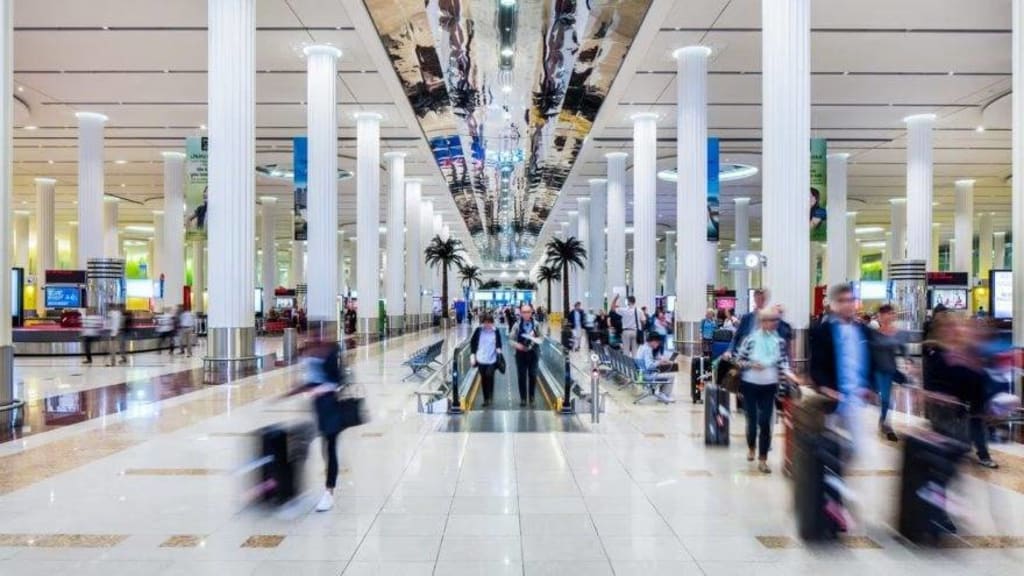
The United Arab Emirates has successfully evacuated more than 6,000 Emirati citizens and their companions from multiple countries as part of an emergency repatriation operation triggered by escalating regional instability and security concerns. Officials described the operation as one of the largest coordinated evacuation efforts conducted by the Gulf nation in recent years.
According to authorities, the evacuation plan was implemented through coordination between the UAE Ministry of Foreign Affairs, the UAE Ministry of Defense, and the National Emergency Crisis and Disaster Management Authority. The operation mobilized military transport aircraft, chartered commercial flights, and diplomatic teams stationed in embassies worldwide.
Government officials said the evacuation began after intelligence assessments indicated rising risks in several regions where Emirati citizens were traveling, studying, or working. Although authorities did not publicly identify every location involved, sources indicated that some evacuations were carried out from parts of the Middle East, Africa, and Eastern Europe where tensions had increased in recent weeks.
The effort prioritized Emirati nationals but also included their spouses, children, and companions who were traveling with them at the time. Diplomatic missions contacted registered citizens through embassy databases, social media alerts, and emergency communication channels to coordinate departure arrangements.
In several locations, embassy teams arranged temporary gathering points where evacuees could receive assistance before boarding flights. Staff members provided medical support, travel documentation services, and emergency supplies for families waiting for transport.
Officials from the UAE Ministry of Foreign Affairs said the government activated its global crisis management system immediately after receiving reports of worsening security conditions. “The safety of Emirati citizens abroad remains a top priority,” a ministry spokesperson said. “The evacuation plan was implemented quickly to ensure their safe return.”
Military aircraft from the United Arab Emirates Armed Forces were deployed to regions where commercial flights were either unavailable or deemed unsafe. In other locations, the government chartered civilian aircraft to speed up the repatriation process and reduce travel delays.
Once evacuees arrived in the Abu Dhabi and Dubai, authorities arranged reception centers at major airports to provide medical screenings, immigration processing, and logistical support. Some families were also offered temporary accommodation and counseling services.
Officials emphasized that the evacuation plan is part of a broader national strategy to protect citizens overseas during emergencies. The UAE maintains crisis response protocols designed to mobilize diplomatic, military, and humanitarian resources within hours of a major international incident.
Analysts say the rapid evacuation reflects the country’s growing ability to conduct complex international operations. Over the past decade, the UAE has expanded its diplomatic presence, crisis management systems, and strategic airlift capabilities, enabling it to respond more effectively to global emergencies.
The evacuation also highlighted the importance of citizen registration programs maintained by the UAE Ministry of Foreign Affairs, which allow embassies to track the presence of Emiratis abroad and contact them during emergencies. Officials encouraged citizens traveling overseas to register with their nearest embassy to ensure they can be reached quickly if conditions deteriorate.
Authorities have not indicated whether additional evacuations will be necessary, but government officials said contingency plans remain active in case further developments occur in affected regions.
For many families returning home, the operation provided reassurance about the country’s commitment to protecting its citizens wherever they may be. As geopolitical uncertainties continue to affect travel and international mobility, the UAE’s large-scale repatriation effort demonstrates the increasingly sophisticated infrastructure behind its global crisis-response system.
Officials concluded that the successful return of thousands of citizens was made possible through coordination among government agencies, diplomatic missions, and international aviation partners. They stressed that safeguarding Emiratis abroad will remain a central priority of national security and foreign policy planning in the years ahead.
About the Creator
Fiaz Ahmed
I am Fiaz Ahmed. I am a passionate writer. I love covering trending topics and breaking news. With a sharp eye for what’s happening around the world, and crafts timely and engaging stories that keep readers informed and updated.
Keep reading
More stories from Fiaz Ahmed and writers in The Swamp and other communities.
Cuban Protesters Ransack Communist Office as Energy Crisis Deepens
Frustration over worsening power shortages erupted into violence in parts of Cuba this week after demonstrators stormed and ransacked a local office belonging to the ruling Communist Party of Cuba. The incident reflects rising anger among ordinary Cubans struggling with long electricity outages, dwindling fuel supplies, and an economy under intense strain. According to witnesses and local reports, a group of protesters gathered outside the party building in a provincial town late in the evening after yet another day of prolonged blackouts. What began as a demonstration demanding reliable electricity and government accountability quickly escalated as some participants forced their way into the building, overturning furniture, smashing windows, and damaging official equipment. Authorities later deployed police to restore order and secure the building. While officials did not immediately release details about arrests or injuries, government sources confirmed that an investigation into the incident was underway. The unrest comes amid one of the most severe energy shortages the island has faced in years. Cuba’s fragile power grid has been struggling with aging infrastructure, limited fuel imports, and mounting economic pressure. In recent months, blackouts lasting several hours at a time have become a daily reality for many communities. Residents say the outages are disrupting every aspect of life. Food spoils quickly in homes without refrigeration, businesses are forced to close early, and hospitals and essential services must rely on backup generators. For families already coping with shortages of food and medicine, the lack of electricity has become another source of anxiety. “The lights go out for half the day,” said one resident who witnessed the protest. “We can’t cook properly, we can’t store food, and it’s extremely hot at night. People are exhausted and angry.” The government of Cuba has acknowledged the severity of the energy crisis, attributing it to multiple factors including mechanical failures at several major power plants and difficulties importing fuel. Officials have also pointed to the long-standing economic embargo imposed by the United States, which they say complicates efforts to purchase equipment and energy supplies. However, critics argue that years of underinvestment and poor management have left the country’s energy infrastructure vulnerable. Several power stations date back decades and require extensive maintenance or replacement, but financial constraints have slowed modernization efforts. The ransacking of the Communist Party of Cuba office represents a rare public challenge to the island’s one-party political system. Although small demonstrations have occurred periodically, direct attacks on government facilities remain unusual and are often quickly suppressed by security forces. Observers say the incident illustrates how economic hardship is fueling deeper dissatisfaction with the government. Since the economic downturn that intensified during the global pandemic, Cuba has experienced rising inflation, shortages of basic goods, and increasing migration as citizens seek opportunities abroad. In response to the growing unrest, officials urged calm and promised that measures are being taken to stabilize the power supply. Government representatives said repair crews are working around the clock to restore several malfunctioning power plants and that emergency fuel shipments are expected in the coming weeks. Authorities also warned against vandalism and disorder, stressing that damaging public property would only complicate recovery efforts. State media described the ransacking incident as an isolated act carried out by a small group of individuals exploiting public frustration. Despite those assurances, many residents remain skeptical about how quickly the situation will improve. The energy crisis has persisted for months, and previous government promises to reduce blackouts have brought only temporary relief. Energy experts say Cuba’s electricity sector faces structural challenges that cannot be solved quickly. The island relies heavily on aging thermal power plants and imported fuel, leaving it vulnerable to supply disruptions and price fluctuations. Renewable energy projects, including solar and wind facilities, have been proposed as part of long-term solutions but remain limited in scale. Meanwhile, the daily realities of the crisis continue to weigh heavily on ordinary citizens. During extended outages, neighborhoods often fall into darkness with little warning, forcing residents to rely on candles or battery-powered lamps. In densely populated areas, the lack of air conditioning and ventilation during hot evenings has become particularly difficult. Community leaders and local activists say people are not necessarily looking for confrontation but for practical improvements that would make daily life more manageable. Reliable electricity, stable food supplies, and economic opportunities remain among the most urgent demands voiced by residents. Whether the latest unrest signals a broader wave of protests remains unclear. In the past, demonstrations over economic conditions in Cuba have sometimes spread rapidly through social media and word of mouth before being contained by authorities. For now, the ransacked party office stands as a visible symbol of the growing frustration simmering across the island. As the energy crisis continues and blackouts persist, the government faces increasing pressure to deliver solutions that restore stability and confidence among a population grappling with daily hardship.
By Fiaz Ahmed about 12 hours ago in The Swamp
The Forsyth House Fire
Since 1851, Forsyth House has stood on the corner of Union Street and Gordon Street in the heart of Glasgow. Its iconic, or was... because on Sunday 8th of March, 2026, a fire broke out in a small, seemingly un-named shop in the building and tore all that history down. As I write, the rubble is still unsettled and the street is still blocked off. Central Station is quiet on the upper level, and around 30 small businesses have quite literally gone up in smoke.
By S. A. Crawford2 days ago in The Swamp
Dozens Killed as Israeli Commandos Raid Lebanon in Hunt for Missing Airman
In a dramatic escalation of tensions along the Israel–Lebanon border, Israeli commandos launched a deep raid into Lebanese territory in an attempt to locate a missing Israeli airman. According to regional authorities and security sources, the operation triggered intense clashes that left dozens of people dead and many others injured. The incident has intensified fears of a broader regional conflict and sparked urgent calls for restraint from the international community.
By Jameel Jamali7 days ago in The Swamp
Hottest in the Office
Dear Rafi, You’re very distracting to work around. For the first second I saw you the other day, I thought you were some type of executive. It took a moment to realize no, you were just the new guy, dressed up for the job he wants. Be still, my heart.
By Gabriel Shames5 days ago in Pride


Comments
There are no comments for this story
Be the first to respond and start the conversation.