
US ‘Stonewalling’ Requests by Gulf States to Replenish Interceptors, Sources Say
Growing missile threats and strained stockpiles test Washington’s commitments in the Middle East
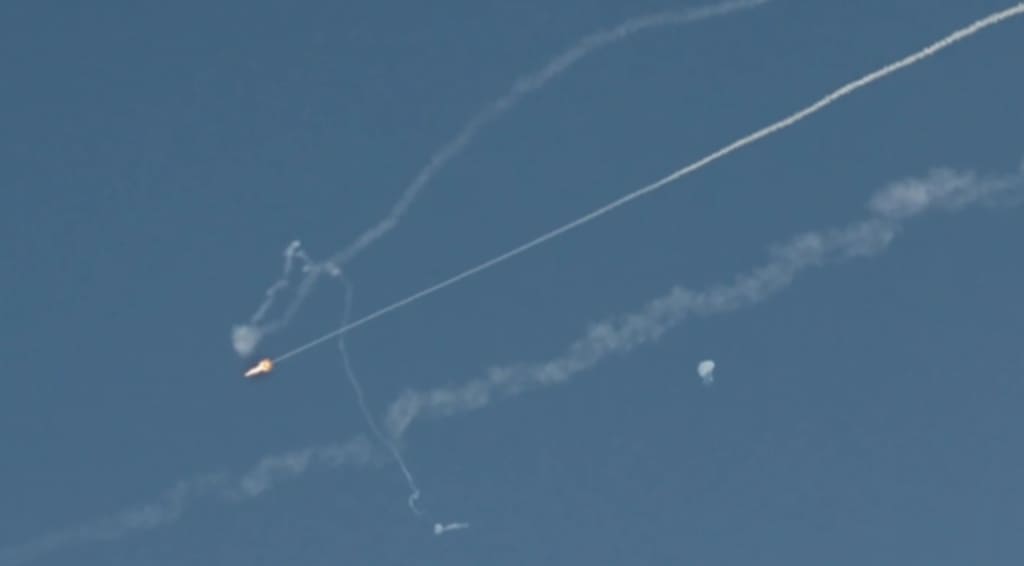
As missile and drone attacks surge across the Middle East, several Gulf states are reportedly facing an urgent problem: depleted air defense interceptor stockpiles. According to regional officials and diplomatic sources, requests to Washington for rapid replenishment of these critical defensive munitions have encountered delays, raising frustration among U.S. partners who rely heavily on American-made systems.
The interceptors in question are central components of advanced missile defense platforms such as the Patriot missile system and the Terminal High Altitude Area Defense (THAAD). Both systems are widely deployed across Gulf Cooperation Council (GCC) states to defend against ballistic missiles and long-range drones.
While U.S. officials have not publicly confirmed any deliberate slowdown, sources in the region describe the current pace of approvals and transfers as “stonewalling” at a moment when air defense capabilities are under acute pressure.
A Surge in Missile Threats
In recent months, the Middle East has experienced a sharp uptick in missile launches and drone strikes linked to regional conflicts. Armed groups aligned with Iran have targeted infrastructure and military facilities, while Israel’s ongoing confrontations with various actors have further destabilized the security environment.
For Gulf states such as Saudi Arabia and the United Arab Emirates, interceptors are not abstract strategic assets—they are frontline necessities. Each incoming missile requires an interceptor round, and those rounds are expensive, finite, and complex to produce.
Defense analysts note that interceptor production lines in the United States operate at a steady but limited capacity. Sudden surges in demand can quickly strain inventories, particularly when multiple theaters—Europe, East Asia, and the Middle East—compete for the same systems.
Competing Global Priorities
The reported delays come at a time when Washington is balancing multiple security commitments. The war in Ukraine has significantly increased demand for missile defense munitions, while U.S. Indo-Pacific strategy continues to prioritize countering China’s growing military capabilities.
Some analysts suggest that these global priorities may be affecting supply timelines for Gulf partners. U.S. defense manufacturing capacity, though expanding, has not yet fully adapted to sustained high-demand conditions across several regions simultaneously.
Others point to bureaucratic processes rather than policy shifts. Foreign Military Sales (FMS) approvals, congressional notifications, and logistical constraints can all contribute to delays—even when political intent remains supportive.
Still, Gulf officials reportedly perceive the slow pace as a signal that Washington’s focus may be shifting elsewhere.
Trust and Strategic Assurances
For decades, the United States has served as the primary security guarantor for many Gulf monarchies. American air defense systems form the backbone of regional deterrence strategies.
When interceptors run low, confidence can erode.
Security partnerships rely not only on formal treaties but also on perceived responsiveness. If Gulf states believe their urgent defense needs are not being met promptly, they may explore alternative suppliers or pursue domestic production initiatives.
China and Russia have marketed air defense systems globally, though integration with existing Western platforms poses technical challenges. Even so, the mere possibility of diversification introduces new strategic calculations.
Washington, for its part, insists that it remains committed to regional security. U.S. military bases and naval deployments across the Gulf underscore that presence. Yet in defense procurement, timing matters.
The Cost of Modern Missile Defense
Missile defense interceptors are technologically sophisticated and financially demanding. A single Patriot interceptor can cost several million dollars. THAAD interceptors are even more expensive.
Moreover, interception often requires more than one missile per incoming threat to ensure success. In high-intensity environments, stockpiles can diminish rapidly.
Production capacity is not easily scalable overnight. Manufacturing involves precision components, complex supply chains, and rigorous testing standards.
Defense contractors have announced plans to increase output, but ramping up capacity takes time. In the interim, allocation decisions must weigh strategic priorities across multiple theaters.
Political Dimensions
The issue also carries political implications in Washington. Congressional oversight plays a role in approving foreign military sales, particularly for advanced weapons systems. Lawmakers may scrutinize transfers in light of human rights concerns or regional stability questions.
At the same time, there is bipartisan recognition of the importance of maintaining strong security partnerships in the Gulf, particularly as Iran’s missile and drone capabilities expand.
Balancing these considerations—security commitments, domestic politics, and global resource constraints—is a complex task for policymakers.
Regional Ripple Effects
The perception of “stonewalling,” whether bureaucratic or intentional, could influence broader diplomatic relationships.
Gulf states have been diversifying their foreign policy portfolios in recent years, strengthening ties with Asian economies and engaging in pragmatic diplomacy with Iran. Security uncertainty may accelerate those trends.
Energy markets are also indirectly affected. The Gulf region remains a central artery for global oil and gas supplies. Robust air defenses contribute to protecting energy infrastructure from disruption.
Thus, interceptor shortages are not merely a military concern—they intersect with economic stability and global energy security.
A Test of Alignment
The debate over interceptor replenishment highlights a broader question: how aligned are U.S. and Gulf threat perceptions in the current geopolitical climate?
For Gulf capitals, missile defense is an immediate operational need. For Washington, it is one element within a global strategic mosaic.
Bridging that perception gap requires transparent communication and timely action. If delays are purely logistical, clarity can mitigate frustration. If prioritization choices are involved, those decisions carry diplomatic consequences.
The Road Ahead
As regional tensions remain high, the demand for missile defense capabilities is unlikely to diminish. Gulf states will continue pressing for faster delivery schedules, while U.S. defense planners grapple with global commitments.
The outcome of this dispute may shape not only military readiness but also long-term strategic alignment.
Whether the current slowdown proves temporary or indicative of a broader recalibration, one reality is clear: in an era of proliferating missile threats, interceptors are more than hardware—they are symbols of trust, partnership, and shared security responsibility.
For Washington and its Gulf allies, restoring confidence may be as important as replenishing stockpiles.
About the Creator
A Gathering of Evil Bosses
“I’m the queen of chin jutting while I smooth my hair, attacking, insulting, and deflecting to protect my appointer.” “Oh, please, Blondi, my hair is curled, highlighted, and longer than yours. I feature television commercials telling immigrants that we will give them a free plane ride home, and if they voluntarily turn themselves in, they will be allowed to legally apply for re-entry. It runs everywhere, and I look good in it! You can’t compete because of your blond hair. Mine is nicer, and my lips are prettier than yours.”
By Andrea Corwin 12 days ago in The Swamp
Supreme Court Considers Fate of Docks and Other Assets Seized by Cuba in 1960
The Supreme Court of the United States is weighing a case that could determine whether American companies and families can reclaim or seek compensation for docks, factories, and other properties seized by Cuba during the revolutionary nationalizations of 1960.
By Fiaz Ahmed 7 days ago in The Swamp
This Is What I Do When People Throw Rocks At Me
Rocks have been thrown at me for a greater part of my life. Some have been small and missed hitting me. When people don't get a reaction from me, they throw bigger rocks with a better aim. Many have been hurled at me with precision over the years. For a long time, I thought my only options were to dodge them or be crushed by them.
By Margaret Minnicks5 days ago in Confessions



Comments
There are no comments for this story
Be the first to respond and start the conversation.