
War Has Grounded High-Flying Gulf Airlines Like Emirates
Regional conflict and airspace closures disrupt the global networks of Gulf carriers including Emirates and Qatar Airways. Escalating tensions in the Middle East force airlines to reroute flights and rethink operations from hubs like Dubai. Security concerns and restricted skies challenge the fast-growing aviation networks of Gulf airlines. War and geopolitical tensions threaten the smooth connectivity that made carriers like Emirates global aviation leaders. Airspace restrictions across the Middle East disrupt travel routes and raise costs for major Gulf airlines.

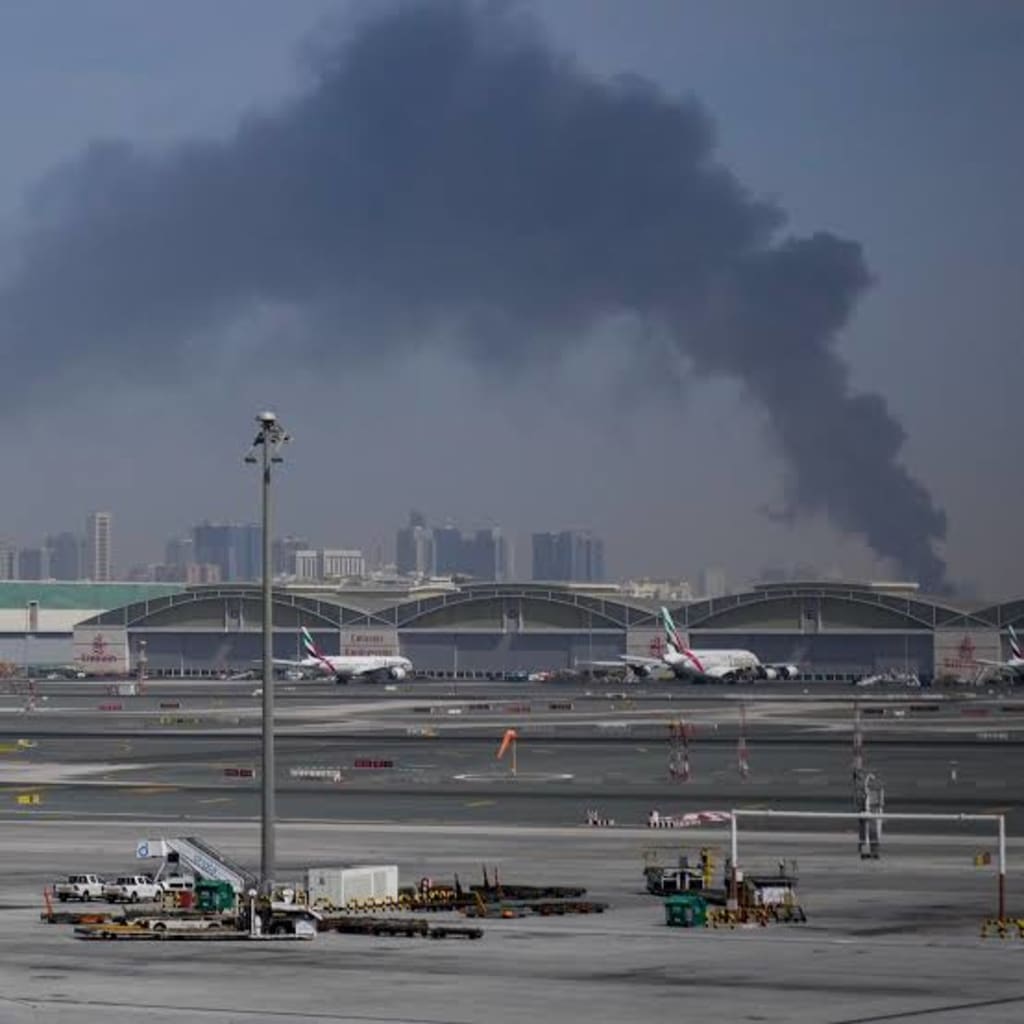
Regional conflict and airspace closures disrupt one of the world’s fastest-growing aviation hubs
For decades, airlines based in the Gulf built a reputation for connecting the world. With their vast networks, modern fleets and ambitious expansion plans, carriers such as Emirates became symbols of the Middle East’s transformation into a global aviation crossroads. But growing regional conflict and security concerns are now forcing these high-flying airlines to confront an unfamiliar challenge: grounded routes, disrupted schedules and rising uncertainty.
The Gulf aviation industry has long thrived because of its strategic geography. Positioned between Europe, Asia and Africa, airlines operating from hubs like Dubai and Doha built business models around connecting passengers across continents with minimal travel time. This system relies heavily on stable airspace corridors across the Middle East.
When conflict intensifies in the region, however, those corridors can quickly become restricted or unsafe. In recent months, airlines have had to navigate a patchwork of closed or risky airspaces stretching across several countries, forcing them to reroute flights or suspend certain destinations entirely.
For major carriers such as Qatar Airways and Etihad Airways, the impact has been immediate. Flights that once followed direct routes are now required to take longer detours to avoid conflict zones, adding hours to journey times and increasing fuel costs. In some cases, airlines have temporarily halted services to destinations considered too risky.
The effects are particularly significant for Emirates, which operates one of the largest international networks in the world. The airline’s hub at Dubai International Airport has historically handled tens of millions of passengers each year, acting as a gateway between East and West. But disruptions to regional airspace threaten the efficiency of that model.
Airspace closures are among the most serious challenges airlines can face. When military operations intensify or missile threats increase, aviation regulators often issue warnings or outright bans on civilian flights through affected areas. Airlines must respond quickly to protect passengers and crews while maintaining operational reliability.
For carriers in the Gulf, this often means redesigning entire route networks overnight. Flights traveling between Europe and Asia may need to avoid certain corridors over countries experiencing conflict, forcing aircraft to fly longer paths over the Mediterranean, Central Asia or the Indian Ocean.
The consequences ripple throughout the aviation industry. Longer routes mean higher fuel consumption, increased operating costs and reduced aircraft availability. Delays can spread across airline schedules, affecting connections for passengers traveling through major hubs.
Industry analysts say the situation underscores how vulnerable global aviation remains to geopolitical tensions. The Middle East has historically been both a vital transit region and a frequent source of instability, making airlines particularly sensitive to security developments.
Airlines have invested heavily in technology and planning to manage such risks. Advanced flight-planning systems allow carriers to evaluate safe routes in real time, taking into account security advisories issued by aviation authorities and governments. Even so, sudden escalations can leave little time for preparation.
For passengers, the disruptions can mean longer travel times and occasional cancellations. While airlines try to minimize inconvenience, safety considerations always take priority when deciding whether to operate flights through potentially dangerous areas.
The broader economic impact may also be significant. Gulf airlines are central to tourism and business travel in the region, bringing millions of visitors to cities such as Dubai and Abu Dhabi every year. If prolonged instability affects flight connectivity, it could influence tourism flows and commercial activity.
Governments across the Gulf have closely monitored the situation, emphasizing the importance of maintaining aviation safety while preserving the region’s role as a global transportation hub. Investments in airport infrastructure and airline fleets over the past two decades have transformed the Gulf into one of the most dynamic aviation markets in the world.
Despite the current challenges, aviation experts believe the region’s airlines remain well positioned to recover once tensions ease. Gulf carriers have historically demonstrated resilience, adapting quickly to economic downturns, pandemics and geopolitical shocks.
Executives at several airlines have also emphasized that global demand for air travel remains strong. As long as international travel continues to grow, major transit hubs in the Gulf are expected to remain important gateways connecting continents.
For now, however, the industry must navigate a complex and unpredictable environment. Each new development in regional conflicts can influence flight routes, insurance costs and operational planning.
The experience serves as a reminder that even the most sophisticated aviation networks depend on stability in the skies above them. For airlines like Emirates, whose success has been built on seamless global connectivity, maintaining that stability is more important than ever.
As long as conflict continues to reshape airspace across parts of the Middle East, the world’s most ambitious aviation hubs will face the challenge of keeping their aircraft—and their passengers—safely in the air.
About the Creator
Fiaz Ahmed
I am Fiaz Ahmed. I am a passionate writer. I love covering trending topics and breaking news. With a sharp eye for what’s happening around the world, and crafts timely and engaging stories that keep readers informed and updated.
Keep reading
More stories from Fiaz Ahmed and writers in The Swamp and other communities.
Indian warships on standby near Persian Gulf for merchant vessels
Indian Warships on Standby Near Persian Gulf for Merchant Vessels New Delhi deploys naval assets as tensions rise in West Asia, ensuring safe passage for maritime trade Several Indian Navy warships have been deployed near the Persian Gulf and Strait of Hormuz, remaining on standby to assist merchant vessels — especially those bound for India — amid the ongoing war in West Asia that has disrupted commercial sea lanes and heightened regional security risks. The deployment reflects New Delhi’s growing efforts to safeguard its maritime trade routes and protect Indian seafarers during a period of escalating conflict. Why Indian Warships Are in the Region With the Middle East at the centre of a widening conflict involving Iran, the United States, and Israel, strategic chokepoints like the Strait of Hormuz — through which a significant share of global oil and liquefied gas supplies transit — have become areas of intense diplomatic and military focus. In this environment, Indian authorities have kept naval vessels near the Gulf to support and monitor merchant ships navigating these waters. Officials said the warships are being kept on standby to assist merchant vessels coming towards India, responding to potential calls for help, providing situational awareness, and reassuring India‑bound cargo owners and crews amid heightened risks. This naval presence is part of Operation Sankalp, a longer‑running mission under which Indian warships have patrolled the Gulf of Oman and Gulf of Aden — and now the wider Persian Gulf region — to ensure maritime safety and respond to potential threats or emergencies affecting commercial shipping. Safe Passage Through the Strait of Hormuz Despite tensions, several Indian‑flagged vessels have made headway. Two Indian LPG carriers, Shivalik and Nanda Devi, have been granted passage through the Strait of Hormuz and are en route to Indian ports, carrying critical energy supplies. These successful transits underscore the importance of safe shipping corridors for India’s economic interests. However, many other India‑flagged vessels remain in the region, with the government actively negotiating and coordinating with regional partners to secure safe movement and, if necessary, naval support or escorts. Recent diplomatic engagements reflect India’s effort to coordinate with Iran, Gulf Cooperation Council states, and Western powers to keep trade routes open. Protecting Indian Seafarers and Commerce The maritime deployment also responds to growing concerns for the safety of Indian seafarers working aboard ships in the Persian Gulf. According to a Reuters report, thousands of Indian sailors are currently in the region, with some stranded and caught between the escalation of hostilities and restrictions on commercial travel and shipping. These crews face increased anxiety as airspace and waters remain tense. India has been clear that the naval presence is aimed at ensuring the safe passage of merchant vessels, providing operational support if needed, and maintaining vigilance in a highly volatile maritime environment — not to contribute to combat. The Indian Navy regularly conducts patrols, surveillance and escort missions to deter threats and monitor hazardous situations. Strategic Importance of the Deployment The Strait of Hormuz remains one of the world’s most critical maritime chokepoints, accounting for a large portion of oil and gas transit worldwide. Disruption here affects global energy markets and economic stability, making international attention to naval deployments all the more significant. India, heavily dependent on imports for energy and trade, has a vested interest in keeping these routes secure. Deploying warships in such locations also serves as a deterrent to potential threats — from state actors to non‑state groups — that might target commercial vessels or disrupt shipping in response to regional tensions. The presence of naval assets aims to reassure both Indian and international shipping operators that maritime safety remains a priority. Naval Cooperation and Regional Dynamics India’s naval deployments complement diplomatic efforts to maintain open seas and safe navigation. In recent weeks, New Delhi has communicated with key stakeholders to facilitate safe passage and protect Indian nationals and seafarers. This includes regular contact with Gulf nations, Iran, and allied countries seeking to reduce maritime risks amid broader geopolitical challenges. Furthermore, Indian warships have been involved in maritime security operations elsewhere in the region for years, including anti‑piracy missions in the Gulf of Aden and Arabian Sea. These longstanding efforts bolster India’s ability to respond effectively to evolving security needs in the Gulf. What Comes Next As the West Asia conflict continues, India’s maritime posture is expected to adapt, balancing diplomacy, commercial interests and security imperatives. Authorities have stressed that naval forces will remain vigilant while working through diplomatic channels to ensure Indian and allied vessels can traverse critical sea lanes without undue risk. In a time of heightened tension, India’s naval presence near the Persian Gulf signals both a commitment to maritime security and a proactive stance in safeguarding its economic and strategic interests. Continued monitoring and cooperation with international partners will be essential as the situation evolves.
By Fiaz Ahmed a day ago in The Swamp
The Forsyth House Fire
Since 1851, Forsyth House has stood on the corner of Union Street and Gordon Street in the heart of Glasgow. Its iconic, or was... because on Sunday 8th of March, 2026, a fire broke out in a small, seemingly un-named shop in the building and tore all that history down. As I write, the rubble is still unsettled and the street is still blocked off. Central Station is quiet on the upper level, and around 30 small businesses have quite literally gone up in smoke.
By S. A. Crawford3 days ago in The Swamp
My First Time Skiing and I Got Lost, Alone, in the French Alps
Looking back, I can trace some of my life’s biggest adventures to a simple action from my sister. She’d introduced me to Tommy (a very long time ago), a colleague of hers, who had overshared his penchant for Italian-looking women, and I ticked that box.
By Chantal Christie Weiss3 days ago in Humans


Comments
There are no comments for this story
Be the first to respond and start the conversation.