
War Tests Dubai as Safe Space for the Super Rich
As tensions spread across the Middle East, Dubai’s reputation as a global haven for wealth, stability, and luxury faces one of its most serious tests.
Introduction
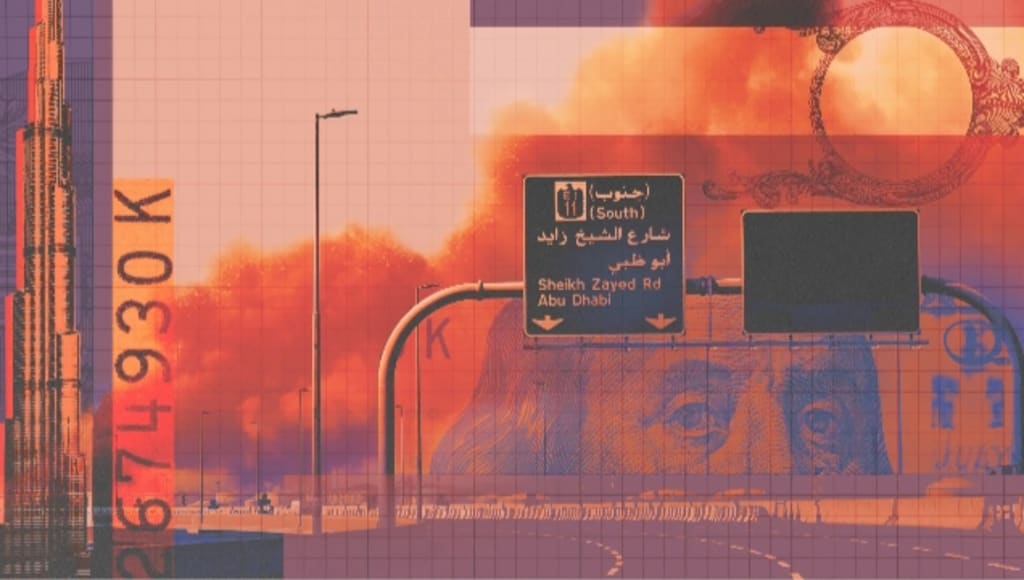
For years, Dubai has marketed itself as a sanctuary for global wealth—a place where the ultra-rich can live, invest, and do business far from the political instability affecting other parts of the world. With glittering skyscrapers, tax advantages, and political neutrality, the city has become a magnet for billionaires, investors, and entrepreneurs from across the globe.
However, the expanding conflict in the Middle East—particularly tensions involving Iran, Israel, and the United States—is raising questions about whether Dubai can maintain its carefully crafted image as a safe haven for the world’s elite.
The war’s ripple effects, from economic uncertainty to security concerns, are now testing the resilience of one of the world’s most famous luxury hubs.
Dubai’s Rise as a Global Safe Haven
Over the past two decades, Dubai has built a reputation as one of the safest and most attractive destinations for global wealth. The city’s leadership invested heavily in infrastructure, tourism, finance, and real estate to transform it into an international economic powerhouse.
High-net-worth individuals from Europe, Asia, Russia, and the Middle East have purchased luxury apartments, waterfront villas, and penthouses overlooking landmarks like the Burj Khalifa and the Palm Jumeirah.
Dubai’s appeal goes beyond luxury real estate. The emirate offers low taxes, strong financial services, and a strategic geographic location connecting Asia, Europe, and Africa.
In times of political instability elsewhere, wealthy individuals have often moved their assets—and sometimes their families—to Dubai to preserve both safety and economic opportunities.
But the current regional conflict threatens to disrupt that perception of stability.
Regional War Reaches the Gulf’s Doorstep
Although Dubai itself has not been directly targeted by military action, the broader conflict unfolding in the Middle East has brought tensions closer to the Gulf region than many residents expected.
Missile exchanges, drone attacks, and naval confrontations involving Iran and its adversaries have heightened concerns about security in nearby waters and airspace.
The Strait of Hormuz, located not far from the United Arab Emirates, is one of the world’s most critical energy and shipping corridors.
Any disruption to this narrow waterway could have significant consequences for global oil supplies and regional economies.
For Dubai, which relies heavily on international trade, aviation, and tourism, instability in the region presents serious risks.
Anxiety Among the Global Elite
For many of Dubai’s wealthiest residents, the war has sparked renewed questions about risk.
Some private wealth advisors report that clients are quietly exploring contingency plans, including relocating assets to Europe, Singapore, or other perceived safe havens.
Luxury real estate brokers say interest in secure compounds and private estates has increased, as affluent buyers seek properties that offer enhanced security and privacy.
At the same time, some investors remain confident that Dubai’s leadership will maintain stability even in difficult circumstances.
The city has a track record of weathering crises—from the global financial downturn of 2008 to the economic disruptions caused by the COVID-19 pandemic.
Financial Markets and Investment Concerns
Beyond security fears, the war is also affecting financial markets and investment strategies.
Energy prices have surged due to concerns about potential disruptions to oil shipments in the Gulf region. Rising fuel costs can influence everything from airline operations to global shipping.
Dubai’s economy is closely linked to international business activity, making it particularly sensitive to geopolitical instability.
However, some analysts believe that Dubai may actually benefit from uncertainty in other parts of the world.
During periods of global turbulence, wealthy individuals often look for politically stable jurisdictions where they can move capital quickly.
Dubai’s financial infrastructure and business-friendly policies continue to make it attractive for investors seeking diversification.
Government Reassurances
Officials in the United Arab Emirates have emphasized that the country remains stable and secure despite the regional conflict.
The UAE maintains strong diplomatic relationships with major global powers and has invested heavily in defense systems to protect its territory.
Government leaders have also sought to reassure international investors that the nation’s economy remains resilient and open to global business.
Dubai’s leadership has consistently positioned the city as neutral in regional disputes, focusing instead on commerce, tourism, and innovation.
This strategy has helped the emirate maintain its status as a global crossroads even during periods of political tension.
Tourism and Lifestyle at Stake
Dubai’s reputation is not built solely on finance. The city is also one of the world’s leading tourism destinations.
Luxury resorts, designer shopping malls, and world-class entertainment venues attract millions of visitors every year.
Tourism contributes significantly to the local economy, and maintaining the perception of safety is crucial for sustaining this sector.
So far, travel to Dubai has continued largely uninterrupted. Major airlines still operate full schedules, and hotels remain busy with international guests.
Nevertheless, tourism officials are closely monitoring the regional situation, aware that perceptions of instability can quickly influence travel decisions.
A Test of Dubai’s Global Brand
The current crisis represents a significant challenge for Dubai’s global brand.
For years, the city has successfully marketed itself as a place where wealth and opportunity thrive despite regional instability.
Now, as war unfolds nearby, Dubai must prove that its reputation for safety and resilience is more than just marketing.
The city’s ability to maintain investor confidence, protect economic growth, and reassure residents will determine whether it can retain its status as a haven for global wealth.
Looking Ahead
The long-term impact of the conflict on Dubai remains uncertain.
If the war escalates or spreads further across the Middle East, even stable countries could face economic and security pressures.
On the other hand, a diplomatic resolution or de-escalation could reinforce Dubai’s image as a resilient financial center capable of navigating regional turmoil.
For now, the city continues operating much as it always has—its skyscrapers gleaming, luxury cars filling its streets, and investors conducting business in high-rise offices overlooking the Persian Gulf.
Yet beneath the surface, the conflict unfolding in the region serves as a reminder that even the world’s most glamorous safe havens cannot completely escape geopolitical realities.
Conclusion
Dubai has long been synonymous with wealth, luxury, and security. But the ongoing Middle East conflict is putting that reputation to the test.
While the city remains stable for now, rising geopolitical tensions, economic uncertainty, and shifting investor sentiment are forcing the global elite to reassess their assumptions about safety and stability.
Whether Dubai emerges from this period stronger or faces lasting challenges will depend on how the region’s crisis unfolds—and how effectively the city continues to balance ambition with resilience.
About the Creator
Parallel Protests
I haven't written for quite some time, but I have A LOT of thoughts about yesterday's protest rally against our government's involvement and complicity in America's war on Iran, on the harbourside of my home city Bristol, and I need to put them somewhere. My gorgeous girlfriend is always a loving and listening ear and sharing it all with her will always be a healthy and happy way of processing the mental and emotional weight, but getting it straight in my brain to share means writing it all down in straight lines, so, here we are and thanks for being here.
By Steph Cole7 days ago in The Swamp
Russia Is Providing Iran Intelligence to Target U.S. Forces, Officials Say
The escalating conflict between Iran and the United States has taken a troubling turn, as U.S. officials say Russia has been providing intelligence that could help Tehran target American military forces in the Middle East. The revelation signals a potentially dangerous new phase in the war, raising concerns that the conflict could draw in major global powers and deepen geopolitical tensions. According to several officials familiar with U.S. intelligence assessments, Russia has reportedly supplied Iran with information about the locations of American military assets, including warships and aircraft operating across the region. The intelligence sharing is believed to have begun shortly after the latest round of hostilities erupted, following U.S. and Israeli strikes on Iranian targets. The reports mark the first indication that another major U.S. rival may be indirectly involved in the conflict. While there is no evidence that Moscow is directing Iran’s military operations, analysts say even limited intelligence assistance could significantly improve Tehran’s ability to strike U.S. positions with greater precision. Precision Strikes Raise Questions Recent Iranian attacks on U.S. and allied targets have shown a level of accuracy that surprised some military observers. Iranian forces have reportedly targeted early-warning radar systems, command centers, and critical infrastructure used by U.S. forces. Experts suggest that such precision could be enhanced by access to more advanced intelligence data. Iran’s own satellite capabilities are limited, and the country does not operate a large constellation of military reconnaissance satellites. Russia, however, has far more advanced intelligence and surveillance capabilities, developed over decades and refined during its ongoing war in Ukraine. This technological advantage means that any intelligence provided by Moscow could give Iran a clearer picture of American troop movements, naval deployments, and air operations across the Middle East. Growing Strategic Partnership The alleged intelligence sharing reflects the deepening relationship between Russia and Iran in recent years. Since the start of the Russia-Ukraine war in 2022, Tehran has been one of Moscow’s key partners, providing drone technology and other military assistance that Russia has used extensively in Ukraine. Now, according to analysts, the partnership may be evolving into a two-way strategic relationship. In this scenario, Russia could repay Iran for its support by offering intelligence and other forms of indirect assistance in Tehran’s confrontation with Washington. Some experts believe Moscow may also see strategic advantages in the ongoing Middle East conflict. A prolonged war could distract Western governments from the Ukraine conflict and drive up global energy prices—developments that could benefit Russia economically and politically. Washington Responds Cautiously The White House has been cautious in responding to the reports. Officials have acknowledged the intelligence findings but have not publicly detailed the extent of Russia’s involvement. Some U.S. officials have suggested that even if intelligence sharing is occurring, it may not dramatically alter the battlefield. Still, the possibility that Russia could be helping Iran target American forces has raised alarm among defense analysts and policymakers. The concern is not only about immediate battlefield consequences but also about the broader implications for global security. If confirmed, the development would represent a significant escalation in the conflict, potentially turning a regional war into a confrontation involving multiple global powers. Risk of a Wider Conflict The Middle East is already experiencing heightened tensions as Iranian forces and allied groups respond to U.S. and Israeli military actions. Thousands of drones and missiles have reportedly been launched at military bases and other targets in the region since the conflict intensified. The addition of Russian intelligence support could complicate efforts to de-escalate the crisis. It may also increase the risk of miscalculation, especially if American forces perceive Russian involvement as a direct threat. Diplomats and security experts warn that the situation illustrates how interconnected global conflicts have become. The wars in Ukraine and the Middle East are no longer isolated struggles; instead, they increasingly overlap through alliances, arms transfers, and intelligence cooperation. As the conflict continues to unfold, the world is watching closely to see whether diplomatic efforts can contain the crisis—or whether it will evolve into an even more dangerous international confrontation.
By Fiaz Ahmed 4 days ago in The Swamp




Comments
There are no comments for this story
Be the first to respond and start the conversation.