
West Asia Conflict: Insurers Face Airspace Closure Strain
As the West Asia conflict escalates, insurers face rising premiums and complex risks from airspace closures and flight disruptions, straining the global aviation market.

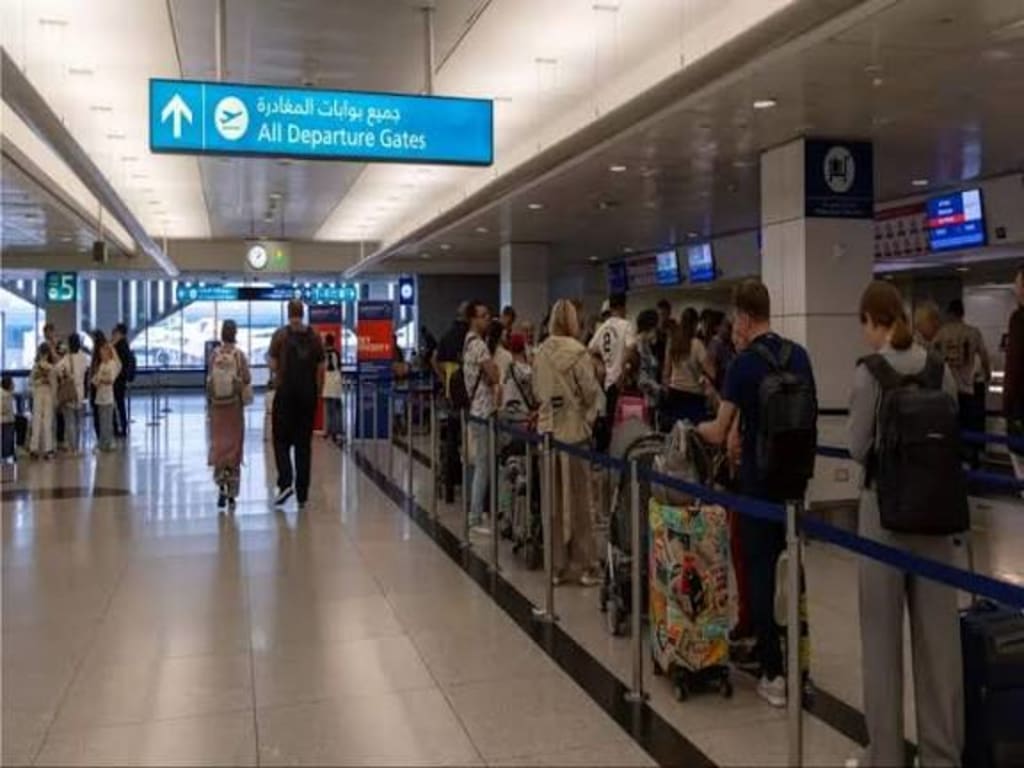
The escalating West Asia conflict is causing significant disruption in the global aviation sector, particularly in the area of aviation insurance. As tensions between Middle Eastern powers and international stakeholders reach new heights, insurers are grappling with the ramifications of airspace closures, flight suspensions, and rising premiums. The risks and uncertainty created by the ongoing conflict are forcing insurers to reconsider their policies, price structures, and risk assessment methodologies.
The most immediate impact has been felt by airlines operating in the region, which have been forced to reroute flights or cancel them entirely due to airspace restrictions and military confrontations. For example, many commercial carriers have opted to avoid specific airspaces, including the Strait of Hormuz and parts of the Persian Gulf, areas already known for geopolitical volatility. As a result, flight durations have increased, fuel costs have risen, and passengers face longer travel times and disruptions.
For insurers, these developments mean higher liabilities. Airspace closures or restricted access can lead to massive delays, groundings, or diversions of commercial flights, each of which translates to a significant payout potential for insurers. Aircraft that are grounded, delayed, or forced to divert may suffer damage from environmental exposure or loss of revenue for the airline, triggering insurance claims for losses incurred. Additionally, insurers are now seeing a rise in claims related to war-risk coverage, which is becoming an increasingly significant factor in calculating premiums.
Historically, the cost of war-risk insurance, which protects against the financial fallout from incidents caused by political or military instability, has been lower in regions that are considered stable, such as North America and Europe. However, West Asia's current state of heightened tension, which includes missile strikes, drone attacks, and the frequent risk of miscalculation between regional powers, is forcing insurers to recalibrate their risk models. This recalibration leads to higher premiums, both for airlines operating in conflict zones and for global insurers that face mounting claims from aircraft operating in the broader Middle East.
Insurers are particularly concerned about the vulnerability of aircraft flying through international air corridors, which often intersect with high-risk zones. In the past, the International Civil Aviation Organization (ICAO) and national aviation authorities typically ensured the safety of flight routes over conflict zones, but the rise in targeted attacks has led to a rethinking of this arrangement. Now, insurers are not only covering damage to aircraft but are also factoring in the possibility of cyberattacks, hijacking, and unforeseen military engagements that could cripple an airline's ability to operate in certain regions.
The situation has created a difficult dilemma for airlines. While they want to continue offering routes to high-demand destinations like Dubai, Doha, and Abu Dhabi, they are also faced with escalating insurance costs and the uncertainty of regional stability. This leads to a situation where some smaller airlines are forced to curtail services or delay new route expansions to manage the mounting risk.
At the same time, international insurance brokers are adapting to these new conditions by diversifying coverage options and offering more tailored policies to airlines operating in affected regions. Some of these brokers are increasingly offering blanket insurance for airlines, covering all regions where conflict might spread, whereas others focus on specific areas, offering coverage for military operations, political instability, or terrorist attacks.
The reclassification of conflict zones has become another critical issue. For instance, the UAE and Qatar, which were once considered relatively safe for commercial aviation, now find their airspace classified as high-risk zones due to the growing frequency of military activity in the region. This reclassification drives up the cost of insurance and forces airlines to reconsider their fleets' flying routes.
Additionally, the political and financial impacts are felt globally, as major re-insurers based in Europe and the U.S. are now more cautious about assuming risk in the region. Companies like Lloyd's of London have historically been at the forefront of underwriting global aviation risks, but recent turmoil in West Asia is leading them to adjust their exposure. These companies are increasingly setting stricter conditions for policies, such as imposing higher deductibles or excluding certain regions altogether from coverage.
In conclusion, the ongoing West Asia conflict has put tremendous strain on the global aviation insurance sector. As insurers navigate airspace closures, rerouted flights, and higher risk assessments, they are forced to adjust their models and rates accordingly. Airlines are caught in the middle, needing to balance the economic costs of escalating premiums with the financial consequences of cancelled or delayed flights. The result is a complex landscape where air travel becomes not only a logistical and operational challenge but also a financial risk that demands new approaches to insurance and risk management.
As tensions continue to rise in the Middle East, it is clear that the future of airspace insurance in this region will be shaped by ongoing political developments, making it imperative for both airlines and insurers to remain agile and prepared for further disruption in global flight patterns.
About the Creator
Fiaz Ahmed
I am Fiaz Ahmed. I am a passionate writer. I love covering trending topics and breaking news. With a sharp eye for what’s happening around the world, and crafts timely and engaging stories that keep readers informed and updated.
Keep reading
More stories from Fiaz Ahmed and writers in The Swamp and other communities.
An “Impossible” €1.35 Billion Contract May Tilt Back Toward the Rafale as a European Country Reconsiders Its F-35 Choice
In a significant shift with potential implications for European defense procurement, one European nation is reportedly reconsidering its long-planned purchase of Lockheed Martin F‑35 Lightning II jets in favor of Dassault Rafale aircraft — driven in part by the structure of a groundbreaking €1.35 billion contract offer that has re-framed the economics of fighter acquisition. The reconsideration underscores the complex interplay of cost, strategic autonomy, and alliance integration that modern defense planning must balance. For decades, the F-35 has been marketed as the future of air combat for NATO and allied nations. Its fifth-generation stealth capabilities, advanced sensor fusion, and networked connectivity made it the prime choice for countries seeking to modernize their fleets and deepen interoperability with U.S. and allied forces. Its adoption has grown steadily across Europe, Asia, and the Middle East, reinforcing its status as a cornerstone of 21st-century aerial defense. Yet, not all procurement decisions hinge solely on technological capabilities. Lifecycle costs, maintenance demands, sovereignty concerns, and industrial participation all weigh heavily in national defense budgets. In this context, a €1.35 billion contract offer centered on the Rafale has captured attention as something many industry insiders initially deemed “impossible” — not merely due to its headline price, but because of its broader value proposition. The proposal did more than list acquisition costs: it incorporated a comprehensive package that blended aircraft purchase, pilot and maintenance training, local industrial participation, and tailored financing terms that extended beyond the initial buy. For a nation contemplating decades of operational life and recurring maintenance expenses, these combined factors can significantly influence the total cost of ownership. Governments increasingly look beyond the sticker price to quantify long-term sustainability and domestic benefits. Unlike the F-35’s tightly controlled ecosystem — where software, upgrades, and key parts are centrally managed and often constrained by U.S. export policies — the Rafale offers a degree of operational autonomy that some countries view as strategically valuable. Its design facilitates more localized maintenance, customized upgrades, and broader integration with domestic aerospace industries. This flexibility can translate into jobs, technology transfer, and economic activity within national borders — attractive outcomes for policymakers under pressure to justify defense spending to voters. The potential shift also reflects broader debates within Europe about strategic autonomy. Some nations have signaled a desire to reduce reliance on non-European defense suppliers and instead foster industrial cooperation across the continent. Although the F-35’s interoperability with NATO remains a key advantage, alternatives like the Rafale — and future European systems emerging from collaborative efforts such as the Future Combat Air System (FCAS) — are gaining political and strategic traction. Critics of the F-35 pathway argue that its lifecycle costs and dependency on external software and support systems create vulnerabilities. Maintaining low-observable coatings, managing software updates, and performing deep upgrades often require ongoing coordination with the aircraft’s original developer, potentially limiting sovereignty. For some militaries, the Rafale’s engineering — less focused on absolute stealth but highly capable in electronic warfare, multi-role missions, and tactical flexibility — aligns better with their defense doctrines and budget realities. Nevertheless, the F-35 continues to dominate in pure stealth and advanced data fusion capabilities. Its ability to integrate seamlessly with other fifth-generation systems gives operators a significant edge in high-intensity conflict environments. The debate between the two platforms is not purely technical; it is fundamentally political and economic. National leaders must consider how defense procurement decisions play into broader geopolitical commitments, alliance obligations, and industrial policy goals. The European country at the center of this reconsideration has not been officially named in public reports. However, recent defense procurement discussions in countries such as Portugal and Spain illustrate a broader trend of reevaluating fighter options in light of cost pressures and strategic priorities. Portugal, for example, has flirted with European alternatives to the F-35, reflecting both political sentiment and budgetary constraints. For Dassault Aviation, the maker of the Rafale, such dynamics play to its strengths as it seeks to expand export markets and fortify European defense cooperation. The Rafale’s proven combat record — operational in diverse environments from the Middle East to Africa — and its versatile capabilities continue to attract interest even as global military budgets tighten. Ultimately, the “impossible” €1.35 billion contract has done more than challenge conventional assumptions about fighter procurement: it has reignited a conversation about how nations define value in defense acquisitions. In an era of shifting alliances, economic pressures, and evolving threats, the choice between aircraft like the F-35 and the Rafale is about far more than raw performance metrics. It is about strategic identity, industrial participation, and long-term sovereignty — factors that may prove just as decisive as any stealth coating or sensor suite.
By Fiaz Ahmed a day ago in The Swamp
A Gathering of Evil Bosses
“I’m the queen of chin jutting while I smooth my hair, attacking, insulting, and deflecting to protect my appointer.” “Oh, please, Blondi, my hair is curled, highlighted, and longer than yours. I feature television commercials telling immigrants that we will give them a free plane ride home, and if they voluntarily turn themselves in, they will be allowed to legally apply for re-entry. It runs everywhere, and I look good in it! You can’t compete because of your blond hair. Mine is nicer, and my lips are prettier than yours.”
By Andrea Corwin 13 days ago in The Swamp
Trump’s Iran Strike Tests the MAGA Promise of “No More Wars”
For years, the political movement associated with Donald Trump has been built on a powerful promise: America would stop fighting endless wars abroad. The slogan “America First” and the broader Make America Great Again philosophy resonated with millions of voters who believed the United States had spent too much blood and money in distant conflicts. Yet recent U.S. military strikes against Iran, carried out alongside Israel, have placed that promise under intense scrutiny. What was presented by the White House as a strategic move to prevent nuclear escalation has instead opened a debate within Trump’s own political base: Can a president who promised “no more wars” justify launching a major military operation? The answer could reshape the future of the MAGA movement and the broader direction of American foreign policy. The Strike That Changed the Conversation The latest crisis erupted when the United States launched coordinated strikes on Iranian military and nuclear-related facilities. The operation targeted key assets linked to Iran’s military infrastructure, including forces connected to the Islamic Revolutionary Guard Corps. According to officials, the strikes were intended to weaken Iran’s missile capabilities and prevent what Washington described as an imminent threat. Intelligence reports suggested Iran might have been preparing attacks on American forces or allies in the region. The military action quickly escalated tensions across the Middle East. Iran responded with missile and drone strikes targeting Israeli cities and U.S. military bases in the region, raising fears of a wider war. � AP News For many Americans, the images of explosions and retaliatory attacks felt painfully familiar—echoing the early days of conflicts in Iraq and Afghanistan. A Promise That Defined Trump’s Political Rise Trump’s political appeal was built partly on his rejection of the foreign policy consensus that dominated Washington for decades. During his campaigns, he repeatedly criticized the wars in Iraq and Afghanistan as costly mistakes. He argued that American leaders had wasted trillions of dollars overseas while neglecting domestic problems. His message was simple but powerful: Stop endless wars Bring American troops home Focus on rebuilding the United States This anti-interventionist stance attracted voters across ideological lines. Many conservatives, libertarians, and even some progressives supported the idea that the United States should avoid new military conflicts whenever possible. By the time Trump returned to the White House, millions of supporters believed they were voting for a president who would break the cycle of foreign wars. The MAGA Base Reacts The strikes on Iran have triggered intense debate among Trump’s supporters. Some prominent voices within the MAGA movement have openly criticized the decision. They argue that military intervention contradicts the core principles that made the movement popular in the first place. Several conservative commentators and political figures have said the operation risks dragging the United States into another long conflict in the Middle East. Others worry that it could distract from domestic priorities such as immigration, economic growth, and border security. For these critics, the question is not whether Iran poses a threat—but whether military action is the right response. Many have warned that American voters are tired of foreign wars and expect their leaders to pursue diplomatic solutions instead. Supporters Defend the Decision At the same time, many Republicans and Trump allies strongly support the strikes. Their argument is that preventing Iran from developing nuclear weapons is essential to global security. From this perspective, limited military action is preferable to allowing a dangerous adversary to gain more power. Supporters also emphasize that Trump has never ruled out the use of force when American interests are at stake. They point out that he has often described military power as a deterrent—something that should exist precisely to prevent larger wars. Some conservative analysts believe the strikes could ultimately strengthen Trump’s reputation if they lead to a quick resolution or deter future aggression. However, if the conflict becomes prolonged, political support could weaken. Congress and Washington React The strikes have also sparked debate in Washington. Several lawmakers from both parties have questioned whether the president should have sought congressional approval before launching the operation. Others have expressed concern about the lack of a clear long-term strategy for dealing with Iran after the initial attacks. � Reuters The central question facing policymakers is simple but difficult: What happens next? Without a clear diplomatic path forward, some fear the United States could become entangled in a prolonged regional conflict. The Strategic Risks Military analysts say the biggest danger is escalation. Iran has extensive regional alliances and influence through various groups across the Middle East. Any conflict involving Iran has the potential to spread beyond its borders. Countries such as Lebanon, Syria, and Iraq could become involved if the fighting intensifies. Another major concern is the Strait of Hormuz, a narrow waterway through which a large portion of the world’s oil supply passes. Any disruption in this region could send global energy prices soaring and trigger economic instability worldwide. Trump’s Strategic Calculation For Trump, the decision to strike Iran may have been driven by multiple factors. One possibility is that the administration believed swift military action could deter Iran from escalating its nuclear program or attacking U.S. interests. Another possibility is political calculation. Presidents often face pressure to demonstrate strength in international crises. Trump has framed the strikes as a defensive measure intended to protect American lives and prevent greater conflict in the future. Yet critics argue that military action often produces unintended consequences. History shows that conflicts in the Middle East can evolve quickly and unpredictably. The Shadow of Iraq and Afghanistan Much of the anxiety surrounding the Iran strike comes from memories of earlier wars. The U.S. invasion of Iraq in 2003 began with a limited military objective but evolved into a long and costly conflict lasting nearly two decades. Similarly, the war in Afghanistan became the longest war in American history. These experiences have left many Americans skeptical of military interventions, especially when the long-term goals are unclear. For the MAGA movement—which was partly built on opposition to those wars—the Iran strike represents a moment of ideological tension. The Political Stakes The political consequences of the Iran strike could be significant. If the conflict remains limited and successful, Trump may argue that he prevented a greater threat while avoiding a large-scale war. But if the situation escalates, critics within his own movement could become louder. Political analysts say the outcome could influence upcoming elections and shape the future direction of the Republican Party. Will the party remain committed to the “America First” principle of avoiding foreign wars? Or will national security concerns push it toward a more traditional interventionist approach? The Global Perspective Outside the United States, governments around the world are closely watching the situation. Many countries fear that a direct confrontation between the United States and Iran could destabilize the entire Middle East. International organizations, including the United Nations, have urged restraint and called for diplomatic efforts to reduce tensions. Global markets have also reacted nervously, with energy prices fluctuating as investors assess the risks of regional instability. A Movement at a Crossroads Ultimately, the Iran strike has forced the MAGA movement to confront a difficult question: Can America remain strong internationally while avoiding new wars? Trump’s supporters have long argued that the United States should project strength but avoid unnecessary conflicts. The challenge is determining where to draw the line between deterrence and intervention. The answer may shape the future of American foreign policy for years to come. Conclusion: The Promise Under Pressure The strikes on Iran have created one of the most significant tests yet for the political philosophy that brought Donald Trump to power. Supporters see the operation as a necessary act of strength. Critics view it as a betrayal of the promise to avoid new wars. For now, the situation remains uncertain. Much will depend on how the conflict unfolds in the coming weeks and months. If the crisis ends quickly, the MAGA movement may rally behind the decision. But if the United States finds itself drawn into another prolonged conflict, the promise of “no more wars” could become one of the most contested issues in modern American politics.
By Zahid Hussaina day ago in The Swamp
A Planetary Alignment will coincide with Mercury Retrograde
Double phenomena in the heavens Some people say in jest that the planets have aligned in their favor when life works the way they desire. Were you aware that there are seasons when things do line up in the heavens? There will be a planetary alignment AKA a planet parade, on February 28, 2026.
By Cheryl E Preston6 days ago in FYI



Comments
There are no comments for this story
Be the first to respond and start the conversation.