
Why Canada Is Helping Canadians Flee the Middle East — and What It Costs
Government evacuation efforts highlight the financial and logistical challenges of protecting citizens abroad during regional crises

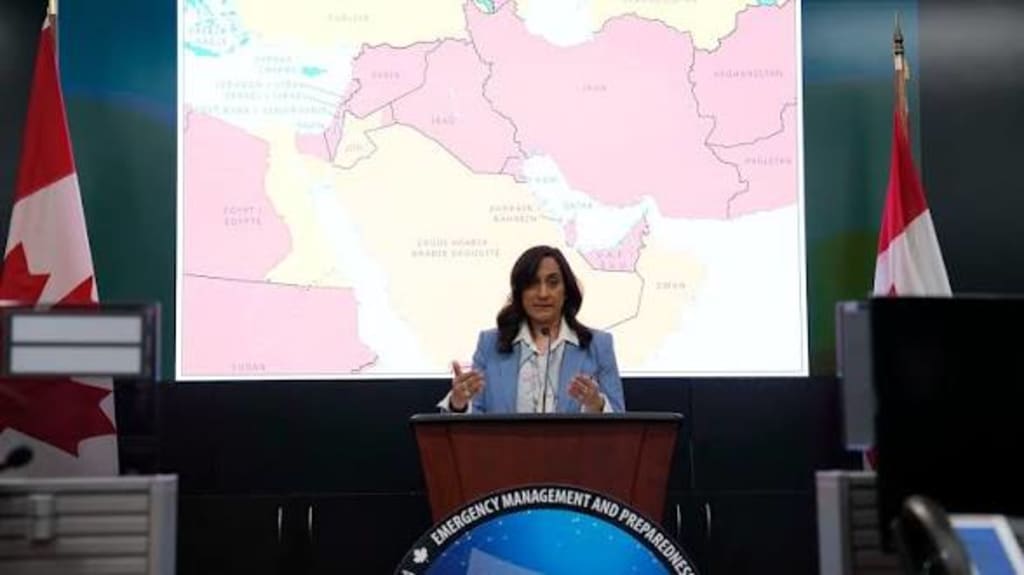
As tensions and conflict escalate across parts of the Middle East, the government of Canada has launched emergency measures to help citizens leave the region. The operation, which includes charter flights, diplomatic coordination, and emergency consular assistance, reflects Ottawa’s responsibility to protect Canadians abroad — but it also carries significant logistical complexity and financial costs.
In recent weeks, hundreds of Canadians living or traveling in the Middle East have sought assistance from embassies and consulates as security conditions deteriorated in several countries. The government responded by organizing evacuation routes and temporary transit arrangements to help citizens reach safer destinations.
Emergency Evacuations Begin
Officials at Global Affairs Canada confirmed that evacuation operations were initiated after rising regional tensions created concerns about civilian safety and the potential closure of commercial air routes. With flights disrupted and airspace restrictions affecting travel across the region, many Canadians found themselves unable to leave on their own.
To address the situation, Canada coordinated charter aircraft, assisted travelers with documentation, and established emergency registration systems so citizens could report their locations and request support. In several cases, diplomatic staff also helped Canadians cross land borders to neighboring countries where commercial flights remained available.
Canadian authorities emphasized that evacuation efforts are typically reserved for situations where normal travel options become unavailable or unsafe.
The Financial Cost
While such operations are essential for citizen safety, they are also expensive. Chartering aircraft, deploying diplomatic staff, and maintaining emergency response systems can cost millions of dollars, depending on the scale and duration of the crisis.
Government officials say evacuation flights often involve complex logistics, including securing aircraft at short notice, coordinating with foreign governments, and ensuring safe transport routes. In many cases, aircraft must operate outside normal commercial schedules or travel through longer flight paths due to security concerns.
Canadian taxpayers typically cover the upfront costs of these operations, though the government sometimes asks evacuees to repay part of the expense later. In previous crises, travelers were billed for a portion of their evacuation flight costs, often equivalent to a standard commercial airfare.
However, officials acknowledge that collecting repayment can be difficult, particularly if evacuees face financial hardship after leaving the region.
Diplomatic Coordination
Evacuations require extensive international cooperation. Canadian diplomats often work closely with allied countries, including the United States, the United Kingdom, and European partners to share transportation resources and coordinate departure routes.
In some situations, citizens from multiple countries are placed on the same evacuation flights. This cooperation helps reduce costs and ensures that limited aircraft capacity can be used as efficiently as possible.
Diplomatic teams also coordinate with local authorities to secure airport access, travel permissions, and border crossings. In regions experiencing active conflict or instability, these negotiations can be particularly sensitive and time-consuming.
Who Gets Help
Canada’s evacuation operations primarily focus on citizens and permanent residents. However, officials often face difficult decisions when family members without Canadian citizenship request assistance.
In past crises, Ottawa has sometimes allowed immediate family members to board evacuation flights, though these decisions are typically made on a case-by-case basis. Immigration documentation and security procedures must still be followed, which can delay departures.
The government also encourages Canadians abroad to register with its Registration of Canadians Abroad system, which helps officials locate citizens quickly during emergencies.
Lessons from Past Evacuations
Canada has carried out similar evacuation missions in previous conflicts and crises. During political upheaval in the Middle East and North Africa over the past decade, Ottawa organized charter flights and naval evacuations to assist citizens leaving dangerous areas.
One of the largest such efforts occurred during the 2006 Lebanon War, when Canada evacuated tens of thousands of citizens from Lebanon using ships and aircraft. That operation remains one of the most complex consular evacuations in Canadian history.
Since then, Canada has refined its emergency response procedures, focusing on faster coordination and improved communication with citizens abroad.
Balancing Responsibility and Risk
Evacuation missions highlight the challenges governments face when protecting citizens overseas. While many Canadians travel or work abroad every year, crises can emerge suddenly and disrupt transportation networks with little warning.
Officials stress that travelers should always monitor security conditions and follow government travel advisories before visiting high-risk regions. In some cases, citizens remain in affected areas despite warnings, making evacuation efforts more complicated.
Despite the cost and logistical hurdles, the Canadian government says assisting citizens in times of danger remains a core responsibility.
A Continuing Operation
As the Middle East crisis continues, Canadian authorities say evacuation operations may remain active as long as security conditions require them. Diplomatic staff are monitoring developments closely and preparing additional assistance if needed.
For Canadians seeking to leave the region, the government’s message is clear: register with consular services, stay informed about travel options, and be prepared to depart quickly if conditions worsen.
The cost of these operations may be high, but officials say the priority remains ensuring that Canadians can return home safely during times of international crisis.
About the Creator
Fiaz Ahmed
I am Fiaz Ahmed. I am a passionate writer. I love covering trending topics and breaking news. With a sharp eye for what’s happening around the world, and crafts timely and engaging stories that keep readers informed and updated.
Keep reading
More stories from Fiaz Ahmed and writers in The Swamp and other communities.
Germany Germany misses climate targets as emissions barely fall in 2025
Germany has fallen short of its national climate targets after greenhouse gas emissions declined only marginally in 2025, raising fresh concerns about whether Europe’s largest economy can meet its ambitious decarbonization goals in the coming decade. Preliminary estimates from environmental monitoring groups suggest emissions in Germany fell by less than expected last year, marking a slowdown in progress compared with earlier reductions achieved during the energy crisis and pandemic years. The modest decline has sparked criticism from climate advocates and renewed debate within the government over the pace of the country’s energy transition. Officials linked the sluggish progress to several factors, including higher industrial output, increased use of fossil fuels during periods of energy demand, and slower-than-anticipated expansion of renewable power infrastructure. These pressures complicated the country’s efforts to stay on track with targets established under Germany’s national climate law. Slower Emissions Decline Germany had aimed to reduce greenhouse gas emissions significantly by the middle of the decade as part of a broader plan to reach climate neutrality by 2045. However, analysts say the reductions achieved in 2025 were minimal compared with the steep cuts required to meet those targets. The country’s climate framework requires strict annual limits for major sectors including transportation, buildings, industry, and energy production. Several of those sectors are believed to have exceeded their permitted emission levels last year, placing additional pressure on policymakers to introduce corrective measures. Environmental experts note that early gains in emissions reduction were partly driven by temporary circumstances such as reduced economic activity and energy consumption during the pandemic period. As the economy rebounded, structural reforms needed to maintain those reductions have proven more difficult to implement. Energy Transition Challenges Germany’s energy transition, often referred to as Energiewende, aims to rapidly expand renewable energy while phasing out nuclear and coal power. Although renewable generation has grown significantly over the past decade, challenges remain in scaling up infrastructure quickly enough to replace fossil fuels. Wind and solar installations continue to expand across the country, but regulatory hurdles, grid limitations, and local opposition to some projects have slowed development in certain regions. At the same time, fluctuating renewable output has required continued reliance on gas and coal power plants during periods of high electricity demand. Energy analysts say that balancing supply and demand during the transition remains one of the central difficulties for policymakers. Without major improvements in energy storage, grid expansion, and renewable deployment, fossil fuel generation may remain necessary to ensure stability in the power system. Transport and Buildings Under Pressure Two sectors in particular — transportation and buildings — continue to pose serious challenges for Germany’s climate strategy. Road traffic emissions remain stubbornly high due to strong reliance on private vehicles and freight transport powered by diesel and gasoline. Although electric vehicle adoption is increasing, the transition is occurring more slowly than many climate planners had anticipated. Charging infrastructure expansion and consumer adoption rates have become key issues in the national debate over transportation emissions. The buildings sector faces similar obstacles. Heating systems in millions of German homes still rely on natural gas or oil, and efforts to replace them with cleaner alternatives have triggered political controversy over costs and regulatory requirements. European and Global Implications Germany’s climate performance carries significant weight across the European Union, where the country plays a leading economic and political role. The EU has set ambitious emissions reduction targets for member states as part of its broader strategy to combat global climate change. If Germany struggles to meet its national targets, analysts warn it could complicate the bloc’s collective efforts to reduce emissions and maintain credibility in international climate negotiations. Climate groups say stronger policies will be needed to accelerate emissions cuts, including faster renewable energy deployment, stricter efficiency standards, and increased investment in green technologies. Political Debate Intensifies The latest emissions data has already fueled debate within Germany’s governing coalition, where parties differ over the best approach to climate policy. Some leaders argue that more aggressive regulations and subsidies are needed to drive rapid transformation, while others warn that excessive pressure could harm industry and economic competitiveness. Industrial groups have expressed concern that overly strict climate measures could push manufacturing companies to relocate production outside Europe. Environmental advocates, however, argue that delaying action would ultimately prove more costly both economically and environmentally. The Road Ahead Despite the disappointing results for 2025, government officials insist that Germany remains committed to its long-term climate objectives. Additional policies aimed at accelerating renewable deployment, expanding public transportation, and improving energy efficiency are expected to be introduced in the coming years. Experts say the next few years will be critical for determining whether Germany can regain momentum in cutting emissions. Achieving the country’s climate targets will require sustained investment, political consensus, and major structural changes across key sectors of the economy. For now, the limited emissions decline in 2025 serves as a warning sign that the path toward climate neutrality may prove more complex — and more contested — than originally anticipated.
By Fiaz Ahmed about 10 hours ago in The Swamp
The Forsyth House Fire
Since 1851, Forsyth House has stood on the corner of Union Street and Gordon Street in the heart of Glasgow. Its iconic, or was... because on Sunday 8th of March, 2026, a fire broke out in a small, seemingly un-named shop in the building and tore all that history down. As I write, the rubble is still unsettled and the street is still blocked off. Central Station is quiet on the upper level, and around 30 small businesses have quite literally gone up in smoke.
By S. A. Crawforda day ago in The Swamp
Mamdani Chooses His Words Carefully After Alleged Terror Attack
In the tense hours following an alleged terror attack, public figures often find themselves under intense scrutiny. Every word spoken carries weight, and even a small misstatement can fuel controversy or misunderstanding. In the wake of the recent incident, political figure Mamdani has taken a notably cautious approach, choosing his words carefully while addressing the public, the media, and concerned communities.
By Jameel Jamali4 days ago in The Swamp


Comments
There are no comments for this story
Be the first to respond and start the conversation.