
Australia Forklift Market: Material Handling on the Move
Fueled by e-commerce, warehouse automation, and electrification trends, the Australia forklift market is growing swiftly — with projections to surpass USD 8 billion by 2034.

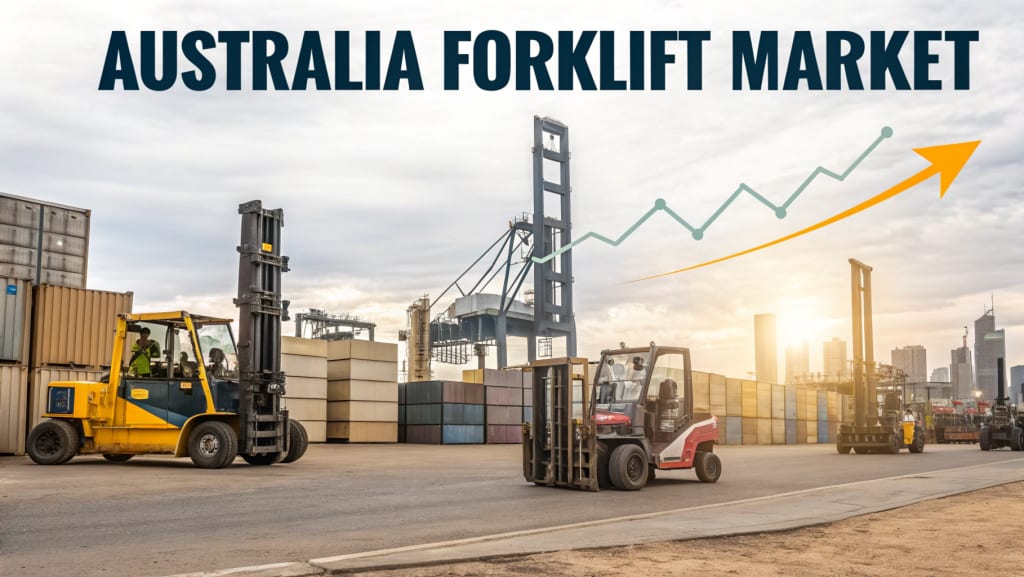
The Australia forklift market is experiencing rapid transformation as demand for efficient material handling solutions accelerates across logistics, retail, manufacturing, and infrastructure sectors. According to the latest IMARC Group analysis, the market reached USD 2.3 billion in 2025 and is expected to rise to USD 8.3 billion by 2034, expanding at a compound annual growth rate (CAGR) of 14.44% during 2026–2034.
This significant growth trajectory reflects structural shifts in supply chains and retail operations driven by online commerce, expanded warehousing, and demand for smarter, more efficient fleet operations. Forklifts — ranging from compact warehouse units to heavy-duty outdoor models — now play an essential role in enhancing logistics throughput, reducing operational costs, and supporting sustainability goals across industries.
The forklift sector’s evolution is marked by electrification trends, service-based deployment models, and adoption of advanced features like telematics, safety systems, and automation — all responding to both operational efficiency imperatives and tighter regulatory requirements.
Why the Market Is Growing So Rapidly
1. E-commerce Expansion and Warehouse Automation
Australia’s growing e-commerce and distribution networks require robust material handling capabilities. Forklifts are central to fast-moving warehouse operations, order fulfilment centres, and logistics hubs where rapid turnaround and accurate goods movement are critical. The scale of delivery expectations, especially same-day and next-day fulfilment, is increasing reliance on mechanised handling solutions.
2. Infrastructure and Industrial Demand
Infrastructure development and industrial activity — including construction, mining, and manufacturing — are driving demand for versatile forklifts capable of heavy payload handling and rugged outdoor operations. Projects in these sectors often require specialised forklifts with enhanced load capacities and durability.
3. Electrification and Sustainability Focus
Environmental sustainability and emissions reduction are shaping fleet purchasing decisions. Electric and lithium-ion battery-powered forklifts are increasingly preferred over traditional internal combustion engine models, as firms aim for lower operating costs, reduced emissions, and improved workplace environments. This trend aligns with broader corporate sustainability targets and contributes to higher uptake of electric material handling equipment.
4. Rental and Leasing Models
High upfront costs for ownership are leading businesses — especially small and medium enterprises — to opt for flexible rental and leasing solutions. These service-based contracts often include maintenance and uptime guarantees, reducing capital burden while ensuring access to modern forklift technologies and support services.
5. Workplace Safety and Technology Integration
Safety compliance is a key priority across Australian workplaces. Modern forklifts with advanced safety features — including collision avoidance sensors, operator assistance technologies, and stability systems — are in demand to minimise accidents and enhance productivity. Equipment integrated with telematics, real-time monitoring, and predictive maintenance tools further elevates operational efficiency while ensuring compliance with safety standards.
What the Opportunities Are
1. Growth in Electric Forklift Adoption
With electrification gaining momentum, suppliers of electric forklifts and lithium-ion battery systems have significant growth opportunities. Offering models with longer battery life, faster charging, and lower total cost of ownership can attract leading logistics and industrial players.
2. Warehouse Telematics and Fleet Management Solutions
Integration of telematics and fleet management platforms enables optimisation of operations, predictive maintenance, and data-driven decision-making. Providers that partner with software platforms can create bundled solutions that enhance efficiency and reduce downtime.
3. Heavy-Duty and All-Terrain Forklifts
Australia’s industrial sectors — from mining to construction — require robust forklifts capable of operating in harsh conditions. Manufacturers focusing on high-load and all-terrain variants can capitalise on this demand segment.
4. Compact & Urban Logistics Models
Urban warehouses and dense distribution centres benefit from compact forklift designs that maximise space utilisation while maintaining performance. Solutions tailored to narrow aisles and indoor operations unlock new market usage scenarios.
5. Flexible Rental and Servicing Contracts
Service-based forklift deployment models that include maintenance and warranty services are attractive for businesses seeking predictable expenses and reduced operational risk. Companies can differentiate through comprehensive service packages and uptime guarantees.
6. Safety-Enhanced Equipment and Training Packages
Forklifts equipped with advanced safety features — plus operator training programmes — improve site safety and reduce liability risks. Offering training services together with equipment sales can drive deeper customer engagement.
7. Aftermarket Parts and Support Services
As fleets expand, demand grows for spare parts, scheduled maintenance, and repair services. Suppliers that build strong aftermarket networks can create recurring revenue streams while enhancing customer loyalty.
• March 2025: Government and Regulatory Action: The Australian Government introduced updated procurement incentives for low-emission industrial equipment, including reduced duty rates and tax credits for electric forklifts. This policy aims to encourage transition toward cleaner material handling, lowering operating costs for businesses adapting to environmental and compliance objectives.
• July 2025: Company Expansion: United Forklift and Access Solutions launched Australia’s first fully electric tire handler built on the Konecranes E-VER platform. This innovation — deployed initially with major mining and logistics operators — showcases advanced capability for heavy-load applications while aligning with corporate emissions reduction targets.
• October 2025: Market Growth & Adoption Milestone: Industry data revealed that electric forklift adoption rates increased by over 18% year-on-year across major Australian warehouse and logistics hubs, driven by improved battery performance, lower lifecycle costs, and heightened sustainability commitments among supply chain operators.
Why Should You Know About the Australia Forklift Market?
The Australia forklift market exemplifies how traditional industrial equipment sectors are being reshaped by digital transformation, sustainability imperatives, and logistics innovation. Its rapid growth trajectory — underpinned by strong forecasts to reach USD 8.3 billion by 2034 — underscores significant opportunities for investors, manufacturers, and service providers alike.
For investors, the sector offers exposure to a high-growth segment of industrial automation and supply chain infrastructure. For business leaders, understanding forklift trends enables better capital allocation, operational planning, and productivity enhancement. For policy makers, supporting sustainable technologies and skills development within this market helps align industrial growth with environmental and workplace safety goals. In an increasingly automated and efficiency-driven economy, forklifts remain a foundational technology — pivotal to keeping goods moving and commerce growing across Australia’s evolving industrial landscape.
About the Creator
Amélie Belle
Hi, I’m Amélie Belle—27, New York writer, lover of quiet moments and honest words. I share poetry and reflections on love, healing, and life’s small miracles. If my writing makes you feel seen, I’m exactly where I’m meant to be.
Keep reading
More stories from Amélie Belle and writers in Trader and other communities.
Australia Facade Market: Growing Demand for Sustainable & Smart Building Envelopes
The Australia Facade Market has been expanding significantly as developers and designers increasingly prioritise performance, aesthetics, and sustainability in building exteriors. According to the latest IMARC Group analysis, the market reached USD 5.8 billion in 2024 and is expected to grow to USD 10.4 billion by 2033, exhibiting a compound annual growth rate (CAGR) of 6.59% during 2025–2033.
By Amélie Bellea day ago in Trader
Philippines Cold Brew Coffee Market 2026: Specialty Coffee Culture, Ready-to-Drink Growth and Premium Beverage Adoption
Philippines Cold Brew Coffee Market Overview The Philippines cold brew coffee market is witnessing rapid expansion as evolving consumer lifestyles, specialty café proliferation and demand for premium ready-to-drink beverages reshape the country’s coffee landscape. Cold brew coffee — prepared by steeping coffee grounds in cold water over extended periods — offers a smoother, less acidic taste profile compared with traditional brewing methods, appealing to younger and health-conscious consumers. As urbanisation and digital retail continue to influence beverage consumption patterns, cold brew coffee is emerging as a dynamic niche within the broader Philippine coffee industry.
By Manisha Dixit5 days ago in Trader



Comments
There are no comments for this story
Be the first to respond and start the conversation.