
Australia Online Grocery Market: Convenience and Digital Growth Driving Retail Transformation
The Australian online grocery market is scaling rapidly — powered by technological convenience, urbanisation, and changing consumer preferences — and is projected to become an almost USD 90 billion segment by 2034.

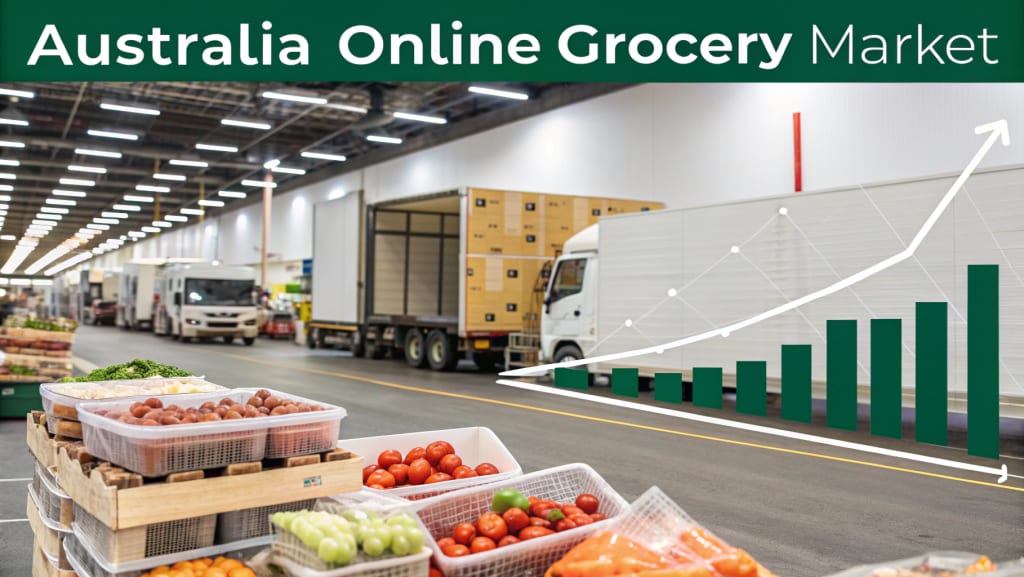
The Australia Online Grocery Market is among the fastest-growing segments in the country’s retail landscape. According to the latest IMARC Group analysis, the market reached USD 17,215.1 million in 2025 and is projected to reach USD 89,865.4 million by 2034, registering a compound annual growth rate (CAGR) of 19.55% during 2026–2034.
This robust growth reflects a structural shift in how Australians purchase essential food and household items. Digital platforms — from retailer apps to online marketplaces — are rapidly replacing traditional in-store shopping for many consumers, driven by busy lifestyles, increasing internet usage, and improvements in delivery infrastructure.
The rise of online grocery shopping is reshaping the retail ecosystem, compelling legacy supermarket chains, pure online grocers, and tech platforms alike to innovate and compete on convenience, speed, and personalised experiences. The trend is further accelerating as retailers expand product ranges, offer fast delivery options, and deploy technologies like AI and predictive logistics to better serve customers.
Why the Market Is Growing So Rapidly
1. Convenience and Time-Saving Appeal
One of the strongest growth drivers for online grocery adoption in Australia is the convenience it delivers. Shoppers increasingly value the ability to order groceries at any time, bypassing the time-intensive traditional shopping experience. Busy professionals, families, and urban dwellers are especially drawn to online platforms that offer 24/7 accessibility, saved shopping lists, and streamlined checkout experiences.
2. Technological Advancements and Digital Platforms
Rapid advancements in user-friendly mobile apps and web platforms have made online grocery shopping more accessible and appealing. Retailers are leveraging intuitive interfaces, personalised promotions, and seamless payment options to improve customer engagement and retention. These digital innovations are critical in turning first-time online shoppers into long-term users.
3. Enhanced Delivery Infrastructure
Improved logistics and delivery infrastructure are key factors enabling the online grocery market’s growth. Retailers are investing in refrigerated warehouses, micro-fulfilment centres, and partnerships with last-mile delivery firms to ensure fast and reliable delivery of perishables like produce, dairy, and meat. This enhanced cold-chain capability is building consumer trust in ordering fresh groceries online.
4. Rising Urbanisation and Population Density
Australia’s urban centres — including Sydney, Melbourne, and Brisbane — provide fertile ground for online grocery operations. High population density in metropolitan areas enables efficient delivery routes and lower logistics costs, which in turn supports competitive pricing, quick delivery windows, and larger order volumes.
5. Subscription and Auto-Replenishment Models
Subscription programmes and auto-replenishment features are gaining traction among consumers seeking ongoing convenience. These models not only enhance customer loyalty but also create predictable recurring revenue streams for retailers. Features like personalised restock reminders and discounted delivery slots make these services attractive to regular shoppers.
What the Opportunities Are
1. Expansion of Micro-Fulfilment Centres
Retailers investing in urban micro-fulfilment hubs can significantly reduce delivery times, enabling same-day or even two-hour delivery — a major competitive advantage.
2. Innovating Same-Day Delivery Solutions
Demand for ultra-fast delivery continues to grow. Companies that can offer reliable same-day delivery — especially for perishables — will capture a larger share of on-demand orders.
3. Personalisation and Loyalty Programmes
Leveraging AI and data analytics to personalise shopping recommendations, discount offers, and delivery experiences can drive retention and increase average order values.
4. Subscription and Scheduled Delivery Services
Retailers that enhance subscription services and automate repeat order fulfilment stand to benefit from increased customer loyalty and predictable revenue.
5. Private Label Growth Online
The expansion of private-label products in online grocery catalogs provides retailers with higher margins and improved brand differentiation versus third-party sellers.
6. Enhanced Inventory and Order Management Technologies
Adopting AI-driven inventory optimisation and predictive fulfilment tools reduces stockouts and enhances customer satisfaction by improving order accuracy.
7. Partnerships with Third-Party Logistics Providers
Collaborations with specialist logistics providers with strong last-mile capabilities can extend geographical reach and operational scalability, especially in semi-urban and regional areas.
Recent News & Developments in Australia Online Grocery Market
• April 2025: Government and Regulatory Action: The Australian Competition and Consumer Commission (ACCC) announced updated guidelines aimed at supporting fair competition in the online grocery space, including regulations to enhance price transparency and protect consumer data privacy. The move aims to foster trust in online platforms and encourage smaller players to participate competitively.
• July 2025: Company Expansion: Coles Group unveiled plans to expand its network of Customer Fulfilment Centres (CFCs), adding two new facilities in Queensland and Western Australia. The investment — valued at approximately A$150 million — is expected to boost delivery capacity, improve fulfilment accuracy, and shorten delivery windows for online grocery orders.
• October 2025: Market Adoption Milestone: Industry data revealed that the share of online grocery sales in total grocery retail reached a new high of 15% in Q3 2025, driven by increased consumer preference for fast delivery, broader product choices, and enhanced digital experiences. Analysts view this milestone as a turning point toward digital-first retail behaviour.
Why Should You Know About the Australia Online Grocery Market?
The Australia Online Grocery Market represents a transformative shift in how consumers buy everyday essentials. Its rapid growth showcases how digital convenience, logistics innovation, and mobile adoption are redefining retail economics in the nation. For investors, the segment presents high-growth opportunities with strong future revenue projections and diversifying consumption patterns. For business leaders, especially in retail and logistics, understanding this market is essential for planning infrastructure investment, technology adoption, and expansion strategies. For policy makers, insights into this market help shape regulations that balance competitive practices with consumer benefits — particularly in pricing transparency, data protection, and delivery infrastructure. Ultimately, this market exemplifies how traditional retail sectors can successfully adapt to digital transformation and evolving consumer lifestyles.
About the Creator
Rashi Sharma
I am a market researcher.
Keep reading
More stories from Rashi Sharma and writers in Trader and other communities.
Australia Industrial Welding Machines Market: Powering Precision in Modern Manufacturing
The Australia Industrial Welding Machines Market has shown robust growth in recent years and continues to expand as key industrial sectors modernize their operations. According to the latest IMARC Group analysis, the market reached USD 296.00 million in 2024 and is projected to rise to USD 534.65 million by 2033, growing at a compound annual growth rate (CAGR) of 6.79% during 2025–2033. This growth reflects increasing industrialization, infrastructure development, and a rising preference for efficient welding systems across segments such as construction, automotive, transportation, and energy.
By Rashi Sharmaa day ago in Trader
Contract Catering Market — Global Industry Overview, Trends, Forecast & Key Players Analysis
Market Overview Contract catering refers to the outsourcing of food service operations by organizations—including businesses, educational institutions, healthcare facilities, and events— to professional catering providers. These services typically encompass meal planning, food preparation, delivery, and on-site service management.
By James Smith7 days ago in Trader
No Word Comes Near Enough
The English language has its limits. I learned this when I became a student of the Bible and looked up the Greek and Hebrew definitions behind the Scriptures I loved. Some languages have so much more depth and power than the one I use to convey my thoughts. But, even so, I don't think any word could ever come close to describing this void and pain I am journeying through. I don't know how to swim through its murky waters.
By Shirley Belk7 days ago in Poets



Comments
There are no comments for this story
Be the first to respond and start the conversation.