
Convenience Food Market Size and Forecast 2025–2033: The Rise of Quick, Smart, and Modern Meal Solutions
Growing urban lifestyles, technological innovation in food processing, and evolving consumer preferences are fueling the rapid expansion of the global convenience food market.

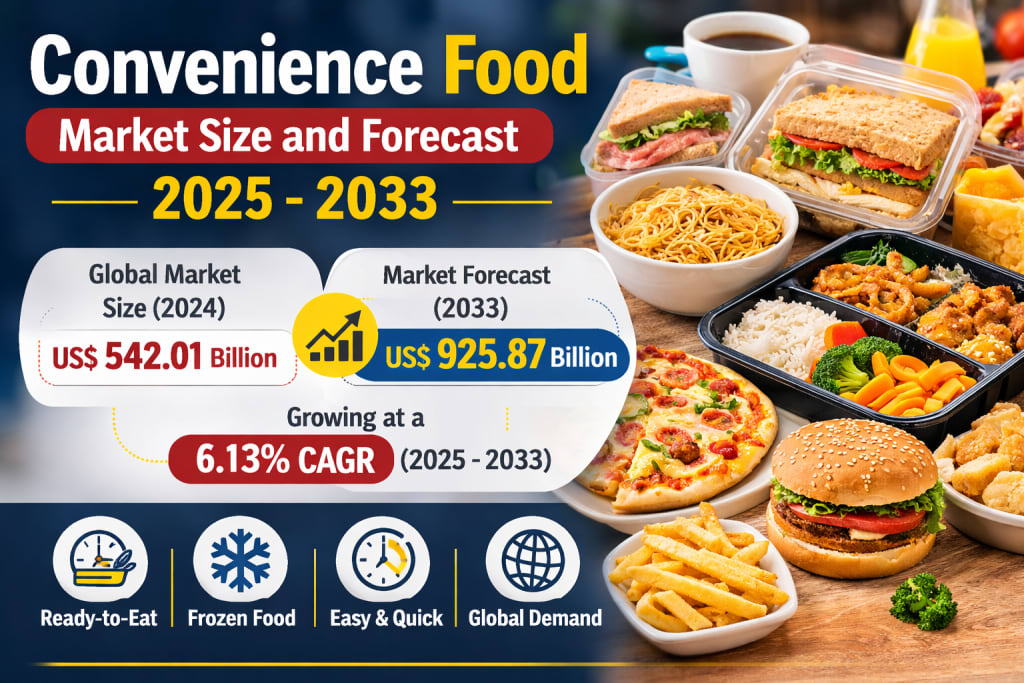
Convenience Food Market Size and Forecast 2025–2033
The global convenience food market is experiencing strong growth as modern lifestyles increasingly demand faster and simpler meal solutions. According to market analysis by Renub Research, the global convenience food market size was valued at US$ 542.01 billion in 2024. The market is projected to expand at a compound annual growth rate (CAGR) of 6.13% between 2025 and 2033, reaching approximately US$ 925.87 billion by 2033.
This significant growth is largely driven by shifting consumer behavior, including increasing urbanization, rising disposable incomes, and the demand for ready-to-eat and easy-to-prepare meals. Consumers around the world are increasingly prioritizing convenience without sacrificing taste, nutrition, or quality.
The Convenience Food Market & Forecast 2025–2033 report evaluates the market across multiple segments, including product categories such as ready-to-eat foods and frozen foods, along with distribution channels like supermarkets & hypermarkets, convenience stores, online retail, and others. The study also provides a detailed regional and company-level analysis covering major global markets.
Convenience Food Market Overview
Convenience food refers to pre-packaged, partially prepared, or fully cooked food products that require minimal preparation before consumption. These foods are designed to reduce cooking time and effort while still delivering satisfying meals.
Common examples of convenience foods include:
Frozen meals and frozen vegetables
Ready-to-eat meals
Instant noodles and soups
Snack bars and packaged snacks
Canned food products
Instant beverages
Most convenience foods require only simple preparation such as reheating, microwaving, or adding hot water. This simplicity makes them particularly appealing to consumers with busy schedules or limited cooking skills.
Today, convenience food products play a vital role not only in households but also in workplaces, travel, outdoor activities, vending machines, and food service sectors. Restaurants, catering services, and quick-service food outlets also rely heavily on processed and semi-prepared food items to maintain operational efficiency.
Additionally, convenience foods are extremely useful in emergency situations or outdoor environments such as camping, where traditional cooking methods may not be practical. Their flexibility, long shelf life, and diverse product offerings make them an essential part of modern food consumption.
Growth Drivers in the Convenience Food Market
Busy Lifestyles and Rapid Urbanization
One of the most significant factors driving the growth of the convenience food market is the fast-paced nature of modern lifestyles. Urbanization has accelerated dramatically across the globe, and as people migrate to cities, their daily routines become increasingly demanding.
With longer working hours and hectic schedules, many consumers find it difficult to cook traditional meals regularly. As a result, ready-to-eat and easy-to-cook food products are becoming household staples, particularly among dual-income families.
Urban retail environments also contribute to this growth. Cities offer easier access to supermarkets, convenience stores, and delivery services, making convenience food products widely available.
Global urbanization trends further strengthen this market expansion. In 1950, only about one-third of the world’s population lived in cities, whereas today more than half of the global population resides in urban areas. By 2050, nearly two-thirds of the global population is expected to live in cities, which will further accelerate the demand for convenient food options.
Technological Advancements in Food Processing
Advancements in food processing, packaging, and preservation technologies have significantly improved the quality and safety of convenience foods.
Modern techniques such as:
Advanced freezing technologies
Vacuum packaging
Modified atmosphere packaging
Microwave-ready containers
help preserve freshness, flavor, and nutritional value while extending shelf life.
Automation and digitization in food production have also increased manufacturing efficiency. Food companies can now produce large volumes of ready-to-eat products at competitive prices, enabling them to meet rising global demand.
In March 2024, food processing technology company Alfa Laval introduced the HL8-WG hygienic heat exchanger for oat beverage production in Northern Europe. This innovation reduces fouling, lowers energy consumption, and minimizes cleaning intervals, demonstrating how technological improvements are supporting sustainable food manufacturing.
Growing Preference for Healthier Convenience Foods
While convenience remains the primary attraction, consumers are now placing greater emphasis on health and nutrition.
Health-conscious shoppers increasingly prefer convenience foods that include:
Natural ingredients
Reduced preservatives
Lower sugar and sodium levels
Organic or plant-based components
Food manufacturers are responding by introducing gluten-free, vegan, high-protein, and low-calorie convenience foods.
Functional foods enriched with fiber, vitamins, and protein are also gaining popularity among consumers seeking healthier dietary options.
For instance, in February 2024, Base Culture launched its Simply Bread product line, offering gluten-free bread made from clean ingredients. Such innovations highlight how companies are adapting to evolving consumer health preferences while maintaining convenience.
Challenges Facing the Convenience Food Market
Health Concerns and Nutritional Composition
Despite its popularity, convenience food has faced criticism due to high levels of preservatives, sodium, sugars, and unhealthy fats in certain products.
Growing awareness of diet-related health conditions such as obesity, diabetes, and cardiovascular diseases has encouraged consumers to carefully examine nutritional labels and ingredient lists.
As a result, food manufacturers are under increasing pressure to reformulate products and reduce unhealthy ingredients. Governments and regulatory bodies are also implementing stricter food labeling regulations and nutritional standards.
Balancing convenience with health remains a key challenge for companies in the industry.
Environmental and Packaging Concerns
Another major issue confronting the convenience food market is environmental sustainability.
Many convenience food products rely heavily on single-use plastic packaging, which contributes to environmental pollution and waste management challenges.
Consumers are becoming increasingly aware of sustainability issues and are demanding eco-friendly alternatives. In response, food manufacturers are investing in biodegradable packaging, recyclable materials, and sustainable supply chains.
However, adopting environmentally friendly packaging often increases production costs, creating a delicate balance between sustainability and affordability.
Ready-to-Eat Convenience Food Market
The ready-to-eat segment is one of the fastest-growing categories within the convenience food market.
Ready-to-eat meals include products that can be consumed immediately or after minimal preparation. Examples include frozen dinners, microwave meals, instant noodles, and snack packs.
Several factors are driving the growth of this segment:
Increasing urban populations
Busy professional lifestyles
Rising demand for quick meal solutions
Improved food processing technology
Health-focused innovation is also influencing this category. Manufacturers are introducing organic, low-calorie, and gluten-free ready-to-eat products, making the category more appealing to health-conscious consumers.
Additionally, the rapid expansion of online food delivery services and grocery platforms has further boosted demand for ready-to-eat convenience foods.
Supermarkets and Hypermarkets Distribution Channel
Supermarkets and hypermarkets represent the largest distribution channel for convenience food products.
These retail outlets provide consumers with a wide variety of ready-to-eat, frozen, and packaged foods under one roof. Their large-scale operations and extensive supply chains allow them to offer competitive prices and consistent product availability.
Retailers are also expanding shelf space dedicated to premium and healthier convenience food options.
Promotional strategies such as:
Loyalty programs
Discount offers
In-store promotions
encourage consumers to purchase convenience food products more frequently.
Furthermore, advanced inventory management systems ensure that products remain fresh and available to customers at all times.
United States Convenience Food Industry
The United States convenience food market is one of the most mature and dynamic markets in the world.
American consumers widely adopt convenience foods due to demanding work schedules and fast-paced lifestyles. Popular product categories include frozen meals, snack bars, canned goods, and microwave-ready meals.
Technological innovation in food processing and packaging has played a crucial role in the expansion of the industry.
Additionally, growing health awareness among U.S. consumers has increased demand for organic, gluten-free, and low-calorie convenience foods, encouraging manufacturers to innovate and diversify their product portfolios.
Online grocery shopping and meal delivery platforms have further expanded accessibility and consumer reach.
United Kingdom Convenience Food Industry
The United Kingdom convenience food market is well-developed and continues to grow steadily.
Urban lifestyles and busy schedules have fueled the demand for ready-to-eat foods such as pre-packed sandwiches, frozen meals, snacks, and canned products.
A strong retail network consisting of supermarkets, convenience stores, and online grocery services supports the expansion of this market.
Health and sustainability trends are particularly influential in the UK. Consumers increasingly prefer plant-based meals, organic foods, and environmentally friendly packaging.
Manufacturers are adapting by introducing innovative product lines that align with these preferences.
India Convenience Food Industry
The Indian convenience food market has been growing rapidly due to urbanization, rising disposable incomes, and evolving consumer lifestyles.
Younger consumers, working professionals, and students increasingly rely on ready-to-eat and frozen food products due to limited time for cooking.
Food companies are also developing products tailored to regional Indian flavors, making convenience foods more appealing to domestic consumers.
The expansion of e-commerce grocery platforms and food delivery apps has significantly increased product accessibility.
According to the Indian Institute of Journalism & New Media (IIJNM), sales of ready-to-eat foods in supermarkets have risen sharply in recent years. Sales increased from 50% last year to 70% in 2023, reflecting strong consumer demand.
Brazil Convenience Food Industry
Brazil’s convenience food industry has witnessed significant expansion due to increasing urbanization and changing consumer habits.
Consumers are increasingly choosing ready meals, frozen foods, and packaged snacks as quick and convenient meal alternatives.
Younger demographics are particularly driving this trend, while health-conscious consumers are encouraging brands to develop products that emphasize natural ingredients and balanced nutrition.
As Brazil’s economy evolves, the convenience food sector is expected to continue expanding through product innovation and retail expansion.
Saudi Arabia Convenience Food Industry
Saudi Arabia’s convenience food market is growing rapidly as urban lifestyles and workforce participation continue to increase.
Consumers are seeking fast meal solutions that combine quality, taste, and convenience.
Retail expansion, including supermarkets and online grocery platforms, has improved product availability across the country.
Government initiatives under Vision 2030 are encouraging investment in food technology and manufacturing, supporting the long-term development of the industry.
Convenience Food Market Segmentation
By Product
Ready-to-eat
Frozen food
By Distribution Channel
Supermarkets & Hypermarkets
Convenience Stores
Online Retail
Others
By Country
United States, Canada, France, Germany, Italy, Spain, United Kingdom, Belgium, Netherlands, Turkey, China, Japan, India, Australia, South Korea, Thailand, Malaysia, Indonesia, New Zealand, Brazil, Mexico, Argentina, South Africa, Saudi Arabia, and UAE.
Company Analysis
The report provides detailed profiles of leading companies operating in the global convenience food market, including:
General Mills Inc.
Conagra Brands
Nestlé S.A.
Hormel Foods
Unilever PLC
The Kraft Heinz Company
Nomad Foods Ltd
B&G Foods, Inc.
Each company is analyzed across several perspectives including corporate overview, key personnel, recent developments, strategic initiatives, and revenue performance.
Final Thoughts
The global convenience food market is entering a transformative period fueled by urban lifestyles, technological innovation, and evolving consumer expectations.
While convenience remains the primary driver, modern consumers increasingly demand healthier ingredients, sustainable packaging, and high-quality meal options. Companies that successfully combine convenience, nutrition, and sustainability will likely lead the market in the coming decade.
With the market expected to grow from US$ 542.01 billion in 2024 to US$ 925.87 billion by 2033, the convenience food industry is set to remain one of the most dynamic sectors within the global food and beverage landscape.
About the Creator
Keep reading
More stories from shibansh kumar and writers in Trader and other communities.
Precipitated Calcium Carbonate Market Trends & Forecast 2025–2033
Introduction The global precipitated calcium carbonate (PCC) market is steadily expanding as industries increasingly adopt high-performance materials that improve product quality and reduce manufacturing costs. According to industry estimates, the market is projected to grow from US$ 2.09 billion in 2024 to US$ 3.16 billion by 2033, registering a compound annual growth rate (CAGR) of 4.69% during the forecast period from 2025 to 2033.
By shibansh kumara day ago in Trader
Philippines Animal Health Market 2026: Livestock Expansion, Veterinary Innovation & Biosecurity Awareness
Philippines Animal Health Market Overview The Philippines animal health market plays an essential role in supporting the country’s livestock, poultry and companion animal sectors. Animal health products and veterinary services are critical for improving livestock productivity, ensuring food safety and preventing the spread of animal diseases. As demand for meat, dairy and poultry products continues to rise, farmers and livestock producers are increasingly investing in veterinary healthcare solutions to maintain animal welfare and farm efficiency.
By Manisha Dixit7 days ago in Trader




Comments
There are no comments for this story
Be the first to respond and start the conversation.