
Global Alcoholic Beverage Market Forecast 2025–2033: Premiumization, Changing Consumer Habits, and Digital Sales Reshaping the Industry
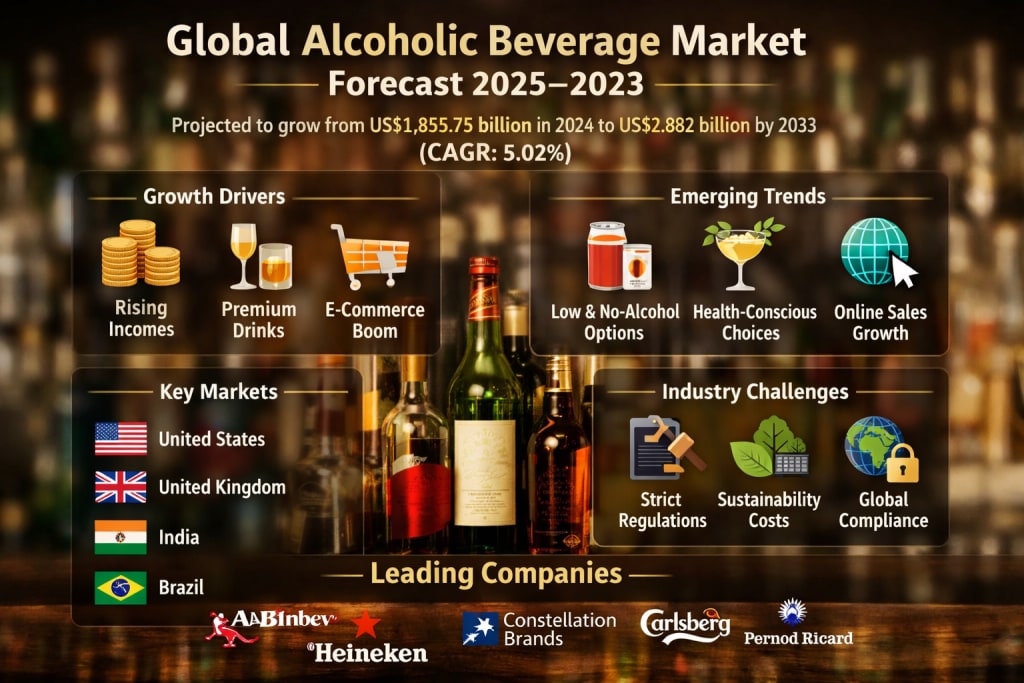
Rising disposable income, growing demand for premium drinks, and expanding e-commerce channels are expected to drive the global alcoholic beverage market toward nearly US$2.9 trillion by 2033.

Alcoholic Beverage Market Overview
The global alcoholic beverage industry continues to evolve as consumer preferences, economic development, and lifestyle trends reshape drinking habits across regions. Alcoholic beverages contain ethanol and are typically produced through fermentation or distillation of grains, fruits, sugars, and other natural ingredients. Common product categories include beer, wine, distilled spirits such as whiskey, rum, vodka, and gin, as well as cocktails and ready-to-drink beverages.
According to Renub Research, the global alcoholic beverages market was valued at US$1,855.75 billion in 2024. The market is projected to grow at a compound annual growth rate (CAGR) of 5.02% from 2025 to 2033, reaching approximately US$2,883.82 billion by 2033.
The expansion of the market reflects several factors, including rising disposable income, growing urbanization, premium product innovation, and digital transformation in retail channels. Consumers around the world are increasingly experimenting with different beverage categories, driving growth across both traditional and emerging segments.
Alcohol consumption patterns vary widely depending on geography, culture, and social traditions. In many European countries such as France and Italy, wine remains deeply embedded in dining culture, while beer consumption dominates in countries like Germany and the United Kingdom. Meanwhile, spirits have gained strong traction in markets such as the United States and parts of Asia.
Another notable shift in the industry is the rising interest in premium, craft, and artisanal alcoholic beverages. Consumers are seeking higher quality products with unique flavors, heritage, and authenticity. At the same time, health awareness is prompting some consumers to shift toward low-alcohol or alcohol-free alternatives, creating a new category within the market.
Key Growth Drivers in the Alcoholic Beverage Market
Rising Disposable Incomes and Premiumization
One of the most important drivers of growth in the alcoholic beverage industry is increasing disposable income, particularly in emerging economies. As consumer purchasing power rises, individuals are more willing to spend on premium and luxury beverages that offer enhanced quality, brand prestige, and unique experiences.
Premiumization has become a dominant strategy among beverage manufacturers. Companies are introducing craft beers, aged whiskies, premium vodkas, and boutique wines to cater to consumers seeking exclusivity and refined taste.
Emerging markets such as India, Indonesia, Thailand, and China are experiencing rapid income growth. For example, India’s GDP per capita is expected to increase significantly over the next decade, while the number of households earning more than US$5,000 annually is projected to expand substantially.
As these middle-class populations grow, demand for premium alcoholic beverages is likely to increase, mirroring patterns previously observed in developed markets.
Changing Consumer Preferences and Health Awareness
Another major shift shaping the global alcoholic beverage market is changing consumer attitudes toward health and wellness. Increasing awareness of health risks associated with excessive alcohol consumption has led many consumers to moderate their drinking habits.
This shift has encouraged the development of low-alcohol and non-alcoholic beverages, including alcohol-free beer, reduced-alcohol wine, and botanical spirits.
Younger consumers in particular are driving this trend. Surveys indicate that a significant share of consumers aged 18–34 are actively seeking beverages with lower alcohol content while still enjoying the social aspects of drinking.
Functional beverages infused with botanicals, natural ingredients, or adaptogens are also gaining popularity, blending lifestyle trends with traditional alcohol consumption.
Governments and health authorities worldwide have also introduced guidelines encouraging responsible drinking, further influencing consumer behavior.
Expansion of E-Commerce and Digital Retail
The rapid development of e-commerce and digital distribution channels has significantly transformed the alcoholic beverage industry. Online platforms allow consumers to browse, compare, and purchase beverages conveniently from their homes.
Digital retail channels include:
Online liquor stores
Beverage subscription services
Delivery apps
Direct-to-consumer brand platforms
These platforms provide broader product selection and enable brands to reach new audiences more effectively.
For example, in May 2023, Cocktail Courier acquired Thirstie, a company specializing in e-commerce technology for alcohol brands. This acquisition enables beverage companies to establish direct-to-consumer channels while remaining compliant with regulatory requirements.
As digital infrastructure improves globally, online alcohol sales are expected to grow rapidly, contributing significantly to overall market expansion.
Challenges in the Alcoholic Beverage Industry
Strict Regulations and Licensing Requirements
Despite strong growth potential, the alcoholic beverage industry faces complex regulatory frameworks. Governments across the world impose strict rules governing alcohol production, marketing, taxation, and distribution.
Common regulatory restrictions include:
Minimum drinking age laws
Advertising limitations
Licensing requirements
Excise taxes and import duties
These regulations vary widely across regions and countries, making international market expansion challenging for manufacturers and distributors.
High taxation also increases product prices, which may reduce consumption or encourage illicit markets in certain regions.
Environmental Sustainability and Rising Production Costs
Environmental sustainability has become an increasingly important issue for beverage producers. Manufacturers are facing pressure from governments, consumers, and environmental organizations to adopt eco-friendly production practices.
Key sustainability challenges include:
Water usage in brewing and distillation
Sustainable sourcing of raw materials
Eco-friendly packaging solutions
Waste reduction and recycling
Climate change also affects agricultural inputs such as grapes, barley, and sugarcane, potentially disrupting supply chains and increasing production costs.
To remain competitive, many companies are investing in renewable energy, recyclable packaging, and sustainable sourcing strategies.
Distilled Spirits Segment: Strong Growth Driven by Premium Demand
The distilled spirits segment is one of the fastest-growing categories in the global alcoholic beverage market. Popular products include whiskey, vodka, rum, gin, tequila, and flavored spirits.
Several trends are fueling the growth of this segment:
Increasing demand for premium and craft spirits
Rising popularity of cocktail culture
Expansion of artisanal distilleries
Innovative flavors and botanical infusions
Consumers are increasingly experimenting with home mixology, particularly after lifestyle shifts during the COVID-19 pandemic. As a result, premium spirits and cocktail ingredients have seen significant demand.
North America, Europe, and Asia-Pacific remain key growth regions for the distilled spirits market.
Glass Bottle Packaging Market
Glass bottles remain the dominant packaging format for alcoholic beverages, especially for wine and spirits. Glass offers several advantages including durability, chemical stability, and the ability to preserve flavor and aroma.
Premium beverages often rely on elegant glass packaging to communicate brand quality and luxury. Custom bottle shapes, embossing, and distinctive designs are commonly used to enhance brand identity.
Glass is also highly recyclable, making it attractive from a sustainability perspective compared with plastic alternatives.
As premiumization continues to drive the market, demand for high-quality glass packaging is expected to increase.
Convenience Stores Distribution Channel
Convenience stores represent a rapidly growing distribution channel for alcoholic beverages. These stores offer consumers quick access to beer, wine, spirits, and ready-to-drink beverages.
The appeal of convenience stores lies in:
Extended operating hours
Easy accessibility in urban areas
Single-serve beverage options
Competitive pricing
Busy lifestyles and urbanization have made quick purchases more common, particularly among younger consumers and working professionals.
However, strict regulations in certain regions regarding alcohol sales in convenience stores may limit market growth.
Liquor Stores Distribution Channel
Liquor stores continue to play an important role in the alcoholic beverage retail ecosystem. These stores often specialize in premium, imported, and craft beverages that may not be widely available in supermarkets.
Customers visit liquor stores for curated product selections, expert recommendations, and access to specialty beverages.
The rise of cocktail culture and home entertaining has further increased demand for high-quality spirits and wines sold through liquor stores.
Although online retail is expanding rapidly, brick-and-mortar liquor stores remain popular due to personalized service and product discovery opportunities.
Regional Insights in the Alcoholic Beverage Market
United States
The United States represents one of the largest alcoholic beverage markets globally. Consumer demand is driven by innovation, premiumization, and strong interest in craft beverages.
Beer and spirits remain the dominant categories, while the craft beer movement continues to expand nationwide. Consumers are also increasingly purchasing alcohol online and experimenting with cocktail kits for home consumption.
In February 2024, Pernod Ricard introduced a ready-to-serve margarita under its Altos Tequila brand, highlighting ongoing innovation in the ready-to-drink segment.
United Kingdom
The United Kingdom has a long tradition of alcohol consumption, particularly beer, cider, gin, and whisky. The market is currently experiencing growth in craft beverages and premium spirits.
Gin has become one of the most dynamic categories, with numerous craft distilleries introducing unique botanical flavors.
Online retail and home delivery services have further expanded consumer access to alcoholic beverages.
However, high taxes and regulatory changes continue to pose challenges for manufacturers and retailers.
India
India’s alcoholic beverage market is expanding rapidly due to urbanization, a growing middle class, and changing social attitudes toward alcohol consumption.
Beer and spirits dominate the market, but demand for craft beer, flavored spirits, and ready-to-drink cocktails is rising.
In January 2024, Coca-Cola India entered the alcoholic beverage segment with the launch of Lemon-Dou, a lime-flavored cocktail beverage originally developed in Japan.
Despite strong growth potential, high taxation and complex regulatory frameworks remain challenges for the industry.
Brazil
Brazil is one of the largest alcohol markets in Latin America. Beer remains the most widely consumed alcoholic beverage, particularly during sporting events and social gatherings.
Growing middle-class income and the expansion of retail channels have increased access to both domestic and imported beverages.
The craft beer movement is also gaining momentum among younger consumers seeking distinctive flavors.
In July 2024, the Argentinian brand Bosque Gin expanded its distribution into Brazil, reflecting the increasing demand for premium spirits across South America.
Competitive Landscape
The global alcoholic beverage market is highly competitive, with multinational corporations dominating large segments of the industry. Companies compete through product innovation, branding, premium offerings, and strategic acquisitions.
Key companies operating in the market include:
Anheuser-Busch InBev SA/NV
Carlsberg Group
Constellation Brands Inc.
Heineken N.V.
Molson Coors Beverage Company
Pernod Ricard SA
Suntory Holdings Limited
These companies continue to invest heavily in research, marketing, and global distribution networks to strengthen their market positions.
Final Thoughts
The global alcoholic beverage market is entering a new era defined by premiumization, innovation, and shifting consumer preferences. While traditional categories such as beer, wine, and spirits remain central to the industry, emerging trends are reshaping how people consume alcohol.
Growing disposable income, particularly in emerging markets, is expanding the global consumer base. At the same time, health awareness is driving interest in low-alcohol alternatives, while digital platforms are transforming how beverages are marketed and sold.
With the market projected to reach US$2.88 trillion by 2033, companies that adapt to evolving consumer lifestyles, sustainability demands, and digital retail opportunities are likely to lead the next phase of growth in the global alcoholic beverage industry.
About the Creator
Australia Data Center Market Growth, Forecast, and Strategic Insights by 2034
The rapid growth of digital technologies has transformed the way businesses store, process, and manage data. As companies across industries rely increasingly on cloud computing, artificial intelligence, and digital platforms, the demand for reliable data storage and processing infrastructure has surged. This shift has positioned data centers as one of the most critical components of modern digital economies.
By Amélie Belle4 days ago in Trader
The First Rainbow Baby
Pitter-patter, pitter-patter. The rain fell in rhythmic splatters, slowly slowing, but still constant. Mira rolled onto her side pulling the blanket tight against her ears, but still she could hear chitter-chatter and scurrying feet of the creatures that refused to sleep in the lower decks.
By A. J. Schoenfeld2 days ago in Fiction



Comments
There are no comments for this story
Be the first to respond and start the conversation.