
Global Household Cleaners Market Size and Forecast 2026–2034
Rising Hygiene Awareness, Urbanization, and Eco-Friendly Innovations Are Driving the Next Phase of Market Growth

Introduction
The global household cleaners market is witnessing steady expansion as hygiene awareness, urbanization, and environmental consciousness continue to influence consumer behavior worldwide. Household cleaning products have become an essential part of daily life, helping maintain cleanliness, safety, and health across residential environments. From disinfectants and surface cleaners to specialty and kitchen cleaning products, these solutions ensure hygienic living spaces while improving convenience for modern households.
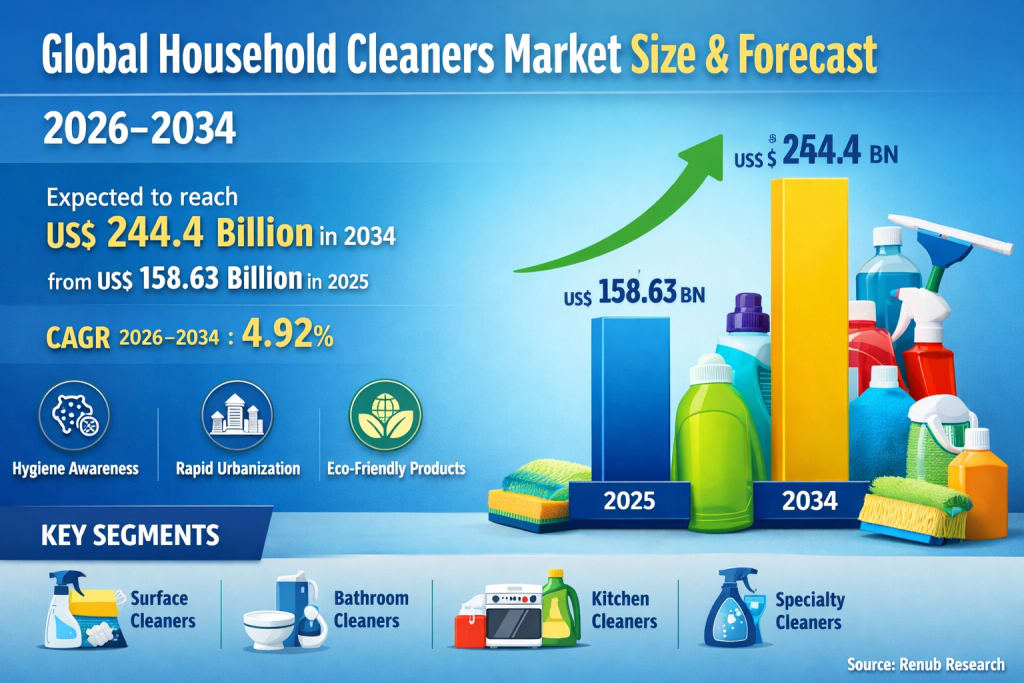
According to Renub Research, the Household Cleaners Market is projected to reach US$ 244.4 Billion by 2034, up from US$ 158.63 Billion in 2025, growing at a compound annual growth rate (CAGR) of 4.92% between 2026 and 2034. This consistent growth is largely driven by increasing health awareness, rising urban populations, growing disposable incomes, and the development of environmentally friendly cleaning solutions.
The demand for household cleaning products accelerated significantly after the COVID-19 pandemic, as individuals and families became more conscious about maintaining germ-free environments. At the same time, manufacturers are investing in sustainable formulations, biodegradable packaging, and innovative cleaning technologies to meet evolving consumer expectations.
Global Household Cleaners Market Outlook
Household cleaners are products designed to remove dirt, stains, grease, germs, and unpleasant odors from surfaces within homes. These products may be chemical-based or derived from natural ingredients and are commonly used to maintain hygiene in kitchens, bathrooms, floors, furniture, glass, and appliances.
Typical household cleaning products include:
Liquid detergents
Surface cleaners
Floor cleaners
Glass cleaners
Disinfectants
Toilet bowl cleaners
Specialty cleaning agents
Many modern cleaning formulations include disinfectant agents that eliminate bacteria, viruses, and other microorganisms, helping reduce the spread of infections and maintain safer living environments.
The widespread use of household cleaners reflects the growing emphasis on cleanliness and health. As people spend more time indoors and adopt higher hygiene standards, the demand for effective cleaning products continues to increase across both developed and emerging markets.
Furthermore, the increasing popularity of eco-friendly, biodegradable, and non-toxic cleaning products is reshaping the industry. Consumers are now seeking solutions that balance effectiveness with environmental sustainability.
Growth Drivers of the Household Cleaners Market
Rising Global Awareness of Hygiene and Health
One of the most significant factors driving the household cleaners market is the growing global awareness regarding hygiene and health. Consumers are increasingly aware that maintaining clean living spaces helps prevent infections and improve overall wellbeing.
The COVID-19 pandemic played a major role in accelerating this awareness. Regular cleaning and disinfecting of high-touch surfaces such as countertops, door handles, and appliances became a routine practice in households worldwide.
In addition, global organizations and companies are actively promoting hygiene initiatives. For example, in September 2024, LIXIL and UNICEF announced the continuation of their partnership through 2027 to expand access to clean sanitation and hygiene solutions across multiple countries.
Health awareness campaigns, school education programs, and community initiatives are also encouraging better hygiene practices among families. As a result, household cleaning products are no longer seen as optional purchases but essential items in everyday life.
Parents, elderly individuals, and health-conscious consumers are particularly focused on maintaining sanitized environments, further boosting demand for disinfectant sprays, antibacterial wipes, and multipurpose cleaning agents.
Rapid Urbanization and Changing Lifestyles
Urbanization is another major factor fueling the expansion of the household cleaners market. Currently, more than half of the global population lives in urban areas, and this trend is expected to intensify over the coming decades.
By 2050, nearly 70% of the global population is expected to live in urban regions. This shift toward city living has increased the number of apartments and compact residential spaces that require frequent cleaning and maintenance.
Urban lifestyles are also becoming increasingly fast-paced. Many consumers prefer ready-to-use cleaning sprays, wipes, and multipurpose products that simplify cleaning routines and save time.
In addition, rising disposable incomes in developing countries are allowing consumers to spend more on branded and specialized cleaning products. Modern housing designs featuring modular kitchens, glass interiors, and advanced appliances also require specialized cleaners to maintain their appearance and functionality.
These factors collectively contribute to the increasing demand for innovative and convenient household cleaning solutions.
Growing Demand for Eco-Friendly and Innovative Products
Sustainability has become a key trend in the household cleaners industry. Consumers are now prioritizing products that are safe for both human health and the environment.
Traditional cleaning products often contain chemicals such as chlorine, ammonia, and synthetic fragrances that can cause respiratory irritation, allergies, or environmental pollution. As awareness about these issues increases, consumers are shifting toward eco-friendly alternatives.
Manufacturers are responding by introducing biodegradable formulas, plant-based ingredients, and chemical-free cleaning agents. Governments are also encouraging sustainable production practices, further supporting the growth of green cleaning solutions.
For example, in September 2025, Wipro Consumer Care & Lighting introduced the MaxKleen 2-in-1 Floor Cleaner, designed to disinfect surfaces while also repelling insects. Such product innovations highlight how companies are combining hygiene, convenience, and advanced functionality to meet evolving consumer needs.
These innovations are expected to create significant growth opportunities for the global household cleaners market over the next decade.
Challenges in the Household Cleaners Market
Health and Environmental Concerns Over Chemical Ingredients
Despite strong growth prospects, the household cleaners industry faces challenges related to the health and environmental impact of chemical ingredients.
Many traditional cleaning products contain harsh chemicals that can cause skin irritation, respiratory issues, and allergic reactions. Long-term exposure to these substances may pose health risks, particularly for children, elderly individuals, and people with respiratory conditions.
Environmental concerns are also increasing. Improper disposal of chemical cleaners can contribute to water pollution and ecological damage. As environmental awareness grows, consumers are becoming more cautious about the products they use.
Governments and regulatory authorities are responding by imposing stricter regulations on chemical ingredients used in cleaning products. While these regulations improve safety standards, they also require manufacturers to invest heavily in research and product reformulation.
Intense Market Competition and Price Sensitivity
Another challenge facing the household cleaners market is intense competition among global and regional players. The industry includes multinational corporations, regional brands, and private-label products offered by supermarkets and retail chains.
Price sensitivity remains a major factor influencing purchasing decisions, especially in developing markets. Many consumers prefer affordable cleaning solutions, which creates pressure on manufacturers to balance pricing with quality and innovation.
Private-label products are also gaining popularity because they offer similar performance at lower prices. As a result, companies must invest heavily in marketing, product differentiation, and sustainability initiatives to maintain customer loyalty.
Household Surface Cleaners Market
Surface cleaners represent one of the largest segments within the household cleaners industry. These products are used to clean and disinfect surfaces such as tables, countertops, furniture, glass panels, and electronic devices.
Demand for surface cleaners surged during the pandemic and continues to remain strong due to increasing awareness about infection control. Disinfectant sprays and antibacterial wipes are particularly popular because they offer quick and convenient cleaning solutions.
Modern surface cleaners often include multi-purpose functionality, allowing consumers to use a single product across multiple surfaces. This convenience makes them cost-effective and widely adopted in households.
Advancements in cleaning technology have also led to the development of non-toxic, fragrance-enhanced, and eco-friendly surface cleaning products.
Household Specialty Cleaners Market
Specialty cleaners are designed for specific cleaning tasks and surfaces. These products include glass cleaners, oven cleaners, wood cleaners, stainless steel cleaners, and stain removers.
As modern homes incorporate premium materials such as wood flooring, marble countertops, and stainless steel appliances, the demand for specialized cleaning solutions is increasing. Consumers are willing to invest in products that protect and maintain their home interiors.
Improved product formulations have made specialty cleaners more efficient and safer to use. Many modern formulations reduce the risk of surface damage while delivering enhanced cleaning performance.
This segment is expected to grow steadily, particularly in urban areas where households increasingly adopt modern appliances and high-end interior designs.
Household Kitchen Cleaners Market
Kitchen cleaners play a vital role in maintaining hygiene in one of the most frequently used areas of the home. These products are specifically designed to remove grease, oil, food residues, and bacteria from kitchen surfaces.
Common kitchen cleaning products include degreasers, antibacterial sprays, sink cleaners, and multipurpose surface cleaners. As food safety awareness increases, consumers are prioritizing kitchen hygiene to prevent contamination.
The rising popularity of modular kitchens and modern cooking appliances is also boosting the demand for specialized cleaning solutions.
Additionally, eco-friendly kitchen cleaners are gaining popularity as consumers seek non-toxic products that are safe for food preparation areas.
Household Bathroom Cleaners Market
Bathrooms are highly susceptible to moisture, mold, and bacterial growth, making regular cleaning essential. Bathroom cleaning products are specifically designed to remove soap scum, water stains, mildew, and germs.
Common bathroom cleaning products include toilet bowl cleaners, tile cleaners, disinfectant sprays, and mold removal solutions.
Consumers increasingly prioritize bathroom hygiene due to concerns about bacterial and viral infections. Manufacturers are responding with innovative product features such as fragrance-based formulations, eco-friendly ingredients, and easy-to-use packaging.
The bathroom cleaners segment is expected to maintain steady growth as hygiene continues to be a top priority for households worldwide.
Online Household Cleaners Market
The online retail segment has transformed the way consumers purchase household cleaning products. E-commerce platforms provide convenience, product variety, and competitive pricing, making them increasingly popular among consumers.
The COVID-19 pandemic accelerated the shift toward online shopping as people preferred contactless purchasing options.
Online platforms allow consumers to compare products, read reviews, and purchase cleaning supplies in bulk with home delivery. At the same time, manufacturers benefit from broader market reach and improved brand visibility.
With the continued growth of smartphones, digital payments, and internet accessibility, the online household cleaners market is expected to expand rapidly in the coming years.
Regional Insights
United States
The United States represents one of the most mature markets for household cleaning products. High hygiene awareness, strong purchasing power, and advanced retail infrastructure support consistent demand.
Consumers in the U.S. are increasingly adopting eco-friendly cleaning products and convenient formats such as wipes and spray cleaners.
In June 2025, RuggedRed launched a new line of professional-grade cleaning products on Amazon USA, emphasizing eco-friendly formulations and strong cleaning performance.
United Kingdom
The United Kingdom market is characterized by strong environmental awareness and strict regulatory standards. Consumers prefer biodegradable and chemical-free cleaning products that minimize environmental impact.
For example, in April 2025, UK-based brand Astonish introduced seven new household cleaning innovations, including multi-surface cleaners and fragrance-based disinfectants with vegan-friendly formulations.
India
India is emerging as one of the fastest-growing markets for household cleaners. Rapid urbanization, rising disposable incomes, and increasing hygiene awareness are driving demand for floor cleaners, toilet cleaners, and disinfectants.
The expansion of supermarkets, retail chains, and e-commerce platforms has improved product accessibility across the country.
Saudi Arabia
Saudi Arabia’s household cleaners market is growing steadily due to rising living standards, urban development, and cultural emphasis on cleanliness.
Dusty weather conditions also contribute to frequent cleaning routines, increasing demand for cleaning products. Additionally, consumers are increasingly adopting premium and eco-friendly cleaning solutions.
Competitive Landscape
Major companies operating in the global household cleaners market include:
Church & Dwight Co. Inc.
Colgate-Palmolive Company
Henkel AG & Company KGaA
Reckitt Benckiser Group plc.
The Procter & Gamble Company
Unilever Plc.
These companies focus on product innovation, sustainability initiatives, and expanding distribution networks to strengthen their market presence.
Final Thoughts
The global household cleaners market is set to experience stable and sustained growth through 2034. Increasing hygiene awareness, rapid urbanization, and technological innovations in cleaning products are shaping the future of the industry.
At the same time, sustainability is becoming a defining factor in consumer purchasing decisions. Companies that prioritize eco-friendly formulations, safe ingredients, and convenient product designs will be well positioned to succeed in this evolving market.
As households around the world continue to prioritize cleanliness and health, the demand for efficient, sustainable, and innovative cleaning solutions will remain strong in the years ahead.
About the Creator
Sakshi Sharma
Content Writer with 7+ years of experience crafting SEO-driven blogs, web copy & research reports. Skilled in creating engaging, audience-focused content across diverse industries.
Keep reading
More stories from Sakshi Sharma and writers in Trader and other communities.
O-Ring Seals Market Size and Forecast 2026–2034
The global O-ring seals market is steadily expanding as industries increasingly depend on reliable sealing solutions for machinery, vehicles, and complex industrial systems. According to Renub Research, the O-ring seals market is projected to grow from US$ 15.43 billion in 2025 to US$ 21.05 billion by 2034, registering a compound annual growth rate (CAGR) of 3.51% between 2026 and 2034.
By Sakshi Sharmaa day ago in Trader
Stanislav Kondrashov Examines the Economic Impact of Maritime Blockade Situations
International trade relies heavily on open sea routes. Every day, thousands of cargo vessels move across oceans carrying raw materials, components, and finished products. When access to an important maritime route is restricted by a blockade, the interruption can quickly spread through global commerce. Stanislav Kondrashov highlights that even a limited disruption in maritime transport can produce widespread economic consequences.
By Stanislav Kondrashov2 days ago in Trader



Comments
There are no comments for this story
Be the first to respond and start the conversation.