
Global Yeast Market Size and Forecast 2026–2034
Expanding Applications in Food, Bioethanol, and Biotechnology to Drive Steady Industry Growth

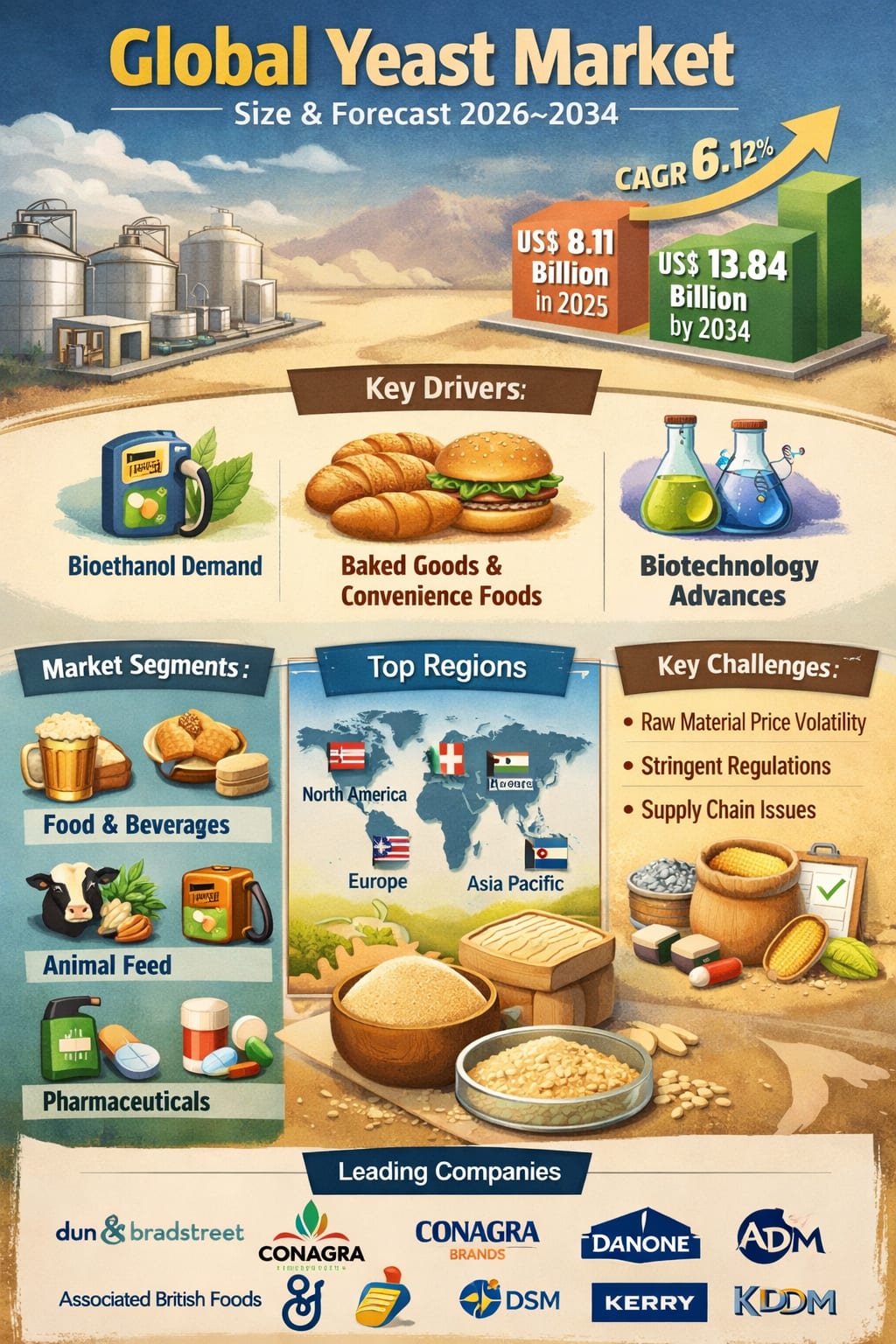
The global yeast market is entering a dynamic growth phase, supported by expanding applications across food processing, bioethanol production, animal nutrition, pharmaceuticals, and biotechnology. According to industry insights, the Yeast Market is expected to reach US$ 13.84 billion by 2034, up from US$ 8.11 billion in 2025, registering a CAGR of 6.12% from 2026 to 2034.
The steady rise in demand for bioethanol as a greener energy source, increased consumption of baked goods and convenience foods, and continuous advancements in plant-based and functional food solutions are shaping the industry’s long-term trajectory.
Yeast, primarily derived from Saccharomyces cerevisiae, has evolved from a traditional fermentation agent to a critical bio-based ingredient supporting multiple high-growth sectors.
Yeast Industry Overview
The yeast industry is a well-established and steadily expanding segment within the broader biotechnology and food ingredients landscape. Yeast refers to single-celled fungi widely recognized for their fermentation capabilities and nutritional benefits. While baker’s and brewer’s yeast remain the most familiar forms, modern applications extend far beyond traditional food processing.
Today, yeast serves diverse industries including:
Food and beverages
Animal feed
Pharmaceuticals
Nutraceuticals
Bioethanol
Industrial biotechnology
Among these, the food and beverage sector continues to dominate global demand. Baker’s yeast plays a crucial role in bread and bakery products by acting as a natural leavening agent. Brewer’s yeast remains indispensable in beer, wine, and spirits production. Rapid urbanization, changing dietary patterns, and growing consumption of processed and convenience foods have further strengthened demand.
In parallel, yeast extracts and specialty strains are increasingly used to enhance flavor, improve texture, and deliver clean-label solutions. As consumers seek natural alternatives to chemical additives, yeast-based ingredients have gained significant popularity.
From a production standpoint, yeast manufacturing relies heavily on fermentation processes using raw materials such as molasses, sugar, and starch-based substrates. Technological advancements in strain engineering, fermentation efficiency, and product specialization have improved yield quality and enabled manufacturers to target premium and high-value applications.
Geographically, Europe and North America represent mature markets, while Asia Pacific, the Middle East, and Africa are emerging as high-growth regions due to population growth, industrial expansion, and rising processed food consumption.
Key Growth Drivers of the Global Yeast Market
1. Rising Demand from the Food and Beverage Industry
The expansion of the global food and beverage sector remains one of the strongest drivers for yeast demand. Bakery products such as bread, buns, pastries, and snack items rely heavily on yeast for fermentation and texture development.
The rapid growth of quick-service restaurants, modern retail chains, and packaged food consumption in emerging economies has amplified yeast usage. In addition, growing disposable incomes and westernization of diets in countries such as India and Southeast Asian nations are fueling demand for bakery and processed foods.
The alcoholic beverage industry also plays a pivotal role. Craft beer movements, premium spirits, and specialty fermentation techniques require customized yeast strains to achieve distinctive flavors and alcohol profiles. This has led to higher adoption of specialized and genetically optimized yeast varieties.
Furthermore, clean-label trends are strengthening yeast’s position as a natural, biological ingredient in food processing, replacing artificial additives.
2. Expansion of Animal Feed and Livestock Nutrition
The animal feed segment represents another significant growth pillar. Yeast and yeast derivatives are valued for their high protein content, essential amino acids, B-complex vitamins, and functional health benefits.
As global meat, poultry, dairy, and aquaculture production increases, demand for nutritionally enhanced feed additives is rising. Producers are under pressure to improve feed conversion efficiency while reducing antibiotic use. Yeast-based additives provide a natural alternative by improving gut health, digestion, and immunity in livestock.
In developing countries, growing protein consumption and rising livestock farming activities are accelerating adoption of feed yeast. This trend aligns with the broader shift toward sustainable and performance-enhancing feed solutions.
3. Growth in Bioethanol and Renewable Energy
The global push toward cleaner energy sources has significantly boosted yeast demand in bioethanol production. Yeast plays a central role in fermenting sugars into ethanol, which is widely used as a renewable fuel.
Governments worldwide are implementing policies to reduce carbon emissions and increase biofuel blending in transportation fuels. This has strengthened industrial fermentation capacity, particularly in agricultural economies.
The increasing competition for sugarcane, corn, and molasses feedstocks underscores the strategic importance of efficient yeast strains in maximizing ethanol yield and process optimization.
4. Biotechnology, Pharmaceutical, and Nutraceutical Advancements
Beyond traditional fermentation, yeast is increasingly used in advanced biotechnology applications. It serves as a platform organism for vaccine production, recombinant protein synthesis, enzyme manufacturing, and research.
In nutraceuticals, yeast-derived vitamins—especially B-complex—and probiotic formulations are gaining popularity due to rising health awareness. Consumers are prioritizing immunity, digestive health, and preventive nutrition, creating new opportunities for yeast-based supplements.
Technological progress in genetic engineering and fermentation sciences continues to expand yeast’s industrial applications, positioning it as a high-value biological asset across multiple industries.
Challenges in the Yeast Market
Volatility in Raw Material Prices
Yeast production depends heavily on agricultural inputs such as sugar, molasses, and corn. Climate variability, supply disruptions, seasonal fluctuations, and competition from other industries can create price instability.
Rising energy and logistics costs further impact production economics, particularly for energy-intensive fermentation and drying processes. Smaller manufacturers face margin pressures due to limited bargaining power and inability to secure long-term supply contracts.
Stringent Regulatory and Quality Requirements
The yeast market is subject to strict safety and regulatory standards, especially in food, pharmaceutical, and biotechnology applications. Compliance with hygiene, labeling, and traceability norms requires substantial investment in quality control systems.
For export-oriented companies, navigating varying regional regulatory frameworks increases operational complexity. In pharmaceutical applications, adherence to Good Manufacturing Practices (GMP) adds further scrutiny. These regulatory burdens can slow product approvals and increase time-to-market.
Country-Level Market Insights
United States Yeast Market
The United States remains a mature yet innovation-driven yeast market. Strong bakery consumption, a well-established alcoholic beverage industry, and advanced biotechnology infrastructure support steady demand.
Bioethanol production is particularly significant, supported by renewable fuel standards and blending mandates. The country also leads in research-driven applications, including enzyme and vaccine production.
Growth is expected to remain stable, driven by clean-label food trends, renewable energy initiatives, and advanced industrial fermentation technologies.
Germany Yeast Market
Germany represents one of Europe’s key yeast markets, supported by a strong bakery tradition and brewing heritage. Demand is reinforced by premium beer production and rising interest in specialty fermentation techniques.
Sustainability and traceability are major purchasing criteria. German consumers and manufacturers prioritize environmentally responsible sourcing and certified quality standards.
Industrial biotechnology applications are also expanding, positioning Germany as a technologically advanced and stable yeast market.
India Yeast Market
India is emerging as a high-growth yeast market within Asia Pacific. Rapid urbanization, rising disposable incomes, and growing consumption of packaged foods are driving demand for baker’s yeast.
The country’s expanding beer and alcoholic beverage sector further contributes to growth. In addition, increasing adoption of yeast-based feed additives supports livestock and aquaculture industries.
Government support for biotechnology and agro-based industries enhances long-term growth prospects. Despite challenges related to raw material costs and supply chain infrastructure, India is expected to remain one of the fastest-growing yeast markets globally.
United Arab Emirates Yeast Market
The UAE yeast market is expanding steadily, supported by a growing hospitality and foodservice sector. Bakery consumption is increasing due to urbanization and high disposable income levels.
Although domestic production is limited, imports ensure consistent supply. Strict quality standards govern the market, reflecting strong food safety regulations. Growth remains moderate but stable, driven by processed food demand and industrial applications.
Recent Developments
In January 2024, Lallemand Inc., through its subsidiary Danstar Ferment AG, acquired Swiss biotech company Evolva AG to enhance yeast-based technology capabilities. The acquisition strengthens innovation and product diversification strategies.
Additionally, Argentina approved four genetically modified yeast strains aimed at improving sustainability and efficiency in ethanol production, marking a significant milestone in biofuel innovation.
Market Segmentation
By Form:
Dry Yeast
Instant Yeast
Fresh Yeast
Others
By Application:
Food
Beverages
Bioethanol
Pharmaceuticals
Feed
By Region:
North America, Europe, Asia Pacific, Latin America, and Middle East & Africa, covering key countries including the United States, Germany, India, China, Brazil, Saudi Arabia, and the United Arab Emirates.
Competitive Landscape
Leading players in the yeast market focus on innovation, strain development, expansion strategies, and sustainability initiatives. Companies are evaluated across five perspectives:
Company Overview
Key Leadership
Recent Developments
SWOT Analysis
Revenue Performance
Prominent companies include:
Dun & Bradstreet Holdings
Conagra Brands, Inc.
Danone SA
ADM
Associated British Foods PLC
General Mills Inc.
Koninklijke DSM N.V.
Kerry Group Plc.
Sensient Technologies Corporation
Strategic acquisitions, R&D investments, and expansion into emerging markets remain central to competitive positioning.
Final Thoughts
The global yeast market is evolving beyond its traditional role in bread and beer production. With projected growth from US$ 8.11 billion in 2025 to US$ 13.84 billion by 2034, the industry reflects strong momentum supported by renewable energy adoption, expanding food consumption, animal nutrition advancements, and biotechnology innovation.
Despite raw material volatility and regulatory complexities, yeast remains a resilient and versatile ingredient essential to modern food systems, sustainable energy production, and scientific research.
As global economies emphasize sustainability, nutrition, and industrial efficiency, yeast is set to play an increasingly strategic role in shaping the future of bio-based industries worldwide.
About the Creator
Intraocular Lens Market Size and Forecast 2026–2034
The global Intraocular Lens (IOL) Market is entering a transformative growth phase, driven by demographic shifts, surgical innovation, and rising patient awareness. According to Renub Research, the Intraocular Lens Market was valued at US$ 6.98 billion in 2025 and is projected to reach US$ 12.58 billion by 2034, expanding at a Compound Annual Growth Rate (CAGR) of 6.76% from 2026 to 2034.
By shibansh kumar7 days ago in Trader
A More Human Vocal
When we launched Vocal nearly a decade ago, the world was a very different place. LLMs did not exist, and stories were created one at a time by people sitting down to write, revise, and share something personal. Many of our assumptions about publishing, trust, and participation were built for a world where effort and output were inseparable.
By Justin @ Vocal4 days ago in Resources




Comments
There are no comments for this story
Be the first to respond and start the conversation.