
Washing Machine Market Size and Forecast 2025–2033: Smart Technology and Rising Urbanization Transform the Global Laundry Appliance Industry
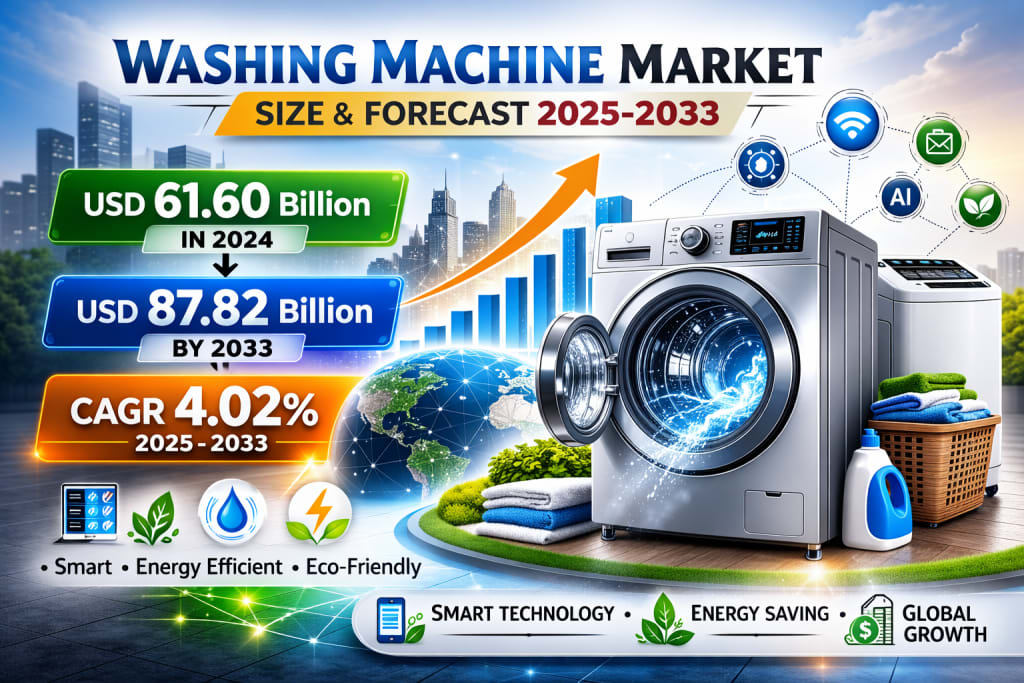
As disposable income rises and smart home adoption accelerates, the global washing machine market is projected to reach USD 87.82 billion by 2033.

Introduction
The global washing machine market is undergoing significant transformation as technological advancements, urbanization, and changing consumer lifestyles reshape the home appliance industry. According to industry analysis, the global washing machine market was valued at USD 61.60 billion in 2024 and is projected to grow to USD 87.82 billion by 2033, registering a compound annual growth rate (CAGR) of 4.02% between 2025 and 2033.
Washing machines have evolved from simple mechanical devices to advanced smart appliances that integrate artificial intelligence, Internet of Things (IoT) connectivity, and energy-efficient technologies. These innovations are not only improving user convenience but also addressing growing environmental concerns related to water and energy consumption.
Increasing disposable income in developing economies, the growth of urban populations, and the demand for smart home solutions are among the key drivers fueling expansion in the global washing machine industry.
Washing Machine Market Overview
A washing machine is an essential household appliance designed to clean clothing, bedding, and other textiles automatically using water, detergent, and mechanical agitation. By eliminating the need for manual washing, these appliances save time and effort while delivering efficient and hygienic cleaning.
Modern washing machines are available in several types, including top-load, front-load, and semi-automatic models, allowing consumers to select machines based on their needs, budget, and space availability.
Advanced washing machines now feature:
Multiple washing cycles for different fabric types
Temperature and water level control
Energy-saving modes
Smart connectivity and mobile app integration
These appliances are widely used not only in residential homes but also in commercial settings such as laundromats, hotels, hospitals, and healthcare facilities.
As urban lifestyles become busier and households increasingly rely on automated appliances, washing machines continue to play a vital role in improving convenience and maintaining hygiene.
Growing Popularity of Washing Machines
Rising Demand in Emerging Economies
Emerging economies such as India, Indonesia, Brazil, and Nigeria are witnessing growing demand for washing machines due to rising middle-class populations and improving living standards. Increased access to electricity, higher disposable incomes, and government initiatives promoting rural electrification are accelerating appliance adoption.
In many of these regions, washing machines are transitioning from luxury appliances to everyday household necessities. Manufacturers are responding by introducing affordable, durable, and water-efficient models tailored to local market conditions.
This growing demand presents significant opportunities for companies that can deliver cost-effective appliances suited to emerging markets.
Growth of Smart and Connected Appliances
The rise of smart home technology has significantly influenced the washing machine market. Consumers increasingly prefer appliances equipped with Wi-Fi connectivity, artificial intelligence, and IoT capabilities.
Smart washing machines allow users to:
Monitor and control wash cycles remotely using smartphones
Receive maintenance alerts
Customize wash programs based on fabric type
Automatically dispense detergent
These features enhance convenience while improving washing efficiency and energy management.
As smart home ecosystems continue to expand, demand for connected washing machines is expected to rise steadily in both developed and emerging markets.
Increasing Focus on Sustainability
Environmental concerns are pushing manufacturers to develop energy-efficient and water-saving washing machines. Governments across the world are implementing stricter regulations related to energy consumption and sustainability.
Consumers are also increasingly seeking appliances with high energy ratings and reduced water usage.
Manufacturers are responding with innovations such as:
Inverter motor technology
Low-water wash systems
Eco-wash cycles
High-speed spin mechanisms that reduce drying time
These eco-friendly solutions help households reduce electricity and water consumption while supporting global sustainability goals.
Expansion of E-Commerce Sales
The growth of e-commerce platforms has significantly transformed the washing machine retail landscape. Consumers now prefer to research, compare, and purchase appliances online due to convenience and competitive pricing.
Online retail platforms provide:
Detailed product specifications
Customer reviews and ratings
Flexible payment options
Home delivery and installation services
This shift has enabled brands to reach customers in remote or underserved regions where physical retail stores may be limited.
Companies that strengthen their digital sales channels and after-sales services are likely to gain a competitive advantage in the evolving marketplace.
Rising Demand for Premium Appliances
Growing incomes and evolving lifestyles are driving demand for premium washing machines with advanced features such as:
Steam cleaning
Touchscreen controls
Inverter motors
AI-powered washing programs
Built-in or integrated designs
Urban consumers increasingly prefer stylish appliances that complement modern home interiors. Compact built-in machines are particularly popular in apartments where space efficiency is essential.
Manufacturers are capitalizing on this trend by introducing high-end models that combine performance, aesthetics, and smart functionality.
Porter’s Five Forces Analysis
Competitive Rivalry
Competition in the washing machine market is intense due to the presence of numerous global and regional manufacturers. Major companies compete through technological innovation, energy efficiency improvements, pricing strategies, and brand reputation.
Frequent product launches, marketing campaigns, and research investments are common as companies strive to maintain market share. The rise of e-commerce has also lowered entry barriers for smaller brands, intensifying competition.
Overall, competitive rivalry in the industry remains high.
Threat of New Entrants
While the washing machine market offers growth opportunities, entry barriers remain significant. Establishing manufacturing facilities, distribution networks, and brand recognition requires substantial investment.
Additionally, companies must comply with strict safety and energy efficiency regulations.
However, contract manufacturing and online retail platforms have reduced some barriers, enabling new brands to enter niche segments of the market.
Bargaining Power of Suppliers
Suppliers provide critical components such as motors, drums, sensors, and electronic chips. Although large manufacturers often negotiate favorable terms due to high order volumes, shortages of specialized components like semiconductors can temporarily increase supplier power.
Nevertheless, diversified supply chains and long-term agreements help maintain a balanced relationship between suppliers and manufacturers.
Bargaining Power of Buyers
Consumers possess considerable bargaining power in the washing machine market. Online comparison tools, product reviews, and promotional offers allow buyers to easily switch between brands.
Retailers and commercial buyers purchasing appliances in bulk also have strong negotiating power, often securing discounts and favorable contracts.
To retain customers, manufacturers must focus on delivering competitive pricing, innovative features, and reliable after-sales service.
Threat of Substitutes
The threat of substitutes remains relatively low in developed markets, where washing machines are considered essential household appliances.
However, in some rural areas or low-income regions, manual washing or community laundry facilities may serve as alternatives.
Despite this, the time-saving benefits and efficiency of washing machines ensure continued demand across most markets.
Key Growth Drivers
Rising Urbanization and Disposable Income
Urbanization is a major factor driving demand for washing machines worldwide. As cities expand and living standards improve, more households are adopting modern home appliances.
Urban residents prioritize convenience and efficiency, making fully automatic washing machines increasingly popular.
Asia-Pacific remains the fastest-growing region in terms of urban population. More than 2.2 billion people—approximately 54% of the world’s urban population—live in Asia, and this number is expected to rise significantly by 2050.
Technological Innovation
Continuous technological innovation is attracting tech-savvy consumers to modern washing machines.
Manufacturers are incorporating advanced features such as:
Artificial intelligence washing programs
Smart connectivity with mobile apps
Automatic detergent dispensing
Fabric-specific wash cycles
For instance, in March 2024, Samsung introduced a new range of AI Ecobubble fully automatic front-load washing machines featuring AI Wash and Auto Dispense technology designed to improve washing efficiency and energy savings.
Energy and Water Conservation
Environmental awareness among consumers is encouraging the adoption of eco-friendly appliances.
Manufacturers are developing washing machines that reduce electricity and water usage while maintaining cleaning performance.
Innovations such as AI Energy mode and inverter motor technology help users reduce their environmental footprint and lower utility bills.
Challenges in the Washing Machine Market
High Costs of Advanced Models
Smart and fully automatic washing machines often come with premium price tags, making them less accessible for price-sensitive consumers.
Maintenance and repair costs can also be relatively high, particularly for machines with advanced electronic components.
This challenge remains significant in developing markets where affordability is a key purchasing factor.
Supply Chain Disruptions
The washing machine industry relies heavily on global supply chains for essential components.
Disruptions caused by semiconductor shortages, rising raw material prices, or geopolitical tensions can affect production and increase product costs.
Manufacturers must strengthen supply chain resilience to mitigate these risks.
Segment Insights
Fully Automatic Washing Machines
Fully automatic washing machines dominate the global market due to their convenience and advanced features. These machines perform the entire washing process—from soaking to drying—without manual intervention.
They are available in both front-load and top-load variants and offer customizable wash cycles, energy-efficient operation, and digital controls.
Smart Connected Washing Machines
Smart-connected machines represent one of the fastest-growing segments in the industry. Integration with IoT technology allows users to control washing machines through mobile apps and voice assistants.
Features such as remote monitoring, AI-powered wash programs, and maintenance alerts enhance the overall user experience.
Commercial Washing Machines
Commercial washing machines are widely used in laundromats, hotels, hospitals, and other institutional settings. These machines are designed for heavy-duty operation and offer high load capacities and durable components.
The growth of hospitality and healthcare industries continues to drive demand in this segment.
Regional Market Insights
United States
The United States remains a major market for washing machines due to high consumer spending and strong adoption of smart home technology. Energy-efficient appliances are gaining popularity as government regulations encourage sustainability.
France
In France, consumers prioritize compact and environmentally friendly appliances. The market is characterized by strong demand for energy-efficient washing machines with reduced water consumption.
China
China plays a central role in the global washing machine industry, both as a manufacturing hub and a major consumer market. Rapid urbanization, rising incomes, and technological innovation are driving demand for advanced appliances.
Saudi Arabia
The washing machine market in Saudi Arabia is expanding due to increasing urbanization and rising living standards. Water-efficient and energy-saving models are particularly popular due to environmental considerations and climate conditions.
Key Companies in the Washing Machine Market
Several major manufacturers dominate the global washing machine industry, including:
Whirlpool
Samsung
LG Electronics
IFB Appliances
Panasonic Holdings Corporation
Haier Inc.
Godrej
General Electric Company
AB Electrolux
These companies focus on innovation, product differentiation, and global expansion to maintain their competitive positions.
Final Thoughts
The global washing machine market is entering a new era defined by smart technology, sustainability, and evolving consumer lifestyles. As urbanization accelerates and digital connectivity becomes increasingly integrated into homes, demand for advanced washing machines will continue to grow.
Manufacturers that prioritize energy efficiency, smart features, and affordability are likely to gain a competitive edge in this rapidly evolving industry.
With strong growth expected through 2033, the washing machine market will remain a critical segment within the global home appliance industry, offering significant opportunities for innovation and expansion.
About the Creator
Sakshi Sharma
Content Writer with 7+ years of experience crafting SEO-driven blogs, web copy & research reports. Skilled in creating engaging, audience-focused content across diverse industries.
Keep reading
More stories from Sakshi Sharma and writers in Trader and other communities.
Carpet Market Size and Forecast 2025–2033
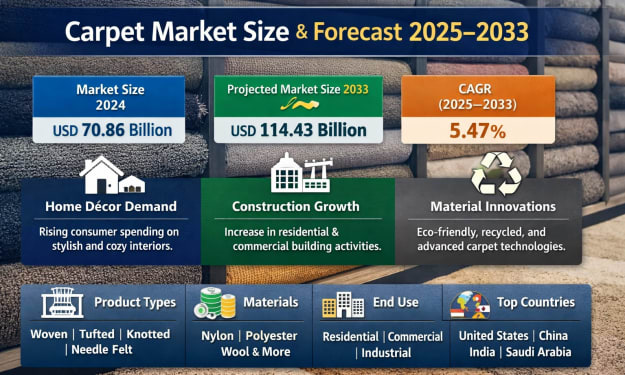
The global carpet market is witnessing steady expansion as consumer demand for comfortable, stylish, and energy-efficient flooring solutions increases worldwide. According to Renub Research, the global carpets market was valued at USD 70.86 billion in 2024 and is projected to grow from USD 74.73 billion in 2025 to USD 114.43 billion by 2033, registering a compound annual growth rate (CAGR) of 5.47% during 2025–2033.
By Sakshi Sharmaa day ago in Trader
Luxury Car Market: Innovation, Performance, and the Future of Premium Mobility
Luxury Car Market: Driving the Future of Premium Automotive Innovation The luxury car market represents one of the most dynamic segments within the global automotive industry. Luxury vehicles are designed to deliver superior comfort, cutting-edge technology, high performance, and premium aesthetics. These cars often feature advanced safety systems, powerful engines, and high-end materials that differentiate them from standard vehicles.
By James Smith5 days ago in Trader
My First Time Skiing and I Got Lost, Alone, in the French Alps
Looking back, I can trace some of my life’s biggest adventures to a simple action from my sister. She’d introduced me to Tommy (a very long time ago), a colleague of hers, who had overshared his penchant for Italian-looking women, and I ticked that box.
By Chantal Christie Weiss2 days ago in Humans


Comments
There are no comments for this story
Be the first to respond and start the conversation.