
Mount Nebo: Improvised Travel, Biblical History, and Grief in Jordan
Mount Nebo: How does an improvised journey to Jordan’s biblical summit reveal grief, history, and desert solitude?

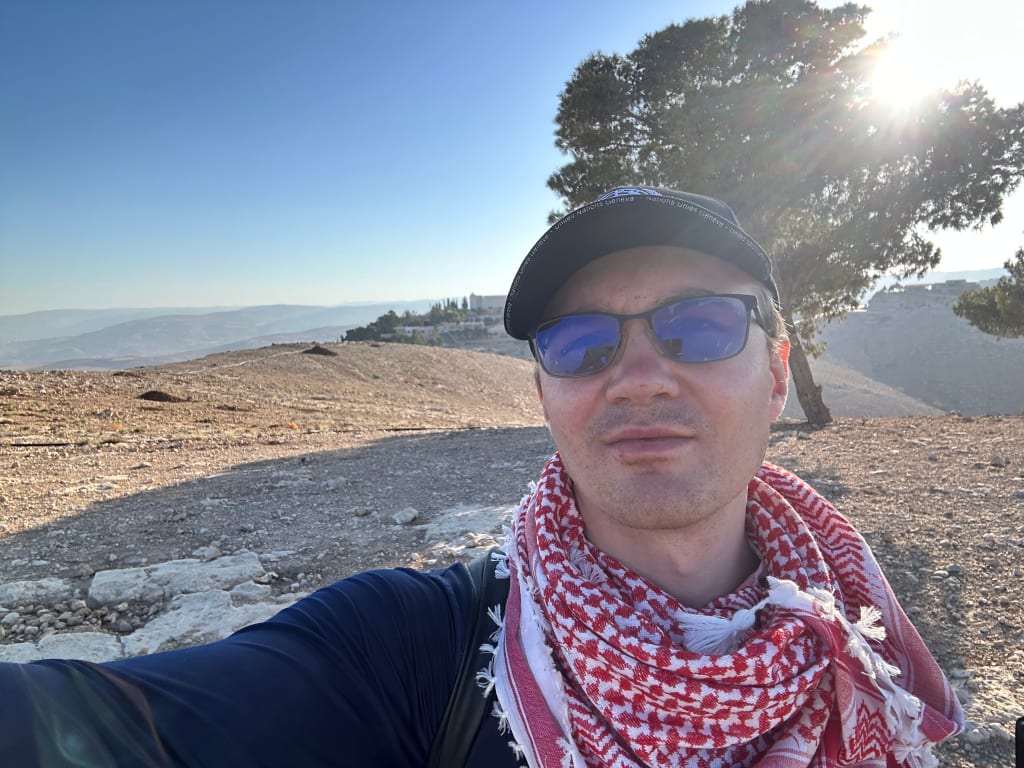
After an improvised crossing from Israel into Jordan, a taxi ride to Mount Nebo became a strange, comic, and quietly mournful detour. Arriving an hour early, I wandered the desert hillside with figs, whole kiwis, and water, hearing only a disembodied groundskeeper, meeting a dog, and watching a distant Bedouin goatherder. The landscape felt harsh yet alive, an oasis of silence, history, and endurance. Inside the sanctuary, cooler air, Byzantine ruins, mosaics, and biblical memory deepened the visit. Yet the journey was shadowed by grief: it unfolded during a birthday week and just before my father’s funeral, giving the beauty a muted, tragic undertone.
On that trip to a sprinkle of Israel and a douse of Jordan.
An Amman taxi to Moses’s Mount Nebo.
Good idea? No.
Bad idea? No.
Improvised idea? Yes.
After 4.5 hours of Israeli interrogations, what I’m told were 15 calls to get me through security and questioning, and an improvised trip claim, one must do what one was going to do anyway and, in fact, play the part. Life is funny like that. Monty Python strikes again. But a taxi to Mount Nebo to hike to it, so grab some figs and kiwis (which I eat whole) and see the holy site, is a reasonable improvisation.
One catch: I scheduled the taxi directly to it. Welp, no hiking necessary at that point, whoops.
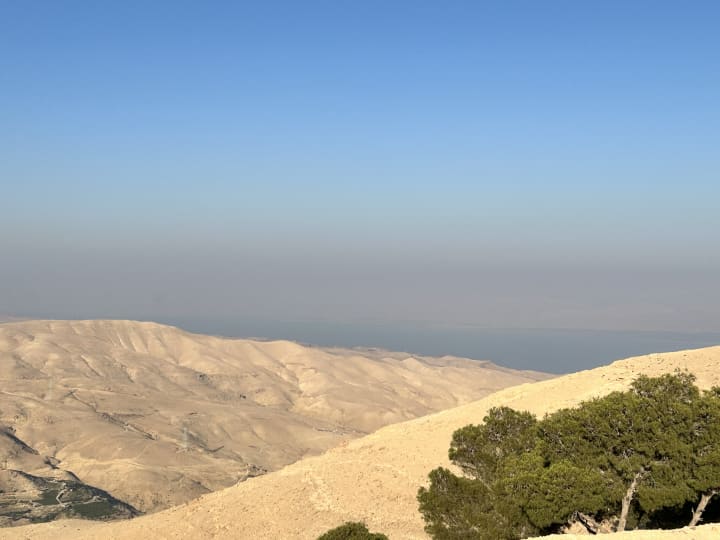
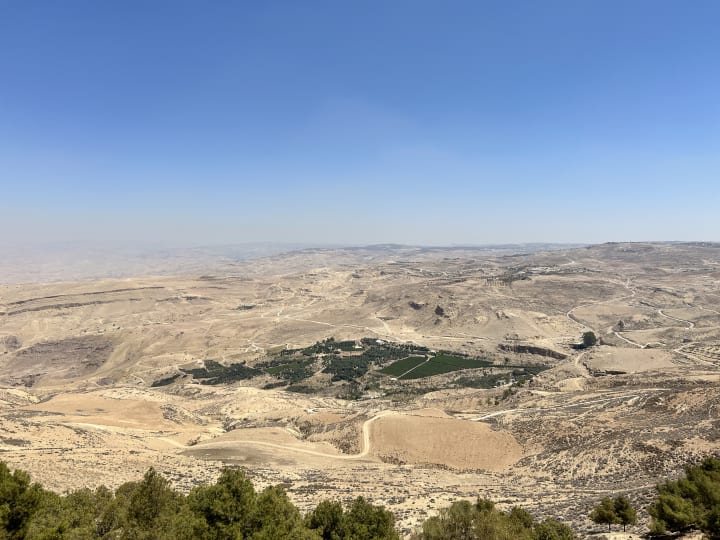
The next day was the famous Mount Nebo (Jebel an-Neba). An 802-metre-high peak in Jordan with sweeping views over the Jordan Valley. Jericho lies below. Jerusalem can be seen on clear days.
Early morning, heading to it, I heard an exclamation from the groundskeeper of this hilltop sanctuary in the desert:
“8:00 am!”
“What?”
“Come back, 8:00 am!”
“Oh, okay, thank you, sir!”
It was 7:00 am. So, plenty of time to meander around the oasis and discover some of the views of the area. I never even caught a glimpse of the bellowing voice, as if Moses himself was echoing down an eleventh commandment from the Mount’s top. Or maybe, it was the proverbial Voice of God. Who knows? I am not religious. Although, many highly religious colleagues and friends may secretly whisper after an ellipses:
“...Yet.”
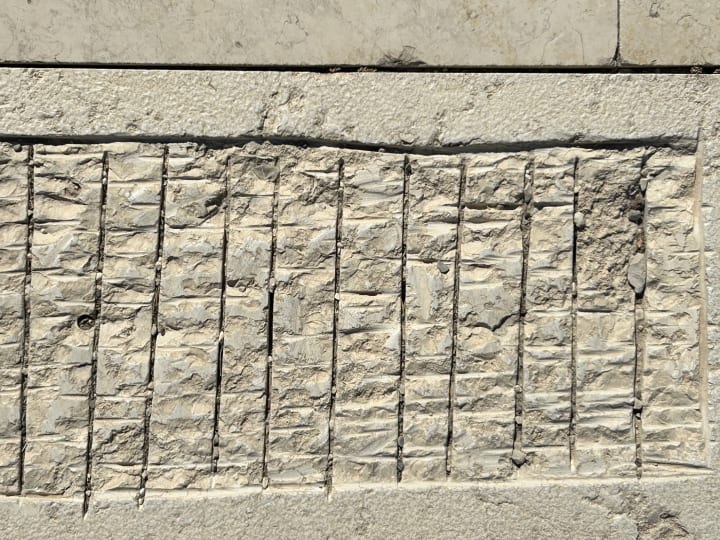
Although, it can be admitted by most. If God exists, He seems rather less active nowadays and less into grand introductions from a mountaintop to a dehydrated, itinerant, and wandering stray Canadian with an inordinate fondness of full-skinned kiwis for consumption.
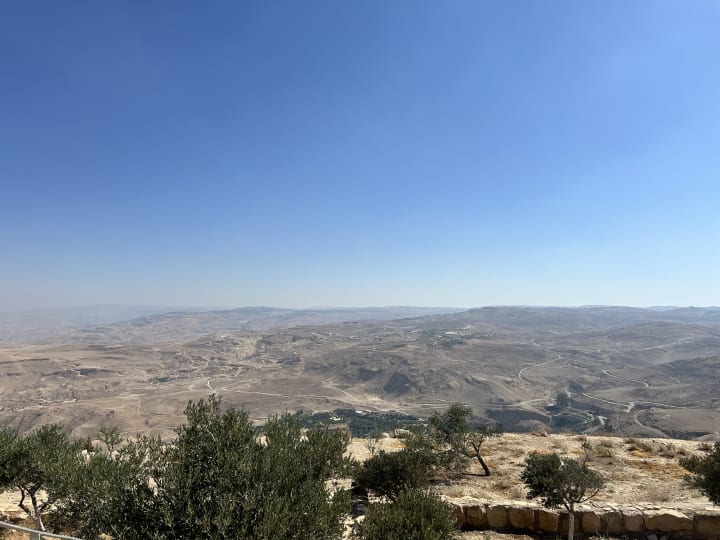
For clarity, it should be noted: Mount Nebo has deep biblical ties. In Deuteronomy 32–34, so the story goes, Moses travels to Mount Nebo (Pisgah), views Canaan, then dies there. The site is in the care of the Franciscan Custody of the Holy Land. The current Memorial of Moses was rebuilt and restored between 2007 and 2016, sheltering the excavated ruins and Byzantine mosaics. It serves as a pilgrimage shrine and memorial church.
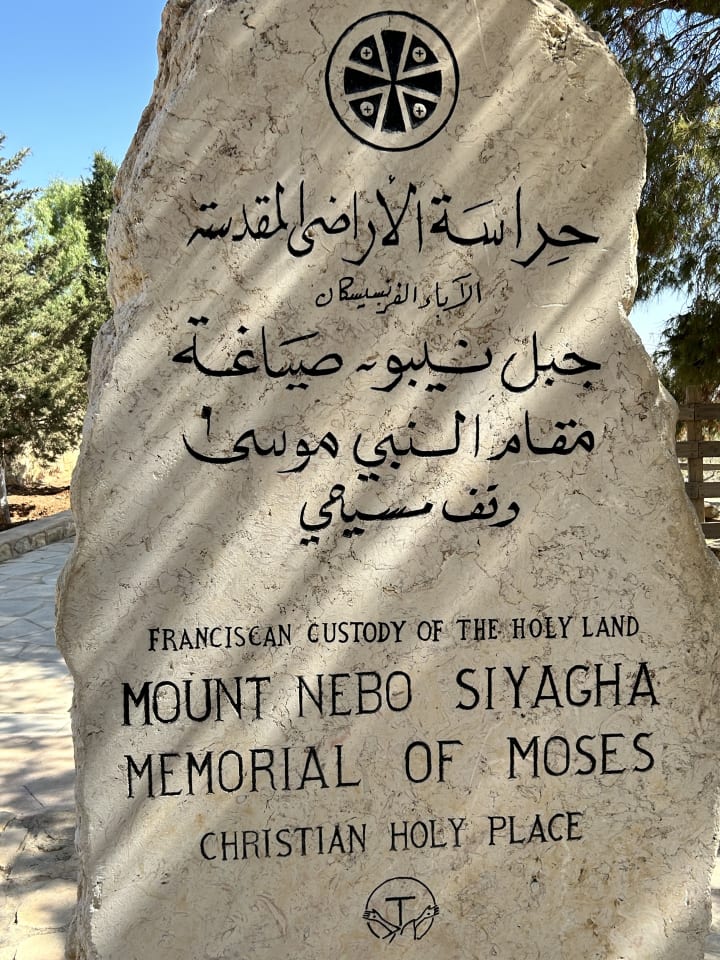
Not only unique to stray Canadians, they welcomed 462,688 visitors in 2022. Entry is 3 JOD (Jordanian dinars) for foreigners. The Jordan Pass can save money on many sites in Jordan. But that was for 8:00 am, not 7:00 am. An hour in the blistering mid-July heat of my birthday week prior to my father’s return-to-home next-day funeral.
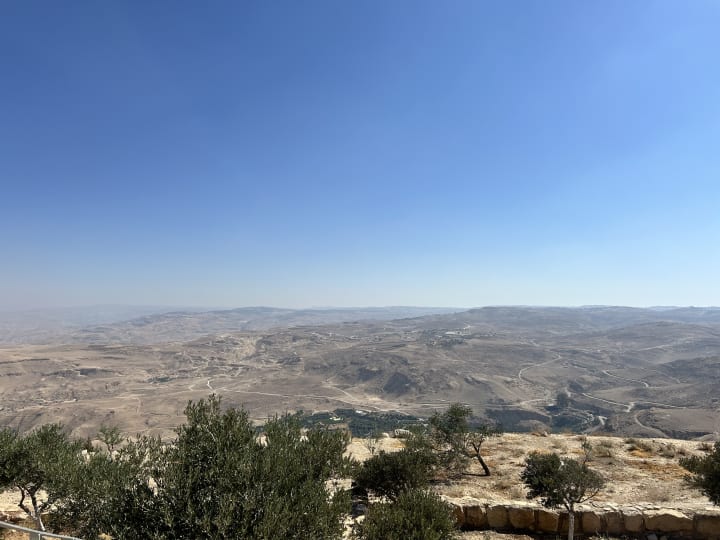
Some of the most challenging juxtapositions of a man’s life to have at once: the birthday week with the clarity of renewal and the confusion of the new environs, and the tragic conclusion of a paternal life story once home. A life story I never knew; he wanted to be a journalist when young. I found out at the funeral/celebration of life. Those moments in life when overwhelmed, and then everything dims, becomes numb, distant, diminished. Rare, inevitable contexts of life in which the tragic frame makes an overwhelmingly positively painted journey turn flat, though only on the surface.
Nothing prepares you for its weight on your soul.
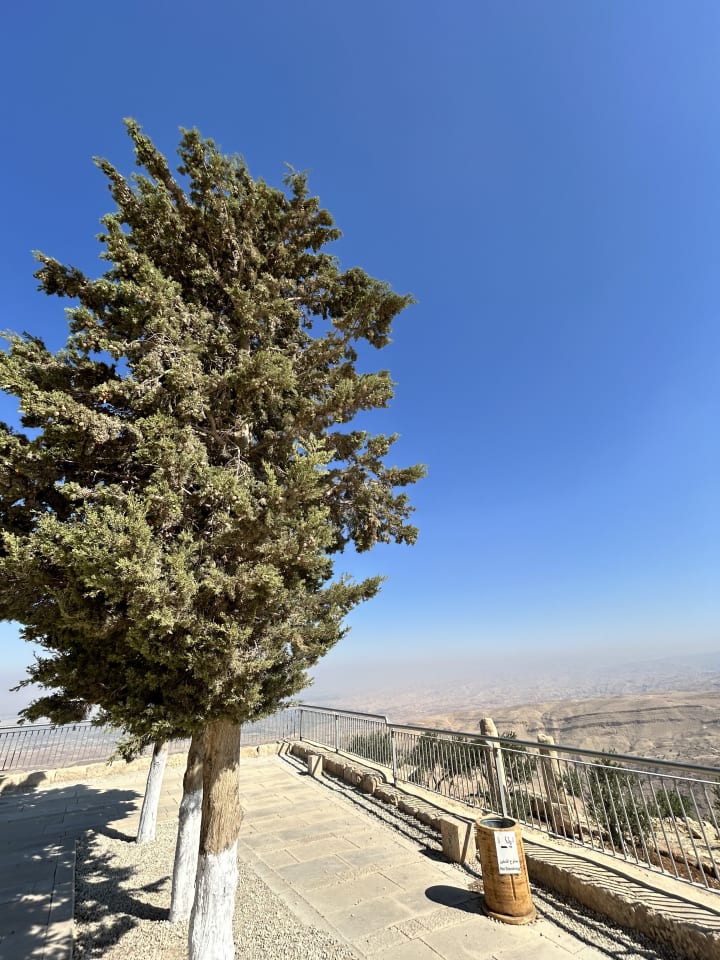
Off I went down the left side of Mount Nebo, down the main road, with a backpack full of figs, kiwis, and water, and what do I see? A dog ran down Mount Nebo to me. I assume the disembodied groundskeeper did not transform into a dog all of a sudden as if the Man in Yellow from the show FROM. I look off to the left past the road, up another mound, and see a big container with hoses out of it, which then runs down the hillsides of the mound.
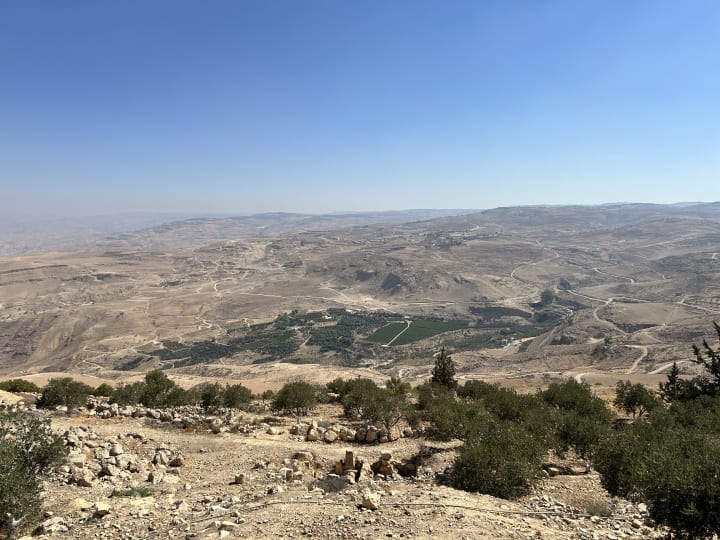
“That should consume an hour of time and interest.”
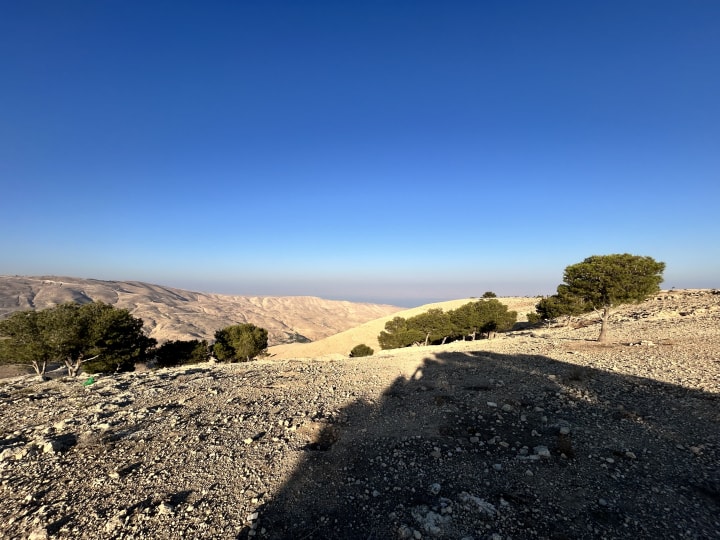
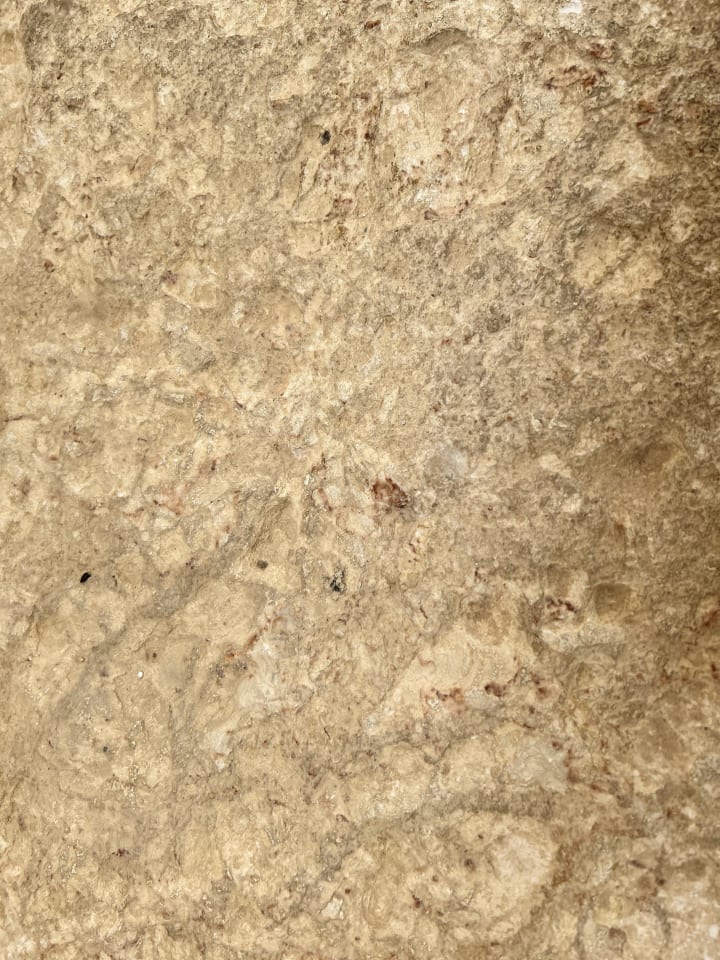
The ground is hard, crumbly.
The temperature is hot, burning.
The air is dry, consuming.
The shrubs are determined, hardened.
The road is workable, cracked.
The sky is clear, nary a cloud.
There is deep & lasting silence, but there is life.
The hills show paths, symmetrical rounded paths of different elevations.
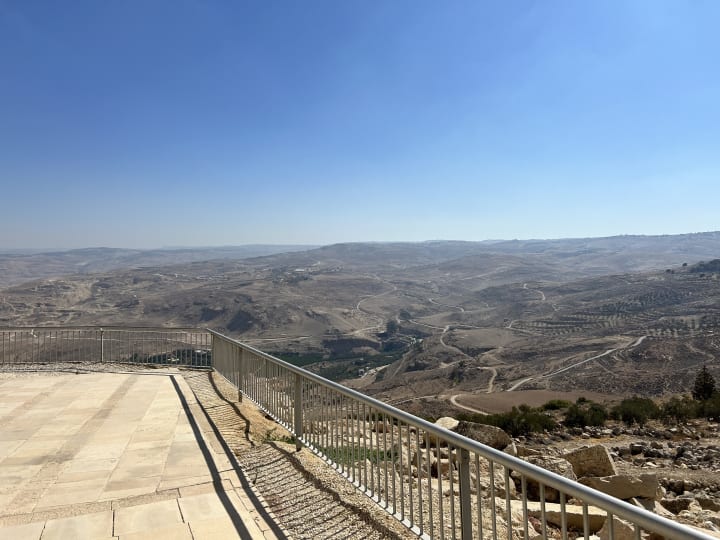
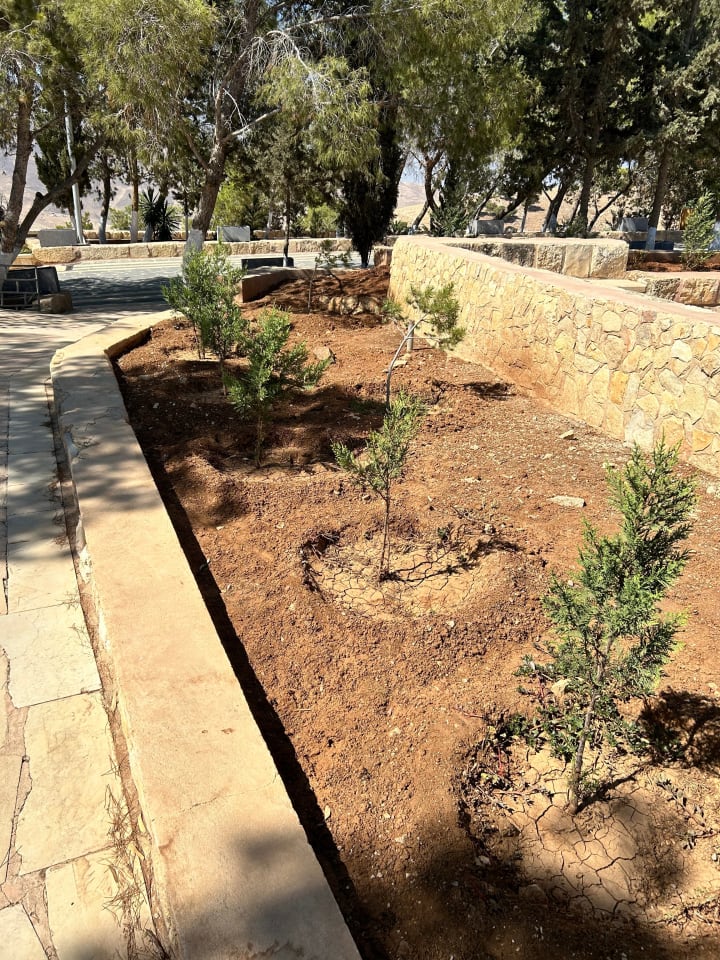
Mount Nebo represents an idyllic fount in the middle of the desert. I get up to the top ring of the second mount and note the hoses run down to various planted spots. They are there to water shrubs and new plantations. Over the mound, overlooking a dug trench, I hear a cling-cling, clang-clang.
I sit.
I ate some figs.
I munch on whole kiwis, with the skin in other words.
Off in the distance while sitting in the trench, I see a Bedouin goat herder walking his herd. I see him pull out a stick, bring it to his face, bring another item to his face, then a puff renounces the purity of the surrounding air. A goatherder's soul entering the atmosphere, a smoker. On their way they went in the distance. Was this the reason for the curved paths in the mounds, in the hillsides — the goats traversing them?
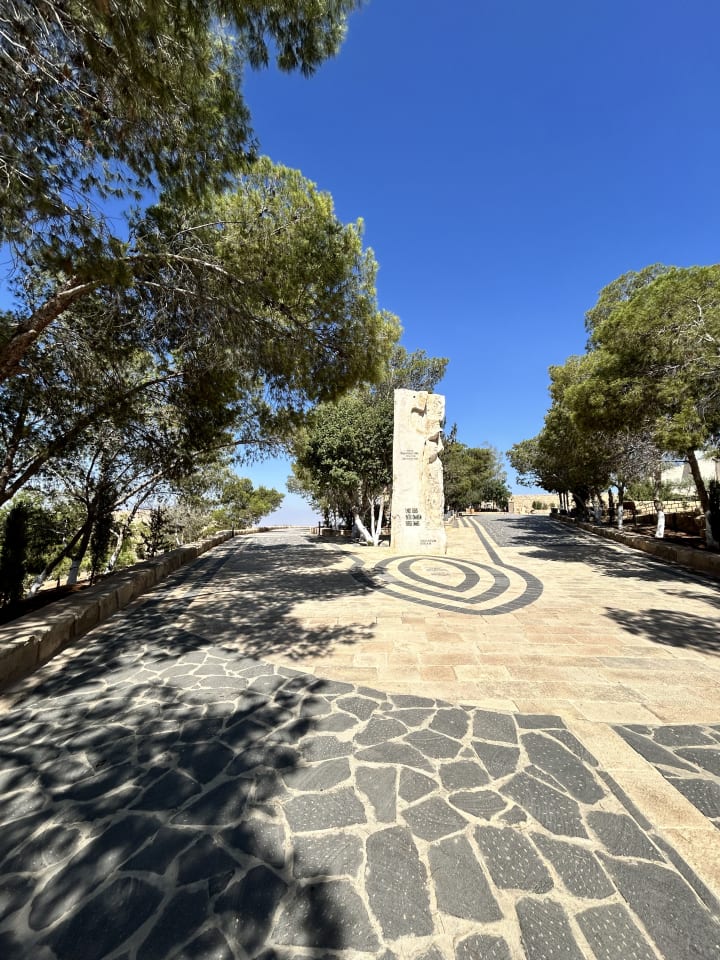
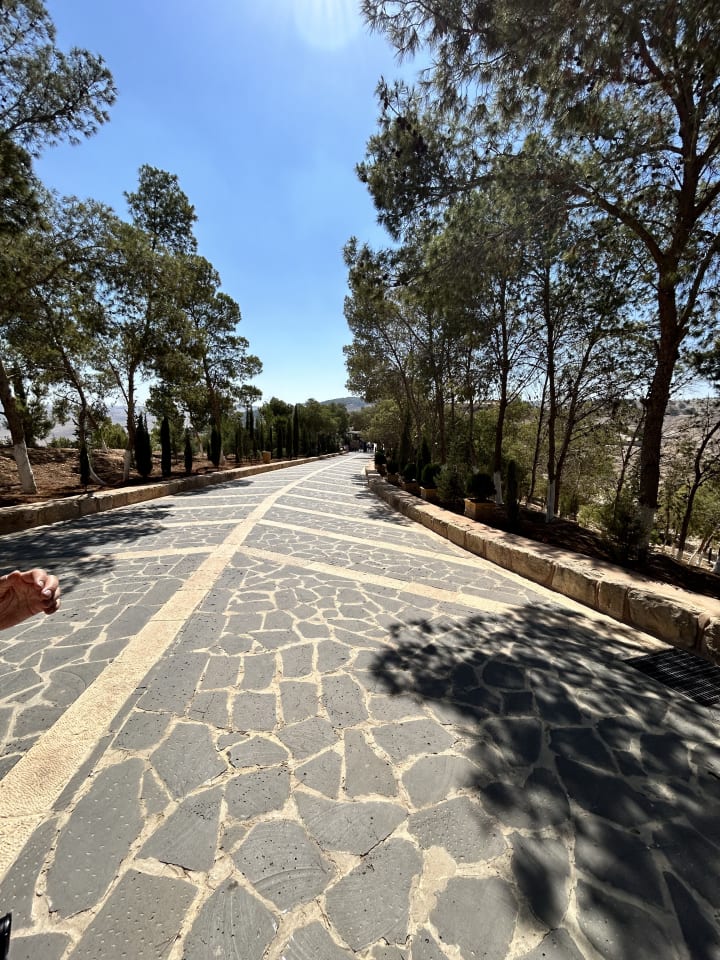
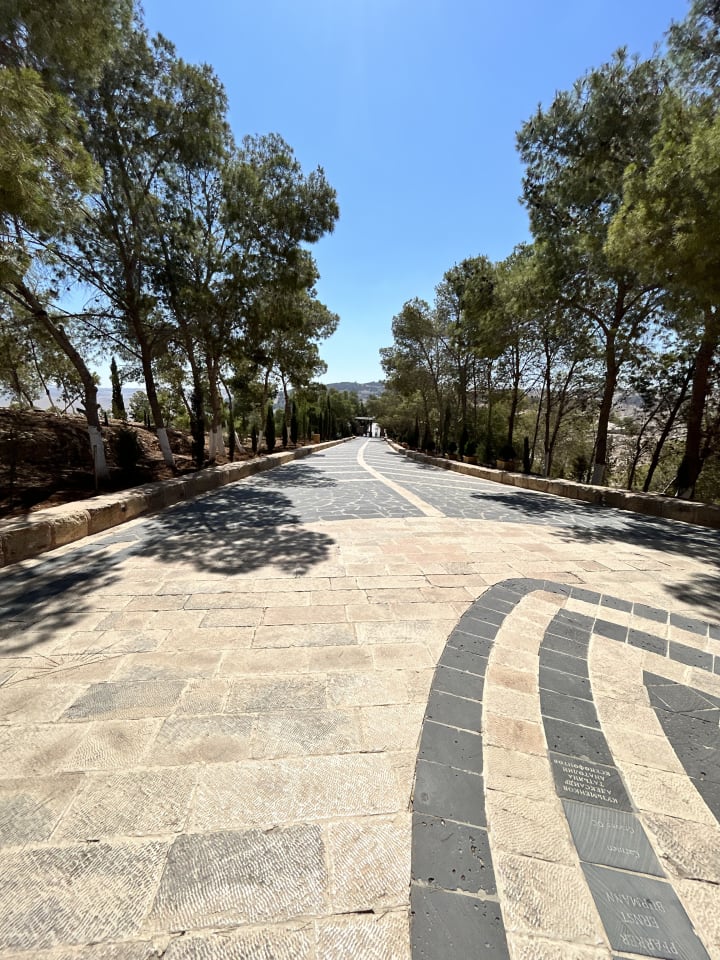
Trudge back to Mount Nebo, no more dog this time - sad. But into the entrance, instantly, the temperature drops. The masonry is beautiful and the plants of variety lower the local temperature. The 2007 and 2016 restorations are nice, but secondary. The history runs long on this mound.
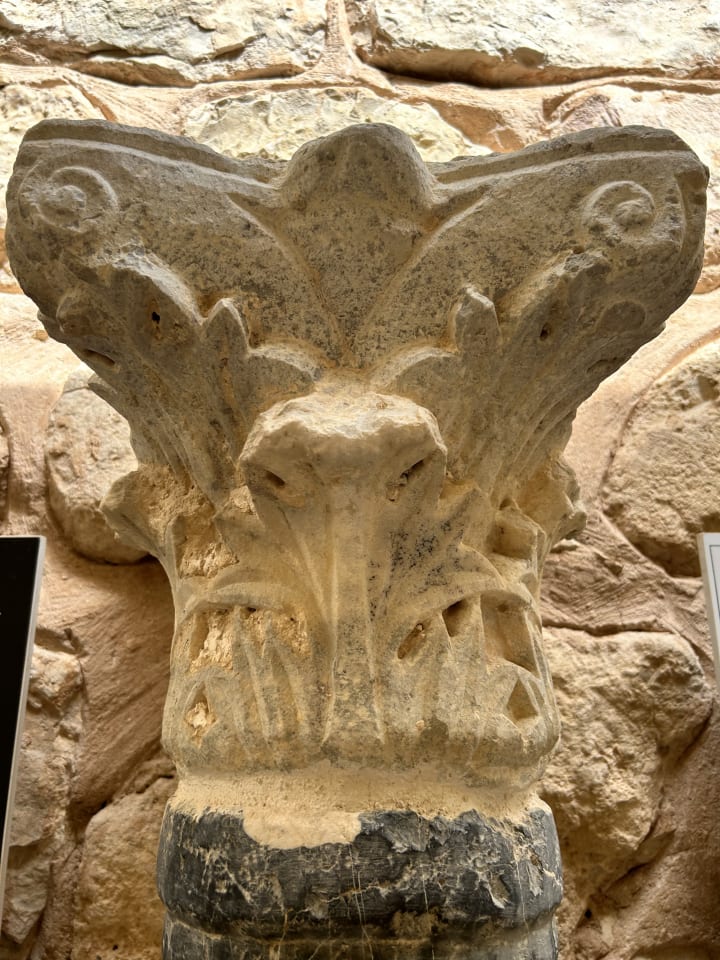
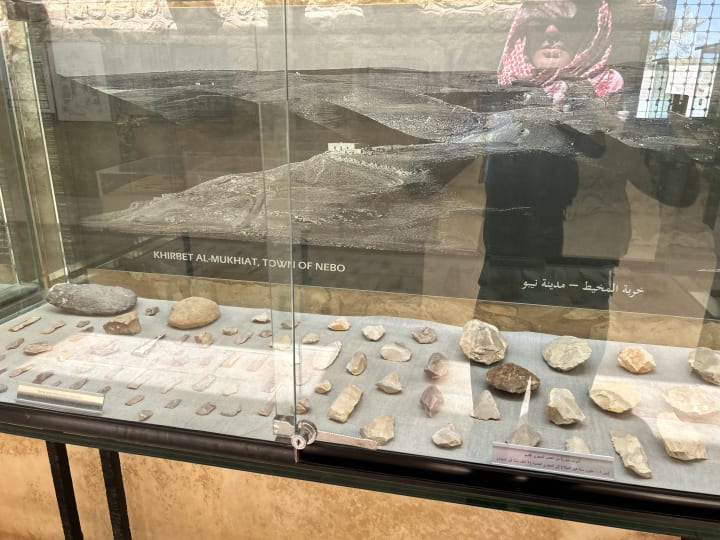
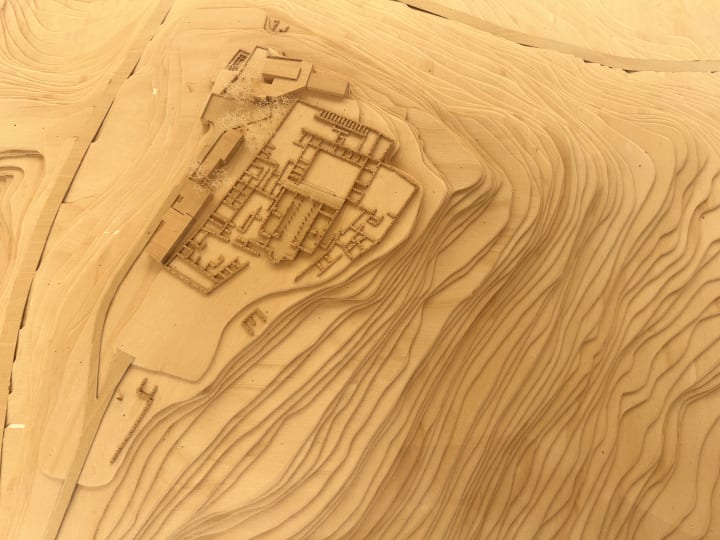
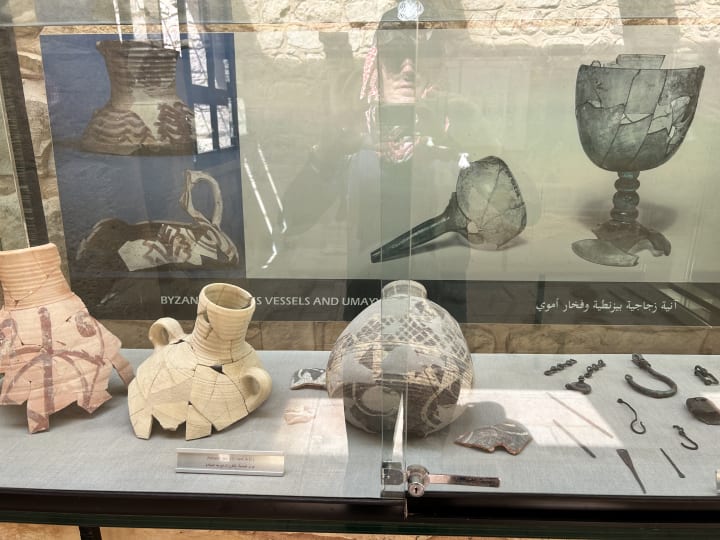
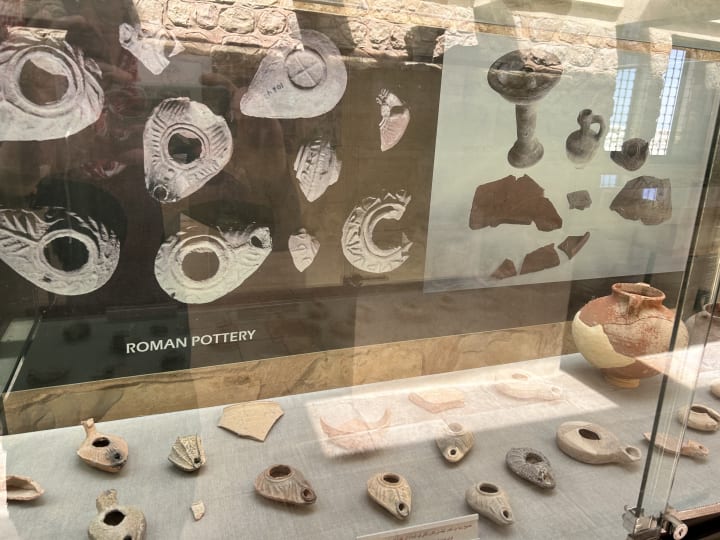
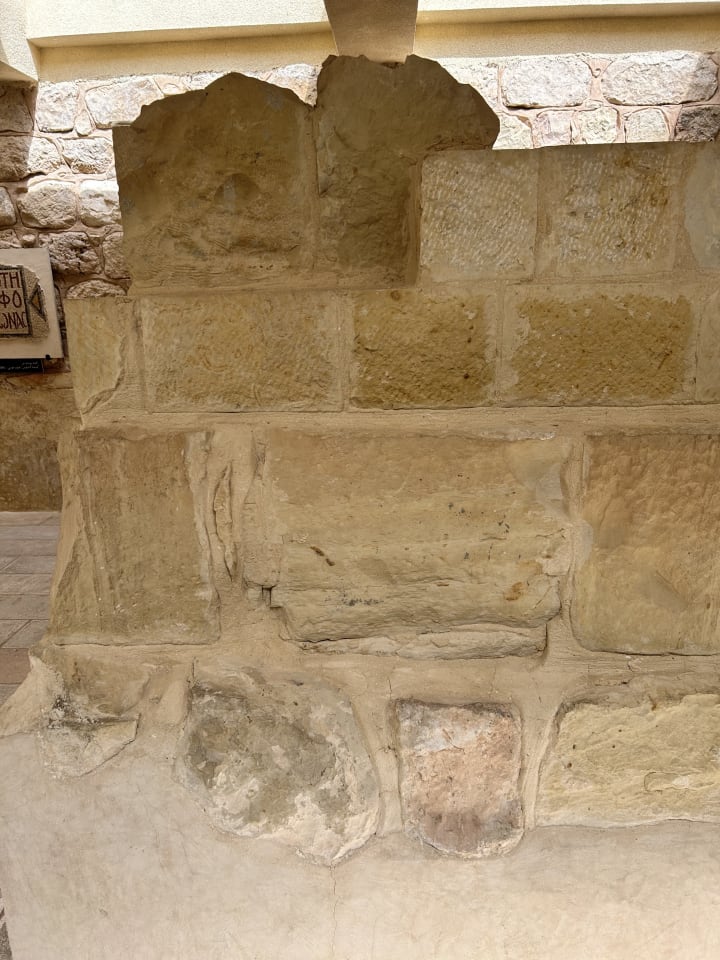
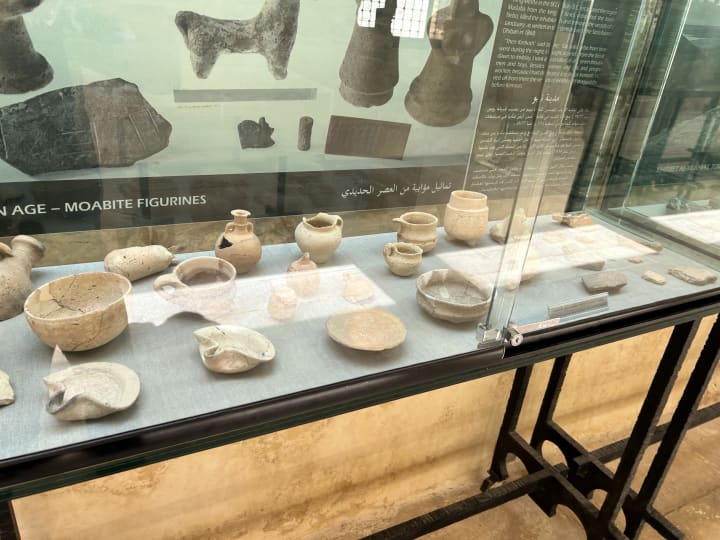
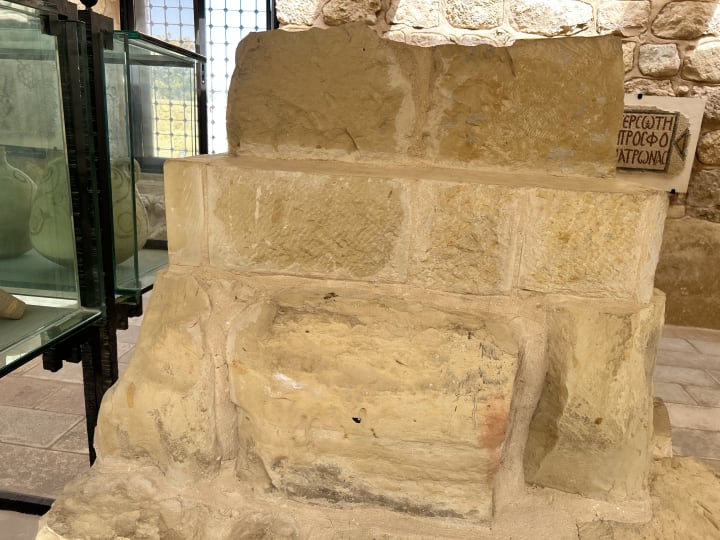
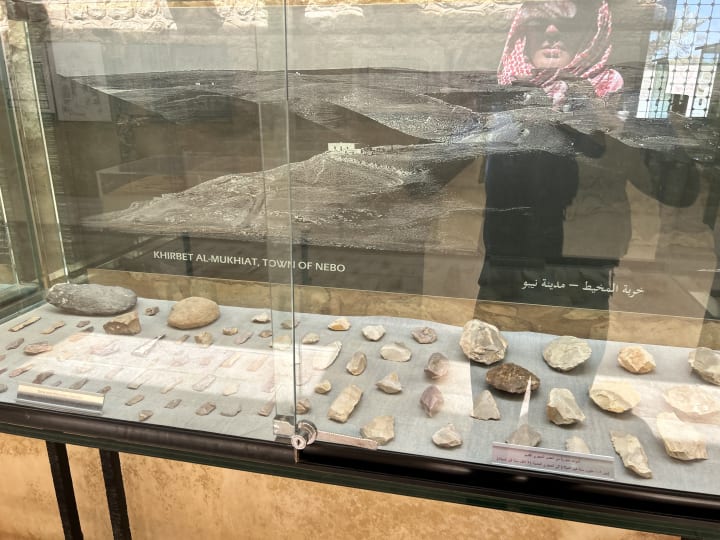
Archaeology revealed a Byzantine-era church and monastery. Excavations in the 1930s, 1960s, and 1970s-1980s, uncovered remains of a 4th-century sanctuary later expanded into a 6th-century basilica. Six rock-cut tombs sit beneath the mosaic floor. Mosaic pavements depict animals, hunting, and plants. There are Greek inscriptions. Abrahamic faiths venerate Mount Nebo. Jews for Moses’ final vision. Christians as a pilgrimage church and the Brazen Serpent scripture symbolizing Old and New Covenants. Muslims for the Nabi Musa traditions. If assuming the historicity of Moses in the Bible, the death placement of Moses is alleged as Mount Nebo.
The narrative is believed by folks, the excavations are present, and the masonry and plantations and views, are wonderful. I bought some souvenirs and then moved onto the next site before travelling home, a mosaic crafts workshop and shop. Immensely talented women crafting away day after day to create intricate, ornamental designs.
A stray Canadian met a Prophet's end, and only in the middle of the trip, as I was embarking on my birth celebration to close then on my father's final communion of the living.
Scott Douglas Jacobsen is a blogger on Vocal with over 130 posts on the platform. He is the Founder and Publisher of In-Sight Publishing (ISBN: 978–1–0692343; 978–1–0673505) and Editor-in-Chief of In-Sight: Interviews (ISSN: 2369–6885). He writes for International Policy Digest (ISSN: 2332–9416), The Humanist (Print: ISSN, 0018–7399; Online: ISSN, 2163–3576), Basic Income Earth Network (UK Registered Charity 1177066), Humanist Perspectives (ISSN: 1719–6337), A Further Inquiry (SubStack), Vocal, Medium, The Good Men Project, The New Enlightenment Project, The Washington Outsider, rabble.ca, and other media. His bibliography index can be found via the Jacobsen Bankat In-Sight Publishing. He has served in national and international leadership roles within humanist and media organizations, held several academic fellowships, and currently serves on several boards. He is a member in good standing in numerous media organizations, including the Canadian Association of Journalists, PEN Canada (CRA: 88916 2541 RR0001), Reporters Without Borders (SIREN: 343 684 221/SIRET: 343 684 221 00041/EIN: 20–0708028), and others.
About the Creator
Scott Douglas Jacobsen
Scott Douglas Jacobsen is the publisher of In-Sight Publishing (ISBN: 978-1-0692343) and Editor-in-Chief of In-Sight: Interviews (ISSN: 2369-6885). He is a member in good standing of numerous media organizations.
Keep reading
More stories from Scott Douglas Jacobsen and writers in Wander and other communities.
Toronto Consulate Shooting, Synagogue Attacks, and Antisemitic Violence in Canada
Irina Tsukerman is a human rights and national security attorney based in New York and Connecticut. She earned her Bachelor of Arts in National and Intercultural Studies and Middle East Studies from Fordham University in 2006, followed by a Juris Doctor from Fordham University School of Law in 2009. She operates a boutique national security law practice. She serves as President of Scarab Rising, Inc., a media and security strategic advisory firm. Additionally, she is the Editor-in-Chief of The Washington Outsider, which focuses on foreign policy, geopolitics, security, and human rights. She is actively involved in several professional organizations, including the American Bar Association’s Energy, Environment, and Science and Technology Sections, where she serves as Program Vice Chair in the Oil and Gas Committee. She is also a member of the New York City Bar Association. She serves on the Middle East and North Africa Affairs Committee and affiliates with the Foreign and Comparative Law Committee.
By Scott Douglas Jacobsen4 days ago in Criminal
Worth the Wait: Puerto Viejo, Costa Rica
Beach bumming in a small Caribbean beach town sounded like a perfect way to end our 6-month trip through Mexico and Central America. Or so we thought. The foul, fishy stench of rotten seaweed hit our nostrils as we stepped from the cramped bus and looked out at a rather depressing, empty, and underwhelming black sand beach. It was pouring with rain, and we had to quickly fish out our ponchos. We thought, this couldn’t be it, could it?
By Sh*t Happens - Lost Girl Travel11 days ago in Wander
Fun Times at Globe Life Field: Part 2
Last month, I took a trip to my hometown of Arlington, Texas. It was the first time in nearly 15 years I've been back to the place that I grew up. During the two days I was there, I did some sight-seeing and was highly impressed with how much has changed the last time I was there, which was 2011. On the last day of my trip, I took part in a premium stadium tour at Globe Life Field, the home of the Texas Rangers. It was my first time there and was with a small group of people on the tour. I've discussed the things I've seen during the hour and a half tour in my previous story, which you can read down below. After the tour concluded, I went outside and took even more snapshots. I'll go over some of the images, individually and in collage form.
By Mark Wesley Pritchard 4 days ago in Wander




Comments
There are no comments for this story
Be the first to respond and start the conversation.