
Who was Ayatollah Seyyed Ali Khamenei and how powerful is his family?
Ayatollah Ali Khamenei Biography, Political Power, and Latest Attack Reports Explained

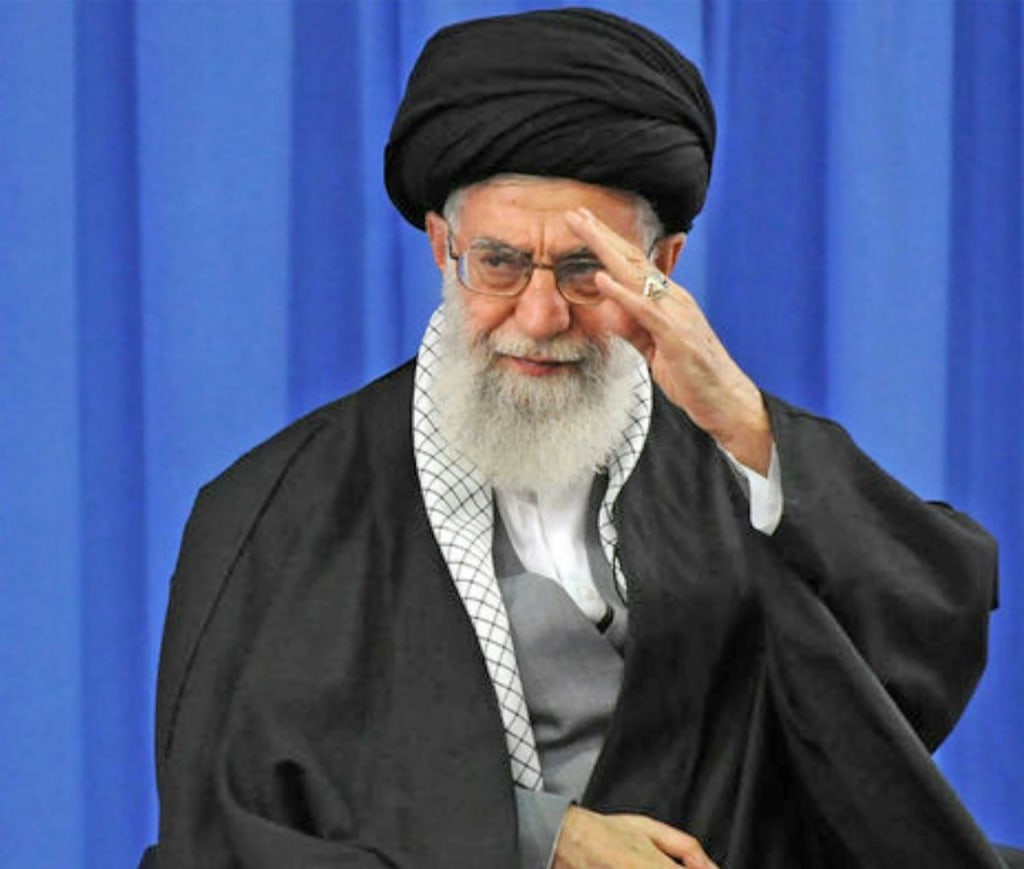
Iran’s official news agency Tasnim has confirmed that the country’s Supreme Leader, Ayatollah Seyyed Ali Khamenei, has been killed in US and Israeli attacks.
Earlier, Donald Trump had claimed that Ali Khamenei had been killed on the very first day of the joint US-Israeli strikes.
Ali Khamenei was the second person to become Iran’s Supreme Leader after the 1979 Islamic Revolution. He assumed the position in 1989 following the death of Ayatollah Khomeini, and many young Iranians have only ever known him in that role.
He was known for holding a central position in Iran’s power structure. As Supreme Leader, Khamenei had veto power over any government matter. He also had the authority to approve or disqualify candidates for public office.
As head of state and commander-in-chief of the armed forces, he was regarded as the most powerful person in Iran.
While Iranian presidents often made headlines abroad, in reality the reins of power within Iran remained in Khamenei’s hands.
Khamenei: Iran’s “Most Powerful Man”
Ayatollah Khamenei was born in 1939 in Mashhad, Iran’s second-largest city, into a religious family. He was the second of his siblings, and his father was a Shiite cleric.
He received religious education in childhood and was qualified as a cleric by the age of 11. Like many clerics of his time, his work was both religious and political in nature.
As an influential preacher, he became a critic of the Shah of Iran. Ultimately, the Shah was overthrown in the 1979 Islamic Revolution.
Khamenei spent several years in hiding and also served time in prison. The Shah’s secret police arrested him six times, and he was subjected to torture.
A year after the 1979 revolution, Ayatollah Ruhollah Khomeini appointed him as Tehran’s Friday prayer leader.
In 1981, Khamenei was elected President of Iran, and in 1989, following Khomeini’s death, religious leaders appointed him as his successor.
Khamenei rarely traveled outside Iran and lived a simple life with his wife in a compound in central Tehran.
It is said that he enjoyed gardening and poetry. He was also known to have smoked cigarettes in his youth, which was unusual for a religious leader in Iran.
Since an assassination attempt against him in the 1980s, Khamenei had been unable to use his right arm.
Khamenei and his wife, Mansoureh Khojasteh Bagherzadeh, have six children four sons and two daughters. In the US attack, one of his daughters and his son-in-law were also killed.
The Khamenei family rarely appeared in public or the media. Official and verified information about his children’s private lives is very limited.
Among his children, his second son Mojtaba is the most well-known due to his influence and role within Khamenei’s inner circle.
How powerful is Khamenei’s son Mojtaba?
Mojtaba studied at Alavi High School in Tehran, a school traditionally attended by the children of Iran’s senior officials.
He married the daughter of conservative figure Gholam Ali Haddad-Adel before becoming a cleric and while he was considering beginning religious studies. Mojtaba formally began religious education at a seminary in Qom at the age of 30.
By the mid-2000s, Mojtaba’s influence within Iran’s political circles had grown considerably, though it was rarely discussed in the media.
In 2004, Mojtaba first made headlines when presidential candidate Mehdi Karroubi accused him, in an open letter to Ayatollah Khamenei, of working behind the scenes to support Ahmadinejad.
One of the most influential figures
Since the 2010s, he has been regarded as one of Iran’s most influential personalities. It is believed that Khamenei saw him as a suitable candidate for succession, although some official sources deny this.
An Ayatollah is not a king who can pass his throne to his son; however, Mojtaba wields significant influence within Khamenei’s inner circles, including the Supreme Leader’s office.
It should be noted that the Supreme Leader’s office is in many respects more powerful than constitutional institutions.
Khamenei’s eldest son is Mostafa Khamenei. His wife is the daughter of conservative religious leader Azizollah Khoshvaght.
Mostafa and Mojtaba served on the front lines during the Iran-Iraq War in the 1980s.
Ali Khamenei’s third son, Masoud, was born in 1972. He is married to the daughter of Seyyed Mohsen Kharazi, a cleric associated with the Qom Seminary Teachers Association.
Masoud keeps away from political circles, and information about him is very limited.
He previously headed the office that serves as an important propaganda center for Ayatollah Khamenei. This office is also responsible for preserving his father’s works. Masoud oversees the compilation of Khamenei’s biography and memoirs.
Khamenei’s youngest son, Meysam, was born in 1977 and, like his three brothers, is also a cleric.
His wife is the daughter of influential businessman Mahmoud Loulachian, who is said to have financially supported revolutionary religious leaders before the 1979 revolution.
Meysam has worked alongside his older brother Masoud in the office responsible for preserving their father’s works.
Who are Khamenei’s daughters?
Very limited information is available about Khamenei’s daughters, Boshra and Hoda. They are the youngest among the siblings and were born after the 1979 Islamic Revolution.
Boshra, born in 1980, is married to Mohammad Javad Golpayegani, the son of Gholam Hossein Mohammadi Golpayegani, who is the chief of staff in Khamenei’s office.
Khamenei’s youngest child, Hoda, was born in 1981. She is married to Mesbaholhoda Bagheri Kani, who teaches at Imam Sadiq University.
About the Creator
Keep reading
More stories from Real content and writers in Chapters and other communities.
Tehran is doing what it promised: What does Iran want to achieve with missile attacks on Middle Eastern countries?
Iran’s Supreme Leader Ayatollah Ali Khamenei and several other Iranian officials had been warning for weeks before the American and Israeli attacks that in the event of any strike, not only Tehran but the entire region would be engulfed in a new war.
By Real content2 days ago in Chapters
Valentine's Dates Over the Years
Colin grinned as Brooklyn slipped into the living room. “Is it all set?” he asked. The twenty-one year old grinned. She was in her last year of college and Colin knew that Lincoln was proud of her. Although she had been away at college, she’d eagerly helped Colin plan his surprise for Lincoln. “I’m so glad you’re finally doing this,” she said.
By Reb Kreyling18 days ago in Chapters
The Future of Coding and AI
In the ever-evolving world of technology, the future of coding is undergoing a profound transformation driven by the rapid rise of artificial intelligence (AI). What was once the exclusive domain of human programmers is now becoming a dynamic partnership between humans and intelligent machines. As AI continues to advance, it’s not replacing coders, it’s redefining what it means to code.
By Gus Woltmann3 days ago in Chapters


Comments
There are no comments for this story
Be the first to respond and start the conversation.