
Why Pakistan Erupted in Protests After Ali Khamenei’s Death: Curfews, Casualties, and Diplomatic Tensions
From Gilgit-Baltistan to Karachi and Islamabad, violent unrest raises security concerns and strains regional stability.

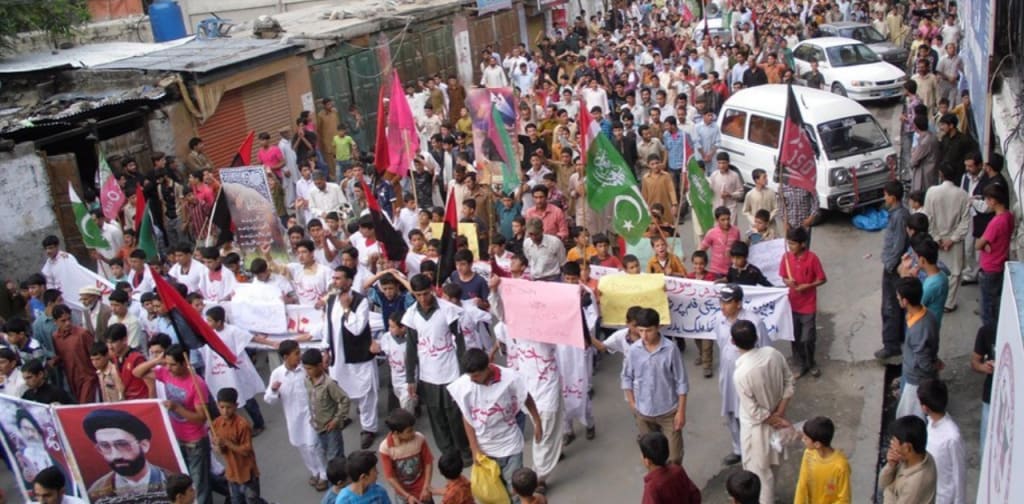
In Pakistan-administered Gilgit-Baltistan, following violent protests over the reported killing of Iran’s Supreme Leader Ayatollah Ali Khamenei in an alleged U.S.-Israeli attack, authorities have imposed a three-day curfew in the districts of Gilgit and Skardu and called in the army.
It is worth noting that early Sunday morning, after Iran confirmed the killing of Ali Khamenei, large-scale protest rallies and demonstrations began across various cities in Pakistan as well as in Pakistan-administered Gilgit-Baltistan.
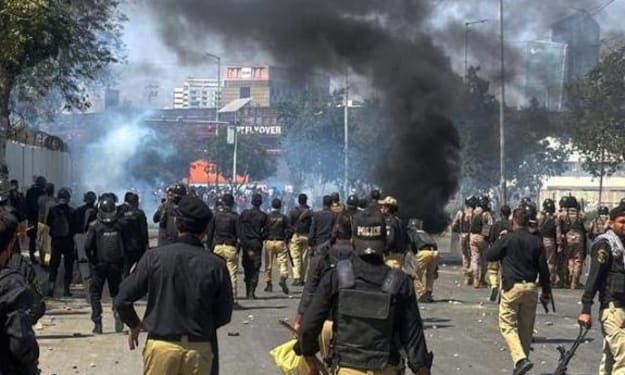
Protesters attempted to march toward U.S. consulates, the embassy, and other locations in Pakistan. Clashes with police, Rangers, and other law enforcement personnel resulted in multiple deaths among protesters.
The Government of Pakistan appealed to demonstrators to remain peaceful following Khamenei’s death, and Section 144 (which prohibits gatherings of five or more people) was imposed in several cities.
In violent clashes with law enforcement agencies, confirmed fatalities so far include 10 in Karachi, three in the federal capital Islamabad, and five in Skardu.
Although officials in Gilgit have not yet released an official figure for those killed in the previous day’s violent protests, senior police and health department officials have confirmed at least five deaths in Gilgit.
Curfew Imposed in Gilgit and Skardu, Army Deployed
Following the fatalities in Gilgit and Skardu, a curfew has been in effect in both districts since last night, and the army has taken over administrative control of these areas.
The three-day curfew began at midnight on Sunday (March 2) and will remain in force until midnight on March 4.
According to a statement issued by the Gilgit-Baltistan government, a complete curfew will be enforced in the districts of Gilgit and Skardu from midnight to noon between March 2 and March 4. There will be partial relaxation from noon to 4 p.m., after which the curfew will again be enforced from 4 p.m. until midnight.
Inspector General of Gilgit-Baltistan Police Dr. Akbar Nasir Khan stated in a video message that the army has been called in and will oversee the administration of Skardu and Gilgit for the next three days (March 2–4), while police, FC, Rangers, and other law enforcement agencies will continue performing their duties.
On Sunday, angry protesters vandalized and set fire to United Nations offices in Gilgit.
Clashes between protesters and police at multiple locations in Gilgit and Skardu resulted in deaths, while the Deputy Superintendent of Police (DSP) Skardu, several police officers, and numerous protesters were injured. In Skardu, the SP House, Software Technology Park, and United Nations offices were vandalized, while in Gilgit, UNDP and other UN offices were damaged and some locations were set ablaze.
Shia representative organizations in Gilgit have claimed that seven people were killed in the district and announced that collective funeral prayers for them will be held today at 11 a.m.
Dozens of people, including police personnel, were injured in the violent protests nationwide. Police used tear gas, rubber bullets, and aerial firing to keep protesters away from U.S. consulates, the embassy, and other sensitive locations.
Dr. Asif Raza, Medical Superintendent of the Regional Hospital Skardu, confirmed that five bodies were brought to the hospital following the violent protests, including one belonging to a security agency personnel.
Dr. Raza said that injured individuals began arriving after 10 a.m. He confirmed that approximately 50 injured people were brought to the hospital.
He stated that four of the deceased were civilians while one belonged to a security agency. According to Dr. Raza, two injured patients remain in critical condition. He claimed that all those brought to the hospital had gunshot wounds.
Journalist Wajahat Ali from Gilgit reported that a large rally was held in the city on Sunday, initially peaceful, marching through various roads. He said the rally was intended to conclude outside the United Nations office, but before that, angry protesters surrounded and vandalized the UN office.
He said police resisted, but after tear gas supplies were exhausted, police resorted to aerial firing.
An eyewitness said that when police tried to protect the UN office, protesters also attacked the SP office and the Software Technology Park. Clashes between police and protesters continued for several hours, resulting in multiple injuries.
Spokesperson for the caretaker government in Gilgit-Baltistan, Shabbir Mir, said that some unfortunate incidents occurred that should not have happened.
He said, “Protesting is the right of demonstrators, but vandalism and damaging one’s own property is not appropriate. The government has placed security on high alert at all locations and is in contact with religious leadership to help calm public sentiments.”
Attack on U.S. Consulate in Karachi: 11 Dead, 73 Injured
Following confirmation of Ali Khamenei’s death, angry protesters in the provincial capital Karachi vandalized the U.S. Consulate and attempted to set it on fire.
During clashes with police, 11 deaths have been confirmed so far. According to Police Surgeon Dr. Sumaiya, eight individuals were brought dead to the hospital, while two died during treatment. Nine critically injured individuals remain under treatment in two Karachi hospitals, three of whom are in critical condition. According to the Sindh government, a total of 73 people, including police personnel, were injured in the unrest.
Clashes between protesters and police in Karachi took place in the areas of Numaish, Native Jetty, and Paposh.
On Sunday, some angry protesters broke the main gate and entered the premises of the U.S. Consulate in Karachi, where they smashed windows in the reception area and security rooms.
Karachi Police DIG East Zone said that some protesters managed to enter the consulate but police arrived and brought the situation under control.
Police used tear gas and rubber bullets to keep protesters away from the consulate building.
Police negotiated with protesters and offered them an alternative protest location at Bahria College away from the consulate, but protesters insisted on demonstrating outside the consulate.
Protesters demanded that the American flag be lowered from the consulate building. Police stated this was beyond their authority, after which protesters demanded that the Prime Minister and Interior Minister be contacted to remove the flag, but it was not taken down.
Due to rising tensions, police from various districts were called into Karachi.
Protesters Attempt to March to U.S. Embassy in Islamabad, Two Killed
In the federal capital Islamabad, all routes leading to the Red Zone were closed from Sunday morning due to the protests.
Protesters gathered at Aabpara Chowk and announced a march toward the U.S. Embassy. Interior Minister Mohsin Naqvi spoke to the protesters and urged them not to proceed toward the Red Zone.
According to police, three layers of security were deployed at Serena Chowk and on roads leading to the Red Zone, particularly toward the Diplomatic Enclave, to keep protesters away from the embassy.
When protesters departing from Aabpara Chowk reached Gate No. 2 of the Diplomatic Enclave near the Foreign Office after facing tear gas and rubber bullets, clashes resulted in at least two deaths. Authorities said around 18 people, including police personnel, were injured. Police and administration officials reported that four individuals were critically injured with bullet wounds.
Protests in Lahore and Peshawar
In Lahore, protesters gathered outside the U.S. Consulate, and police used shelling to disperse them.
Angry protesters set the main gate of the consulate on fire.
Similarly, protests were held in Peshawar against the killing of Ali Khamenei, and police used tear gas to disperse demonstrators.
However, no fatalities have been reported in Lahore or Peshawar.
The U.S. Embassy in Pakistan stated that it is monitoring reports of ongoing protests outside U.S. consulates in Karachi and Lahore, as well as calls for further demonstrations outside the U.S. Embassy in Islamabad and the consulate in Peshawar.
In a post on social media platform X, the embassy advised U.S. citizens in Pakistan to monitor local news and take personal security precautions.
About the Creator
Keep reading
More stories from Real content and writers in Chapters and other communities.
What impact could the death of Iran's Supreme Leader have on the Muslim world?
Following the killing of Iran’s Supreme Leader Ayatollah Ali Khamenei in US and Israeli attacks, Iranian President Masoud Pezeshkian said in a message that “this great crime will be answered” and that “with all our strength and determination, and with the support of the Muslim Ummah and the free people of the world, we will make those responsible for this great crime regret their actions.”
By Real contenta day ago in Chapters
Inside Rebels
I still remembered the first day Mr. Hargrove entered our sophomore English classroom, his shoulders hunched like a storm cloud ready to unload its fury. I was fifteen, clutching a battered notebook, and my best friend, Maya, sat beside me, her eyes narrowed with an instinctive wariness. The walls, once adorned with vibrant student posters, seemed to shrink under the weight of his scowl, and his voice cut through the chatter like a blade. “This is not a playground; it is a battlefield of ideas,” he announced, his tone dripping with disdain for any hint of youthful enthusiasm. From that moment, the air grew thick with an oppressive expectation that made each breath feel like a silent accusation, and I sensed that Maya and I would soon be forced to navigate a terrain far more treacherous than any literary analysis we were meant to master.
By Forest Greenabout 3 hours ago in Chapters
I wanted to title this something different, but worried that my chosen title might cause problems entering the United States in the future so this is the new title. It's the greatest title. No one has ever written a title better than this. (All titles unrelated to content).
Let me be honest. I am finding this difficult. Now, I like a challenge, a stretch, a bit of an obstacle course. “Write about the decline of the British Empire in the form of a narrative poem in which your protagonist is an artichoke” I read, and flex my fingers. “Write a haiku to evoke the sensation of sibilance using only the first half of the alphabet.” “Well”, I think to myself, “this should be fun.” But “write about a system that isn’t working”? A system that isn’t working? Now? In 2026? ONE system? My favourite system that isn’t working? The sexiest system that isn’t working? The one giving me the most angst day to day? The one giving me the most existential dread? I am, as I say, finding this difficult. I will own that I have contemplated writing a thousand words on why the steady “all on” setting on my fairy lights is the EIGHTH of seven options which must be sequentially activated to get there, because that is a system that some fool came up with and it definitely doesn’t work, and now who is paying the price, eh? But how can I write about my fairy lights when…. When…. When….
By Hannah Moore4 days ago in Humans



Comments
There are no comments for this story
Be the first to respond and start the conversation.