how to
How Tos for lawful misconduct; explore forensic analysis, legal proceedings, police investigations and beyond.
How To Deal With LEOs And Not Catch A Bullet
Darn it! The newest shooting to enrage people has occurred and again, you’re faced with that werid question, why? Why would guys with families at home, men and women with lives, be using deadly force on American citizens? It’s a puzzler, isn’t it?
By Jason Ray Morton about 4 hours ago in Criminal
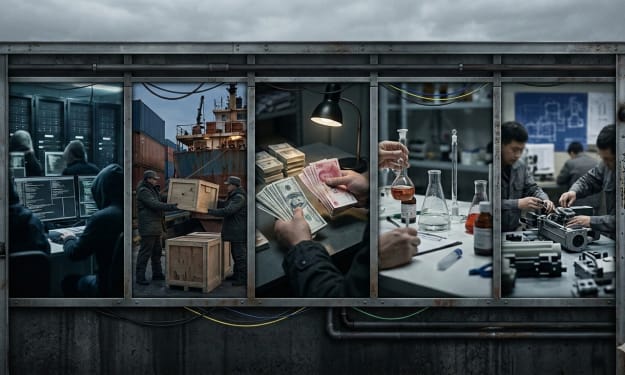
Inside the Hermit Kingdom: 5 Shocking Ways North Korea Allegedly Funds Its Regime in 2026
For decades, North Korea has been known as the “Hermit Kingdom,” a nation that deliberately sealed itself off from much of the world. Officially called North Korea or the DPRK, it remains one of the most secretive and tightly controlled countries on Earth.
By Areeba Umairabout 7 hours ago in Criminal
What Legal Rights Do Families Have in Alabama Wrongful Death Cases?
The sudden death of a loved one is an experience that can be hurtful to any family. The emotional and financial consequences of a loss may be even more significant when caused due to the negligence of another person or the wrongdoing committed by another person. In such cases, the law gives a means of justice to the families by the wrongful death case.
By Deborah Larsona day ago in Criminal
El Infernito: Inside the Notorious Prison Where Crocodiles, Chickens, and Refrigerators Were Found in Inmates’ Cells
Deep inside **Guatemala**, a prison once nicknamed **“El Infernito”**—Spanish for *“The Little Hell”*—became a global symbol of how prisons can spiral out of control. Officially known as **Pavón Prison**, the facility gained its terrifying reputation after authorities discovered that inmates were not only running the prison but also living with luxuries—and even wild animals—inside their cells.
By Irshad Abbasi a day ago in Criminal
The Assassination of King Faisal: The Tragic Day a Saudi Monarch Was Killed by His Own Nephew
On March 25, 1975, the Arab world was shaken by the shocking assassination of King Faisal of Saudi Arabia. The respected monarch, known for his political wisdom and strong leadership in the Muslim world, was killed inside the royal palace in Riyadh by his own nephew, Faisal bin Musaid. The incident stunned both Saudi citizens and the international community, raising many questions about what circumstances led to such a tragic act within the royal family.
By Irshad Abbasi 3 days ago in Criminal
The Middle East at a Crossroads
The Middle East at a Crossroads The Middle East has once again become the center of global attention as tensions rise between several powerful countries and regional actors. Conflicts, political rivalries, and military movements have created an atmosphere of uncertainty that many analysts believe could reshape global politics in the coming years. Although wars and crises have occurred in this region for decades, the current situation feels more fragile and dangerous because multiple global powers are indirectly involved.
By Wings of Time 3 days ago in Criminal
Factory of Fear: The Escape and 21-Year Manhunt of America’s “Most Wanted” Terror Suspect
In the tense years following the September 11 attacks, the United States launched one of the largest counterterrorism operations in modern history. Intelligence agencies tracked suspects across continents, tightened airport security, and expanded surveillance networks. Yet, amid this sweeping effort, one man accused of building explosives inside his car managed to disappear — evading capture for more than two decades.
By Irshad Abbasi 4 days ago in Criminal
The Impossible Prison Break - Alcatraz Escape
FBI officers were stunned. This was a prison where even if a prisoner was left out in the open, escape seemed impossible. Yet somehow, right under the noses of the authorities, three inmates managed to break out. What was even more shocking was that for nearly 10 hours, the prison authorities had no idea they were missing.
By Imran Ali Shah4 days ago in Criminal
Ten Days of Marriage, A Lifetime Lost: A Wake-Up Call Against Greed, Dowry, and Domestic Violence
Ten Days of Marriage, A Lifetime Lost: A Wake-Up Call Against Greed, Dowry, and Domestic Violence a relationship that only lasted ten days. A young woman who had visions of the future as she entered her new residence. After that, a shocking end: her husband killed her with a broken piece of glass following an argument about money, property, and a car.
By Farida Kabir6 days ago in Criminal
The last Alibi
M Mehran In the rain-slick streets of Frankfurt, crime rarely slept — it adapted. Sirens echoed through financial districts, neon lights flickered across wet pavement, and somewhere in the darkness, someone was always watching. But Inspector Daniel Krämer had never seen a case like this. Because this killer never fled. He never hid. And according to every witness… he was never there. The Perfect Crime Scene At 10:42 p.m., emergency calls flooded dispatch from a luxury apartment overlooking the River Main. A prominent investment lawyer, Stefan Krüger, was found dead in his study — a single precise stab wound to the chest. No signs of struggle. No forced entry. No missing valuables. Only a glass of red wine, two chairs facing each other, and soft jazz still playing in the background. Krämer stood in the doorway, scanning the room. “He was expecting someone,” he said. Detective Anika Weiss nodded. “Neighbor saw a guest arrive at 9:58 p.m.” “Did they see him leave?” She shook her head. “No one left.” The Man With the Unbreakable Alibi Security cameras in the lobby clearly captured a visitor entering the building: a well-dressed man in a charcoal coat. Facial recognition identified him immediately. Martin Adler. Business partner. Friend. And now prime suspect. But Adler’s alibi was ironclad. At the estimated time of death, he was seated in a live televised panel discussion across town. The broadcast had no cuts. No delays. Hundreds of viewers watched him speak in real time. Krämer replayed the footage three times. Adler never left the stage. Yet the cameras did not lie. He had entered the building. And he had never exited. A Second Body, Same Ghost Two nights later, another victim surfaced — a private art broker found dead in her office after hours. Same wound. Same precision. Same untouched valuables. Same witness report: a man in a charcoal coat entering. Security footage confirmed it. Martin Adler again. But Adler was speaking at a charity gala across the city, photographed repeatedly by journalists and guests. Two murders. One man. Impossible timing. Krämer rubbed his temples. “Either Adler can teleport… or someone wants us to believe he can.” The Illusion of Presence Forensic teams uncovered a strange detail at both scenes: microscopic adhesive residue near entry doors and elevator panels. Transparent. Industrial grade. And unusual. Meanwhile, a digital analyst noticed something peculiar in the lobby footage. Adler’s reflection did not appear in the glass directory panel as he walked past. Anika froze the frame. “That’s not him,” she whispered. Krämer leaned closer. It looked like Adler. Moved like Adler. But it wasn’t Adler. It was a projection. The Technology Behind the Ghost Investigators uncovered a compact holographic projection system hidden inside a maintenance ceiling panel near the lobby camera. Using synchronized light refraction and motion mapping, the device projected a lifelike moving image — visible from specific angles. To the security camera, the illusion appeared real. To passing witnesses, it was convincing enough. But from the wrong angle, the figure simply vanished. Someone had manufactured a digital ghost. And they wanted police chasing the wrong man. Following the Motive Both victims shared a quiet connection: they were former legal advisors in a corporate fraud case buried years earlier. The case collapsed after key evidence mysteriously disappeared. The primary beneficiary? A development conglomerate that had since become one of Europe’s fastest-growing real estate empires. Krämer studied the archived case file. One junior accountant had attempted to testify before vanishing from public records. Name: Lukas Brenner. Declared missing. Presumed relocated. But financial activity showed he never left the country. The Third Target Surveillance traced Brenner to an abandoned industrial building slated for demolition. Inside, investigators found a workshop filled with projection equipment, acoustic dampening foam, and architectural blueprints. Pinned to a wall were photographs of individuals tied to the old fraud case. Three faces were crossed out. One remained. Helena Vogler — CEO of the conglomerate. Scheduled to attend a press conference the next morning. Krämer grabbed his coat. “He’s finishing what he started.” Truth Revealed in the Light The press hall buzzed with reporters and flashing cameras as Vogler approached the podium. At exactly 11:03 a.m., the lights flickered. A man in a charcoal coat appeared near the rear exit. Gasps rippled through the room. Security rushed toward the figure — only for it to flicker and dissolve into light. Panic erupted. And in the confusion, a real figure emerged beside the stage. Lukas Brenner. Calm. Pale. Determined. “I’m not here to kill,” he said, raising his hands. Security froze. Cameras rolled. “They buried evidence. They buried the truth. They buried lives,” he continued. “I made ghosts so the world would finally look where it refused to see.” Krämer stepped forward. “You committed murder.” Brenner’s eyes darkened. “They destroyed thousands of lives and walked free.” Silence filled the hall. Not the artificial silence of hidden crimes. But the heavy silence of truth exposed. After the Verdict Brenner was arrested without resistance. His projections, illusions, and meticulous planning stunned investigators across Europe. The reopened fraud case uncovered billions in corruption. Executives resigned. Charges were filed. And the public learned how easily reality could be manipulated — not just through technology, but through power. Weeks later, Krämer stood by the river, watching reflections ripple beneath gray skies. Anika joined him. “Do you think he regrets it?” Krämer considered the question. “He made the world see ghosts,” he said. “But what haunted him was real.” The city moved around them — loud, restless, alive. And somewhere within its noise lived truth, deception, justice, and the fragile line between them. Because the most dangerous criminals are not always the ones who hide. Sometimes, they are the ones everyone can see — and no one chooses to believe.
By Muhammad Mehran7 days ago in Criminal
The Last Train from Lahore
M Mehran On a fog-drenched winter night in Lahore, the last train pulled away from the platform with a tired metallic scream. Vendors packed up their tea stalls. Porters stretched their aching backs. The city exhaled. But in coach C-7, a crime was already in motion. His name was Hamza Iqbal. To his neighbors, he was polite. To his mother, devoted. To the law, invisible. And to the passengers on that train, he was about to become a nightmare. A Criminal Who Studied People, Not Locks Hamza wasn’t the kind of criminal who relied on force. He relied on observation. For months, he had studied human behavior at railway stations—who traveled alone, who carried expensive gadgets, who looked distracted, who trusted too easily. He learned patterns. Businessmen guarded briefcases but ignored backpacks. Students protected phones but forgot wallets in jacket pockets. Families assumed safety in numbers. Hamza didn’t steal randomly. He selected with precision. But what made him different from petty thieves was his long game. He wasn’t after wallets. He was after identities. The Perfect Setup Inside coach C-7, Hamza smiled warmly at an elderly couple struggling with luggage. “Let me help,” he offered. They thanked him. Trust was built in seconds. Across the aisle, a young tech entrepreneur tapped away on his laptop. Hamza noticed the company logo on his bag. Startup founder. Likely successful. Likely careless. As the train rolled into darkness, Hamza moved like a shadow. He didn’t snatch. He didn’t threaten. He cloned. With a small wireless device hidden inside his power bank, he skimmed unsecured data from nearby phones and laptops connected to the train’s public Wi-Fi. Passwords. Banking apps. Email logins. Most passengers never realized their digital doors had been left open. By the time the train reached Karachi, Hamza had stolen more than cash could ever buy. He had stolen access. When Theft Becomes Destruction Within days, bank accounts were drained. Cryptocurrency wallets vanished. Confidential business proposals leaked online. Victims filed complaints, confused and ashamed. No one remembered being robbed. No physical evidence. No witnesses. Cybercrime units suspected phishing scams. Malware. International hacking rings. But Hamza worked alone. He operated from a modest apartment, using public networks and temporary devices. After each operation, he destroyed hardware. Burned SIM cards. Wiped drives. He believed himself untouchable. And for a while, he was. The Investigator Who Refused to Guess Enter Detective Ayesha Khan of the Federal Investigation Agency. Unlike others, Ayesha didn’t begin with technology. She began with geography. She mapped every victim’s travel history. One connection stood out: each had taken the Lahore–Karachi night train within the same three-month window. Coincidence? Criminal investigations rarely reward coincidence. Ayesha rode the train herself. She watched. Listened. Waited. And she noticed something subtle—one passenger who never seemed to sleep, never seemed to panic, never seemed to disconnect from the public Wi-Fi. Hamza. The Psychology of a Criminal Criminal profiling suggests that repeat offenders develop rituals. Habits. Comfort zones. Hamza always chose coach C-7. Always boarded last. Always offered help to elderly passengers to avoid suspicion. It wasn’t greed that motivated him. It was superiority. He believed he was smarter than the system. Smarter than his victims. That belief would become his weakness. The Trap On her third undercover ride, Ayesha deliberately connected a decoy laptop to the train’s Wi-Fi. It contained traceable bait—fake financial credentials monitored by cyber forensic teams. Within minutes, the system detected an intrusion attempt. The signal originated only meters away. Ayesha felt her pulse steady, not race. Criminal apprehension isn’t about adrenaline. It’s about timing. When the train slowed near Hyderabad, officers in plain clothes quietly surrounded Hamza. He tried to remain calm. But calm cracks under certainty. Inside his backpack, they found modified signal boosters, portable data skimmers, and encrypted storage drives containing hundreds of stolen identities. The silent thief of the rails was finally visible. In the Interrogation Room “Why?” Ayesha asked him. Hamza shrugged. “Because they made it easy.” It wasn’t poverty. It wasn’t desperation. It was opportunity. He saw society’s dependence on technology and recognized its vulnerability. Public Wi-Fi networks. Weak passwords. Blind trust. He didn’t see faces. He saw access points. Psychologists later described him as a high-functioning cybercriminal driven by intellectual thrill rather than necessity. But thrill fades. Consequences don’t. The Impact of Modern Crime Hamza’s arrest exposed more than one man’s wrongdoing. It revealed a larger truth about modern criminal activity: Digital theft can be more damaging than physical robbery. Cybercrime leaves victims confused and self-blaming. Public networks are fertile ground for exploitation. News outlets across Pakistan covered the case extensively. Security experts warned travelers to avoid unsecured Wi-Fi. Banks strengthened authentication systems. The Lahore–Karachi train added cybersecurity advisories to ticket confirmations. Crime had evolved. And so had fear. The Sentence In court, Hamza showed little emotion as charges were read: identity theft, cyber fraud, illegal data interception, financial crimes. He was sentenced to fifteen years. Some called it harsh. Others called it justice. For the entrepreneur who lost his startup funding overnight, it was closure. For the elderly couple whose savings disappeared, it was relief. For Detective Ayesha Khan, it was a reminder: Criminals adapt. So must those who chase them. The Moral Behind the Crime Story This criminal story isn’t just about one man on a train. It’s about vulnerability in a connected world. It’s about how trust, convenience, and technology can become weapons in the wrong hands. Hamza didn’t wear a mask. He wore normalcy. And that is what makes modern criminals so dangerous—they blend in. The next time you connect to public Wi-Fi, glance around. The quiet passenger helping with luggage. The man who never seems to sleep. The stranger who smiles too easily. Crime no longer needs a gun. Sometimes, it only needs a signal. And somewhere, on another train slicing through the night, someone may already be watching the bars of your connection rise—waiting for them to fall.
By Muhammad Mehran8 days ago in Criminal