
2016 Could Break Global Record as the Hottest Year Ever
Rising global temperatures, climate change, and a powerful El Niño push the planet toward a historic heat record.

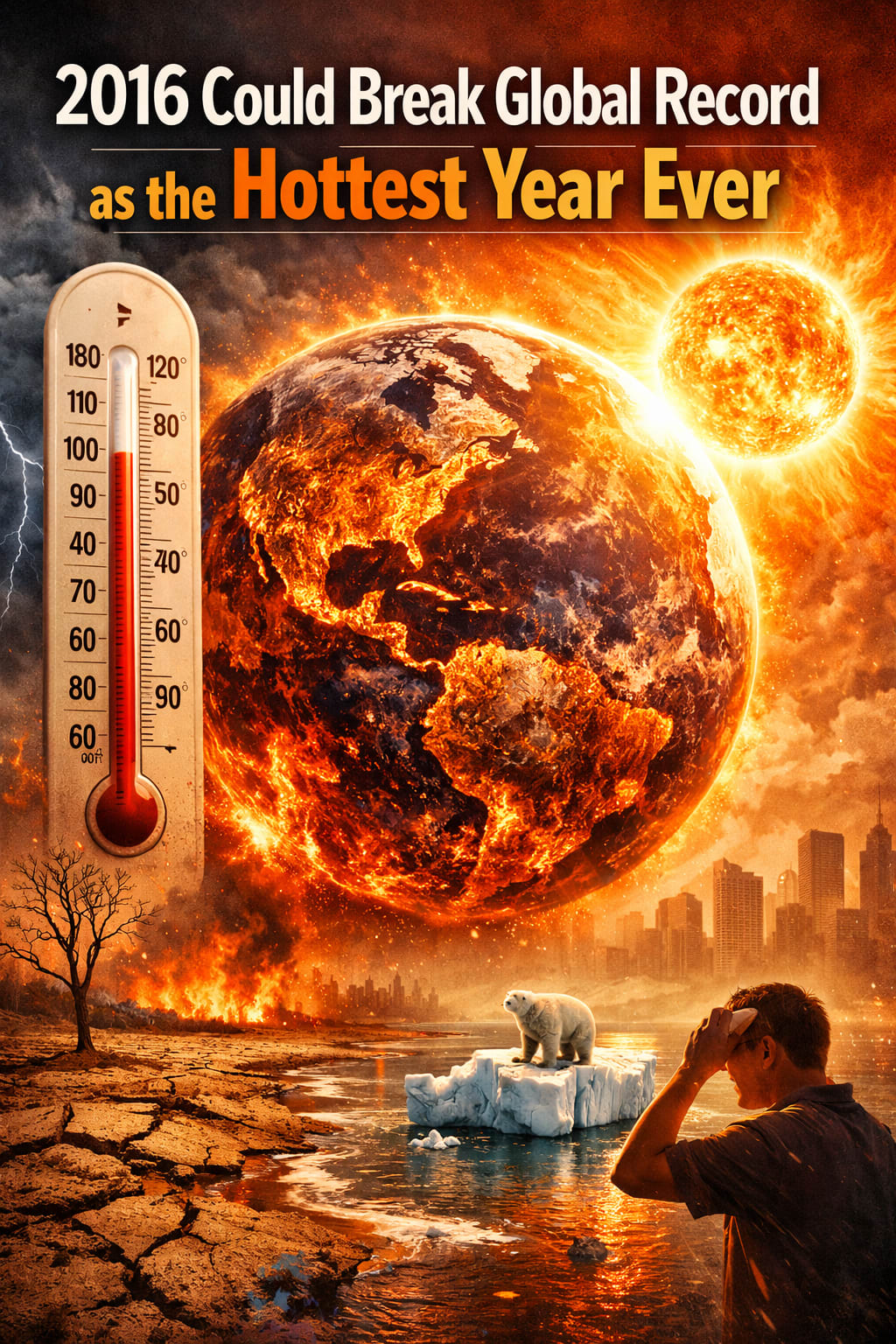
Scientists around the world warned that 2016 could become the hottest year ever recorded, highlighting the accelerating impact of climate change on the planet. Data from major climate organizations indicated that global temperatures were rising at an alarming rate, raising concerns about environmental stability, extreme weather events, and the long-term future of the Earth’s climate system.
According to global climate monitoring agencies, 2016 was on track to surpass the previous temperature records set in 2015 and 2014. If confirmed, this would mark the third consecutive year in which global temperature records were broken. The continuing trend suggests that the Earth is experiencing a sustained period of warming largely driven by human activities such as the burning of fossil fuels and deforestation.
Scientists reported that the average global temperature in 2016 was significantly higher than the long-term average. Measurements showed that global temperatures were nearly 1°C above the mid-20th century average, making it the warmest year in the modern record. The rise in temperature reflects a long-term warming trend that climate scientists have observed for decades. 
One of the key factors contributing to the unusually high temperatures in 2016 was the presence of a strong El Niño weather phenomenon. El Niño occurs when sea surface temperatures in the Pacific Ocean become unusually warm, affecting weather patterns worldwide. During such events, global temperatures tend to increase temporarily, intensifying heatwaves and altering rainfall patterns across many regions.
However, experts emphasized that El Niño alone cannot explain the record-breaking temperatures. They pointed out that the long-term rise in greenhouse gases—particularly carbon dioxide—has significantly warmed the planet over the past century. Human activities such as industrial production, transportation, and large-scale energy consumption have dramatically increased the concentration of these gases in the atmosphere.
Climate scientists also warned that rising temperatures are closely linked to a wide range of environmental impacts. Heatwaves are becoming more frequent and severe in many parts of the world, posing serious risks to human health, agriculture, and water resources. In several regions, prolonged droughts and record-breaking temperatures have already affected millions of people.
In Asia, for example, extreme heat waves have caused significant disruptions and health emergencies. In 2016, parts of South Asia experienced dangerously high temperatures, affecting hundreds of millions of people and highlighting the growing threat posed by climate change.
The warming trend has also affected polar regions, particularly the Arctic, where temperatures have increased much faster than the global average. Scientists observed that Arctic sea ice reached historically low levels in 2016, raising concerns about rising sea levels and changes in global ocean circulation patterns.
Global climate agencies stressed that the warming trend should not be viewed as a single-year anomaly but rather as part of a broader pattern. Data shows that the past decade has been the warmest period since modern temperature records began in the late 19th century. In fact, most of the hottest years on record have occurred in the 21st century.
Experts warn that if global temperatures continue to rise at the current rate, the world may soon exceed the limits set by the Paris Climate Agreement. That agreement aims to keep global warming well below 2°C above pre-industrial levels, with efforts to limit it to 1.5°C. Crossing these thresholds could trigger severe consequences, including more intense storms, rising sea levels, ecosystem damage, and increased food and water insecurity.
Despite these challenges, scientists emphasize that the future is not predetermined. They believe that global cooperation, technological innovation, and stronger climate policies can slow the rate of warming. Transitioning to renewable energy sources such as solar and wind power, improving energy efficiency, and protecting forests are among the strategies that can help reduce greenhouse gas emissions.
Governments, businesses, and individuals all have a role to play in addressing climate change. While the record-breaking heat of 2016 serves as a stark warning, it also highlights the urgency of taking action to protect the planet for future generations.
As the world continues to monitor climate trends, the record temperatures of 2016 stand as a powerful reminder that the Earth’s climate is changing rapidly—and that the decisions made today will shape the environment for decades to come.
About the Creator
Irshad Abbasi
Ali ibn Abi Talib (RA) said 📚
“Knowledge is better than wealth, because knowledge protects you, while you have to protect wealth.
Keep reading
More stories from Irshad Abbasi and writers in Earth and other communities.
Air Pollution Linked to Declining Arctic Ice
Air pollution has long been considered a major threat to human health and ecosystems around the world. However, new scientific findings suggest that its effects extend far beyond the regions where pollution is produced. Recent research indicates that air pollution from industrialized areas, particularly in China, may be contributing to the loss of sea ice in the Arctic. This connection highlights how environmental problems in one part of the world can have serious consequences thousands of kilometers away.
By Irshad Abbasi about 2 hours ago in Earth
Thief In The Night
To the thief in the night that took and replicated what once was mine: Honestly, I feel kind of bad for you. It’s funny, because we hardly know each other. I only know of you through the magazines you’ve written and the broadcasts you have televised in the past — as well as through the public mentions of you from your show business connections there.
By Snarky Lisa7 days ago in Humans


Comments
There are no comments for this story
Be the first to respond and start the conversation.