
How Does a Wildfire Sprinkler System Work to Protect Homes from Advancing Fires?
How Does a Wildfire Sprinkler System Work to Protect Homes?
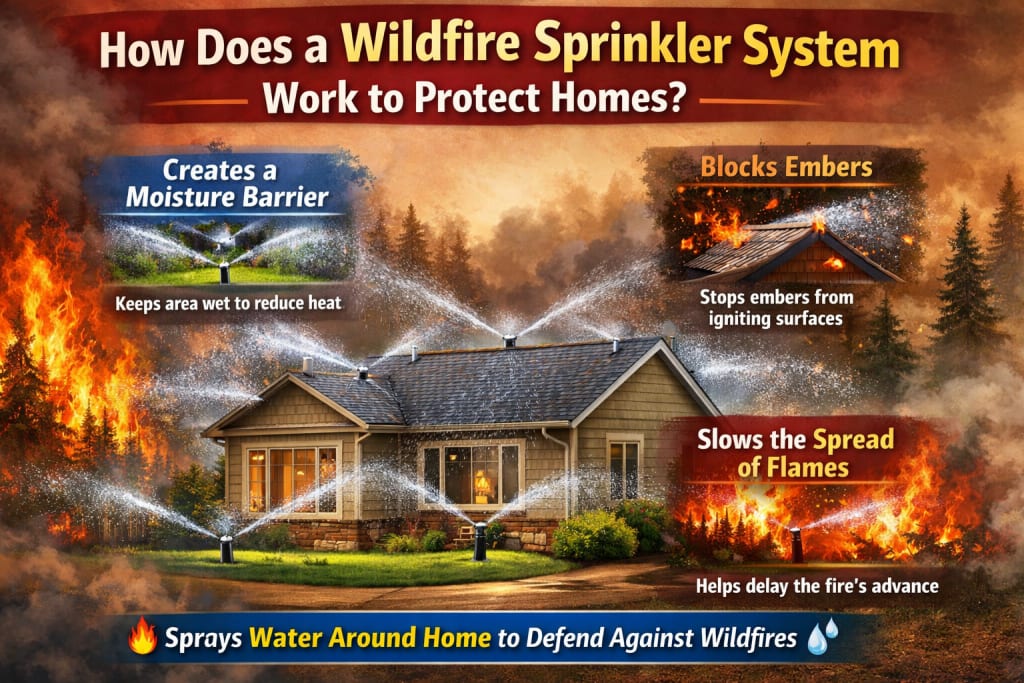
Wildfires have become an increasing concern in many regions where dry vegetation, strong winds, and high temperatures create conditions that allow fires to spread quickly. Homeowners in wildfire-prone areas are now turning to proactive protection systems designed to reduce risk and improve property resilience. Among these solutions, wildfire sprinkler systems are gaining attention for their ability to defend structures before flames reach them.
Many homeowners often ask, “How does a wildfire sprinkler system work?” Understanding how these systems function can help property owners prepare their homes and improve their chances of minimizing damage during an advancing wildfire.
Knowing the Purpose of a Wildfire Sprinkler System
A wildfire sprinkler system is designed to wet vulnerable areas around a home before or during a fire event. By creating a layer of moisture on rooftops, exterior walls, surrounding vegetation, and nearby surfaces, the system helps reduce the chances of ignition from embers and radiant heat.
Wildfires commonly spread through airborne embers that can travel long distances ahead of the flames. These embers often land on roofs, gutters, decks, or dry landscaping. When these surfaces remain dry, ignition becomes more likely. A sprinkler system helps prevent this by continuously applying water, lowering surface temperatures, and maintaining moisture.
This leads many homeowners to ask an important question: How does a wildfire sprinkler system work? The answer lies in a combination of strategic water delivery, reliable pumping systems, and carefully positioned sprinkler heads that distribute water across critical areas of the property.
The Role of High-Pressure Pumps in Fire Protection
One of the most important components of a wildfire sprinkler system is the water pump. In wildfire situations, consistent water pressure is necessary to ensure that sprinklers operate effectively across the entire property.
High-pressure pumps are often used to maintain a steady water flow even when multiple sprinkler heads are operating at the same time. These pumps draw water from a supply source such as a water tank, reservoir, or municipal connection and deliver it through the sprinkler network with sufficient pressure.
Modern pump systems are designed to maintain consistent water pressure automatically. This ensures that the sprinklers continue functioning properly even if water demand fluctuates. Reliable pressure helps the system distribute water evenly, allowing the entire roofline, perimeter, and surrounding vegetation to remain damp.
Without dependable pressure, water distribution could become uneven, leaving certain areas unprotected. A strong pumping system, therefore, becomes a critical part of how wildfire defense systems operate.
How Sprinklers Protect the Home Structure
Once water pressure is established, sprinkler heads positioned around the property perform the actual protective work. These sprinklers are usually installed on rooftops, along roof edges, on perimeter fencing, or around nearby landscaping.
When activated, they release water in controlled spray patterns that cover key surfaces. The goal is not simply to spray water randomly, but to maintain consistent moisture on areas where embers are most likely to land.
At this stage, homeowners often revisit the same question: How does a wildfire sprinkler system work? The answer becomes clearer when looking at the protective effects created by these sprinklers.
Water sprayed onto the roof and surrounding surfaces creates a temporary protective barrier. This moisture reduces the likelihood that embers will ignite roofing materials, wooden structures, or dry debris. In addition, the water cools surfaces exposed to radiant heat from nearby flames.
The system can also dampen nearby vegetation and ground cover, reducing available fuel around the home. This combination of cooling and moisture plays a significant role in slowing fire spread.
Water Sources That Power the System
For a wildfire sprinkler system to operate effectively, it must have access to a reliable water source. Several options are commonly used depending on the property location and infrastructure.
Some homes rely on dedicated water storage tanks specifically reserved for fire protection. These tanks ensure water availability even if local water supplies become disrupted during a wildfire emergency.
Other systems may connect to private wells or municipal water lines, although pressure levels and reliability must be carefully evaluated. In areas where water supply may fluctuate, pumps help regulate pressure to ensure consistent operation.
When considering system design, property owners often return to the central question: How does a wildfire sprinkler system work? In simple terms, the system requires three essential components—water supply, pressure control, and sprinkler distribution—to operate effectively.
Manual vs Automatic Activation
Wildfire sprinkler systems can be activated either manually or automatically, depending on how they are configured.
Manual systems require homeowners or property managers to turn on the system when wildfire risk becomes imminent. This approach can work well when residents are present and monitoring local fire conditions.
Automatic systems, on the other hand, may include sensors or timers that activate sprinklers when certain conditions occur. Some systems can even be operated remotely, allowing homeowners to start the sprinklers if evacuation orders are issued.
Regardless of the activation method, the goal remains the same: to wet vulnerable surfaces before embers arrive.
This again raises the practical question many homeowners ask: How does a wildfire sprinkler system work? Ultimately, the system functions by anticipating fire exposure and preparing the property in advance.
Why Consistent Pressure and Coverage Matter
A wildfire sprinkler system is only effective when water coverage is thorough and consistent. Even small gaps in coverage could allow embers to ignite vulnerable areas.
Reliable pressure ensures that water reaches the furthest sprinkler heads while maintaining proper spray patterns. At the same time, system design must consider roof shape, property size, wind direction, and landscaping layout.
Professional installation often focuses on creating overlapping spray zones. This approach ensures that no section of the property remains dry while the system is operating.
Through careful planning and reliable equipment, wildfire sprinkler systems provide an additional layer of protection that supports broader wildfire preparedness strategies.
Final Thoughts on Wildfire Sprinkler Protection
Wildfire sprinkler systems have become an important tool for homeowners living in fire-prone regions. By delivering consistent water coverage to rooftops, structures, and surrounding vegetation, these systems help reduce ignition risks caused by embers and radiant heat.
Understanding how does a wildfire sprinkler system work? allows homeowners to make informed decisions about protecting their property. When supported by reliable pumps, dependable water sources, and properly positioned sprinklers, these systems can significantly improve a home's resilience during wildfire events.
While no single solution can completely eliminate wildfire risk, sprinkler systems provide an effective defensive measure that helps homes stand a stronger chance against advancing fires.
About the Creator
Keep reading
More stories from Brandon Honey and writers in Earth and other communities.
Why Native Trees Need Specialized Care from Local Arborists
When someone walks through a neighborhood shaded by tall, healthy trees, there is more at work than meets the eye. Behind the lush canopies and sturdy trunks can often be found the expertise of local arborists, individuals who have been dedicating their knowledge to nurturing the trees that define a community.
By Brandon Honey5 months ago in Earth
Planning a Vegetable Garden Layout: Sun, Space, and Succession
You've decided to grow your own food. You've cleared a space, bought seeds, and imagined baskets overflowing with tomatoes and zucchini. Then reality intervenes. The tomatoes shade the basil. The zucchini engulfs the carrots. By midsummer, you have more lettuce than you can eat, followed by a gap of nothing until frost.
By Emma Wallace6 days ago in Earth
Bomb Scare
It was 2027, and the world never thought it would happen. A missle hit the United States, but it wasn't where they had anticipated. A little town in the northeast was hit by a missile strike, they didn't know why, and they didn't know exactly where it hit, but they did know it was a coastal community, somewhere between Maine and Delaware.
By Gregory Payton6 days ago in Fiction



Comments
There are no comments for this story
Be the first to respond and start the conversation.