
The Truth About the Black Lotus: Myth, Symbolism, and Science
The Black Lotus: Myth vs. Reality 🌑

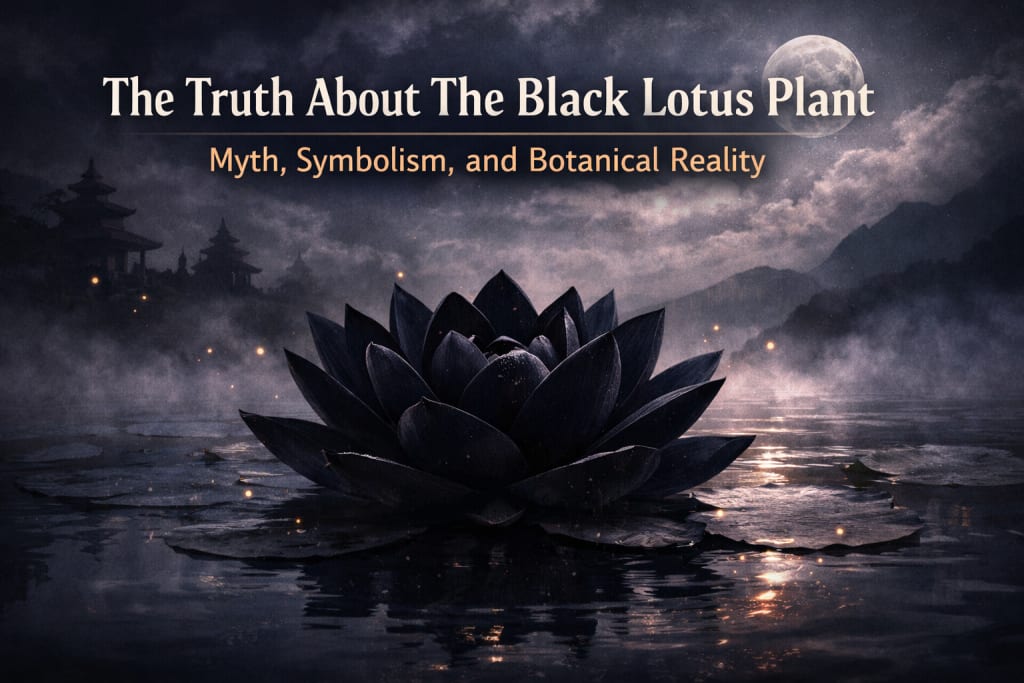
Across the internet, the black lotus appears again and again. Dark petals. Dramatic lighting. Captions filled with mystery, rebirth, and hidden strength.
It looks rare. It feels powerful. It seems almost supernatural.
But there’s an important truth behind the imagery:
A naturally black lotus does not exist.
That statement surprises many people. After all, the photos look convincing. The symbolism feels ancient. The idea seems believable. So why does the myth continue to thrive?
To understand that, we have to separate botanical reality from visual storytelling.
The Real Lotus in Nature
True lotus plants belong to the genus Nelumbo. They are aquatic plants known for their broad leaves and elegant flowers that rise above still water. For centuries, the lotus has symbolized purity and renewal because it grows from muddy depths yet blooms clean and bright.
Scientifically recognized lotus flowers grow in shades of white, pink, yellow, and sometimes deep purplish tones. These colors come from natural pigments found in plant cells. Pigments such as anthocyanins can create deep reds and purples, but they cannot produce a surface that absorbs all visible light.
In simple terms, flowers can appear very dark — but not truly black.
When a lotus seems black in a photograph, it is usually a deep maroon or purple variety captured under low lighting. In natural daylight, the true hue becomes visible.
The Power of Photography and Perception
Modern photography can dramatically alter how we perceive color. High contrast, shadow enhancement, and digital filters can transform a dark purple bloom into something that looks completely black.
Once those images are shared online, they spread quickly. Social media rewards dramatic visuals. A nearly black flower paired with a mystical caption travels much faster than a scientific explanation about plant pigmentation.
Over time, repetition builds belief. When enough people share something, it begins to feel authentic — even if it isn’t botanically accurate.
The black lotus becomes less of a plant and more of an idea.
Dark vs. Black: A Subtle but Important Difference
There are genuine lotus varieties with deep coloration. Some bloom in rich burgundy or dark violet shades that appear almost black in dim environments. But “almost” is not the same as truly black.
Black, in scientific terms, would mean complete absorption of visible light. Plant petals do not have the pigment structure required to achieve that effect naturally.
The difference may seem small to the eye, yet biologically it is significant.
Understanding this distinction helps prevent misinformation while still appreciating the beauty of dark-toned flowers.
Why the Black Lotus Feels Meaningful
Even though it does not exist in nature, the black lotus carries strong symbolic weight.
The lotus itself has long represented growth through difficulty. It rises from mud and still blooms beautifully. That journey from darkness to light has inspired spiritual traditions for centuries.
When the color black is imagined, the symbolism deepens. Black is often associated with mystery, hidden strength, and transformation. Combined with the lotus, it creates a powerful metaphor: resilience emerging from adversity.
In this way, the black lotus becomes emotionally real, even if it is not botanically real.
It represents inner growth.
It symbolizes endurance.
It reflects the idea that something beautiful can rise from struggle.
Those meanings resonate deeply with people, which explains why the image continues to circulate.
The Enduring Appeal of the Myth
The myth persists because it blends emotion with visual drama.
- It looks rare.
- It feels intense.
- It sounds ancient and mystical.
In a digital age, striking concepts spread quickly. A dark flower with a symbolic message is more compelling than a simple botanical explanation.
Yet appreciating symbolism does not require ignoring science. The black lotus can remain a meaningful metaphor without being mistaken for a natural species. For readers who want a deeper look at the black lotus discussion, extended botanical explanations are available online.
Final Thoughts
The black lotus belongs to imagination, art, and storytelling — not to plant classification.
No verified lotus species produces a true black bloom. What exists instead is a combination of dark-toned flowers, photographic editing, and powerful symbolism.
Understanding this allows us to hold both ideas at once: scientific clarity and symbolic meaning.
Sometimes, the most powerful images are not those rooted in biology, but those rooted in human interpretation.
And perhaps that is why the black lotus continues to bloom — not in ponds or lakes, but in the collective imagination.
About the Creator
Leafy Heaven
Leafy Heaven shares practical guidance on indoor plants, plant care techniques, and natural plant benefits. Focused on sustainable growing practices and healthier green living.
Keep reading
More stories from writers in Earth and other communities.
Man (22) Charged With Murder of English Tourist in Temple Bar
Arrest and Formal Charges A 22-year-old man has been charged with the murder of an English tourist following a fatal incident in Dublin’s Temple Bar area. The charge comes after an intensive Garda investigation into events that unfolded in one of Ireland’s busiest and most popular nightlife districts.
By Aarif Lashari4 days ago in Earth
A Knight of the Seven Kingdoms Series Review (Season 1)
As one of the biggest properties in fantasy, A Song of Ice and Fire remains immensely popular with audiences. After reaching far into the past with House of the Dragon, a second spin-off was on the cards. A Knight of the Seven Kingdoms serves up a bite-sized slice of action and drama, but it still claims a spot among the best small-screen titles.
By Robert Cain3 days ago in Geeks




Comments
There are no comments for this story
Be the first to respond and start the conversation.