Top Stories
Stories in FYI that you’ll love, handpicked by our team.
Bikini Bottom Was Actually a Nuclear Testing Site. Third place in (Un)Common Knowledge Challenge.
Who lives in a pineapple under the sea? Things are rarely as they seem. The innocent and silly SpongeBob SquarePants is no exception. First premiering in 1999 the show was wildly popular with children and adults alike. Created by a marine educator turned animator, Stephen Hillenburg, few people are aware of the sinister beginnings of Bikini Bottom, the home of SpongeBob and friends.
By Maria Calderoni5 years ago in FYI
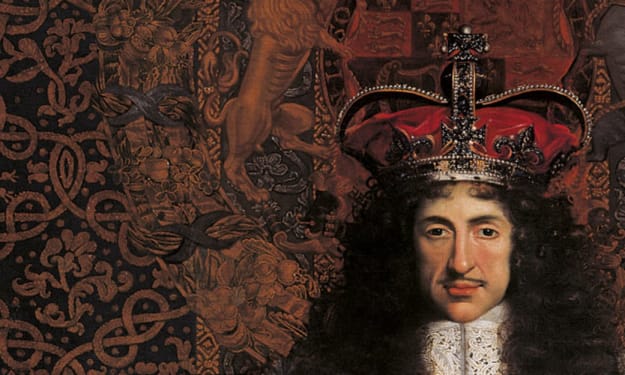
The Merry Sex Life of Charles II
There were many reasons, Charles II (1660-1685) of Britain was known as the ‘merry monarch’. To begin with, he was the symbol of Restoration England, following 11 years of unrest and instability that ended with the restoration of the Stuart monarchy in the kingdoms of England, Scotland, and Ireland when Charles II ascended the throne. Without Charles’ royal patronage there would have been no St. Paul’s Cathedral, Kensington Palace, Chelsea Royal Hospital, or even No. 10 Downing Street.
By Peeping_Soul3 years ago in FYI
Love & War: The Gay Army who Destroyed the Spartans!🏳️🌈. First place in (Un)Common Knowledge Challenge.
When Gerard Butler King Leonidas led his 300 warriors into one of the most notorious battles in history, The Battle of Thermopylae in 480 BC, his army became the ultimate symbol of strength, bravery and peak masculinity. This three-day bloody battle spawned countless iterations; paintings, statues, essays, novels, comic books, movies, memes and the fancy dress costume of choice for buff dudes.
By Kate Holderness5 years ago in FYI
The Biggest Paradox of All: Language is a Lie
Only one with hypermnesia could cranially farctate the brontide of linguistic nuances that the English language possesses. A philodox who adores the sound of his own vocal ruminations, a virago with vulpine command of tongue, or a rapscallion sciolist might cavil the uselessness of elaborate verbatim; but seldom the banal factotum. It is with a frisson of ardour that I indite of the gorgonising peregrination of heady literary escapes, a feeling akin to gargalesthesia, tucked up in beldam arms, as I first discovered the joy of words. An ambuscade of aliment for my natural brain, each letter instilling an appentency within me for any orts or scruples of learning; but to collogue like a clerk was never my destiny. Betimes I excogigated a fantasy land, fuzzled on fudge; my bookcase a chicane of intelligence, a fane to fandangle tomes. Forsooth, the bootless act of reading is as ineffectual as a dextrosinistral with no one to dispraise. First a dandiprat, I grew into a beef-witted morosoph, my crumpet tied to the archaic isms of my childhood; but soon I discovered the pleasure of lalochezia; my sensibilities and my words torn asunder, suddenly athwart each other. Erewhile I grew up with the classics, erelong the four-letter malisons enthrall me now.
By Francesca Devon Heward5 years ago in FYI
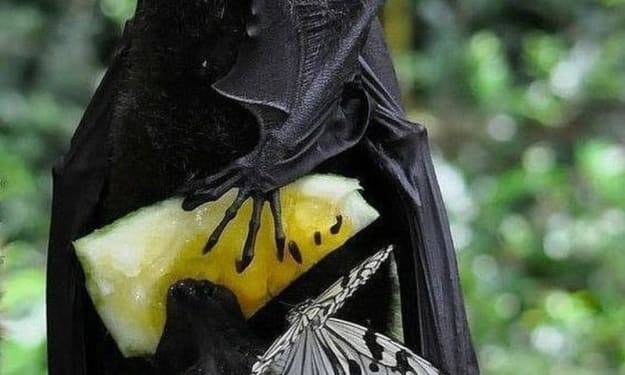
The Overlooked Pollinators
While bees get most of the attention when it comes to pollinating our crops, there is an integral nighttime pollinator that shouldn’t be overlooked: bats. Bats are responsible for pollinating over 500 types of tropical plants and flowers across the globe, including dates, bananas, agave, cashews, eucalyptus, avocados, cacao, and durian. They are important in the medicinal world as well, with several remedies—such as treatments for epilepsy and night blindness—originating from plants that rely on bats for survival.
By M.R. Cameo5 years ago in FYI
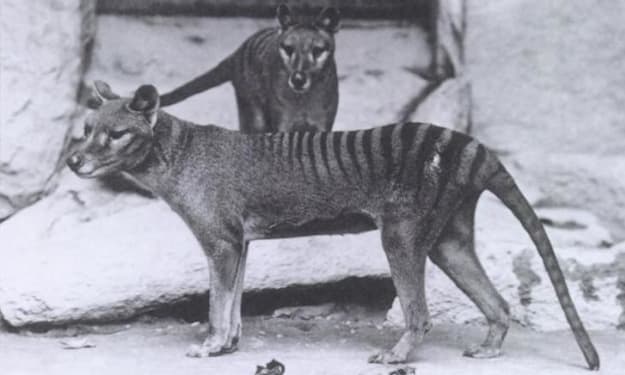
Vicious Beast to Victim: Folklore of the Tasmanian Tiger
The Tasmanian Tiger or Thylacine is an iconic Tasmanian animal that went extinct in 1936 when the last Tiger died in captivity. Today, the animal is steeped in myths and legends that have been weaved into its history since the nineteenth century. The Thylacine experienced varying treatment by groups that each had different values and dealings with it. This includes the contributions of a struggling scientific front in trying to understand the unfamiliar, farmers with inept farming practices and naturalists in support of the animal. Not many people are aware of why the Tiger is embraced as a state icon in Tasmania, Australia, and how the media and public perception evolved over centuries to end with a population with deep-seeded guilt and responsibility for the decimation of a species.
By Eloise Robertson 5 years ago in FYI