
Book Review: "The Hitler Years" by Frank McDonough (Pt. 3)
5/5 - the road to the war...

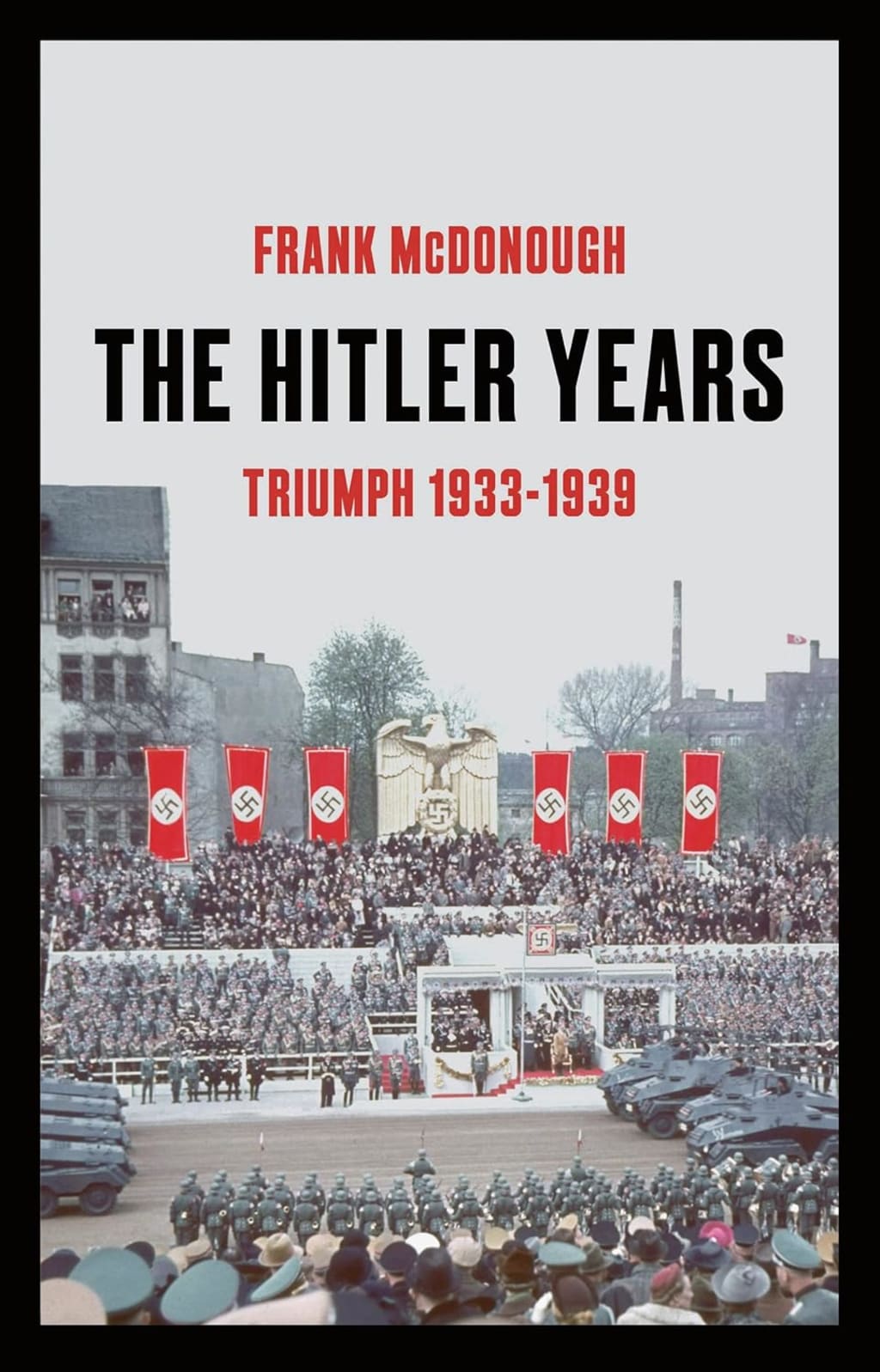
This review covers from the beginning of Chapter 6 to the end of the book.
Please note: this is a review of the book 'Triumph' and not of its successor 'Disaster'.
***
Why is it always the case that they give you the first book cheaply and then charge you more for the second? I don't know but it is really horrid of them. Anyways, as we continue into Hitler's reign of terror, we are moving inevitably towards World War 2. We've hit the final few years before the war and in England, Chamberlain is coming into power and they've finally realised that perhaps the Germans are no friends of theirs. Meanwhile, we've heard basically nothing of the Holocaust (which is covered in a different book entirely). Needless to say, this book does a fantastic job in taking us politically from Hitler's strange foreign policies to the run-up to the war. McDonough has definitely done a hell of a lot of research.
The first interesting thing that happens during the 1938 era is Hitler's entrance into Austria. Now, you'd think it would be an invasion, which is why Hitler called Mussolini and asked whether he would be opposed to him going into Austria to take it. Mussolini said he wouldn't stand in the way and of course, Hitler stated that he would always be a friend to the Italian dictator. Once in Austria however, there was no invasion.
Austrians felt liberated by the Germans and cheered, hollered and rang church bells as Hitler went through the cities, gave speeches and travelled around like bloody Napoleon. Of course, Austria is Hitler's own homeland and yet, there is something really weird about the way everyone just trusted him to do good things - even though he was horrifically evil. This is something, I have realised, that is much worse than those who worship people like Donald Trump because even in his own country people hate him. But Hitler seems to have gone pretty far with people all over Europe. It isn't really as comparable as I once thought it was.
Another thing I enjoyed reading about was the fact that economically, Germany was actually worse off than most other countries and in many cases, they were worse off than they were during the Weimar Era. Of course, the Weimar Era is my era of choice when it comes to reading and research, but it was a time of dire poverty and government distrust, it was practically a national collapse caused by the Treaty of Versailles and its impact on the German people. But to say that Germany was more prosperous in Hitler's Era is wrong too. It was still really pretty bad for people like the factory workers and the lowest paid agricultural workers.
They were not doing well in the way of food either. Pork and eggs were very expensive and so, most people lived off bread and cigarettes which were far cheaper. Spending may have gone up but then again, everything was more expensive so of course it would. Economists reported that Germans had a much lower standard of life than England and the USA and yet, they didn't seem to take much notice of it. McDonough writes this as being a stark vision of Germany from the outside to the inside rather than the other way around - people around Europe saw the truth and were now not so sure that this Hitler guy was doing anything very good at all.
After covering Hitler's discussions with Chamberlain, we move into 1939 in which we as the readers, know that World War 2 is on the way. Many people around the world now agree that Hitler and his Nazi Court of political madmen are loose canons and possibly very dangerous. A war is on the horizon and there's nothing about world peace that feels stable. Of course, we also know that World War 2 pretty much begins with the fact that Hitler invaded Poland - but it is still early days and all the politicians all over Europe are simply wondering what this strange, disturbed Austrian dictator will do next.
Frank McDonough makes an excellent case for us to revisit our analysis of World War 2 and pretty much teaches us that the sort of things we were taught in school perhaps were not all that realistic and possibly based more on public opinion than on actual fact. There were far more political moves going on in the background and the idea that Hitler was a lone gunman is completely wrong. Yes, he's a manipulative piece of crap, but he also worked with a bunch of other men who were as manipulative as he was when it comes to politics. With the situation in Czechoslovakia and the situation in Poland, there were definitely instabilities coming through 1939 that people definitely saw. It is wrong to think that everyone thought this was peace time. Once the invasion started, there was no going back.
About the Creator
Annie Kapur
I am:
🙋🏽♀️ Annie
📚 Avid Reader
📝 Reviewer and Commentator
🎓 Post-Grad Millennial (M.A)
***
I have:
📖 300K+ reads on Vocal
🫶🏼 Love for reading & research
🦋/X @AnnieWithBooks
***
🏡 UK
Keep reading
More stories from Annie Kapur and writers in Geeks and other communities.
Book Review: "The Hitler Years" by Frank McDonough (Pt. 2)
This review covers (Triumph) chapters 3 through to the end of 5 *** And so we continue with our review of The Hitler Years (Triumph) and thus it includes the creation of the 'family unit' ideology that is so prevalent in the language of the right wing American doublespeak today. The rolling back of women's roles to those that are confided to the home was a big deal because it meant that more women now had to have more children in order to fill the workforce later on. This comes towards the end of the second chapter and then, in the third chapter, we move into the creation of the Volkswagon and how Hitler was definitely trying to sell the idea that the Nazi Party was one for the average (rather) 'nuclear' family.
By Annie Kapura day ago in Geeks
Hunter x Hunter Power Rankings
The world of Hunter × Hunter isn’t about straightforward battles — it’s about strategy, skill, and the endless pursuit of personal growth and survival. Strength alone rarely wins; clever tactics, Nen mastery, and adaptability often decide who lives, who dies, and who rises above the rest. Some characters rely on raw power, others on intelligence, precision, or complex abilities — but only a select few operate on a level that makes them untouchable in combat.
By Top Ranked6 days ago in Geeks
Early March 2026: 4 Goals Accomplished
It's early March and I've now accomplished my 4th writing goal for the year of 2026. Before diving into the behind-the-scenes of it... why not tell you up front what that accomplishment was? I was published in a 2nd publication for this year. Published in Helix Literary Magazine out of Central Connecticut State University. You can read it for free right now!
By Stephen Kramer Avitabile3 days ago in Writers



Comments
There are no comments for this story
Be the first to respond and start the conversation.