literature
Geek literature from the New York Times or the recesses of online. Our favorite stories showcase geeks.
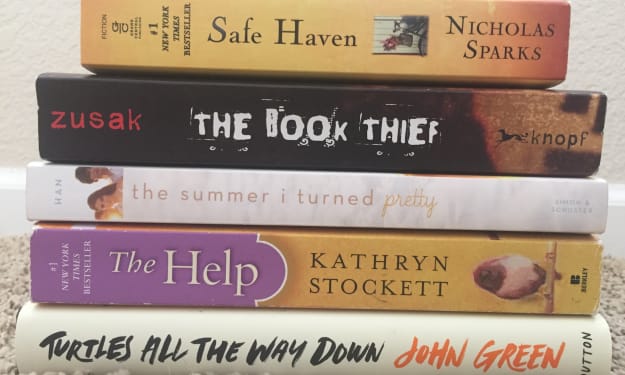
5 Books That Will Make You Cry
I love when a book makes me cry. There's something about having so much empathy for a character that you become physically emotional that's really special. It's cleansing and it's utterly human. When a book makes me cry, I know it's good because I've connected with the characters enough and been emotionally moved enough that I have a physical reaction. So, here are five books that made me cry, and that'll make you cry too.
By Alyssa Conroy8 years ago in Geeks
She Definitely Doesn’t Need You Anymore
Most people know that conflict is a heavily defining part of life; this is one thing that goes without saying. From arguing with a parent over curfew to disagreeing with the way a coworker accomplishes tasks or having to continually remind your housemate to take care of chores, everyone has encountered conflict. While conflict in itself isn’t bad, the way people handle it determines whether the effect is positive or negative. Much like in real life, in literature, conflict is essential. It is the base on which all other aspects of the story branch from, and without conflict there would be no plot line, which would result in having nothing interesting to read. In Kate Chopin’s “Story of an Hour”, there are multiple important conflicts, and while none of them are in established usage for that era, they all make the story a story.
By Emma Williams8 years ago in Geeks
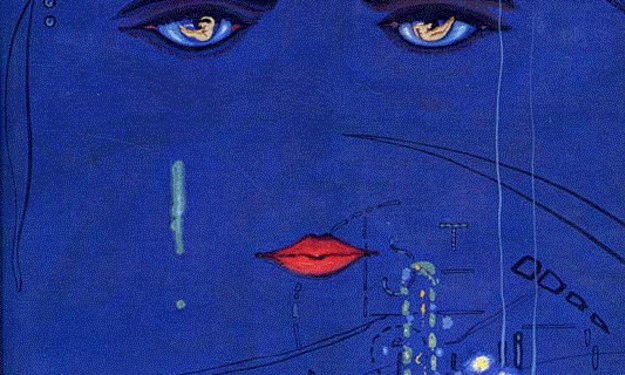
The Gatsby Complex
The Great Gatsby by F. Scott Fitzgerald encompasses a variety of themes including the glorification of wealth, romanticization of unrequited love, and the pursuit of the American dream—to name a few among many. However, one theme that is often overshadowed by the ones listed above is the theme of idolizing something that simply doesn't live up to one's perceived expectations of it. For instance, Jay Gatsby internalized the notion that Daisy Buchanan, the girl he dreamt his whole life of being with, was nothing short of idealized perfection. However, for anyone that has read the book, this simply doesn't hold true—Gatsby idolized Daisy and wound up with a relationship that didn't live up to his expectations. This isn't something that only occurred in the roaring 20s, a period of wealth, abundance, and jazz, but is a recurring aspect that follows us even to this day and age.
By Ankita Upadhyay8 years ago in Geeks
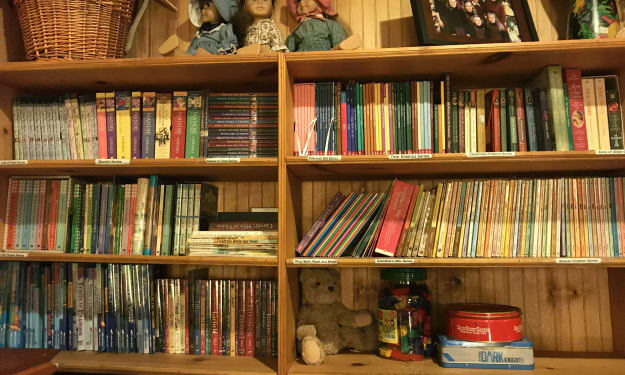
You Say You Don't Like To Read?
I was talking to my 10-year-old little sister yesterday, as she was playing a game on her "school" laptop, and I asked her if she's read any interesting books lately. She quickly answered me with a clear disdain for reading, saying that she only reads when she has to, and "no book in the world is interesting, it's boring." I realized then how different my childhood was compared to hers. Disclaimer, I'm only 19, so I won't pretend that I grew up in a time where technology was unheard of, but I certainly didn't have the technology as readily available to me as my siblings do now.
By Sophia Shedd8 years ago in Geeks
A 'Sky in the Deep' Review
This weekend in my local Barnes and Nobles store I found myself drawn to the beautiful cover of the book Sky in the Deep by Adrienne Young. Now, I don’t ever buy books just for their covers so I proceeded to open the book and read the jacket cover. This cover featured a blurb about the story, promising war, romance, and a kickass female protagonist. I finished the book a few hours ago and I’m disappointed to say it didn’t quite live up to my expectations.
By Ky Bollinger8 years ago in Geeks
Stop Book-Shaming
By now I am sure we are all familiar with the act of book-shaming. Perhaps you tell people you don't like a certain book when you do. Maybe you are too embarrassed to read a particular book in public, or maybe you won't even read a certain book at all because you feel ashamed. If this or anything similar has happened to you (and I'm sure it's happened to a lot of us) you have been a victim of book-shaming.
By Hannah Amiee8 years ago in Geeks
I Am an Author
My first book I ever wrote and published was Trusting You, Trusting Me. It is a romance novel, but to me, it was more than just that. The girl in my book suffers from mental illness. She has so much anxiety, sadness, and anger; it makes her have this paranoia about everything that goes on in her life, but she soon finds love in an unexpected man who has trust issues because of his ex.
By Jescina Miller8 years ago in Geeks
On Fairy Stories
On Fairy Stories: Tolkien’s Apologia Fairytales or fairy stories have been a large part of the world’s body of literature. They serve as a way to instruct, inform, and entertain those who read or hear them. They have captivated and inspired for generations. Of course, most of the inspiring and captivating that happened, happened to children. When most people think of fairytales or fairy stories, they think of them as children’s stories and as things that are meant for children that have no place in the lives of adults. Fairy stories have long been considered the realm of children and that these fairy stories are something to be eventually outgrown as a child reaches adulthood. This was especially true in the early part of the twentieth century in Great Britain. J. R. R. Tolkien is widely known as the father of modern fantasy. The author of such works as The Lord of the Rings, The Hobbit, and The Silmarillion had a different idea than most of his time. Tolkien believed that, although fairy stories were great for children, fairy stories are ideally suited for adults. Tolkien argues in his essay, "On Fairy Stories," that fairy stories have a unique and deserving place in the hearts and minds of everyone, not just children. Tolkien aims to persuade his audience that they should read whatever they desire to read. His argument that fairy stories are a beautiful thing, a chance for men to create great works of art, is intended to reach as many as possible. Tolkien even goes on to say that, because fairy stories are seen as the realm of children, they have been decreased in value. “Fairy-stories banished in this way, cut off from a full adult art, would in the end be ruined; indeed in so far as they have been so banished, they have been ruined” (349). Tolkien uses his credentials as a highly respected professor as well as remembering what it is like to be a child and to escape from the real world, and well-crafted questions to try to convince his readers that fairy stories are something that should be read and enjoyed by people of all ages, not just children.
By Kenyon Willard8 years ago in Geeks
Preface to 'The Further Works of William Shakespeare'
A nasty debate has raged on for decades in essentially every liberal arts department across the globe. It goes like this: who, out of history's most noteworthy deceased authors, would be most entertaining on an intimate lunch date?
By Surreal Time Press8 years ago in Geeks
'The Hobbit'
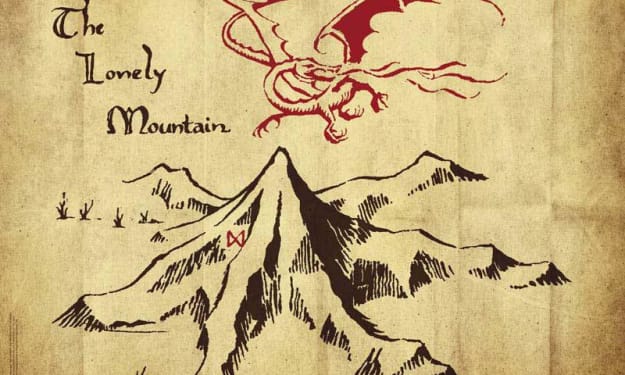
Fairy Tales, the beginnings of wonderment. Why did they begin? Will they end? All questions are unknown. Children are raised on such fantastical stories. They weave into their hearts and minds. Epic heroics and tales of magic fly off of the worded page. There is a catch to all of this. Not all fairy tales, are fairy stories. Not just the ones that have the magical beings classes as fairies are fairy tales. There are several criteria that must first be thought of. If you dream of a fairy realm, that dream story is not a fairy tale. Talking animals with no apparent cause as to how, again, are not a fairy story. Many of these are found in books that are labeled “fairy tales,” but their content was not taken into consideration. The technicality was not thought out. Why label things as fairy tales when they are not fairy tales? J. R. R. Tolkien wrote a marvelous essay, On Fairy Stories, in which he studies the idea of what actually qualifies as a fairy tale. In accordance to the essay, fairy tales are only “fairy tales” if they take place in the realm of Faerie. Tolkien’s book, The Hobbit, does indeed take place in the fantastical realm. It is a fairy tale.
By Kendra Burnett8 years ago in Geeks