
Dinosaurs and the Mystery of Their Reproduction
How fossil discoveries revealed that many dinosaurs laid eggs and cared for their young millions of years ago.

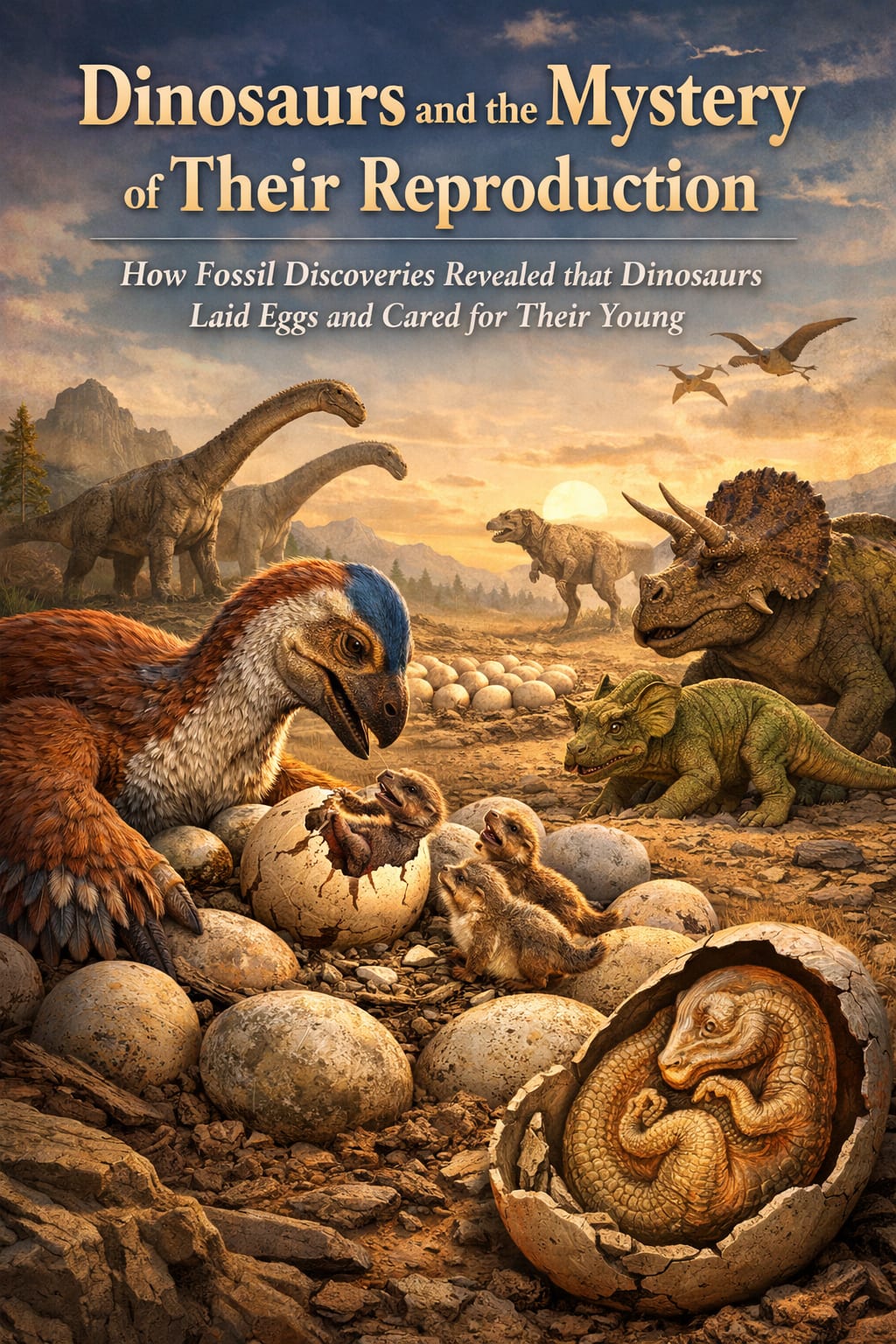
For decades, dinosaurs have fascinated scientists and the public alike. These giant creatures ruled the Earth for more than 160 million years before their extinction around 66 million years ago. One of the most interesting questions scientists have tried to answer is how dinosaurs reproduced. Evidence from fossils has shown that many dinosaurs had the ability to produce and lay eggs, much like modern birds and reptiles.
The idea that dinosaurs laid eggs was not always widely accepted. Early paleontologists in the 19th century had limited fossil evidence, and many aspects of dinosaur life remained mysterious. However, as more fossils were discovered across the world, scientists began to find clear proof that dinosaurs reproduced by laying eggs and raising offspring.
One of the most important discoveries came in the early 20th century when dinosaur eggs were first identified in Mongolia. These fossils were found during expeditions to the Gobi Desert. The discovery of fossilized eggs in nests suggested that dinosaurs did not simply lay eggs and abandon them. Instead, some species likely built nests and protected their eggs, much like birds do today.
Over the years, paleontologists have discovered hundreds of dinosaur egg fossils on different continents, including Asia, North America, South America, and Europe. These eggs vary in size and shape, indicating that different species of dinosaurs had different reproductive strategies. Some eggs were small and oval-shaped, while others were larger and more spherical.
The discovery of dinosaur embryos inside fossilized eggs was another breakthrough. These embryos allowed scientists to study how baby dinosaurs developed before hatching. In some cases, the skeletons of the unborn dinosaurs were so well preserved that researchers could identify the species and understand their growth patterns.
One famous example involves the dinosaur species Maiasaura, whose name means “good mother lizard.” Fossils of this dinosaur discovered in Montana, United States, showed nests containing eggs, hatchlings, and young dinosaurs of different ages. This evidence strongly suggested that some dinosaurs cared for their young after they hatched. Scientists believe that adult Maiasaura may have fed and protected their babies until they were strong enough to survive on their own.
The structure of dinosaur eggs also provides clues about their reproduction. Some eggs had hard shells similar to bird eggs, while others had softer shells resembling those of reptiles. This variation suggests that dinosaurs shared characteristics with both birds and reptiles, supporting the scientific theory that birds evolved from certain groups of dinosaurs.
Modern technology has helped scientists learn even more about dinosaur reproduction. Using advanced scanning methods such as CT scans, researchers can examine fossilized eggs without damaging them. These scans reveal details about embryo development, eggshell structure, and even how the baby dinosaur was positioned before hatching.
Scientists have also studied nesting sites to understand dinosaur behavior. Some fossil sites contain dozens or even hundreds of nests arranged in colonies. This suggests that certain dinosaurs may have gathered together during breeding seasons, much like many birds do today. Living in colonies would have helped protect eggs and hatchlings from predators.
Another fascinating discovery is that some dinosaur fossils appear to show adults sitting on nests. This behavior is very similar to how birds incubate their eggs by keeping them warm. Such findings strengthen the connection between dinosaurs and modern birds.
Despite these discoveries, many questions remain. Scientists are still trying to determine exactly how long dinosaur eggs took to hatch, how often dinosaurs reproduced, and how many offspring survived to adulthood. Fossil evidence suggests that life was difficult for young dinosaurs, as many predators likely targeted eggs and hatchlings.
Nevertheless, the evidence clearly shows that dinosaurs were capable of producing offspring through eggs and, in some cases, caring for their young. These discoveries have changed our understanding of dinosaur behavior and biology. Instead of being seen only as massive, fearsome creatures, dinosaurs are now recognized as complex animals with social and reproductive behaviors.
The study of dinosaur reproduction continues to evolve as new fossils are discovered and technology improves. Each new finding helps scientists piece together the story of how these ancient giants lived, reproduced, and eventually disappeared from the Earth.
In the end, dinosaur eggs and embryos serve as a powerful reminder that even the largest and most powerful creatures once began life as tiny hatchlings, emerging from fragile shells millions of years ago.
About the Creator
Irshad Abbasi
Ali ibn Abi Talib (RA) said 📚
“Knowledge is better than wealth, because knowledge protects you, while you have to protect wealth.
Keep reading
More stories from Irshad Abbasi and writers in History and other communities.
Volcanic Eruptions and the Rise of Dinosaurs
The story of dinosaurs is one of the most fascinating chapters in Earth’s long history. These incredible creatures ruled the planet for more than 160 million years, evolving into hundreds of different species that ranged from tiny feathered hunters to gigantic plant-eating giants. While many factors contributed to their rise, scientists believe that volcanic activity played a crucial role in creating the environmental conditions that allowed dinosaurs to flourish.
By Irshad Abbasi about 14 hours ago in History
The Year 1939 in Review: Fun Facts, Trivia, and Historic Highlights
This quick read is a collection of fun facts, trivia, and historic events from the year 1939. Discover the year’s top news stories, most influential people, sports facts, a World War II timeline, entertainment trivia, and much more.
By Gregory DeVictor6 days ago in History
My First Time Skiing and I Got Lost, Alone, in the French Alps
Looking back, I can trace some of my life’s biggest adventures to a simple action from my sister. She’d introduced me to Tommy (a very long time ago), a colleague of hers, who had overshared his penchant for Italian-looking women, and I ticked that box.
By Chantal Christie Weiss3 days ago in Humans




Comments
There are no comments for this story
Be the first to respond and start the conversation.