
Islamic State Accused of Involvement in Antiquities Smuggling
Looted historical artifacts from conflict zones fuel black-market trade and help finance extremist activities

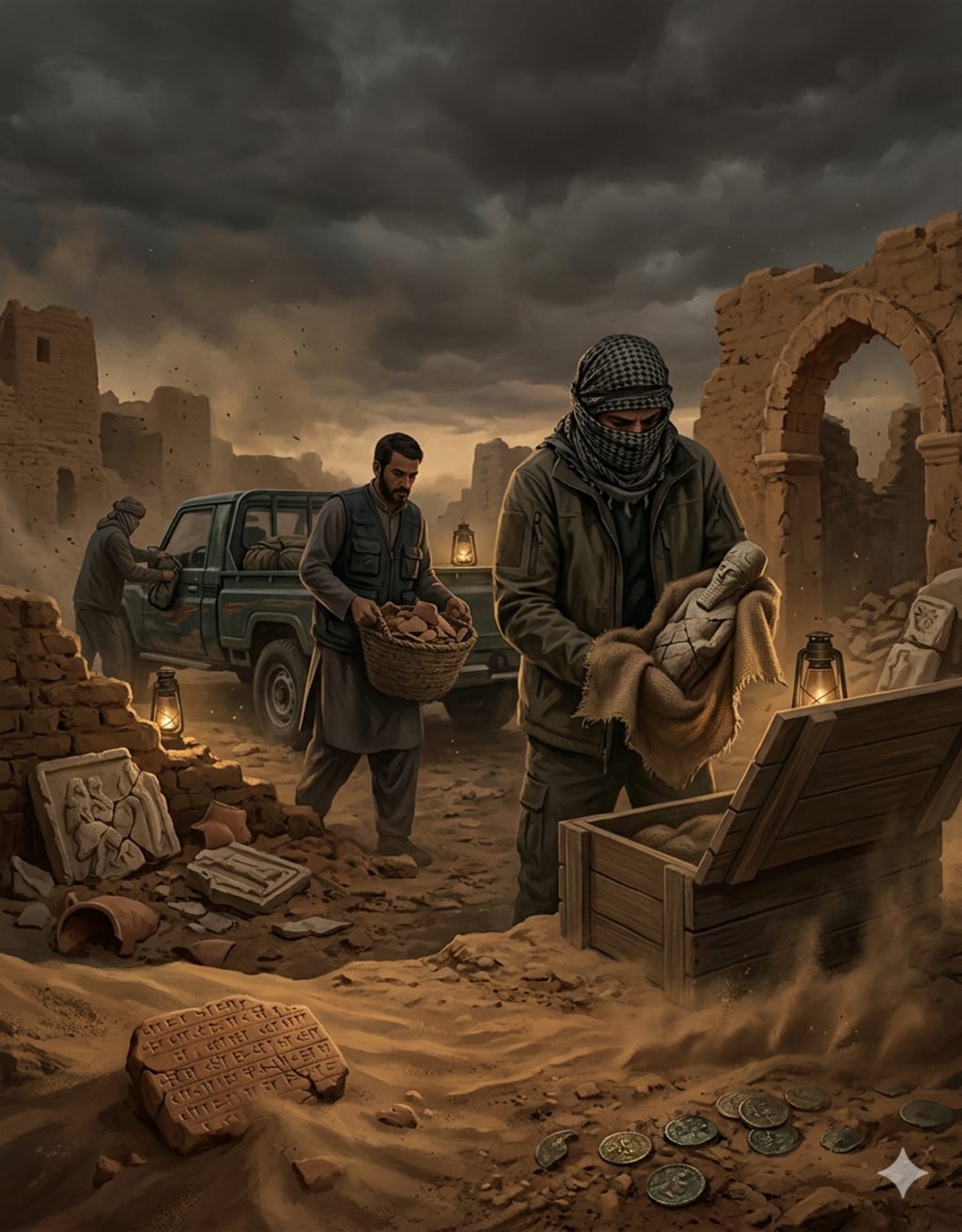
The illegal trade in antiquities has long been a shadowy but profitable enterprise, and in recent years it has gained global attention due to the involvement of extremist groups. Among these groups, the so-called Islamic State (IS) has been widely accused by international investigators and cultural heritage experts of participating in the looting and smuggling of priceless historical artifacts. These activities not only threaten humanity’s shared cultural heritage but also provide a significant source of funding for militant operations.
During the height of its territorial control in parts of Iraq and Syria between 2014 and 2019, the Islamic State captured regions rich in ancient history. These areas included archaeological sites dating back thousands of years, from the Assyrian and Babylonian civilizations to Greco-Roman settlements and early Islamic heritage sites. Instead of preserving these sites, IS reportedly exploited them in multiple ways—either by destroying monuments for propaganda purposes or by looting artifacts to sell on the international black market.
Archaeologists and investigators say the group developed an organized system to profit from antiquities. Local diggers were sometimes forced or encouraged to excavate historical sites. In other cases, IS militants themselves supervised illegal excavations. The group reportedly issued permits to looters and demanded a percentage of the profits in return. This system effectively turned cultural heritage sites into revenue sources.
Once artifacts were removed from the ground, they were smuggled through complex trafficking networks that stretched across borders. Items such as ancient coins, statues, clay tablets, jewelry, and pottery were transported through neighboring countries before eventually reaching dealers and collectors in Europe, the Middle East, and North America. The small size and high value of many artifacts made them easy to conceal and transport.
Experts estimate that the illegal antiquities trade generated millions of dollars for extremist groups during the peak of IS control. Although oil smuggling and taxation were larger sources of income, the trafficking of cultural artifacts played a meaningful role in diversifying the group’s funding streams. The destruction of major heritage landmarks, such as temples and statues, also served a dual purpose: it created global shock while increasing the scarcity—and therefore value—of smaller artifacts that could be sold secretly.
The impact of these activities on cultural heritage has been devastating. Archaeological sites are not simply collections of objects; they are historical records that provide insight into ancient civilizations. When artifacts are removed without proper documentation, the historical context is lost forever. Scholars say that looting destroys layers of information that archaeologists rely on to reconstruct the past.
International organizations, including cultural preservation groups and law enforcement agencies, have stepped up efforts to combat antiquities trafficking. Governments have introduced stricter import regulations for ancient artifacts, and customs officials have increased inspections of suspicious shipments. Museums and collectors are also being urged to conduct thorough provenance checks before acquiring historical objects.
Several high-profile cases in recent years have demonstrated the scale of the problem. Authorities in multiple countries have seized looted artifacts believed to have originated in conflict zones in Iraq and Syria. In some cases, investigators were able to trace items back to specific archaeological sites that had been damaged by illegal excavations.
Technology is also playing a growing role in the fight against cultural trafficking. Satellite imagery has helped researchers identify looted sites by detecting excavation pits and disturbances in the landscape. Databases and digital registries are being developed to document known artifacts and track stolen items as they appear in the art market.
Despite these efforts, challenges remain. The global art and antiquities market is complex, with many private transactions taking place outside public oversight. Smugglers often exploit legal loopholes and weak enforcement in certain regions. Furthermore, once artifacts enter private collections, they can become difficult to trace or recover.
Cultural heritage experts stress that protecting historical sites requires international cooperation and public awareness. Governments, museums, collectors, and auction houses all play a role in ensuring that artifacts are acquired legally and ethically. Educating buyers about the risks and consequences of purchasing looted objects is also essential.
Ultimately, the fight against antiquities smuggling is not just about preventing financial support for extremist groups. It is also about safeguarding the legacy of human civilization. Every artifact lost to looting represents a fragment of history that may never be fully understood again. Protecting these treasures ensures that future generations can continue to study and appreciate the rich cultural heritage of the past.
About the Creator
Irshad Abbasi
Ali ibn Abi Talib (RA) said 📚
“Knowledge is better than wealth, because knowledge protects you, while you have to protect wealth.
Keep reading
More stories from Irshad Abbasi and writers in History and other communities.
Birthplace of the Buddha Threatened by Rising Air Pollution
Lumbini, located in the southern plains of Nepal near the border with India, is one of the most sacred sites in the world for Buddhists. It is widely recognized as the birthplace of Gautama Buddha, the founder of Buddhism who lived more than 2,500 years ago. The site, centered around the Maya Devi Temple and its surrounding sacred garden, attracts hundreds of thousands of pilgrims and tourists every year. However, this historically and spiritually significant location is now facing an alarming threat: increasing air pollution.
By Irshad Abbasi a day ago in History
The Strait of Hormuz: When the World Held Its Breath
The sea was calm, but the tension in the air was anything but peaceful. At the narrow waters of the Strait of Hormuz, one of the most important shipping routes on Earth, warships began to appear on the horizon. Oil tankers slowed down, merchant ships changed their routes, and the world watched nervously.
By Imran Ali Shahabout 11 hours ago in History


Comments
There are no comments for this story
Be the first to respond and start the conversation.