
The Clinton Record: A Fierce Examination of Power, Secrecy, and the Women Caught in the Crossfire

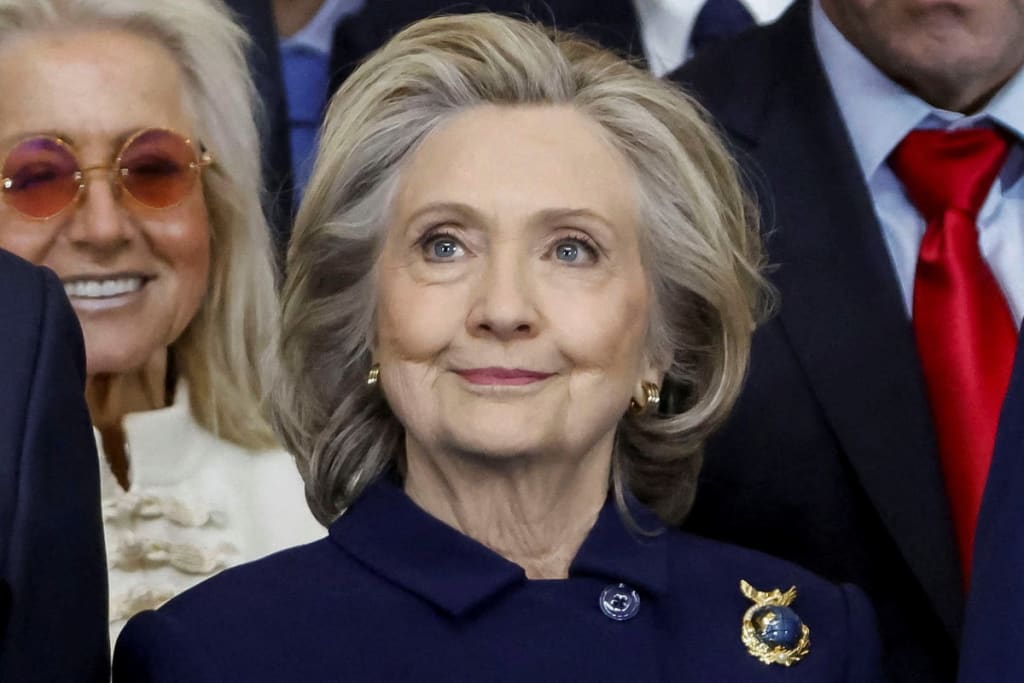
Hillary Clinton is cut from the same cloth as Donald Trump. Don't for a minute think otherwise. She only succeeds at being more intelligent and sneaky than Trump. But at their core, they are the same.
Hillary Clinton’s public career spans decades, and with it comes a long trail of controversies that have shaped her reputation. Critics argue that her record reveals a pattern of secrecy, defensiveness, and willingness to protect political power even at the expense of vulnerable individuals. These controversies are not isolated incidents; they form a consistent narrative documented across major news outlets, congressional investigations, and firsthand accounts.
This analysis examines the most significant issues associated with Hillary Clinton’s career, focusing on the themes that recur across them: opaque decision‑making, blurred ethical boundaries, and the treatment of women who accused her husband of misconduct.
The Private Email Server and the Culture of Secrecy
In 2015, it became public that Hillary Clinton used a private, unsecured email server for official State Department business. The FBI investigation concluded she was “extremely careless” with classified information, though they did not recommend charges.
The controversy was not simply about technology. It reflected a deeper pattern:
- Avoiding transparency laws by routing communications outside government systems
- Deleting thousands of emails later deemed work‑related
- Destroying devices used to access the server
Critics argued that these actions undermined public accountability and created unnecessary national security risks. The FBI’s findings reinforced the perception that Clinton operated with a sense of exceptionalism — that rules applied differently to her.
The Clinton Foundation and the Appearance of Influence
The Clinton Foundation’s fundraising practices during Hillary Clinton’s tenure as Secretary of State raised persistent questions about conflicts of interest. Major outlets such as The Washington Post and The New York Times reported that foreign governments and wealthy donors gained unusual access to the State Department.
No direct quid‑pro‑quo was proven, but the optics were troubling:
- Donations from countries with business before the State Department
- Meetings between donors and senior officials
- Overlapping roles between Clinton’s aides and the Foundation
The issue was not illegality; it was the appearance of a pay‑to‑play environment, which critics argued eroded public trust.
Benghazi and the Question of Accountability
The 2012 attack on the U.S. diplomatic compound in Benghazi, Libya, resulted in the deaths of four Americans. Multiple congressional committees investigated the State Department’s security decisions. Reports found systemic failures in diplomatic security, though they did not conclude that Clinton intentionally withheld protection.
Still, the controversy persisted because of:
- Shifting public explanations in the days after the attack
- Internal communications suggesting the administration struggled to control the narrative
- Clinton’s statement that the cause “didn’t matter” in the context of the victims’ families
For critics, Benghazi symbolized a broader issue: a reluctance to accept responsibility when decisions go wrong.
Whitewater and the Long Shadow of the 1990s
The Whitewater investigation in the 1990s examined the Clintons’ involvement in a failed Arkansas real‑estate venture. Independent Counsel Kenneth Starr investigated allegations of financial misconduct. While Hillary Clinton was never charged, the inquiry uncovered other issues, including the Lewinsky scandal, and contributed to a public perception of evasiveness.
The controversy highlighted:
- Missing billing records from her law firm that later resurfaced under unclear circumstances
- Conflicting statements about her role in the venture
- A pattern of defensive responses to legitimate questions
Whitewater became the first major episode in a decades‑long narrative of secrecy and suspicion.
The Treatment of Women Who Accused Bill Clinton
One of the most enduring criticisms of Hillary Clinton concerns her role in responding to allegations against her husband. Several women — including Paula Jones, Kathleen Willey, and Juanita Broaddrick — have said they felt smeared, dismissed, or intimidated by the Clinton political apparatus. Their accounts have been widely documented in interviews and reporting.
The strategy was consistent:
- Discredit the woman
- Protect Bill Clinton’s political viability
- Frame accusations as partisan attacks
This approach helped preserve the Clintons’ power but came at the expense of women who said they were harmed.
Monica Lewinsky and the Power Imbalance
Monica Lewinsky was 22 years old — a young intern, new to Washington, and profoundly vulnerable to the power dynamics of the White House. The relationship with President Bill Clinton was consensual, but Lewinsky has since described it as a “gross abuse of power.”
Hillary Clinton’s response was shaped by political necessity. She defended her husband, minimized the power imbalance, and framed the scandal as a partisan attack. Leaked notes reported by CBS News described her privately calling Lewinsky a “narcissistic loony toon,” though Clinton has not confirmed the phrasing.
Lewinsky endured public humiliation on a scale few people have faced. She has said she never received a private apology from either Clinton.
The episode revealed a stark contradiction: a public champion of women’s rights who participated in a political strategy that harmed a young woman caught in a power imbalance she could not possibly navigate.
The Larger Pattern: Power, Defensiveness, and Ethical Blind Spots
Across these controversies, several themes recur:
- A preference for secrecy over transparency
- A tendency to view scrutiny as persecution
- A willingness to protect political power at the expense of others
- A defensive posture that treats critics as enemies rather than participants in democratic accountability
These patterns have shaped public perception of Hillary Clinton more than any single scandal.
Why These Controversies Endure
Hillary Clinton’s long career — First Lady, Senator, Secretary of State, and two‑time presidential candidate — means her actions have been examined more intensely than most public figures. Several factors keep these controversies alive:
- High political stakes
- Polarization
- Media saturation
- A cumulative narrative of mistrust
Even when investigations found no criminal wrongdoing, the pattern of ethical ambiguity remained.
A Final Thought
This analysis reflects the documented controversies that have shaped Hillary Clinton’s public image. It does not offer political persuasion or personal judgment; it presents the record as reported by reputable sources and interpreted by her critics.
About the Creator
Julie O'Hara - Author, Poet and Spiritual Warrior
Thank you for reading my work. Feel free to contact me with your thoughts or if you want to chat. [email protected]
Keep reading
More stories from Julie O'Hara - Author, Poet and Spiritual Warrior and writers in History and other communities.
The Cornish Pastie: A History, A Craft, and the Law That Guards Its Name
Cornwall rises from the sea with a kind of ancient certainty, its cliffs carved by wind and salt, its moors stretching into a quiet, haunted distance. Life here has always been shaped by endurance. The land is beautiful, but it is not gentle. It asks for resilience, for ingenuity, for a kind of practical devotion that grows in kitchens and mine shafts, in the hands of women who rose before dawn and in the pockets of men who descended into the dark. Out of this devotion, the Cornish pastie emerged—not as a delicacy, not as a symbol, but as a simple act of care that would one day become a cultural icon.
By Julie O'Hara - Author, Poet and Spiritual Warrior2 days ago in History
Worst Mid-Air Crash in Aviation History part 2
Around 6:23 PM, Flight 1907 reached a waypoint west of Delhi called LUMKA. Waypoints function like intersections in the sky, where different airways cross. From there, the Kazakh flight was cleared to descend from 25,000 feet to 20,000 feet as it joined the “Delhi STAR” arrival route.
By Imran Ali Shah6 days ago in History
Flower Bloom 369
FLOWER Bloom 2/25/26 Wednesday By Mariann Carroll Karen had been with Tony for 7 years. Tony started acting strangely after her surgery. He would mow the lawn in the rain and be on his cellphone. He started pushing Karen away. Tony came clean about seeing someone. Karen moved out two months later. Karen moved in with a friend. She felt betrayed.
By Mariann Carroll5 days ago in Fiction




Comments
There are no comments for this story
Be the first to respond and start the conversation.