
An Interview with Dr. Douglas Sung Won
Dr. Won is widely regarded as both a pioneer in minimally invasive spine surgery and a healthcare systems architect who has built and led the development of vertically integrated clinical infrastructures.

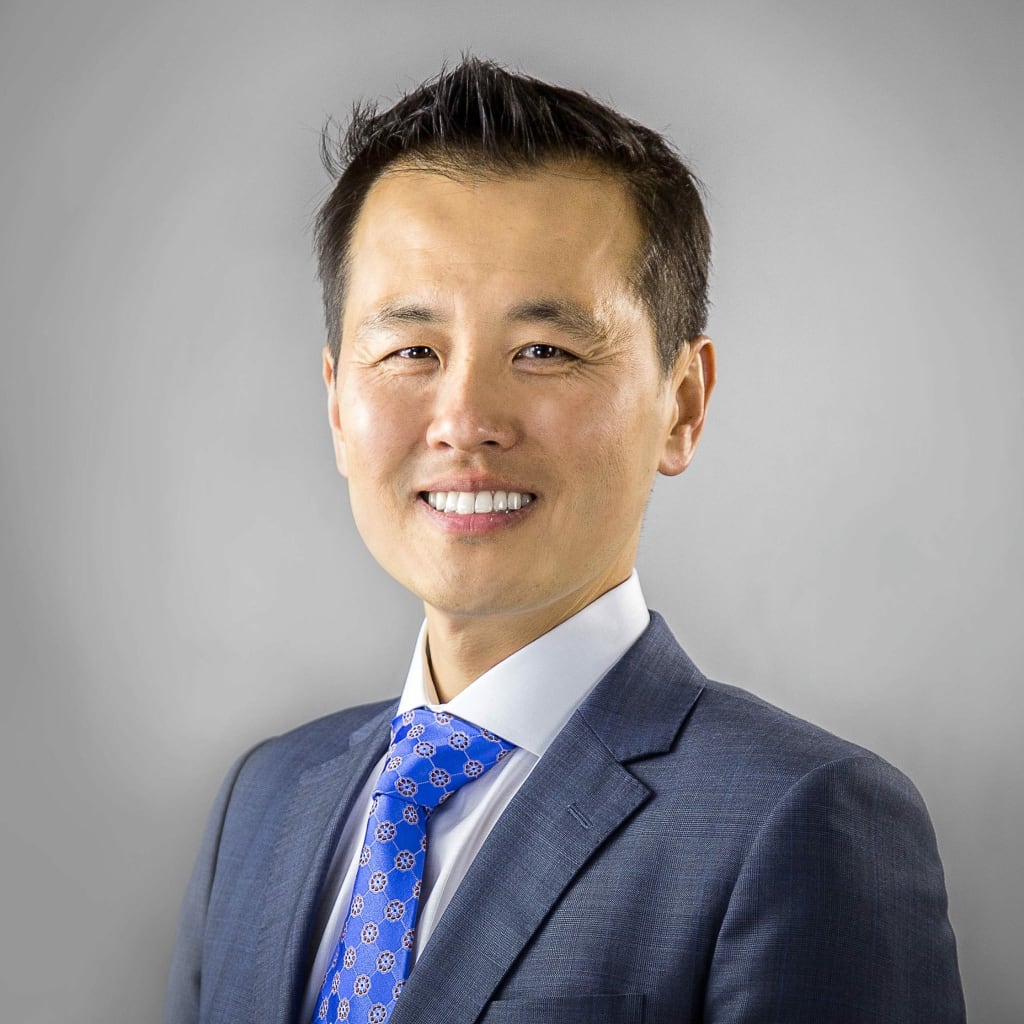
In modern healthcare, progress often emerges at the intersection of clinical innovation and structural leadership. Few professionals embody that intersection as clearly as Dr. Douglas Sung Won, MD. Over the past two decades, Dr. Won has built a reputation not only as a pioneer in minimally invasive spine surgery but also as a healthcare systems architect responsible for developing vertically integrated clinical infrastructures.
His career has moved across several layers of healthcare leadership, from surgical innovation and medical device development to large-scale healthcare system architecture and strategic advisory. Today, Dr. Douglas Sung Won, MD focuses on helping healthcare organizations design systems capable of sustaining excellence while navigating the growing complexity of modern medicine.
In this extended interview, Dr. Won reflects on his professional journey, the lessons learned from building healthcare infrastructure, and the strategic thinking that continues to shape his work today.
Q: Dr. Won, your career has covered clinical innovation, entrepreneurship, and healthcare system development. What initially drew you toward medicine?
Dr. Douglas Sung Won:
Like many physicians, my path into medicine began with a deep curiosity about how the human body functions and how science can be applied to alleviate suffering. Early in my training, I was particularly drawn to areas of medicine where precision and innovation intersected. Spine surgery was one of those fields where technological progress was rapidly changing what was possible.
What fascinated me most was the combination of technical skill and intellectual problem-solving. Surgery demands both. Each case is unique, and every patient presents a different challenge. That environment encourages constant learning and continuous refinement.
Over time, that curiosity expanded beyond procedures themselves. I began asking broader questions about how care was delivered and how healthcare systems could evolve to support better outcomes.
Q: You were among the early pioneers of endoscopic spine surgery. What was that experience like during the early years of minimally invasive techniques?
Dr. Douglas Sung Won:
When minimally invasive and endoscopic spine techniques began gaining traction in the early 2000s, they represented a significant shift in how surgeons approached spinal procedures. Traditional surgical methods often required large incisions and longer recovery periods. The promise of minimally invasive techniques was that they could reduce trauma while maintaining or even improving surgical effectiveness.
However, adopting new surgical technologies always requires careful evaluation. Surgeons must balance innovation with patient safety. In those early years, the learning curve was significant, and it demanded a great deal of discipline and technical adaptation.
For me, that period reinforced the importance of innovation in medicine. It also reinforced the responsibility physicians have when introducing new approaches to patient care. Innovation must always be grounded in evidence, experience, and thoughtful clinical judgment.
Q: At some point your career expanded from surgical practice into building healthcare systems. What motivated that shift?
Dr. Douglas Sung Won:
The shift happened gradually rather than suddenly. While working in clinical environments, I began to observe that many of the challenges patients faced had little to do with the quality of individual physicians. Instead, they were related to how healthcare was organized.
Patients often encountered fragmented systems where diagnostics, treatment, rehabilitation, and follow-up were handled by separate organizations that did not communicate efficiently. Even when every individual clinician performed well, the system itself sometimes created unnecessary complexity.
That realization led me to become interested in designing integrated healthcare environments. I began thinking about how care pathways could be structured so that patients would experience continuity rather than fragmentation.
This thinking eventually contributed to my work with organizations such as the Minimally Invasive Spine Institute and later with Lumin Health, where the focus was on building vertically integrated healthcare systems.
Q: Lumin Health became known as a large physician-driven integrated system. What was the vision behind that organization?
Dr. Douglas Sung Won:
The vision behind Lumin Health was to create a healthcare ecosystem where multiple services could operate within a unified framework. The idea was not simply to build facilities but to design a structure where each component of care supported the others.
Under that framework, the system included multi-specialty clinics, imaging and diagnostic centers, rehabilitation services, urgent care facilities, freestanding emergency rooms, ambulatory surgery centers, and surgical hospitals. By integrating these services, the goal was to improve coordination and continuity.
Healthcare systems often grow through acquisition or expansion, but growth without structural alignment can create complexity. Our objective was to build an infrastructure that could scale while maintaining coherence.
That required careful attention to how information moved across the system, how clinical decisions were coordinated, and how incentives influenced behavior.
Q: You often describe yourself as a “Healthcare Systems Architect.” What does that role involve in practical terms?
Dr. Douglas Sung Won:
A Healthcare Systems Architect focuses on designing the structural environment within which healthcare operates. That involves examining how organizations are built, how they evolve, and how their internal dynamics influence outcomes.
In practical terms, this work includes evaluating governance structures, incentive models, information systems, and operational workflows. Each of these elements influences how effectively clinicians and administrators can perform their roles.
When healthcare organizations encounter persistent operational challenges, those issues often originate from structural misalignment rather than individual performance. By addressing architecture at the system level, leaders can create environments where excellence becomes sustainable rather than dependent on extraordinary effort.
As Dr. Douglas Sung Won, MD, my advisory work focuses on helping organizations understand these structural dynamics and design systems that support long-term resilience.
Q: Your work now focuses largely on strategic advisory. What kinds of projects do you typically engage in today?
Dr. Douglas Sung Won:
Today my work involves advising healthcare organizations on structural strategy and organizational design. This often includes areas such as Management Services Organization (MSO) strategy, hospital–physician alignment, surgical hospital development, and vertical integration.
Healthcare organizations today operate within a rapidly changing environment. Technology is evolving, patient expectations are shifting, and regulatory frameworks continue to adapt. In this context, leaders need systems that are both stable and flexible.
My role is to help leadership teams examine how their organizations are structured and how those structures influence performance over time. Often the most important insights emerge when leaders step back and examine their systems from an architectural perspective.
Q: You have also spoken publicly about longevity and health optimization. How does that interest connect with your healthcare background?
Dr. Douglas Sung Won:
Longevity science reflects many of the same principles that apply to healthcare systems design. Sustainable health is rarely achieved through isolated interventions. Instead, it depends on consistent behaviors, structured environments, and long-term alignment between lifestyle and physiology.
Through initiatives such as Neogevity Life, I explore educational approaches that help individuals understand how data-driven health strategies can support long-term physical and cognitive performance. The emphasis is on education and wellness rather than clinical treatment.
In many ways, the same systems thinking used in healthcare organizations can be applied to individual health optimization. Structure influences outcomes.
Q: Looking ahead, what do you believe will define the next generation of healthcare leadership?
Dr. Douglas Sung Won:
Healthcare leaders will increasingly need to think beyond operational management and adopt an architectural perspective. The complexity of modern healthcare will continue to grow, and organizations must be prepared to adapt without losing coherence.
Future leaders will need to understand how incentives shape behavior, how technology integrates with clinical workflows, and how systems can be designed to sustain long-term performance.
Innovation will always remain important, but innovation alone is not sufficient. Without thoughtful system architecture, even the most promising technologies can struggle to deliver their full potential.
Ultimately, the future of healthcare will depend on leaders who can combine clinical insight with structural thinking.
Closing Thoughts
The career of Dr. Douglas Sung Won, MD reflects a unique combination of clinical expertise, entrepreneurial leadership, and systems-level thinking. From pioneering minimally invasive spine surgery to building integrated healthcare systems and advising healthcare organizations on strategic architecture, Dr. Won’s work illustrates how medicine evolves when innovation and infrastructure develop together.
As healthcare continues to navigate an increasingly complex landscape, voices like that of Dr. Douglas Sung Won, MD offer valuable perspective on how thoughtful system design can shape the future of medicine.
About the Creator
Robin Milton
Hi, I am Robin Milton, after being a part of the marketing industry for several years, I took the opportunity to pursue blogging full time.
Keep reading
More stories from Robin Milton and writers in Interview and other communities.
Interview with Nomad Internet’s Jaden Garza
Jaden Garza started Nomad Internet in 2017. He always had a knack for being a successful entrepreneur. However, he never knew he would end up in the Internet services industry. All thanks to his vision and mission to serve the left out, people who are still devoid of the internet in the United States.
By Robin Milton2 years ago in Interview
Part 2 Interview With Joe Patterson, Author Of Melanin Memoirs
This is my second interview with Joe Patterson. His 4th anniversary writing on Vocal will be in March 2026. He has one achievement on Vocal, The Other Foot. He has over 17,000 reads on Vocal since he started on Vocal in 2022. Joe Patterson is very creative poet and rapper. Joe is deep thinker and I feel it is reflected in his latest published book, Melanin Memoirs.
By Mariann Carroll24 days ago in Interview
Why I Built an AI Therapist
I’ve been a waiter, a construction worker, a DJ, a kitchen hand, a porter, a caregiver, and a supermarket cashier. I’ve washed dishes in Australia and meditated in the Himalayas. I’ve battled addictions, eating disorders, anxiety, depression, and self-destructive behavior. Before I ever sat across from a client as a psychotherapist, I had already lived a dozen lives — and nearly destroyed myself in several of them.
By Laurentis Theofanusabout 8 hours ago in Interview




Comments