
HORMUZ TRACKER: Iran-Linked Ships Are the Only Ones to Transit
Rising Gulf tensions and maritime security fears leave the Strait of Hormuz nearly empty as global shipping avoids one of the world's most critical oil routes.

Introduction
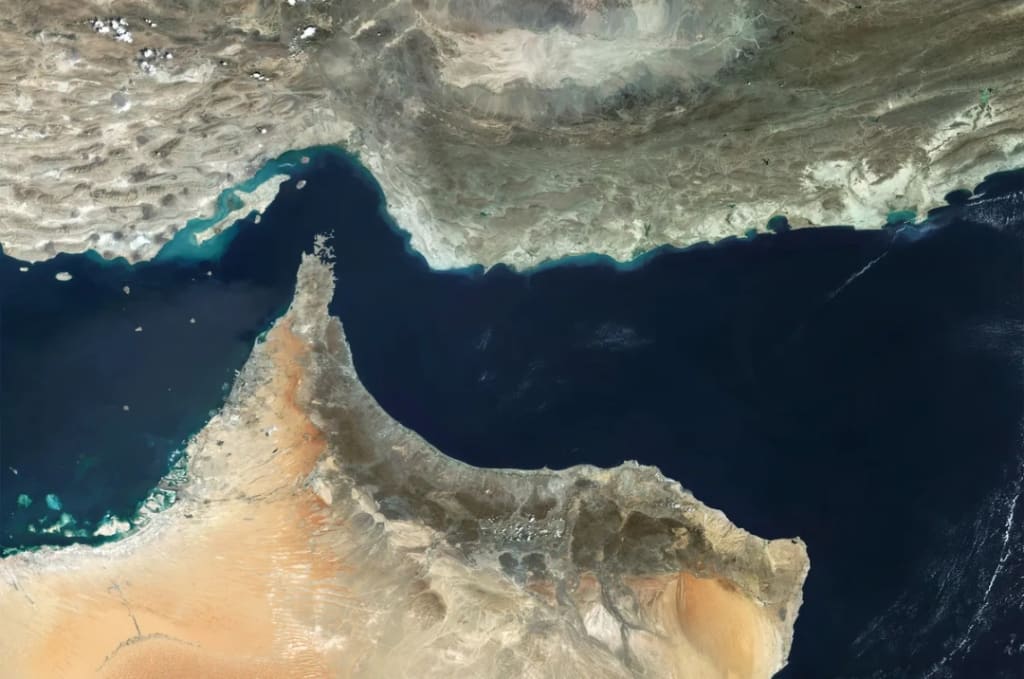
The Strait of Hormuz has long been recognized as one of the most important maritime routes in the global energy system. This narrow waterway connects the Persian Gulf with the Gulf of Oman and the Arabian Sea, allowing oil and gas exports from major Middle Eastern producers to reach international markets. Nearly one-fifth of the world’s petroleum supply travels through this strategic corridor each day.
Recently, however, maritime tracking data has revealed a dramatic shift in shipping activity. According to reports from global ship-tracking platforms, only vessels linked to Iran have continued transiting the Strait of Hormuz, while many international cargo ships and oil tankers have halted their journeys through the area.
This unusual development reflects the rising geopolitical tensions in the Middle East and growing security concerns for global shipping companies. The situation has not only disrupted maritime traffic but has also triggered concerns about energy security, oil prices, and international trade.
This article explores the current shipping situation in the Strait of Hormuz, the reasons behind the decline in maritime traffic, and the potential consequences for global markets.
The Strategic Importance of the Strait of Hormuz
The Strait of Hormuz is widely considered the world’s most important oil chokepoint. Positioned between Iran and Oman, the strait serves as the primary route for oil exports from several major energy-producing countries including Saudi Arabia, Iraq, Kuwait, the United Arab Emirates, and Iran.
The waterway itself is relatively narrow, measuring about 21 miles at its narrowest point. Despite its size, it plays an enormous role in the global energy supply chain. Every day, millions of barrels of crude oil and petroleum products move through the strait, destined for markets in Asia, Europe, and North America.
Because such a large portion of global energy flows through this single passage, any disruption in the Strait of Hormuz can have immediate and far-reaching effects on global oil prices and economic stability.
Maritime Traffic Drops Dramatically
In recent days, ship-tracking systems have detected a significant decline in maritime traffic passing through the Strait of Hormuz. Normally, dozens of oil tankers, container ships, and cargo vessels travel through the route daily.
However, recent data shows that most commercial vessels have avoided the region entirely. Shipping companies have delayed voyages, redirected ships, or paused operations due to rising security concerns.
What makes the situation particularly unusual is that ships linked to Iran appear to be the only vessels continuing to transit the strait. This suggests that international shipping operators are exercising extreme caution while regional vessels continue operating under different conditions.
The sudden reduction in traffic has raised alarm among energy analysts and maritime experts who closely monitor global shipping routes.
Security Concerns Driving the Shipping Slowdown
The sharp drop in maritime traffic is primarily driven by growing security threats in the Persian Gulf region. Military tensions have escalated following recent conflicts and retaliatory actions involving regional powers.
Several incidents involving commercial vessels have increased fears among shipping companies. Reports of attacks on ships, drone strikes, and naval confrontations have made the route significantly more dangerous for international vessels.
As a result, many global shipping firms have decided that the risks currently outweigh the benefits of using the route. War-risk insurance premiums for ships entering the region have also risen sharply, further discouraging companies from sending vessels through the strait.
These factors combined have created a situation where only a limited number of ships are willing—or able—to continue using the waterway.
Why Iran-Linked Ships Continue to Transit
The fact that Iranian or Iran-associated vessels are still crossing the Strait of Hormuz while most others stay away can be explained by several factors.
Local Maritime Presence
Iran maintains a strong naval presence in the northern part of the strait. Its naval forces patrol the region regularly and have extensive knowledge of local waters. Because of this presence, Iranian vessels may face fewer risks compared with foreign ships.
Economic Necessity
Like other energy-producing nations, Iran relies on maritime routes to transport oil and other goods. Continuing ship movements ensures that essential trade activities are not completely halted despite the regional tensions.
Political Messaging
Allowing Iranian vessels to continue transit while others stay away may also send a strategic message. It highlights Iran’s geographic influence over one of the most critical waterways in global energy transportation.
This situation demonstrates how geopolitical tensions can directly influence international shipping patterns.
Effects on Global Oil Markets
The slowdown in shipping through the Strait of Hormuz has already begun influencing global oil markets. When a route responsible for transporting a significant share of the world’s oil becomes unstable, markets tend to react quickly.
Oil prices have shown increased volatility as traders respond to the possibility of supply disruptions. Energy analysts warn that if the strait becomes completely blocked or unsafe for extended periods, oil prices could rise sharply.
Countries that depend heavily on Gulf oil exports may experience difficulties maintaining supply levels. Meanwhile, oil-importing nations could face higher energy costs and economic pressure.
Even the perception of risk in the Strait of Hormuz is often enough to push prices upward in global energy markets.
Impact on the Global Shipping Industry
The shipping industry is particularly vulnerable to geopolitical tensions in critical maritime routes. The current situation in the Strait of Hormuz has forced shipping companies to reassess their operations.
Many firms now face difficult choices. Some have chosen to delay shipments until the security situation improves, while others are exploring alternative routes that bypass the Persian Gulf entirely.
Insurance costs have also become a major concern. War-risk insurance premiums for vessels entering the region have increased significantly, making voyages through the strait far more expensive.
For shipping companies operating on tight profit margins, these additional costs can have a major financial impact.
Potential Global Economic Consequences
The effects of reduced traffic in the Strait of Hormuz extend beyond oil markets and shipping companies. Global supply chains could also feel the impact if disruptions continue.
Higher transportation costs and longer shipping routes may increase the price of various goods worldwide. Industries that rely heavily on imported energy could face rising production costs, which may ultimately affect consumers.
Financial markets also tend to react strongly to geopolitical risks involving energy supplies. Prolonged instability in the region could therefore create broader economic uncertainty across global markets.
What Happens Next?
The future of shipping through the Strait of Hormuz largely depends on how regional tensions develop. If diplomatic efforts succeed in reducing conflict and improving security conditions, maritime traffic could gradually return to normal.
However, if tensions escalate further, the disruption could intensify. A prolonged reduction in shipping activity would place additional strain on global energy supplies and international trade.
Governments, energy companies, and shipping organizations around the world are closely monitoring the situation as it continues to evolve.
Conclusion
The recent development in which only Iran-linked ships are transiting the Strait of Hormuz highlights the fragile nature of global energy transportation routes. Rising geopolitical tensions and security threats have caused most international shipping companies to avoid one of the world’s most critical maritime corridors.
Because the Strait of Hormuz plays such a vital role in global oil supply, even limited disruptions can have significant consequences. Markets, governments, and industries are now watching closely to see whether the situation will stabilize or escalate further.
For now, the quiet waters of the strait—normally crowded with tankers and cargo ships—serve as a reminder of how quickly geopolitical tensions can reshape global trade routes and energy flows.
About the Creator
Asad Ali
I'm Asad Ali, a passionate blogger with 3 years of experience creating engaging and informative content across various niches. I specialize in crafting SEO-friendly articles that drive traffic and deliver value to readers.
Shell Signs Oil and Gas Exploration Deal in Kazakhstan
Energy giant Shell plc has signed a new agreement with the government of Kazakhstan to explore oil and gas resources in the country’s western region, marking another step in the long-standing partnership between the international energy major and the Central Asian producer. The contract focuses on geological exploration at the Zhanaturmys block in the Aktobe region, an area considered to hold significant untapped hydrocarbon potential. The agreement was signed by Kazakhstan’s Deputy Energy Minister Yerlan Akbarov and Suzanne Coogan, senior vice president and country chair of Shell Kazakhstan. Under the terms of the contract, Shell will carry out seismic surveys, geological data collection, and technical evaluations to determine the commercial potential of oil and gas reserves in the Zhanaturmys area. The exploration contract is expected to run until 2032, reflecting the scale and technical complexity of the project. Authorities say the work program will involve advanced geological studies and potentially the drilling of a deep exploration well if early surveys confirm promising structures. Expanding Kazakhstan’s Resource Base Kazakhstan’s government sees the project as part of its strategy to strengthen the country’s hydrocarbon resource base and maintain its position as one of the leading energy producers in Eurasia. The Zhanaturmys block spans roughly 1,377 square kilometres, placing it within one of the most promising oil and gas basins in western Kazakhstan. Deputy Energy Minister Akbarov said the project is intended to support the country’s long-term energy security and stimulate economic growth through increased exploration activity. Officials believe the new initiative could attract further investment into Kazakhstan’s energy sector and help diversify exploration beyond existing producing fields. Shell also committed to supporting regional development as part of the agreement. According to Kazakhstan’s energy ministry, the company will allocate funding to local socio-economic programs during the life of the project, contributing to infrastructure and community development in the Aktobe region. Shell’s Long Presence in Kazakhstan Shell has operated in Kazakhstan for decades and remains one of the major international investors in the country’s oil and gas industry. The company holds stakes in several key projects, including the giant Kashagan oil field in the Caspian Sea and the Karachaganak Field gas-condensate project in northwestern Kazakhstan. These projects have made Kazakhstan one of the most important energy producers in the former Soviet region. Kashagan alone is considered one of the largest oil discoveries of the past three decades and plays a major role in the country’s export capacity. Despite these long-standing partnerships, relations between international oil companies and the Kazakh government have occasionally been complicated by legal disputes over project costs and environmental issues. In recent years, arbitration cases involving major projects have raised questions about future investment conditions in the country’s energy sector. Nevertheless, the new exploration deal suggests that both sides remain committed to cooperation. Shell executives say the contract reinforces the company’s long-term strategic interest in Kazakhstan’s energy resources and its willingness to continue applying advanced exploration technologies in the region. Strategic Importance for Global Energy The agreement comes at a time when global energy markets are facing increasing volatility. Rising geopolitical tensions, supply disruptions, and shifting demand patterns have encouraged oil companies to seek new exploration opportunities to secure future production. Kazakhstan, with its vast reserves and established export infrastructure, remains an attractive destination for energy investment. Much of its oil is transported through pipelines such as the Caspian Pipeline Consortium, which carries crude from Kazakhstan’s fields to export terminals on the Black Sea. For Shell, expanding exploration in Kazakhstan helps maintain its global portfolio of upstream assets while strengthening its presence in Central Asia’s energy sector. Looking Ahead Exploration activities in the Zhanaturmys block are expected to begin with seismic surveys and technical studies in the coming years. If commercial reserves are confirmed, the project could eventually lead to new production developments that would further boost Kazakhstan’s energy output. For now, both Shell and Kazakhstan are positioning the agreement as a sign of renewed confidence in the country’s hydrocarbon potential. As energy demand continues to evolve worldwide, the results of this exploration effort could shape the next phase of investment in Kazakhstan’s oil and gas industry.
By Fiaz Ahmed 4 days ago in Journal




Comments
There are no comments for this story
Be the first to respond and start the conversation.