
Iran War Update: What Happened Today and Why the Situation Is Getting More Dangerous
New military deployments, oil market shocks, and growing political pressure suggest the Iran–U.S.–Israel war may be entering a critical phase.

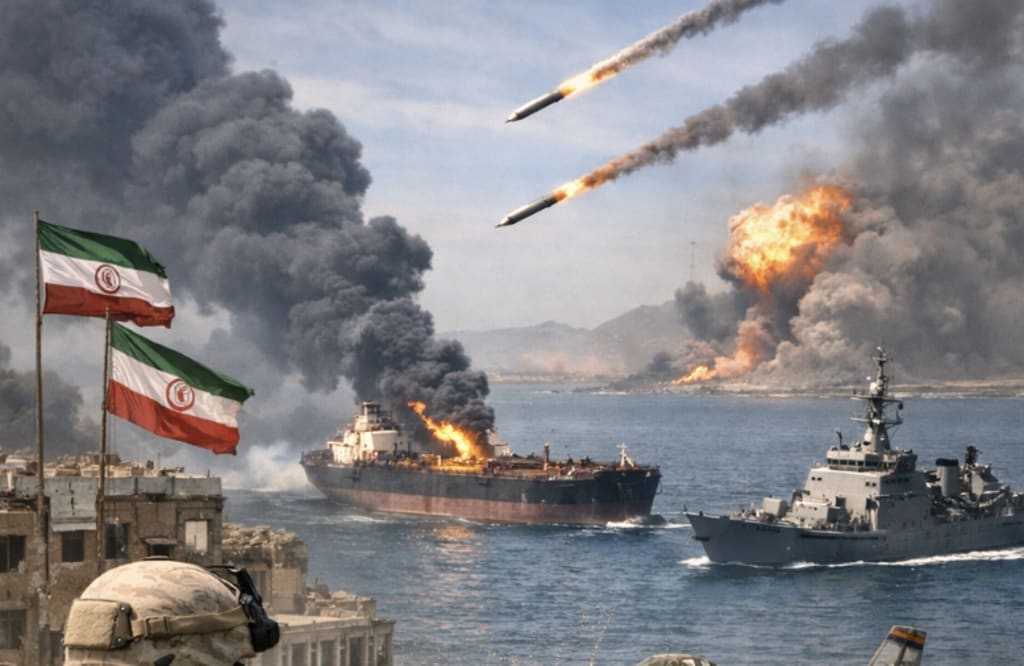
The war involving Iran, Israel, and the United States continues to escalate, with new developments emerging almost daily. What began as a series of military strikes has rapidly expanded into a regional conflict affecting global energy markets, shipping routes, and international politics.
Today’s updates suggest that the situation is becoming even more volatile.
Military deployments are increasing, attacks continue across the region, and the global economy is beginning to feel the pressure from disrupted oil supplies and rising uncertainty.
Here is a clear update on the latest developments in the war.
The War Enters a More Dangerous Phase
The conflict between Iran and the U.S.-backed coalition has now entered its second week, with both sides showing little sign of backing down.
Recent reports indicate that additional U.S. forces are being deployed to the Middle East, including Marines and naval assets. These deployments are meant to strengthen American positions in the region and protect shipping lanes that have become increasingly dangerous.
At the same time, Iranian forces and allied groups continue launching drones and missiles targeting Israeli territory and military installations connected to U.S. operations.
The scale of these attacks has raised concerns among military analysts that the conflict could expand further if retaliation continues.
The Strait of Hormuz Remains the Biggest Global Risk
One of the most important developments in the war remains the situation around the Strait of Hormuz, a narrow shipping route between Iran and Oman.
This passage is one of the most strategically important waterways on Earth because around 20% of the world’s oil supply travels through it.
In recent days, several incidents involving commercial vessels have been reported in or near the strait. Tankers have been threatened, attacked, or forced to reroute, leading many shipping companies to avoid the area entirely.
The impact has been immediate:
- Oil prices have surged as markets react to supply concerns
- Shipping insurance rates have skyrocketed
- Hundreds of ships are waiting outside the region rather than entering the strait
If the situation worsens and shipping through the strait becomes impossible, economists warn the consequences could ripple across the global economy.
Military Activity Across the Region
The war is not limited to Iran and Israel alone. Activity tied to the conflict is now occurring across several parts of the Middle East.
Reports indicate:
- Israeli forces have conducted multiple strikes targeting Iranian infrastructure and military sites
- Drone and missile attacks have been launched toward Israeli territory
- Military installations connected to the United States remain on high alert
- Regional allies and proxy groups are increasingly involved
This widening battlefield is one reason experts are warning that the war could evolve into a broader regional conflict if diplomatic efforts fail.
Political Tensions in Washington
While fighting continues overseas, the war is also creating political pressure in Washington.
Officials within the U.S. government are reportedly debating how the conflict should be handled moving forward.
Some advisers are pushing for stronger military action against Iranian targets, while others warn that deeper involvement could lead to a prolonged war that is difficult to contain.
At the same time, economic concerns are growing as energy markets react to the conflict.
The Global Economic Impact Is Already Beginning
Beyond the battlefield, the war is already affecting the global economy.
Because the Middle East plays such a central role in global oil production, any disruption to shipping routes or production can quickly affect energy prices around the world.
Some of the early economic effects include:
- Rising oil prices
- Increased volatility in global markets
- Higher shipping costs for international trade
- Concerns about inflation if energy prices continue climbing
Some analysts warn that if the conflict continues to escalate, the economic effects could eventually be felt by everyday consumers in the form of higher gas prices and increased costs for goods and transportation.
What Happens Next?
Right now, the biggest question is whether the war will stabilize or expand further.
Several possible scenarios are being discussed by analysts and policymakers:
- Continued military strikes between Iran and Israel
- A prolonged conflict involving regional proxy groups
- International intervention to protect shipping routes
- Diplomatic negotiations aimed at reducing tensions
For now, the situation remains extremely fluid.
With military forces mobilizing, oil markets reacting, and international tensions rising, the conflict between Iran, Israel, and the United States has quickly become one of the most significant geopolitical crises of the decade.
And the coming days may determine whether it stabilizes — or becomes something much larger.
About the Creator
Navigating the World
News, commentary on entertainment, music, influencers, and modern culture, upcoming artists, politics, and more. Everything you need to know — all in one place.
Keep reading
More stories from Navigating the World and writers in Journal and other communities.
Author’s Advice
If you would’ve asked me 20 years ago did I know I’d become a writer and an author, I would’ve said “nope, ain’t happening”. As fate would have it I did become an author and I can honestly say I’m loving it so far. It really does feel good to be a writer. I’ve learned a lot on this journey and I feel like with even me being as new to this world as I am, there’s some wisdom I need to share with every other aspiring author.
By Joe Patterson3 days ago in Journal
Focus and Overwhelm in Digital Product Creation
Digital product creation demands deep focus, steady decision making, and sustained mental energy. Many creators struggle not because they lack ideas or skill, but because their attention fractures under the weight of constant choices. Overwhelm creeps in quietly and erodes progress.
By Edina Jackson-Yussif about an hour ago in Journal




Comments
There are no comments for this story
Be the first to respond and start the conversation.