
Is Australia’s Outback Way the Loneliest Road in the World?
Stretching across the heart of Australia’s remote interior, the Outback Way is often called the world’s most isolated highway—but is it truly the loneliest road on Earth?

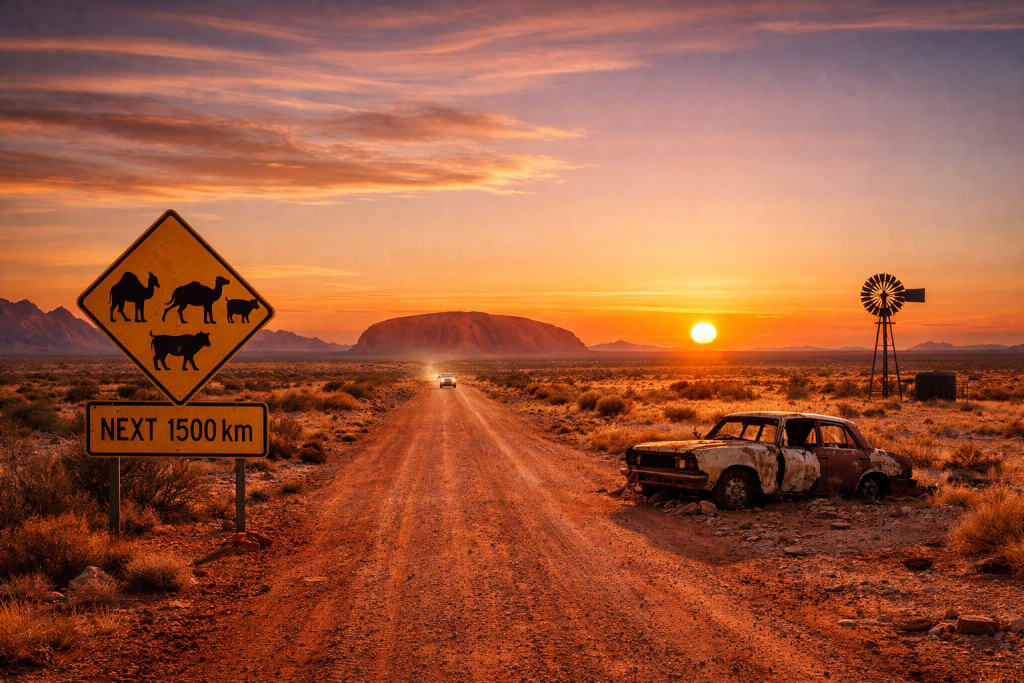
Across the vast interior of Australia lies a road that captures the imagination of travelers, explorers, and adventurers alike. Known as the Outback Way, this rugged route stretches approximately 2,700 kilometers from the coastal city of Laverton in Western Australia to Winton in Queensland. Because of its isolation, vast empty landscapes, and limited population along the route, many travelers describe it as the “loneliest road in the world.” But is this reputation truly deserved?
The Outback Way cuts directly through the heart of Australia’s remote interior, often referred to simply as “the Outback.” This immense region is characterized by red deserts, sparse vegetation, scorching temperatures, and enormous distances between settlements. In many parts of the journey, drivers may travel for hours without encountering another vehicle. The silence and solitude of the landscape can feel almost surreal.
Unlike major highways in densely populated countries, the Outback Way passes through only a handful of small towns and remote communities. Fuel stations are few and far between, and travelers must carefully plan their journeys to avoid running out of fuel, water, or supplies. Some stretches of the road remain unsealed, meaning they consist of gravel or dirt rather than asphalt. During heavy rains, certain sections can become impassable, temporarily isolating the small communities that depend on them.
Despite its challenging conditions, the road has become a symbol of adventure tourism. The route is sometimes promoted as “Australia’s Longest Shortcut,” connecting Western Australia with Queensland across the center of the continent. Travelers along the Outback Way can experience some of the country’s most iconic natural and cultural landmarks.
One of the most famous sites near the route is Uluru, the enormous sandstone monolith that rises dramatically from the desert plains. Known as a sacred site for the Indigenous Anangu people, Uluru is one of Australia’s most recognizable natural wonders and attracts visitors from around the world.
The road also passes through remote Indigenous communities, cattle stations, and small desert towns that offer a glimpse into life in one of the planet’s harshest environments. For many locals, the Outback Way is not just an adventurous travel route—it is an essential lifeline that connects remote regions to medical services, education, and supply networks.
However, calling the Outback Way the “loneliest road in the world” is partly a matter of perspective. While it is certainly remote, other roads on Earth may be even more isolated. For example, sections of the Dalton Highway and certain stretches of highways crossing the Sahara Desert also pass through vast, sparsely populated regions where help can be hundreds of kilometers away.
Still, the Outback Way stands out for its length and the unique character of the Australian landscape it traverses. Unlike many isolated roads that serve primarily industrial purposes, this route invites travelers to explore the cultural and natural history of Australia’s interior. The journey reveals ancient geological formations, vast cattle ranches, desert wildlife, and skies so clear that the stars appear brighter than almost anywhere else on Earth.
In recent years, the Australian government and local authorities have invested in upgrading sections of the route. Gradually sealing the road with asphalt aims to make travel safer and more accessible while boosting tourism in remote regions. Supporters believe the improvements will bring economic opportunities to small communities scattered across the Outback.
Even with these upgrades, the Outback Way will likely remain one of the most remote travel experiences in the modern world. Its enormous distances, limited infrastructure, and breathtaking desert scenery create a journey that feels worlds away from the crowded highways of major cities.
Ultimately, whether or not the Outback Way is truly the loneliest road on Earth may be open to debate. What is certain, however, is that it represents one of the most extraordinary drives on the planet—a road where travelers can experience the raw, untamed beauty of Australia’s vast interior.
For those seeking solitude, adventure, and a deeper connection with nature, the Outback Way offers a journey unlike any other—one where the road stretches endlessly across the horizon, and the silence of the desert becomes part of the experience itself.
About the Creator
Irshad Abbasi
Ali ibn Abi Talib (RA) said 📚
“Knowledge is better than wealth, because knowledge protects you, while you have to protect wealth.
Keep reading
More stories from Irshad Abbasi and writers in Journal and other communities.
Islamic State Accused of Involvement in Antiquities Smuggling
The illegal trade in antiquities has long been a shadowy but profitable enterprise, and in recent years it has gained global attention due to the involvement of extremist groups. Among these groups, the so-called Islamic State (IS) has been widely accused by international investigators and cultural heritage experts of participating in the looting and smuggling of priceless historical artifacts. These activities not only threaten humanity’s shared cultural heritage but also provide a significant source of funding for militant operations.
By Irshad Abbasi a day ago in History
Author’s Advice
If you would’ve asked me 20 years ago did I know I’d become a writer and an author, I would’ve said “nope, ain’t happening”. As fate would have it I did become an author and I can honestly say I’m loving it so far. It really does feel good to be a writer. I’ve learned a lot on this journey and I feel like with even me being as new to this world as I am, there’s some wisdom I need to share with every other aspiring author.
By Joe Patterson4 days ago in Journal
Top tipple tricks
Been thinking a lot about drinking, lately. Not least because of a recent episode of over-indulgence and the inevitable after effects. Some readers may recall the earlier articles I wrote about beating the booze. Here I set out an experiment in techniques for cutting down on my alcohol intake. The experiment was successful, the techniques worked, and I have armed myself with an arsenal of weapons in the war against the demon drink. I have yet to fire the first round however. It's all a question of timing (perhaps procrastination).
By Raymond G. Taylor6 days ago in Psyche




Comments
There are no comments for this story
Be the first to respond and start the conversation.