
Title: Drone Strikes Halt a Third of the World’s Helium Supply, Threatening Global Chip Production
Disruptions to critical helium facilities expose the fragile supply chain behind semiconductors and advanced technology
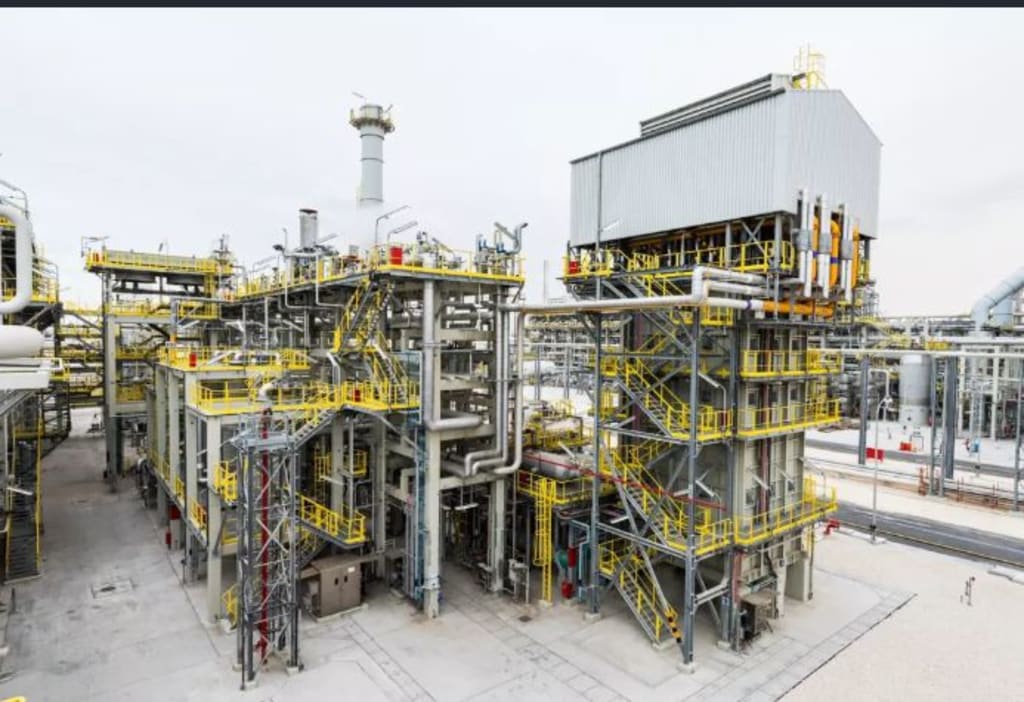
A series of drone strikes targeting key industrial infrastructure has triggered an unexpected crisis in the global supply of helium, a gas essential to modern technology and scientific research. The attacks have forced the shutdown of major production facilities, temporarily halting nearly one-third of the world’s helium output and raising alarms across industries that rely on the rare element.
Among the sectors most at risk is the semiconductor industry, which depends heavily on helium during the manufacturing process. As supply tightens and prices rise, technology companies and chip manufacturers are bracing for disruptions that could ripple through global electronics markets.
The situation highlights a little-known but critical vulnerability in the modern technology supply chain: the dependence on a handful of specialized facilities to produce a resource that cannot easily be replaced.
A Rare and Essential Element
Helium is best known for filling balloons and airships, but its importance goes far beyond party decorations. In fact, the gas plays a vital role in high-tech manufacturing, particularly in semiconductor fabrication.
During chip production, helium is used as a cooling and shielding gas in processes that require extremely stable and controlled environments. The gas helps regulate temperature, protect delicate materials, and maintain precision in advanced manufacturing equipment.
Without a steady supply of helium, semiconductor factories could face operational slowdowns or even temporary shutdowns.
One of the industries most exposed to helium shortages is the global semiconductor sector, which produces the microchips powering everything from smartphones and laptops to electric vehicles and artificial intelligence systems.
Companies like Intel, Taiwan Semiconductor Manufacturing Company, and Samsung Electronics rely on ultra-pure helium to maintain the strict manufacturing conditions required for modern chips.
Even small disruptions in supply can create serious complications for chip production.
Drone Strikes Trigger Supply Shock
The current crisis began when drone strikes targeted major helium infrastructure linked to natural gas processing operations. These facilities extract helium as a byproduct during the refinement of natural gas, making them central hubs for global supply.
The attacks forced several key processing plants to suspend operations, cutting off a large portion of the world’s helium production almost overnight.
Because helium production is highly concentrated in a small number of locations, the shutdown of just a few facilities can significantly disrupt the global market.
Industry analysts estimate that roughly one-third of global helium output has been temporarily halted due to the attacks.
Such a large supply disruption is unprecedented in recent years and has triggered immediate concern among manufacturers and scientific institutions.
Semiconductor Industry Faces New Pressure
The semiconductor sector is particularly vulnerable to helium shortages. Chip fabrication plants operate in ultra-clean environments where even minor variations in temperature or contamination can ruin entire batches of chips.
Helium’s unique physical properties make it ideal for cooling equipment and maintaining stable production conditions. Unlike many other industrial gases, it is chemically inert and extremely efficient at transferring heat.
These characteristics make helium difficult to replace with alternative materials.
If supplies remain constrained, chip manufacturers may be forced to slow production lines or prioritize certain products over others. That could affect the availability of consumer electronics, automobiles, and computing hardware worldwide.
The global semiconductor industry has already faced multiple disruptions in recent years, including supply chain shortages and geopolitical tensions affecting manufacturing hubs.
A helium shortage adds yet another layer of complexity.
Rising Prices and Market Uncertainty
As news of the supply disruption spreads, helium prices are expected to climb sharply. Industrial buyers are already scrambling to secure long-term contracts and alternative supply sources.
Helium markets are known for volatility because the gas is both rare and difficult to store in large quantities. Once released into the atmosphere, helium escapes Earth’s gravitational pull and is lost permanently to space.
This makes helium a non-renewable resource on human timescales.
Major producers—including facilities in the United States, Qatar, and Algeria—account for the majority of global supply. Any disruption to these production centers can quickly lead to shortages.
Companies dependent on helium are now reassessing their inventory levels and contingency plans.
Impact Beyond Technology
While the semiconductor industry is the most visible victim of a helium shortage, many other sectors rely on the gas as well.
Medical imaging systems, particularly MRI machines, require helium to cool powerful superconducting magnets. Without sufficient helium, hospitals could face difficulties maintaining or operating these critical diagnostic tools.
Scientific research laboratories also depend on helium for experiments involving extremely low temperatures.
Even space exploration programs rely on helium to pressurize fuel tanks and support rocket launches.
Because of these diverse uses, a prolonged disruption could affect everything from healthcare and scientific research to aerospace development.
Scrambling for Alternatives
The current crisis is forcing industries to search urgently for ways to reduce their dependence on helium.
Some semiconductor manufacturers are exploring recycling technologies that capture and reuse helium within production facilities. These systems can significantly reduce the amount of new helium required.
However, recycling infrastructure is expensive and cannot completely eliminate the need for fresh supplies.
Researchers are also investigating alternative cooling methods and substitute gases, but many applications still require helium’s unique properties.
In the short term, companies may be forced to compete for limited supplies while waiting for production facilities to resume operations.
A Fragile Supply Chain
The disruption underscores how fragile certain global supply chains have become. While much attention is often focused on critical minerals such as lithium or rare earth elements, helium is another resource that plays an outsized role in modern technology.
Because helium production is tied to natural gas processing, the gas is not extracted primarily for its own value. Instead, it is recovered as a secondary product when conditions allow.
This means global supply depends heavily on the operation of a relatively small number of large facilities.
When those facilities are disrupted—whether by geopolitical conflict, accidents, or infrastructure attacks—the impact can spread quickly across multiple industries.
Looking Ahead
For now, the global technology sector is closely monitoring developments surrounding the damaged helium infrastructure. The speed at which facilities can resume operations will determine whether the supply shock becomes a temporary inconvenience or a deeper crisis.
If production is restored quickly, the semiconductor industry may be able to avoid major disruptions. But if the shutdown continues for weeks or months, manufacturers could face difficult decisions about production priorities and supply allocations.
The drone strikes have revealed an unexpected weak point in the global technology ecosystem.
In a world increasingly dependent on advanced electronics and powerful computing systems, even a colorless, odorless gas like helium can become a critical link in the chain.
And when that link is broken, the consequences can be felt across the entire global economy.
About the Creator
Author’s Advice
If you would’ve asked me 20 years ago did I know I’d become a writer and an author, I would’ve said “nope, ain’t happening”. As fate would have it I did become an author and I can honestly say I’m loving it so far. It really does feel good to be a writer. I’ve learned a lot on this journey and I feel like with even me being as new to this world as I am, there’s some wisdom I need to share with every other aspiring author.
By Joe Patterson4 days ago in Journal




Comments
There are no comments for this story
Be the first to respond and start the conversation.