
US-Israel War on Iran Dramatically Expands Across Middle East
Rising Tensions, Regional Fallout, and the High-Stakes Battle for Middle East Stability
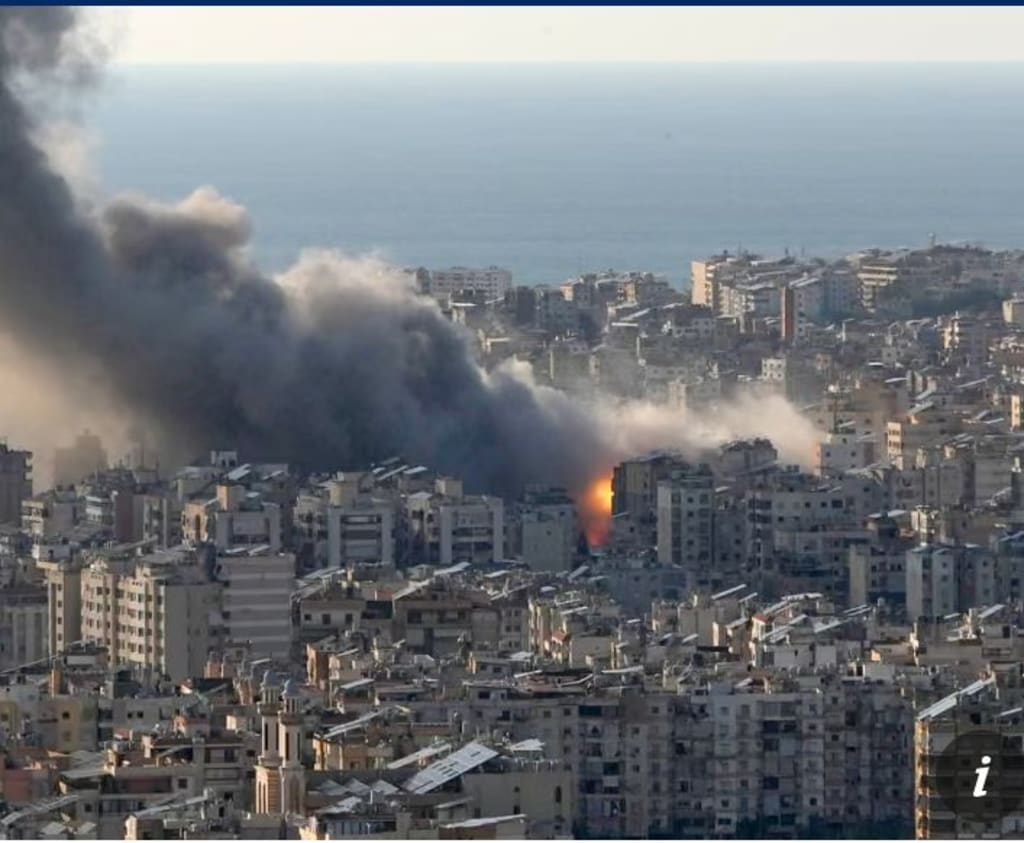
The Middle East is once again at the center of global attention. What began as a coordinated military strike by the United States and Israel against Iran has rapidly escalated into a widening conflict stretching across multiple borders. In just days, the situation has shifted from a calculated offensive to a volatile regional crisis involving state armies, proxy groups, global powers, and energy markets.
This blog breaks down how the conflict unfolded, why it spread so quickly, and what it could mean for the region — and the world.
The Initial Strike: A Calculated Blow
The escalation began when the United States and Israel launched coordinated air and missile strikes targeting Iranian military infrastructure. Israeli Prime Minister Benjamin Netanyahu described the action as a necessary response to what Israel considers existential threats, particularly Iran’s expanding missile capabilities and regional militia networks.
The White House framed the operation as a defensive measure aimed at deterring further aggression and limiting Iran’s strategic reach. Washington has long accused Tehran of arming proxy groups throughout the Middle East and destabilizing U.S. allies.
But what was intended as a decisive and limited operation quickly triggered retaliation.
Iran’s Response: Missiles and Proxies
Iran responded with ballistic missile launches and drone attacks directed toward Israeli targets and U.S. military installations across the region. Air defense systems intercepted many incoming threats, yet the scale of retaliation signaled that Tehran was prepared for a prolonged confrontation.
More significantly, Iran’s regional allies became active.
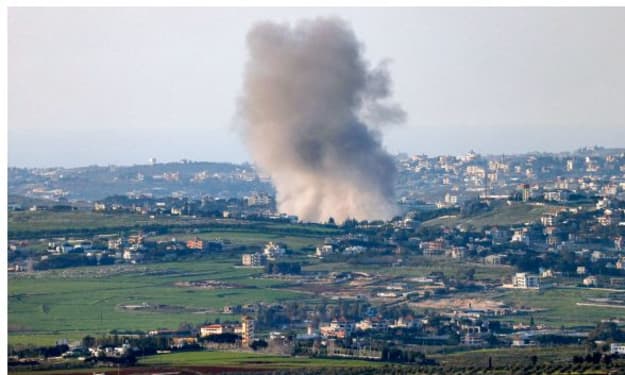
In Lebanon, the militant group Hezbollah intensified cross-border rocket fire into northern Israel. Israeli forces answered with airstrikes in southern Lebanon, raising fears of another full-scale Lebanon-Israel war.
In Iraq and Syria, armed groups aligned with Iran targeted bases housing U.S. personnel. These indirect battlefields transformed what might have been a contained exchange into a multi-theater confrontation.
The Gulf on Edge
One of the most dangerous dimensions of the conflict involves the Persian Gulf.
Iran hinted at possible disruptions in the Strait of Hormuz — the narrow maritime passage through which roughly a fifth of the world’s oil supply flows. Even the suggestion of interference sent oil prices climbing sharply.
Regional powers like the United Arab Emirates and Bahrain strengthened air defenses amid reports of drone incursions and missile interceptions. Gulf airspace restrictions and flight suspensions followed, impacting international travel and trade routes.
Energy markets reacted instantly. Investors feared that a prolonged conflict could mirror historic oil shocks that reshaped the global economy.
Global Powers React
The conflict has not remained a regional matter. It has quickly become a geopolitical flashpoint.
The United Nations urged immediate de-escalation, warning of catastrophic humanitarian consequences if fighting continues. Emergency sessions highlighted growing civilian casualties and displacement risks.
Meanwhile, China called for restraint and diplomatic engagement, emphasizing the need for regional stability to protect global economic flows.
Russia criticized the U.S.–Israeli action as destabilizing and warned that further escalation could spiral beyond control.
These divergent reactions illustrate a widening geopolitical divide — one that could complicate any future peace negotiations.
The Human Cost
Beyond military maneuvers and strategic calculations, civilians are paying the price.
Air raid sirens in Israeli cities, damaged neighborhoods in Lebanon, and strikes on Iranian infrastructure have created fear and displacement. Hospitals across affected regions report strain as casualties mount.
For families caught between rockets and retaliatory strikes, daily life has been replaced by uncertainty. Businesses close, schools suspend classes, and humanitarian groups warn of worsening shortages if supply lines are disrupted.
War in the modern Middle East rarely remains confined to military targets. Urban centers and civilian populations inevitably bear the burden.
Why the Conflict Expanded So Quickly
Several factors explain the rapid expansion:
1. Proxy Networks
Iran’s longstanding strategy of cultivating allied militias across Lebanon, Iraq, Syria, and Yemen means that any direct confrontation automatically risks multiple fronts.
2. Strategic Geography
The Middle East’s dense concentration of military bases, shipping lanes, and contested borders makes containment difficult.
3. Political Stakes
For Israeli leadership, projecting strength is central to national security doctrine. For Iranian leadership, demonstrating resilience is critical to domestic legitimacy.
When both sides see de-escalation as weakness, the path to peace narrows.
Economic Fallout
Markets dislike uncertainty — and this conflict delivers plenty.
Oil prices surged as traders factored in supply disruption risks. Insurance rates for ships transiting Gulf waters rose sharply. Airline rerouting increased fuel and operational costs.
If fighting intensifies or if the Strait of Hormuz becomes fully restricted, global inflationary pressures could rise once again — affecting everything from gasoline prices to food costs worldwide.
For economies already grappling with supply chain fragility, this is a dangerous development.
What Happens Next?
There are three plausible scenarios:
Escalation
Missile exchanges intensify, proxy groups widen attacks, and additional states become involved.
Stalemate
After initial waves of strikes, both sides reduce activity without formal negotiations — resulting in a tense, unstable calm.
Negotiated Pause
International mediators broker a ceasefire, possibly tied to renewed talks on nuclear oversight and regional security guarantees.
The direction will depend on military calculations, political will, and international pressure in the coming days.
A Region at a Crossroads
The US-Israel war on Iran has already reshaped the Middle East’s strategic landscape. What began as a targeted operation has evolved into a complex regional confrontation involving state actors, non-state militias, and global powers.
The stakes are enormous: regional stability, global energy security, and the lives of millions.
History shows that wars in this region rarely follow predictable paths. The question now is not just how far this conflict will spread — but whether diplomacy can catch up before escalation becomes irreversible.
As the world watches, the Middle East stands at yet another pivotal moment — one that could define its political and economic trajectory for years to come.
About the Creator
Why FRP Grating Is Quietly Replacing Steel
For decades, the sound of industry was unmistakable—steel platforms echoing beneath heavy boots, sparks flying during maintenance work, and rust slowly claiming structures that once symbolized strength. Factories accepted deterioration as inevitable. Corrosion was simply part of doing business. But step into a newly upgraded industrial plant today, and something feels different.
By efingutthomasa day ago in Journal
When the Shelter Closes
Across the street from my house, a man slept under a tree, his dog by his side. My first, naive thought: he must be traveling through. But he kept coming back, often sleeping there during the day. Then it hit me—that person might not have a home.
By Bride of Sound5 days ago in Humans


Comments
There are no comments for this story
Be the first to respond and start the conversation.