social media
Social media dramatically impacts our offline lives and mental well-being; examine its benefits, risks and controversies through scientific studies, real-life anecdotes and more.
A 'genetic breakthrough' promises an effective treatment for Alzheimer's
A team from Cardiff University has identified 92 genes that significantly increase the risk of developing Alzheimer's disease, whereas only three genes were known when their research began in 2009, which means there is an exponential increase in information about the disease.
By News Correct3 years ago in Psyche
Main Character Syndrome
"Your Grandma died? I'm so sorry, I know exactly how it feels. My dog died last week.", "Right, but my cramps are 10x worse", "Omg, can we stop talking about your dead grandma and focus on my lash glue not sticking?!" I know you probably have come across someone like this and TRUST me you found just the right place for some tea. Today I am gonna discuss one of the most blood-boiling, eyes-squinting dilemmas of this generation, Main Character Syndrome.
By K. A. Khan3 years ago in Psyche
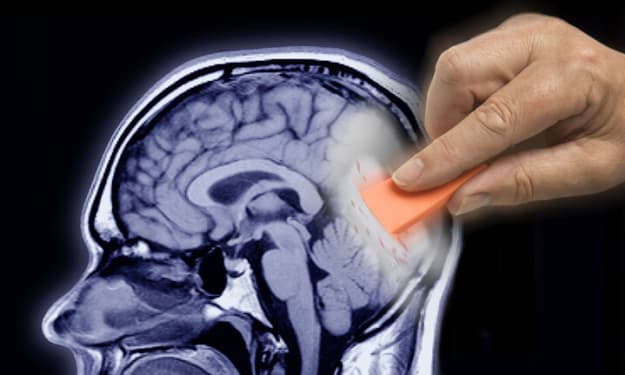
The human brain creates a false memory just a few seconds after the event!
People may misremember events, often within seconds, and reshape memories to fit their expectations. Previous studies have shown that people's perception of their surroundings can be shaped by their expectations, which can lead to delusions. People's long-term memories can also be shaped to fit their expectations, sometimes generating false memories.
By News Correct3 years ago in Psyche
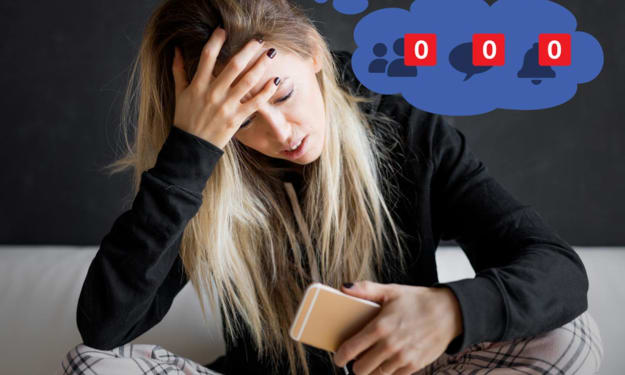
Relationship between Anxiety and Social Media Usage.
Anxiety and Social Media Abstract: - This research aims to investigate the link between social media use and anxiety. Although social media has improved connectivity, it has also presented new difficulties for mental health. Due to variables including fear of missing out (FOMO), social comparison, and the pressure to portray a perfect picture online, many people report experiencing anxiety or stress as a result of using social media.
By Muhammad Suhaib Khan3 years ago in Psyche
The Power of the Mind/Brain
The brain has been ascribed many abilities it cannot possibly possess from learning, to seeing, to understanding, to knowing, etc. This is the mereological fallacy writ large. Ascribing attributes/characteristics/behaviors to a part or parts of a thing that can only (logically) be applied to the whole thing. Only of a (mostly) whole human person (and some non human animals) with a (mostly) functioning nervous system including a brain can we say they are capable of doing any of those things. Never forget that a brain divorced from a body is a lump of grey matter capable of nothing save a few basic cellular processes and possibly some low level electrochemical (nerve) activity, for a short period of time at least.
By Everyday Junglist3 years ago in Psyche
Social Media Addiction
Social media addiction refers to the excessive use of social media platforms to the extent that it negatively affects an individual's daily life and functioning. It is a type of behavioral addiction that can lead to compulsive use of social media platforms, such as Facebook, Twitter, Instagram, TikTok, etc.
By Tamseela Arooj3 years ago in Psyche
Unlock the Secret to the Inner Peace: The Life-Changing Power of Meditation
Do you often feel overwhelmed by the demands of daily life? Do you struggle to stay focused and calm during chaos? If so, you're not alone. Many people today are looking for ways to reduce stress and anxiety and achieve a greater sense of inner peace. Fortunately, meditation can help.
By Nikola Džoni3 years ago in Psyche