
A New Maker of Passenger Jets Arrives: It’s Not Chinese but Indian
India’s aerospace sector makes a historic leap into passenger jet manufacturing through regional aircraft production pacts with global partners and local assembly lines.

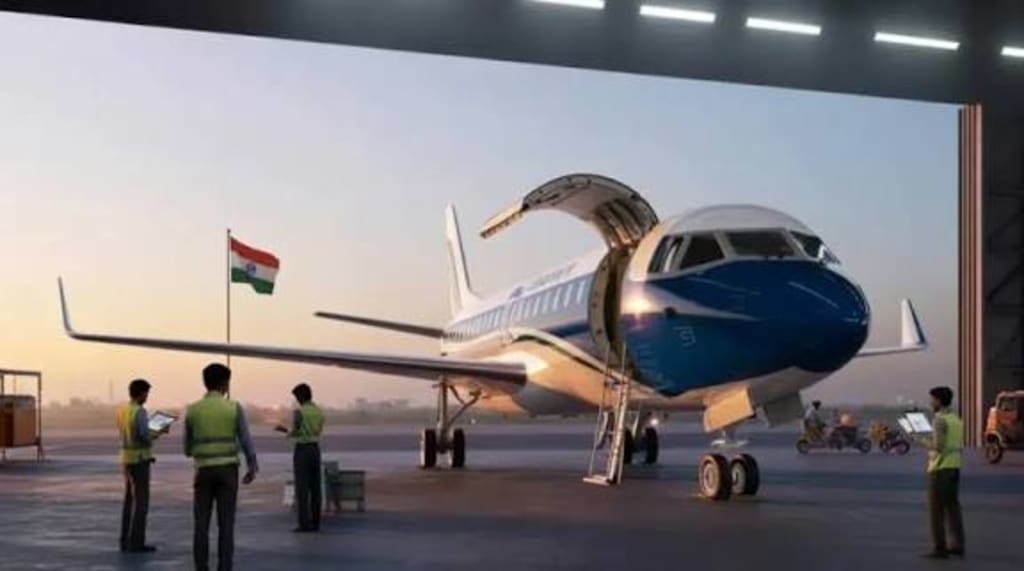
In a significant development for global aviation, India is emerging as a new centre for commercial aircraft production — not through an indigenous design from scratch, but by becoming a host for passenger jet manufacturing that could shift long-standing industry dynamics. This arrival marks a milestone for a country that has long imported almost all its airliners from foreign manufacturers, and could signal a future where Indian-based production plays a larger role in the global market.
Halting a Long Wait for India-Built Airliners
India has tremendous demand for commercial aircraft, driven by rapid growth in domestic travel and international flights. Until recently, airlines operating in the country — including Air India and low-cost carriers — have relied almost entirely on jets made by Airbus, Boeing, and others. Indian carriers have placed massive orders for new aircraft to expand fleets, but none of these planes were produced on Indian soil. India’s aerospace industry has primarily focused on military platforms and component work, not commercial manufacturing.
That is beginning to change through a mix of strategic partnerships and industrial policy focused on self-reliance under initiatives such as “Make in India.”
India to Produce SJ-100 Jets
A key step toward a domestic passenger jet industry was taken in October 2025, when Hindustan Aeronautics Limited (HAL) signed a memorandum of understanding with United Aircraft Corporation to produce the SJ-100 regional passenger aircraft in India. The SJ-100 (formerly the Sukhoi Superjet 100) is a twin-engine narrow-body aircraft used by airlines in several countries. Under the collaboration, HAL will manufacture the aircraft in India and eventually assemble and sell it domestically, marking the first time a complete passenger jet will be built on Indian soil since the production of the Avro HS-748 ended in 1988.
The deal lays the groundwork for a new aerospace manufacturing ecosystem, potentially creating jobs, building supply chains, and reducing India’s dependence on foreign aircraft imports. HAL and its partners also aim to secure certification and regulatory approval within India, paving the way for the jets to serve domestic carriers — particularly under regional connectivity schemes improving air links to smaller cities.
Building an Aviation Ecosystem with Global Partners
India is not stopping with the SJ-100. A separate strategic partnership between Adani Defence & Aerospace, a subsidiary of the Adani Group, and Embraer aims to establish a final assembly line for the Embraer E-175 regional jet in India. The MoU signed in early 2026 outlines plans to build out a regional aircraft manufacturing ecosystem with an Indian supply chain, pilot training, maintenance facilities, and related services.
Although the E-175 itself is a Brazilian design, assembling these jets in India is a major step toward local aviation manufacturing and could set the stage for broader roles in global supply chains. Combined with the SJ-100 effort, India could position itself as a significant player in the short- and medium-haul regional aircraft market — a segment especially important for expanding domestic air travel.
Why It Matters Globally
For decades, the commercial aircraft market has been dominated by a small number of large producers, principally Boeing and Airbus. Other national manufacturers such as Commercial Aircraft Corporation of China (COMAC) have tried to break into the market, but India’s approach is notable because it combines international cooperation with domestic industrial policy.
By hosting manufacturing and final assembly of well-established aircraft types, India gains immediate industrial capability and workforce experience, even if it has not yet developed a fully homegrown jet design. This model reflects a pragmatic approach: leap-frogging into production of certified aircraft rather than starting from zero in design and development.
Challenges Ahead
Despite the optimism, hurdles remain. Completing certification, establishing quality assurance systems, and building a robust supply chain will take years of sustained commitment. Winning airline orders for jets assembled in India — especially from major international carriers — will depend on meeting global safety standards and competitive pricing.
India will also have to balance collaboration with countries like Russia and Brazil while maintaining strong relationships with Western manufacturers and regulators, given their continued dominance in global aviation.
A Turning Point for Indian Aviation
Still, the arrival of passenger jet manufacturing in India represents a meaningful shift. It matches the country’s broader ambitions of technological self-reliance and economic modernization. What was once a dream — seeing commercial jets assembled or produced in India — is now underway, potentially setting the stage for India not just to fly jets, but to make them.
About the Creator
Fiaz Ahmed
I am Fiaz Ahmed. I am a passionate writer. I love covering trending topics and breaking news. With a sharp eye for what’s happening around the world, and crafts timely and engaging stories that keep readers informed and updated.
Keep reading
More stories from Fiaz Ahmed and writers in The Swamp and other communities.
What We Know So Far: Supreme Leader Khamenei Killed, as Iran Launches Retaliatory Strikes
Iran’s long-time supreme leader, Ayatollah Ali Khamenei, has been confirmed dead following a dramatic escalation of hostilities in the Middle East, setting off a cycle of retaliation and raising fears of a broader regional conflict. The developments — unfolding over the past 48 hours — mark one of the most consequential turning points in modern Iranian history. Khamenei’s Death Confirmed Iranian state media confirmed early on 1 March 2026 that Supreme Leader Ayatollah Ali Khamenei — who had led the Islamic Republic since 1989 — was killed in joint U.S. and Israeli airstrikes on Tehran and other key locations in Iran on 28 February. The official announcement described his death as the “martyrdom” of a figure who had steered Iran for nearly four decades, and state TV declared 40 days of national mourning, accompanied by a week of public holidays. President Donald Trump had earlier posted on social media that Khamenei, aged 86, was killed during a major military offensive designed to degrade Iranian leadership and strategic capabilities. Tehran’s confirmation ended initial uncertainty about his status, although both U.S. and Israeli military and political leaders had suggested the supreme leader was dead based on battlefield reports. The Military Offensive That Killed Him The strikes, dubbed by some sources as part of a coordinated campaign between Washington and Jerusalem, reportedly targeted senior leadership compounds, nuclear sites, and ballistic missile infrastructure. Satellite imagery released by analysts showed heavy damage to Khamenei’s compound in Tehran. Independent details about the precise mechanics of the strike remain limited due to ongoing conflict conditions. The joint operation marks a dramatic escalation from earlier phases of tension, which had been largely conducted through proxy confrontations and limited tactical strikes by both sides. Khamenei’s death — a strategic objective reportedly communicated by U.S. and Israeli officials — represents a direct assault on Iran’s political core. Retaliation and Regional Response In response to the news of the attacks and the death of their leader, Iranian officials vowed harsh retaliation. The Islamic Revolutionary Guard Corps declared that a “most ferocious offensive operation” would soon begin against U.S. and Israeli targets. Tehran has already launched missile and drone strikes against U.S. bases in the region and sites inside Israel — a significant escalation that carries high potential for wider conflict. Iran’s government statement described the strikes on its territory — which reportedly killed other high-ranking officials and civilians — as breaches of international law and a direct assault on national sovereignty. Top Iranian leaders warned that “enemies must pay a heavy price” and reaffirmed that the country will pursue retaliation “with all its strength and determination. Succession and Power Vacuum Khamenei’s death immediately triggered constitutional procedures to manage the leadership transition. Iran’s Assembly of Experts, a clerical body, is tasked with selecting the next supreme leader. In the interim, a temporary leadership council is expected to be formed, reportedly including senior figures such as Iran’s president, the judiciary chief, and a jurist from the Guardian Council. This transitional authority will lead the country until a new supreme leader is formally appointed. However, the succession process is unfolding amid wartime conditions and internal factional tensions, raising questions about whether hardliners linked to the IRGC or more traditional clerical figures will prevail. The outcome could shape Iran’s domestic stability and foreign policy for years to come. Domestic and Regional Unrest Khamenei’s death has provoked significant reactions across the region as well as domestically. Thousands of Iranians have participated in memorial gatherings, while strong anti-U.S. and anti-Israeli sentiment is being expressed in public commemorations. Pro-Iran demonstrations have also erupted in neighbouring countries including Pakistan and Iraq, prompting heightened security measures. The potential for further regional instability remains high, with various governments calling for restraint and urging an urgent move back to diplomacy to avoid wider conflict and catastrophic humanitarian consequences. Global responses have been mixed. Some Western leaders reiterated support for self-defence and emphasised the need to prevent Iran from pursuing nuclear weapons, while others warned that targeting a sitting head of state could violate international norms and risk a broader war. The United Nations Security Council convened emergency discussions aimed at de-escalation and humanitarian relief. The New Indian Express Market responses have also reflected the shock of the developments, with energy prices and defense stocks fluctuating amid uncertainty about the conflict’s trajectory and the stability of critical energy corridors such as the Strait of Hormuz.
By Fiaz Ahmed 2 days ago in The Swamp
A Gathering of Evil Bosses
“I’m the queen of chin jutting while I smooth my hair, attacking, insulting, and deflecting to protect my appointer.” “Oh, please, Blondi, my hair is curled, highlighted, and longer than yours. I feature television commercials telling immigrants that we will give them a free plane ride home, and if they voluntarily turn themselves in, they will be allowed to legally apply for re-entry. It runs everywhere, and I look good in it! You can’t compete because of your blond hair. Mine is nicer, and my lips are prettier than yours.”
By Andrea Corwin 13 days ago in The Swamp
Trump’s Iran Strike Tests the MAGA Promise of “No More Wars”
For years, the political movement associated with Donald Trump has been built on a powerful promise: America would stop fighting endless wars abroad. The slogan “America First” and the broader Make America Great Again philosophy resonated with millions of voters who believed the United States had spent too much blood and money in distant conflicts. Yet recent U.S. military strikes against Iran, carried out alongside Israel, have placed that promise under intense scrutiny. What was presented by the White House as a strategic move to prevent nuclear escalation has instead opened a debate within Trump’s own political base: Can a president who promised “no more wars” justify launching a major military operation? The answer could reshape the future of the MAGA movement and the broader direction of American foreign policy. The Strike That Changed the Conversation The latest crisis erupted when the United States launched coordinated strikes on Iranian military and nuclear-related facilities. The operation targeted key assets linked to Iran’s military infrastructure, including forces connected to the Islamic Revolutionary Guard Corps. According to officials, the strikes were intended to weaken Iran’s missile capabilities and prevent what Washington described as an imminent threat. Intelligence reports suggested Iran might have been preparing attacks on American forces or allies in the region. The military action quickly escalated tensions across the Middle East. Iran responded with missile and drone strikes targeting Israeli cities and U.S. military bases in the region, raising fears of a wider war. � AP News For many Americans, the images of explosions and retaliatory attacks felt painfully familiar—echoing the early days of conflicts in Iraq and Afghanistan. A Promise That Defined Trump’s Political Rise Trump’s political appeal was built partly on his rejection of the foreign policy consensus that dominated Washington for decades. During his campaigns, he repeatedly criticized the wars in Iraq and Afghanistan as costly mistakes. He argued that American leaders had wasted trillions of dollars overseas while neglecting domestic problems. His message was simple but powerful: Stop endless wars Bring American troops home Focus on rebuilding the United States This anti-interventionist stance attracted voters across ideological lines. Many conservatives, libertarians, and even some progressives supported the idea that the United States should avoid new military conflicts whenever possible. By the time Trump returned to the White House, millions of supporters believed they were voting for a president who would break the cycle of foreign wars. The MAGA Base Reacts The strikes on Iran have triggered intense debate among Trump’s supporters. Some prominent voices within the MAGA movement have openly criticized the decision. They argue that military intervention contradicts the core principles that made the movement popular in the first place. Several conservative commentators and political figures have said the operation risks dragging the United States into another long conflict in the Middle East. Others worry that it could distract from domestic priorities such as immigration, economic growth, and border security. For these critics, the question is not whether Iran poses a threat—but whether military action is the right response. Many have warned that American voters are tired of foreign wars and expect their leaders to pursue diplomatic solutions instead. Supporters Defend the Decision At the same time, many Republicans and Trump allies strongly support the strikes. Their argument is that preventing Iran from developing nuclear weapons is essential to global security. From this perspective, limited military action is preferable to allowing a dangerous adversary to gain more power. Supporters also emphasize that Trump has never ruled out the use of force when American interests are at stake. They point out that he has often described military power as a deterrent—something that should exist precisely to prevent larger wars. Some conservative analysts believe the strikes could ultimately strengthen Trump’s reputation if they lead to a quick resolution or deter future aggression. However, if the conflict becomes prolonged, political support could weaken. Congress and Washington React The strikes have also sparked debate in Washington. Several lawmakers from both parties have questioned whether the president should have sought congressional approval before launching the operation. Others have expressed concern about the lack of a clear long-term strategy for dealing with Iran after the initial attacks. � Reuters The central question facing policymakers is simple but difficult: What happens next? Without a clear diplomatic path forward, some fear the United States could become entangled in a prolonged regional conflict. The Strategic Risks Military analysts say the biggest danger is escalation. Iran has extensive regional alliances and influence through various groups across the Middle East. Any conflict involving Iran has the potential to spread beyond its borders. Countries such as Lebanon, Syria, and Iraq could become involved if the fighting intensifies. Another major concern is the Strait of Hormuz, a narrow waterway through which a large portion of the world’s oil supply passes. Any disruption in this region could send global energy prices soaring and trigger economic instability worldwide. Trump’s Strategic Calculation For Trump, the decision to strike Iran may have been driven by multiple factors. One possibility is that the administration believed swift military action could deter Iran from escalating its nuclear program or attacking U.S. interests. Another possibility is political calculation. Presidents often face pressure to demonstrate strength in international crises. Trump has framed the strikes as a defensive measure intended to protect American lives and prevent greater conflict in the future. Yet critics argue that military action often produces unintended consequences. History shows that conflicts in the Middle East can evolve quickly and unpredictably. The Shadow of Iraq and Afghanistan Much of the anxiety surrounding the Iran strike comes from memories of earlier wars. The U.S. invasion of Iraq in 2003 began with a limited military objective but evolved into a long and costly conflict lasting nearly two decades. Similarly, the war in Afghanistan became the longest war in American history. These experiences have left many Americans skeptical of military interventions, especially when the long-term goals are unclear. For the MAGA movement—which was partly built on opposition to those wars—the Iran strike represents a moment of ideological tension. The Political Stakes The political consequences of the Iran strike could be significant. If the conflict remains limited and successful, Trump may argue that he prevented a greater threat while avoiding a large-scale war. But if the situation escalates, critics within his own movement could become louder. Political analysts say the outcome could influence upcoming elections and shape the future direction of the Republican Party. Will the party remain committed to the “America First” principle of avoiding foreign wars? Or will national security concerns push it toward a more traditional interventionist approach? The Global Perspective Outside the United States, governments around the world are closely watching the situation. Many countries fear that a direct confrontation between the United States and Iran could destabilize the entire Middle East. International organizations, including the United Nations, have urged restraint and called for diplomatic efforts to reduce tensions. Global markets have also reacted nervously, with energy prices fluctuating as investors assess the risks of regional instability. A Movement at a Crossroads Ultimately, the Iran strike has forced the MAGA movement to confront a difficult question: Can America remain strong internationally while avoiding new wars? Trump’s supporters have long argued that the United States should project strength but avoid unnecessary conflicts. The challenge is determining where to draw the line between deterrence and intervention. The answer may shape the future of American foreign policy for years to come. Conclusion: The Promise Under Pressure The strikes on Iran have created one of the most significant tests yet for the political philosophy that brought Donald Trump to power. Supporters see the operation as a necessary act of strength. Critics view it as a betrayal of the promise to avoid new wars. For now, the situation remains uncertain. Much will depend on how the conflict unfolds in the coming weeks and months. If the crisis ends quickly, the MAGA movement may rally behind the decision. But if the United States finds itself drawn into another prolonged conflict, the promise of “no more wars” could become one of the most contested issues in modern American politics.
By Zahid Hussain2 days ago in The Swamp
This Is What I Do When People Throw Rocks At Me
Rocks have been thrown at me for a greater part of my life. Some have been small and missed hitting me. When people don't get a reaction from me, they throw bigger rocks with a better aim. Many have been hurled at me with precision over the years. For a long time, I thought my only options were to dodge them or be crushed by them.
By Margaret Minnicks6 days ago in Confessions


Comments
There are no comments for this story
Be the first to respond and start the conversation.