defense
Moving through the ranks of military activity including infrastructure, wars, our commander in chief and the nucleur arms race.
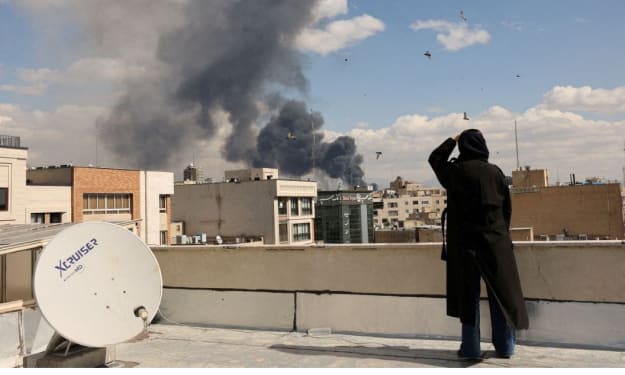
Iran Plunges Into Chaos After Khamenei’s Death
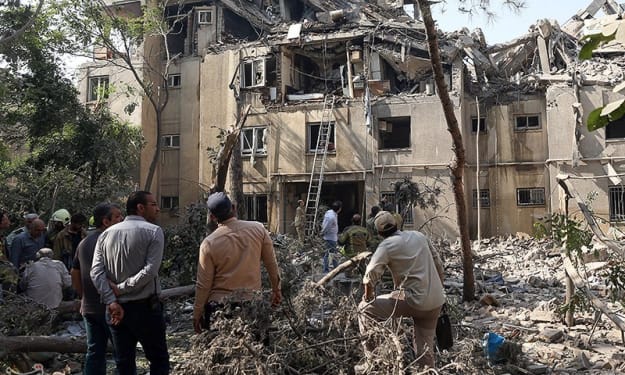
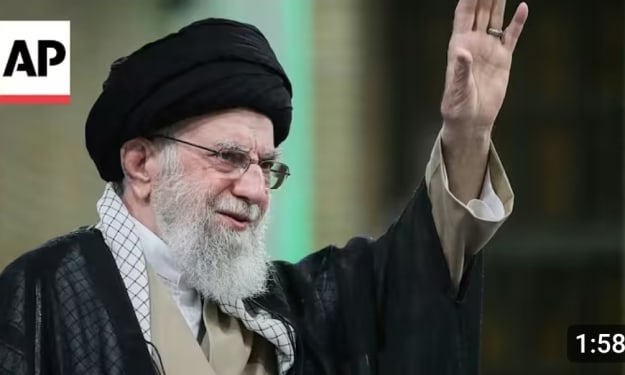
Iran erupted into unprecedented chaos after Supreme Leader Ayatollah Ali Khamenei was killed during targeted strikes on Feb. 28. Streets in Tehran filled with protesters, while retaliatory attacks hit U.S. bases in the Persian Gulf and the U.S. Embassy in Kuwait. Analysts warn that the violence could escalate into a wider regional crisis.
By Jacqueline Bowsera day ago in The Swamp
A New Maker of Passenger Jets Arrives: It’s Not Chinese but Indian. AI-Generated.
In a significant development for global aviation, India is emerging as a new centre for commercial aircraft production — not through an indigenous design from scratch, but by becoming a host for passenger jet manufacturing that could shift long-standing industry dynamics. This arrival marks a milestone for a country that has long imported almost all its airliners from foreign manufacturers, and could signal a future where Indian-based production plays a larger role in the global market. Halting a Long Wait for India-Built Airliners India has tremendous demand for commercial aircraft, driven by rapid growth in domestic travel and international flights. Until recently, airlines operating in the country — including Air India and low-cost carriers — have relied almost entirely on jets made by Airbus, Boeing, and others. Indian carriers have placed massive orders for new aircraft to expand fleets, but none of these planes were produced on Indian soil. India’s aerospace industry has primarily focused on military platforms and component work, not commercial manufacturing. That is beginning to change through a mix of strategic partnerships and industrial policy focused on self-reliance under initiatives such as “Make in India.” India to Produce SJ-100 Jets A key step toward a domestic passenger jet industry was taken in October 2025, when Hindustan Aeronautics Limited (HAL) signed a memorandum of understanding with United Aircraft Corporation to produce the SJ-100 regional passenger aircraft in India. The SJ-100 (formerly the Sukhoi Superjet 100) is a twin-engine narrow-body aircraft used by airlines in several countries. Under the collaboration, HAL will manufacture the aircraft in India and eventually assemble and sell it domestically, marking the first time a complete passenger jet will be built on Indian soil since the production of the Avro HS-748 ended in 1988. The deal lays the groundwork for a new aerospace manufacturing ecosystem, potentially creating jobs, building supply chains, and reducing India’s dependence on foreign aircraft imports. HAL and its partners also aim to secure certification and regulatory approval within India, paving the way for the jets to serve domestic carriers — particularly under regional connectivity schemes improving air links to smaller cities. Building an Aviation Ecosystem with Global Partners India is not stopping with the SJ-100. A separate strategic partnership between Adani Defence & Aerospace, a subsidiary of the Adani Group, and Embraer aims to establish a final assembly line for the Embraer E-175 regional jet in India. The MoU signed in early 2026 outlines plans to build out a regional aircraft manufacturing ecosystem with an Indian supply chain, pilot training, maintenance facilities, and related services. Although the E-175 itself is a Brazilian design, assembling these jets in India is a major step toward local aviation manufacturing and could set the stage for broader roles in global supply chains. Combined with the SJ-100 effort, India could position itself as a significant player in the short- and medium-haul regional aircraft market — a segment especially important for expanding domestic air travel. Why It Matters Globally For decades, the commercial aircraft market has been dominated by a small number of large producers, principally Boeing and Airbus. Other national manufacturers such as Commercial Aircraft Corporation of China (COMAC) have tried to break into the market, but India’s approach is notable because it combines international cooperation with domestic industrial policy. By hosting manufacturing and final assembly of well-established aircraft types, India gains immediate industrial capability and workforce experience, even if it has not yet developed a fully homegrown jet design. This model reflects a pragmatic approach: leap-frogging into production of certified aircraft rather than starting from zero in design and development. Challenges Ahead Despite the optimism, hurdles remain. Completing certification, establishing quality assurance systems, and building a robust supply chain will take years of sustained commitment. Winning airline orders for jets assembled in India — especially from major international carriers — will depend on meeting global safety standards and competitive pricing. India will also have to balance collaboration with countries like Russia and Brazil while maintaining strong relationships with Western manufacturers and regulators, given their continued dominance in global aviation. A Turning Point for Indian Aviation Still, the arrival of passenger jet manufacturing in India represents a meaningful shift. It matches the country’s broader ambitions of technological self-reliance and economic modernization. What was once a dream — seeing commercial jets assembled or produced in India — is now underway, potentially setting the stage for India not just to fly jets, but to make them.
By Fiaz Ahmed 2 days ago in The Swamp
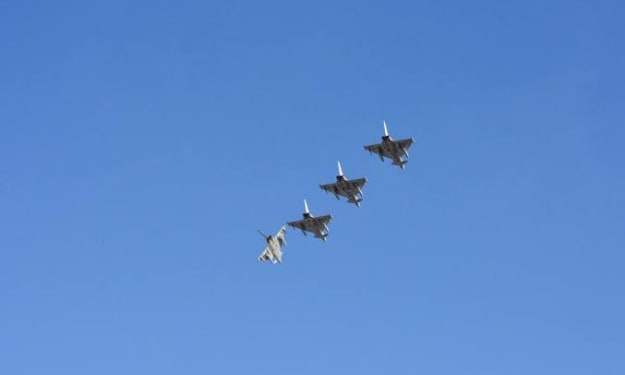
British Jets in the Air in Defensive Action Over Middle East. AI-Generated.
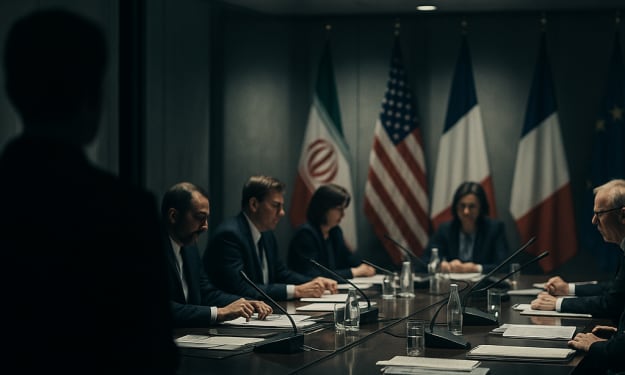
British fighter jets are actively flying defensive missions over the Middle East as part of regional security operations in response to escalating hostilities following recent military strikes on Iran by the United States and Israel, British officials have confirmed. The deployment marks a significant moment in London’s military posture in the region, underscoring both the strategic importance of allied defence cooperation and the intensifying security environment. Prime Minister Keir Starmer announced on Feb. 28 that British military aircraft are “in the sky today” over the Middle East as part of “coordinated regional defensive operations” intended to protect British personnel, strategic interests, and allied partners. Starmer stressed that while the United Kingdom had not participated in the initial U.S.–Israeli strikes against Iranian targets, it was committed to safeguarding forces and installations in an increasingly volatile theatre. What London Calls Defensive Operations According to Starmer’s statement, British jets — understood to include Royal Air Force Typhoon and possibly F-35 aircraft — are engaged in patrols designed to deter and, if necessary, intercept hostile activity in the region. The operations follow a surge in tensions that began when U.S. and Israeli forces launched strikes inside Iran, reportedly targeting nuclear and missile infrastructure. Iran responded with widespread missile and drone attacks against U.S. and allied bases, prompting concerns about escalation. Defence Secretary John Healey reiterated that the RAF jets are conducting defensive actions to protect British personnel and assets. “Force protection for British bases and personnel is at the highest levels,” he said, underscoring the precautionary posture being adopted across the region. London has also elevated security measures at its bases in the Gulf and eastern Mediterranean, including enhanced anti-aircraft defences and alert levels for troops. Starmer’s government has further urged British nationals in Gulf Cooperation Council states — such as Bahrain, Qatar, and the United Arab Emirates — to shelter in place should further escalation occur. Avoiding Direct Combat Involvement Both Starmer and his defence chiefs have been careful to emphasise that British armed forces are not participating in offensive action against Iran, and have no role in the U.S.–Israeli strikes that triggered the latest round of hostilities. Instead, the RAF’s involvement is characterised as a defensive response to protect UK interests and allies from potential Iranian retaliation. This distinction seeks to keep Britain out of a direct combat role while acknowledging its commitments to NATO and regional securit “Our forces are active and British planes are in the sky today as part of coordinated regional defensive operations to protect our people, our interests and our allies — as Britain has done before, in line with international law,” Starmer said in a televised address. He added that Iran “must refrain from further strikes” and urged a return to diplomatic negotiations to de-escalate the conflict Diplomatic and Regional Concerns The British government’s approach comes amid intense diplomatic pressure to prevent a wider regional conflict. Leaders in London, Paris, and Berlin have jointly called for restraint and emphasised the importance of pursuing diplomatic avenues to resolve the crisis. European officials have signalled alarm about the potential for spillover violence that could threaten global energy supplies, disrupt trade routes, and destabilise neighbouring states. Starmer’s administration has underscored that Britain’s priority is the safety of its forces and citizens, and that UK involvement will remain defensive unless broader alliance commitments dictate otherwise. He also reiterated the long-standing British position that Iran should not be allowed to develop nuclear weapons, framing that as a key element both of the current response and of broader Middle East strategy. Public and Parliamentary Reaction The deployment has sparked debate domestically in the UK. Some lawmakers and commentators argue that Britain must avoid becoming entangled in a larger conflict, while others support the government’s decision to protect personnel and demonstrate solidarity with regional allies. Opposition voices have also highlighted the need for a clear legal framework for involvement in overseas military activity, especially in what may not yet be a formal state of war. Looking Ahead With British jets actively patrolling Middle East skies, the situation remains fluid. Military planners in London are monitoring developments closely, including potential expansions of defensive missions or adjustments to force postures should Iranian retaliation intensify. For now, the British government’s messaging prioritises deterrence and protection over offensive engagement, even as concerns about wider conflict persist.
By Fiaz Ahmed 3 days ago in The Swamp