
The Life and Death of Ayatollah Ali Khamenei: Iran's Supreme Leader
A factual account of his rise to power, decades of leadership, and the events surrounding his death in 2026

Introduction
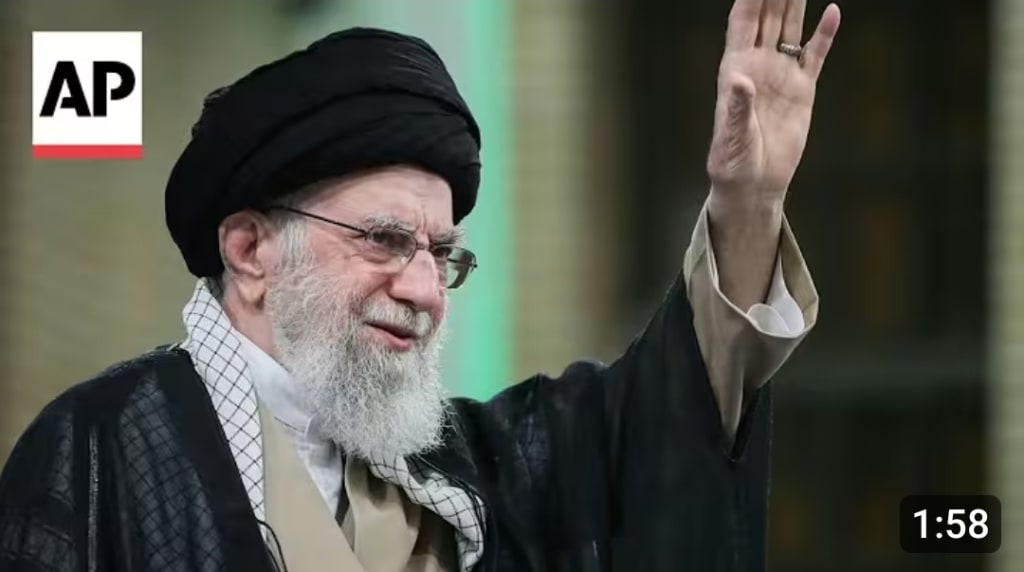
Ayatollah Ali Khamenei served as the Supreme Leader of Iran for nearly 37 years, making him one of the longest-serving heads of state in the Middle East. His leadership shaped Iran's domestic policies, regional strategy, and relationships with global powers. On February 28, 2026, Khamenei was killed in a military strike on a leadership compound in Tehran, an event that marked a turning point in the Islamic Republic's history .
This article presents a factual account of his life, his rise through Iran's political system, his years as Supreme Leader, and the circumstances of his death. It aims to provide readers with a clear understanding of a figure who played a central role in Middle Eastern politics for more than four decades.
Early Life and Religious Education
Ali Khamenei was born on April 19, 1939, in the northeastern city of Mashhad, a major center of Shi'a religious learning in Iran. His family had a long tradition of religious scholarship, and from a young age he received education in Islamic studies.
Khamenei pursued advanced religious training in Qom, Iran's most important seminary city. There he studied theology, jurisprudence, and Islamic law under senior clerics. His education combined traditional religious learning with exposure to political ideas that were circulating among Iranian clergy in the mid-twentieth century.
Before the 1979 revolution, Khamenei participated in protests against the monarchy of Shah Mohammad Reza Pahlavi. His political activism led to his detention and monitoring by the Shah's security services. During this period, he aligned himself with other opposition figures, including Ayatollah Ruhollah Khomeini, who would later become the first Supreme Leader of the Islamic Republic.
Role in the 1979 Revolution
The 1979 Islamic Revolution overthrew the Shah's government and established the Islamic Republic of Iran. The new political system was based on the principle of velāyat-e faqīh, or guardianship of the Islamic jurist, which placed ultimate authority in the hands of a senior cleric.
Khamenei was appointed to several key positions in the revolutionary government. He served on the Revolutionary Council, which helped shape the new constitution and governance framework. He also took on roles related to defense and national security during the revolution's early years.
His work during this period established his reputation as both a religious figure and a political actor. He was among the younger clerics who moved into positions of responsibility as the new government built its institutions.
Presidency: 1981 to 1989
In October 1981, Khamenei was elected president of Iran. He served two terms, from 1981 to 1989, a period dominated by the Iran-Iraq War. The war, which lasted from 1980 to 1988, shaped nearly every aspect of Iranian governance during his presidency.
The presidency under Iran's system was subordinate to the Supreme Leader and other clerical bodies. However, the position allowed Khamenei to gain executive experience at the highest level of government. He worked on wartime administration, economic management, and implementation of revolutionary policies.
His performance during these years positioned him for greater responsibility after the death of Ayatollah Khomeini.
Becoming Supreme Leader in 1989
When Ayatollah Ruhollah Khomeini died in June 1989, the Assembly of Experts—a body of senior clerics responsible for selecting the Supreme Leader—appointed Khamenei as his successor. At the time of his appointment, Khamenei did not hold the highest religious rank traditionally associated with the office. Constitutional amendments were made to allow his succession.
On June 4, 1989, Khamenei officially became Supreme Leader. The position gave him authority over Iran's political, security, and religious institutions. The Supreme Leader holds the highest constitutional power, with oversight of the Islamic Revolutionary Guard Corps, judiciary appointments, and key foreign policy decisions.
Khamenei was 50 years old when he took office. He would remain in the position for the rest of his life.
Authority and Responsibilities as Supreme Leader
As Supreme Leader, Khamenei became the head of state and final decision-maker in Iran's political system. His responsibilities included setting domestic policy directions, supervising the armed forces, and guiding foreign policy. He also influenced appointments to senior positions, including judges, military commanders, and members of the Guardian Council, which vets election candidates and interprets the constitution.
Under Khamenei's leadership, Iran expanded its regional influence through alliances with groups and governments in Lebanon, Iraq, Syria, and Yemen. The Islamic Revolutionary Guard Corps grew in power and became central to Iran's foreign operations and internal security.
Khamenei maintained control over Iran's nuclear program and its negotiations with world powers. He issued a religious decree against nuclear weapons but also oversaw expansion of Iran's nuclear infrastructure.
Domestic Challenges and Protests
Khamenei's tenure saw periods of internal unrest. In 2009, mass demonstrations followed disputed presidential election results. Security forces moved against the protests in actions that drew international criticism.
In 2022, another wave of protests erupted after the death of Mahsa Amini while in custody of morality police. These protests reflected economic discontent and demands for personal freedoms. The government responded with security measures and political rhetoric emphasizing national unity.
Throughout these challenges, Khamenei maintained his position at the head of the political system. Critics argued that his government limited dissent and freedom of expression. Supporters cited the need for stability amid external pressures.
Escalation and the Strike of February 28, 2026
In early 2026, military tensions between Iran, the United States, and Israel reached a new peak. Negotiations over Iran's nuclear program had stalled. American and Israeli intelligence agencies had been tracking Iranian leadership movements for months.
On the morning of February 28, 2026, a joint military operation targeted a leadership compound in Tehran where senior Iranian officials were gathered. The strike hit the compound where Supreme Leader Khamenei was present.
The attack was carried out in daylight. Multiple bombs were dropped on the facility, causing extensive damage. Israeli and American military forces coordinated the operation, which also struck other strategic locations in Tehran.
Iranian state media initially denied that Khamenei had been killed. The following day, official sources confirmed his death. The strike also killed other senior officials, including military commanders and defense officials.
Reactions to Khamenei's Death
The news of Khamenei's death drew varied responses globally. Russia condemned the military action as a violation of international norms. China issued statements opposing the attacks. The European Union described Khamenei's death as a defining moment for Iran with uncertain implications for regional stability.
Inside Iran, reactions were mixed. Official channels announced a period of mourning and called for retaliation. President Masoud Pezeshkian warned that the United States and Israel would face consequences.
However, in parts of Tehran and other cities, some residents celebrated. Witnesses reported cheers, fireworks, and music in certain neighborhoods. These reactions reflected the divisions within Iranian society about the country's leadership.
In several countries across the region, demonstrations occurred, leading to clashes in some locations.
Succession Process
With Khamenei's death, Iran's constitution outlines a process for selecting a new Supreme Leader. The Assembly of Experts, composed of senior Islamic scholars, is responsible for appointing the next leader under Article 107 of the constitution.
This process began amid heightened security concerns and regional tensions. The leadership vacuum represented a significant moment in Iranian politics. Analysts noted that the transition would influence internal governance, regional dynamics, and Iran's relationships with other countries.
The selection of a new Supreme Leader involves complex political and religious considerations. The Assembly of Experts must consider candidates' religious credentials, political experience, and acceptance within Iran's governing system.
Legacy and Historical Significance
Ayatollah Ali Khamenei led Iran as Supreme Leader for nearly 37 years. He was one of the most enduring figures in the Islamic Republic's history. His tenure shaped Iran's domestic policies, regional strategy, and global engagements.
Khamenei's leadership spanned multiple Iranian presidents, American administrations, and regional conflicts. He maintained his position through war, protests, economic pressures, and international sanctions. His death marked the end of an era for the Islamic Republic.
The events surrounding his death and the subsequent transition period will be seen as a pivotal moment in Middle Eastern history. As Iran moves forward under interim leadership and prepares for constitutional succession, Khamenei's legacy remains central to understanding the Islamic Republic's development over nearly four decades.
Iran now faces a period of uncertainty. The coming months will determine how the country navigates this transition and what direction its new leadership will take.
Conclusion
The life of Ayatollah Ali Khamenei spanned the full history of the Islamic Republic of Iran. From his early days as a revolutionary activist to his decades as Supreme Leader, he was a central figure in Iranian politics. His death in the strike of February 28, 2026, removed the keystone of Iran's political and religious leadership.
The full consequences of this event will unfold over time. Iran's succession process, its regional relationships, and its internal stability all face new tests. Understanding Khamenei's life and leadership provides essential context for following these developments as they occur.
About the Creator
Saad
I’m Saad. I’m a passionate writer who loves exploring trending news topics, sharing insights, and keeping readers updated on what’s happening around the world.
A Gathering of Evil Bosses
“I’m the queen of chin jutting while I smooth my hair, attacking, insulting, and deflecting to protect my appointer.” “Oh, please, Blondi, my hair is curled, highlighted, and longer than yours. I feature television commercials telling immigrants that we will give them a free plane ride home, and if they voluntarily turn themselves in, they will be allowed to legally apply for re-entry. It runs everywhere, and I look good in it! You can’t compete because of your blond hair. Mine is nicer, and my lips are prettier than yours.”
By Andrea Corwin 13 days ago in The Swamp
UK Fighter Jet Shoots Down Iranian Drone Flying Towards Qatar
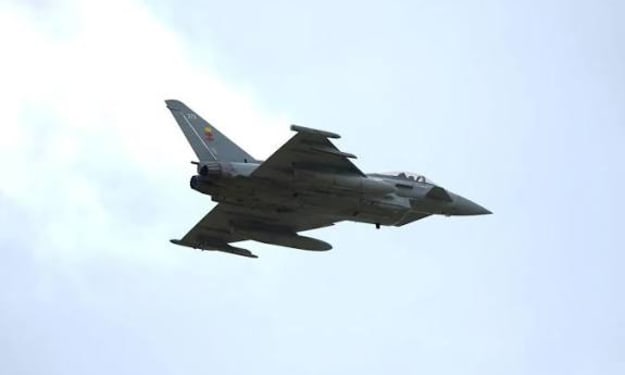
In a tense escalation in the Gulf region, a UK Royal Air Force (RAF) fighter jet successfully intercepted and destroyed an Iranian drone that was reportedly heading toward Qatar, officials confirmed. The incident, which occurred in international airspace near the Persian Gulf, underscores the rising military tensions in the region and highlights the growing role of unmanned aerial systems in modern conflicts. According to sources within the UK Ministry of Defence, the drone was detected approaching Qatari airspace, prompting an immediate response by RAF fighters stationed in the region as part of ongoing NATO and coalition operations. The aircraft, identified as a Eurofighter Typhoon, engaged the drone after it was deemed to pose a potential threat to civilian and military assets. The engagement was executed with precision, and the drone was destroyed without collateral damage to nearby infrastructure. The intercepted drone is believed to have been part of Iran’s expanding unmanned aerial program, which has seen significant investment in both reconnaissance and strike capabilities. Over the past decade, Tehran has increasingly deployed drones for surveillance, intelligence gathering, and, in some instances, offensive operations. Military analysts note that Iran’s use of drones in the Gulf has grown in both sophistication and frequency, raising concerns for regional allies and global shipping lanes that traverse these strategic waters. Officials from Qatar praised the UK’s swift response, emphasizing that the action prevented a potential escalation that could have jeopardized civilian safety or military stability. Qatar, which hosts several critical U.S. and allied military installations, has been closely monitoring regional airspace for signs of hostile activity. The interception of the drone was coordinated with Qatari air defense authorities to ensure that there were no misunderstandings and that the action complied with international law governing self-defense in sovereign airspace. The incident comes amid rising tensions between Iran and several Gulf Cooperation Council (GCC) nations. Diplomatic relations have been strained over a combination of political disputes, proxy conflicts, and competition for influence in the region. Recent months have seen multiple incidents involving drones and naval vessels, prompting increased military vigilance from both regional and Western powers. Analysts warn that such incidents could inadvertently trigger broader confrontations if miscalculations occur. From a strategic perspective, the UK’s involvement demonstrates its commitment to protecting regional allies and maintaining freedom of navigation in one of the world’s most economically critical areas. The Royal Air Force has been conducting regular patrols and exercises in the Gulf, often in coordination with NATO partners, the United States, and GCC nations. These operations are intended to deter potential threats, enhance situational awareness, and provide rapid-response capabilities to counter aerial or maritime provocations. The intercepted drone reportedly carried advanced surveillance equipment capable of gathering imagery and communications intelligence. Military experts suggest that Iran may have been seeking to monitor Qatari military installations, regional shipping routes, or coalition activities. While the drone was destroyed before achieving its objective, the incident highlights the increasing reliance on unmanned systems in modern conflict zones and the challenges they pose for air defense networks. International reactions to the incident have been cautious but supportive of Qatar and the UK’s defensive measures. NATO representatives emphasized the importance of maintaining vigilance and adhering to international norms, warning that unilateral aggressive actions could destabilize the region. Meanwhile, Tehran has yet to issue a formal response, though state-aligned media outlets have framed the incident as an overreaction by foreign forces operating near Iranian airspace. The United Kingdom has reaffirmed its commitment to regional security, noting that the interception was defensive in nature and consistent with international law. Officials stressed that the RAF remains prepared to respond to any credible threat, ensuring that the airspace surrounding Gulf allies remains secure. The incident also underscores the growing role of coalition cooperation in deterring asymmetric threats, such as drones, which can operate with relative stealth and precision. In conclusion, the shooting down of an Iranian drone by a UK fighter jet en route to Qatar is a stark reminder of the volatility in the Gulf region. The event illustrates the increasing sophistication of unmanned aerial technology, the importance of rapid response capabilities, and the delicate balance required to maintain regional stability. As tensions persist, countries in the Gulf and their international partners will need to continue vigilance and coordination to prevent further escalations and protect critical infrastructure and airspace.
By Fiaz Ahmed a day ago in The Swamp
Flower Bloom 369
FLOWER Bloom 2/25/26 Wednesday By Mariann Carroll Karen had been with Tony for 7 years. Tony started acting strangely after her surgery. He would mow the lawn in the rain and be on his cellphone. He started pushing Karen away. Tony came clean about seeing someone. Karen moved out two months later. Karen moved in with a friend. She felt betrayed.
By Mariann Carroll5 days ago in Fiction



Comments
There are no comments for this story
Be the first to respond and start the conversation.