
At Least Nine Killed in Pro-Iran Protest at U.S. Consulate in Karachi
Violent clashes outside the U.S. diplomatic mission highlight rising anger over Middle East tensions and foreign interventio
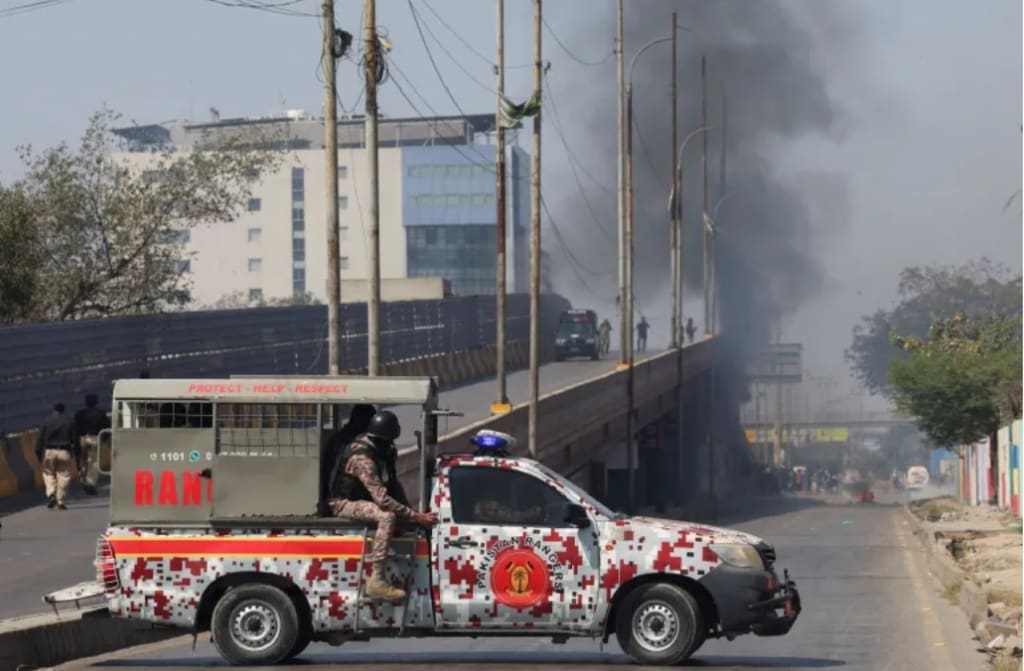
At least nine people have been killed and dozens injured after violent clashes erupted outside the United States Consulate in Karachi, Pakistan, on Sunday during a pro-Iran demonstration that followed the killing of Iran’s Supreme Leader Ayatollah Ali Khamenei in joint U.S. and Israeli military strikes. The deadly confrontation represents one of the most serious episodes of unrest in the city in recent years, igniting tensions in Pakistan and beyond.
Hundreds of protesters, many from Pakistan’s Shi’a Muslim community angered by the strikes, gathered near the consulate’s Mai Kolachi Road entrance on Sunday morning. Their objective was to protest both the killing of Khamenei and what they perceived as Western interference in regional affairs. The demonstration, which began peacefully, quickly escalated as some of those in the crowd attempted to break through security barriers and storm the consulate.
Clashes Escalate Near Consulate
Eyewitnesses said that as the crowd grew, protesters began chanting anti-American and anti-Israel slogans and moving toward the consulate’s perimeter. Footage verified by news organizations showed people climbing over barriers and attempting to push past security forces. Confrontations ensued when police, reinforced by paramilitary units, moved to prevent a breach of the diplomatic compound.
Security forces responded with tear gas, baton charges, and ultimately opened fire as the situation spiraled out of control. According to hospital records seen by AFP, the nine people who died were shot during the clashes, while at least 20 others sustained injuries ranging from bullet wounds to injuries inflicted during the chaos. Local rescue services reported that dozens more were wounded and taken to hospitals across the city for treatment
A spokesman for the Edhi Foundation, a major Pakistani rescue service, confirmed that bodies and dozens of injured individuals were being transported from the scene. “We have moved at least eight dead bodies to Karachi’s civil hospitals, while 20 others were injured,” said the rescue official, though later tallying confirmed nine fatalities. Most of the deceased had bullet wounds, he added. �
Security Response and Diplomatic Impact
Karachi police, along with provincial law enforcement agencies, mobilized heavily as the protest turned violent. Authorities said that the demonstrators had breached outer security lines and attempted to vandalize parts of the consulate’s perimeter before being pushed back. Police used tear gas and other crowd-control tactics to disperse the larger crowd after the deadly shooting.
Sindh Home Minister Ziaul Hassan Lanjar condemned the violence and sought immediate details from senior police officials in Karachi. He emphasized that while Pakistan respects the right to peaceful protest, “no one will be allowed to take the law into their own hands,” and instructed that security at sensitive installations be strengthened.
The U.S. Embassy in Islamabad issued a statement saying it was closely monitoring demonstrations at the Karachi consulate and other locations, including Lahore and Peshawar, and warned U.S. citizens in Pakistan to avoid large crowds and ensure their safety.
Wider Unrest Across Pakistan
The violent clash in Karachi was not an isolated incident. Pro-Iranian protests spread to other Pakistani cities, including Lahore and Islamabad, where crowds gathered outside U.S. diplomatic missions and blocked roads leading to the diplomatic “Red Zone.” In northern Pakistan’s Gilgit-Baltistan region, demonstrators set fire to a United Nations office building, though no casualties were reported there.
In Lahore, hundreds of protesters assembled outside the U.S. consulate, although authorities effectively prevented violence using early interventions and crowd control measures without reported fatalities.
The unrest underscores deep and widespread public anger among parts of Pakistan’s population over the death of Khamenei, who was revered by many in the country’s sizable Shi’a Muslim community and seen as a symbolic leader pushing back against Western influence.
Regional Reactions and International Context
The protests in Pakistan unfolded against a backdrop of heightened tensions across the Middle East following the killing of Iran’s Supreme Leader. Demonstrations also took place in Iraq, where supporters of pro-Iranian armed groups gathered near the U.S. Embassy in Baghdad’s Green Zone, and in other parts of the region.
Regional governments and international powers reacted cautiously, urging restraint and de-escalation to prevent broader conflict. Meanwhile, analysts have warned that the aftermath of Khamenei’s death could fuel instability in multiple countries, intensifying sectarian and geopolitical divisions.
Pakistan’s complex relationship with Iran — shaped by religious linkages, political ties, and shared regional interests — has contributed to passionate public responses. Many protesters expressed deep grief and anger not only at the loss of Iran’s leader but also at perceived U.S. and Israeli roles in Middle Eastern affairs.
Human Costs and Local Impact
Families of the victims gathered outside hospitals and mortuaries in Karachi, mourning the loss of loved ones caught in the sudden eruption of violence. Many of the region’s Shi’a community leaders called for calm and peaceful demonstrations, while others condemned the security forces’ use of lethal force.
Local officials and community leaders have stressed the importance of addressing public grievances through lawful and peaceful means. They also voiced concern that continued unrest could strain Pakistan’s internal security and international standing, particularly as the country faces broader economic and political challenges.
Looking Ahead
As investigations continue into the events that led to the deadly confrontation, Pakistani authorities have formed a joint investigation team to review the sequence of events and determine accountability. Provincial officials have pledged to reassess security protocols and intelligence operations to prevent similar escalations in the future. �
The violent clash outside the U.S. consulate in Karachi, which left at least nine people dead and many more injured, highlights the volatility of political protests in the region. The events are likely to reverberate within Pakistan’s domestic politics and contribute to ongoing debates about foreign policy, national security, and the protection of diplomatic missions in volatile environments.
In the coming days, authorities and political leaders will seek to balance the population’s right to peaceful protest with the need to maintain public order — a challenging task amid rapidly shifting regional dynamics.
About the Creator
A Gathering of Evil Bosses
“I’m the queen of chin jutting while I smooth my hair, attacking, insulting, and deflecting to protect my appointer.” “Oh, please, Blondi, my hair is curled, highlighted, and longer than yours. I feature television commercials telling immigrants that we will give them a free plane ride home, and if they voluntarily turn themselves in, they will be allowed to legally apply for re-entry. It runs everywhere, and I look good in it! You can’t compete because of your blond hair. Mine is nicer, and my lips are prettier than yours.”
By Andrea Corwin 13 days ago in The Swamp
"Scream 7" (2026): Running out of Fresh Screams
This is the seventh time we’ve had a Ghostface crisis. Scream 7 is the latest edition of the Scream franchise. Sydney Prescott and her family are under attack by another anonymous killer dressed in a Ghostface costume. While having issues with her daughter, Tatum, they run from the bloody murders, trying to determine who is behind it all.
By Marielle Sabbaga day ago in Horror



Comments
There are no comments for this story
Be the first to respond and start the conversation.