
Australia Weighing Requests for Assistance from Countries Attacked by Iran
Canberra considers how to support regional partners after Iranian attacks while trying to avoid deeper involvement in a widening Middle East conflict.

A New Diplomatic Challenge for Australia
As tensions surge across the Middle East, Australia is carefully reviewing requests for assistance from countries that say they have been attacked by Iran.
The situation places Canberra in a difficult position. On one hand, several nations in the Persian Gulf are asking for support to defend themselves from missile and drone attacks. On the other hand, Australia is trying to avoid becoming directly involved in a rapidly escalating regional war.
Government officials have confirmed that discussions are underway about what kind of assistance could be provided while maintaining Australia’s policy of avoiding offensive military operations.
Why Gulf Countries Are Seeking Help
Several Gulf nations have reportedly experienced attacks linked to Iran as the regional conflict intensifies. Countries such as Saudi Arabia, United Arab Emirates, Qatar, Kuwait, Bahrain, and Oman have raised concerns about their security.
These countries play a critical role in global energy production and shipping routes, making them strategically important to the international economy. When attacks occur in the region, the effects can quickly spread to global markets.
Because of these risks, some of these nations have turned to international partners—including Australia—for defensive assistance.
What Kind of Support Australia Might Provide
The Australian government has made it clear that it is not considering offensive military operations against Iran. However, several types of defensive support are reportedly under review.
Possible assistance could include:
Intelligence sharing to track missile and drone activity
Surveillance and reconnaissance support
Air defense cooperation
Logistical and training assistance
These forms of support allow Australia to help protect allied nations without directly engaging in combat operations.
Officials say any decision would be based on international law, alliance commitments, and Australia’s national interests.
The Role of Australia’s Alliances
Australia’s strategic alliances also play a role in the decision-making process. Canberra works closely with the United States on security and defense issues.
One major partnership is the AUKUS, a defense agreement involving Australia, the United States, and the United Kingdom.
This alliance focuses on advanced defense technology, intelligence cooperation, and regional security initiatives.
Because of these close relationships, Australia often coordinates its strategic decisions with allied countries when dealing with global security crises.
Concerns About a Wider War
The Middle East conflict has already drawn global attention due to its potential to expand beyond the initial confrontation.
Several countries in the region host military bases or critical energy infrastructure. If attacks continue or spread, more nations could become involved, either directly or through support roles.
Analysts warn that such escalation could disrupt international shipping routes, especially those used to transport oil and gas from the Gulf to the rest of the world.
Even limited disruptions in this region can lead to rising fuel prices and economic uncertainty worldwide.
Protecting Australian Citizens Abroad
Another priority for the Australian government is ensuring the safety of its citizens living or traveling in the Middle East.
Thousands of Australians reside or work in countries across the region. As tensions increase, the government has been urging citizens to monitor official travel advisories and consider leaving affected areas if conditions worsen.
Diplomatic teams are working closely with airlines and local authorities to ensure evacuation options remain available if necessary.
Protecting citizens abroad remains one of the government’s most immediate responsibilities during international crises.
Debate Inside Australia
The possibility of providing assistance to Gulf countries has sparked debate within Australia itself.
Some political leaders and security experts argue that supporting allies strengthens international partnerships and helps maintain global stability.
Others caution that even limited military involvement could gradually draw Australia deeper into a complex and unpredictable conflict.
Public opinion remains cautious, shaped by the country’s previous experiences in long overseas military operations in regions such as Iraq and Afghanistan.
As a result, policymakers are under pressure to carefully balance alliance commitments with national interests.
Why the Middle East Matters to Australia
Although Australia is geographically distant from the Middle East, the region still holds significant importance for the country.
Global oil prices, shipping routes, and trade flows are heavily influenced by stability in the Gulf region. When conflict disrupts energy production or transport, the economic effects are felt worldwide—including in Australia.
Additionally, Australia maintains diplomatic, economic, and defense relationships with several countries in the region.
These connections make the ongoing conflict more than just a distant geopolitical event—it has real implications for Australia’s economy and security strategy.
What Happens Next?
For now, the Australian government is continuing consultations with regional partners and international allies before making any final decision about assistance.
Officials stress that any involvement will prioritize defensive support and humanitarian considerations rather than direct combat.
As the Middle East conflict evolves, Australia’s response will likely reflect its broader strategic approach: supporting international stability while avoiding unnecessary military entanglements.
The coming weeks could prove critical. If tensions escalate further, requests for assistance may increase, forcing Australia and other global powers to make difficult decisions about their roles in maintaining regional security.
✅ Blog Summary
Australia is reviewing requests for assistance from Gulf countries attacked by Iran.
Canberra has ruled out offensive military action but may consider defensive support.
Possible help includes intelligence sharing, surveillance, and air defense cooperation.
The situation is complicated by alliances with the United States and the AUKUS partnership.
Domestic debate continues about how far Australia should go in supporting regional partners.
The conflict’s outcome could influence global energy markets and international security.
About the Creator
Parallel Protests
I haven't written for quite some time, but I have A LOT of thoughts about yesterday's protest rally against our government's involvement and complicity in America's war on Iran, on the harbourside of my home city Bristol, and I need to put them somewhere. My gorgeous girlfriend is always a loving and listening ear and sharing it all with her will always be a healthy and happy way of processing the mental and emotional weight, but getting it straight in my brain to share means writing it all down in straight lines, so, here we are and thanks for being here.
By Steph Cole11 days ago in The Swamp
Russian Strike on Kyiv Region Kills 4 People and Wounds 15 as Peace Talks Stall
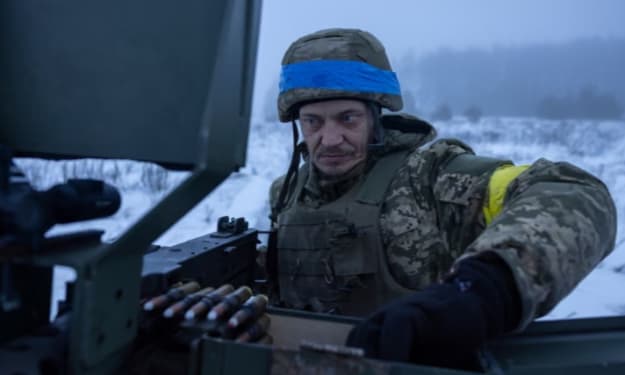
A Russian military strike in the Kyiv region has left at least four civilians dead and 15 others injured, further heightening fears over escalating violence even as stalled peace negotiations underscore the difficulty of ending the conflict. Ukrainian authorities confirmed the casualties, while local emergency services rushed to provide medical care and assess the damage to residential areas. The strike, part of a series of attacks over the past several weeks, targeted both infrastructure and population centers. Explosions destroyed multiple buildings, leaving several residents trapped under debris. Emergency responders and volunteers worked through the night to evacuate survivors and provide urgent assistance to those injured. Civilian Impact and Humanitarian Concerns The human toll of the attack underscores the ongoing vulnerability of civilians in conflict zones. Families living in suburban and rural areas near Kyiv have faced repeated bombardment, which not only causes immediate casualties but also disrupts daily life, schooling, and access to essential services. Medical personnel report that hospitals in the region are operating under significant strain, treating injuries ranging from shrapnel wounds to burns. Local authorities warned that repeated attacks increase both physical and psychological trauma for residents, especially children. International humanitarian organizations have expressed alarm over the rising number of civilian casualties in Ukraine, emphasizing the need for adherence to international law and the protection of noncombatants. Escalation Amid Stalled Peace Talks The strike comes at a time when formal peace discussions remain stalled. Negotiations between Ukrainian officials and Russian representatives, mediated by international actors, have made little progress in recent months. Analysts warn that ongoing attacks, including strikes on urban centers like Kyiv, may further complicate any diplomatic efforts. Officials in Kyiv have stressed that military pressure continues to be a key tactic for Russia, even as international actors push for negotiations. The continuation of strikes raises concerns about both the stability of the truce mechanisms and the broader prospects for a ceasefire. Strategic and Political Implications Beyond the immediate humanitarian impact, attacks on the Kyiv region carry significant political and strategic implications. The Ukrainian government has accused Russia of deliberately targeting populated areas to exert pressure, while Moscow maintains that military operations are aimed at neutralizing Ukrainian military capabilities. The international community remains closely monitoring these developments. Countries supporting Ukraine have condemned attacks on civilian areas, highlighting violations of international humanitarian law, and continue to provide military, financial, and logistical support to Kyiv. Conversely, the continuation of strikes complicates diplomatic engagement by signaling persistent Russian resolve. Regional Security and Infrastructure Damage Infrastructure in the Kyiv region has also suffered extensive damage. Utilities, transportation networks, and residential buildings were affected, creating immediate challenges for recovery and reconstruction. Local authorities are prioritizing the repair of essential services, but the repeated bombardments slow restoration efforts and leave communities exposed to further risk. Energy and water supply systems were reported to be intermittently disrupted, forcing residents to rely on emergency measures. Schools and healthcare facilities have had to adjust operations to accommodate safety concerns, and the local economy continues to be affected by interruptions in daily life. International Reactions The international response to the strike has been swift. The United Nations called for restraint and urged all parties to comply with international law protecting civilians. Western nations, including members of the European Union and United States, issued statements condemning the attacks and reaffirmed support for Ukraine’s sovereignty. Aid organizations are coordinating with local authorities to deliver emergency supplies, medical care, and psychosocial support to affected families. However, the ongoing security situation complicates the logistics of delivering relief in some areas. Civilian Resilience and Community Response Despite the danger, local communities have shown remarkable resilience. Volunteers and neighborhood organizations mobilize quickly to provide shelter, food, and first aid to those affected by strikes. These efforts, combined with government and international assistance, help mitigate the immediate humanitarian consequences. Nevertheless, the repeated attacks erode a sense of security and heighten anxiety among residents, particularly children and the elderly, creating long-term psychological challenges. Outlook and Continuing Tensions The strike in the Kyiv region illustrates the persistent volatility in Ukraine, where civilians remain caught between ongoing military operations and stalled diplomatic efforts. Analysts warn that without renewed negotiations and adherence to humanitarian protections, civilian casualties are likely to increase, further complicating prospects for peace. For now, Ukrainian authorities continue to reinforce emergency response systems and seek international support, while the people of Kyiv brace for further uncertainty. The situation remains a stark reminder of the human cost of conflict and the urgent need for renewed diplomatic engagement to prevent further loss of life.
By Fiaz Ahmed Brohi43 minutes ago in The Swamp



Comments
There are no comments for this story
Be the first to respond and start the conversation.