
Ayatollah Ali Khamenei Dead: Iran’s Supreme Leader Dies, Triggering Global Shock and Middle East Turmoil
The confirmed death of Iran’s highest authority marks a turning point for Middle East politics, nuclear diplomacy, and oil market stability.

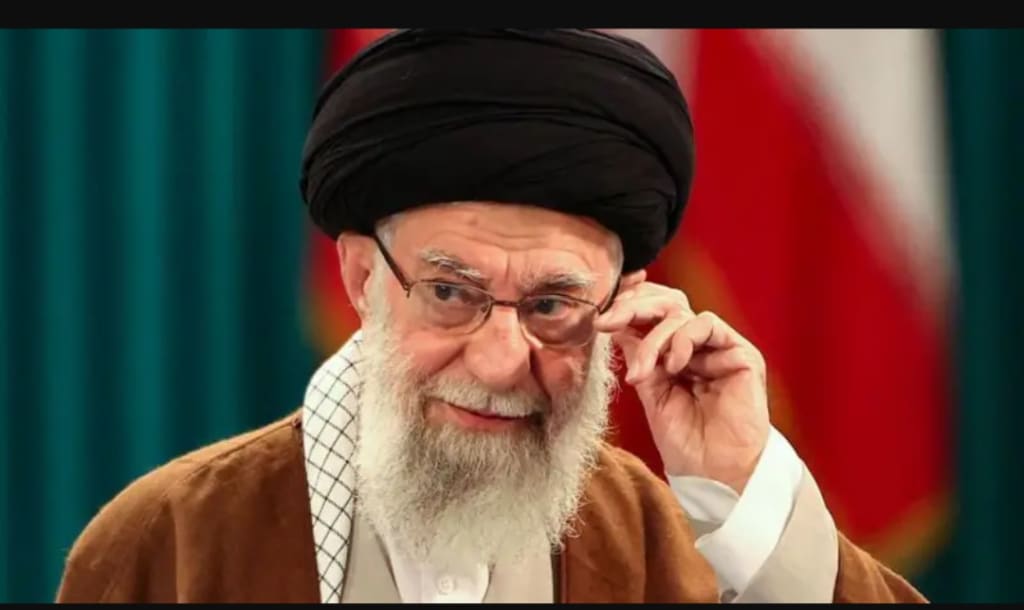
The Islamic Republic of Iran has officially confirmed the death of its Supreme Leader, Ali Khamenei, marking one of the most consequential political developments in the Middle East in decades. Iranian state television announced his passing in a solemn broadcast, declaring a period of national mourning and calling his death a historic loss for the nation.
Khamenei, who led Iran for more than three decades, was one of the most powerful and controversial political figures in modern Middle Eastern history. His death not only reshapes Iran’s internal political landscape but also sends ripples across global geopolitics, energy markets, and regional security dynamics.
Official Confirmation from Iran
Iran’s state media formally announced the passing of Ayatollah Khamenei, describing him as a central pillar of the Islamic Republic. Government officials confirmed that national mourning ceremonies would be held across the country, with public gatherings organized in major cities including Tehran, Qom, and Mashhad.
The announcement was delivered through official state channels, signaling its authenticity and eliminating speculation that had circulated online in recent days. Iranian authorities urged citizens to remain calm and united during what they described as a “sensitive national transition.”
A Leader Who Shaped Modern Iran
Born in 1939, Ali Khamenei rose to prominence during the 1979 Islamic Revolution led by Ruhollah Khomeini. After Khomeini’s death in 1989, Khamenei was appointed as the Supreme Leader — the highest political and religious authority in Iran.
As Supreme Leader, he held ultimate control over:
The armed forces
The judiciary
State broadcasting
Key elements of foreign policy
Strategic military decisions
Over nearly 37 years in power, Khamenei shaped Iran’s ideological direction, reinforcing its theocratic system while maintaining strict oversight over political dissent and reform movements.
Regional Influence and Global Tensions
Under Khamenei’s leadership, Iran expanded its regional influence significantly. Tehran strengthened alliances with non-state actors and governments across the Middle East, including Hezbollah in Lebanon and allied groups in Iraq and Syria. Iran’s role in regional conflicts positioned it as both a strategic power and a focal point of controversy.
Tensions between Iran, the United States, and Israel intensified during his tenure. Disputes over Iran’s nuclear program, sanctions, and regional interventions repeatedly brought the country to the brink of broader confrontation.
Global reactions to his death have been swift. Leaders across the Middle East, Europe, and Asia have issued formal statements, while Western governments are closely monitoring developments in Tehran.
Domestic Reactions Inside Iran
Inside Iran, public reaction has been mixed but tightly managed. State-organized mourning events have drawn large crowds in religious and conservative strongholds. At the same time, social media discussions reveal a complex range of emotions among younger and reform-minded Iranians.
During his rule, Khamenei faced significant internal unrest. Major protests in 2009, 2019, and 2022 highlighted deep divisions within Iranian society over political freedoms, women’s rights, and economic hardship. Security forces often responded firmly to unrest, reinforcing the state’s authority but also drawing international criticism.
His death now raises questions about whether Iran will maintain its current political course or enter a period of gradual transformation.
What Happens Next? Iran’s Succession Process
Iran’s constitution outlines a structured process for selecting a new Supreme Leader. The responsibility lies with the Assembly of Experts — a clerical body tasked with choosing the country’s highest authority.
Until a permanent successor is appointed, a temporary leadership arrangement will oversee critical state affairs. Political analysts believe the succession process could significantly shape Iran’s domestic and foreign policies for decades to come.
Key questions include:
Will the next leader continue Khamenei’s hardline regional strategy?
Could there be space for diplomatic recalibration with Western powers?
How will internal reform pressures influence the selection?
The coming weeks will be crucial in determining Iran’s direction.
Economic and Oil Market Impact
The news has already triggered volatility in global financial markets. Iran sits at the center of the Persian Gulf — a region responsible for a substantial portion of global oil supply.
Energy analysts warn that uncertainty surrounding Iran’s leadership transition could affect oil prices, shipping routes, and regional security arrangements. Even the perception of instability in the Strait of Hormuz — a critical global oil chokepoint — can lead to immediate market reactions.
Investors worldwide are watching closely as geopolitical risk factors intensify.
A Defining Moment for the Middle East
The death of Ayatollah Ali Khamenei marks the end of an era that began shortly after the Iranian Revolution. For nearly four decades, he stood at the center of Iran’s political, military, and religious authority.
Whether his passing leads to continuity or change remains uncertain. However, one reality is clear: this moment will influence Middle Eastern geopolitics, global energy markets, and international diplomacy for years to come.
Iran now stands at a crossroads — balancing national mourning with strategic recalibration. As the world watches Tehran, the next chapter of the Islamic Republic is about to unfold.
About the Creator
Asad Ali
I'm Asad Ali, a passionate blogger with 3 years of experience creating engaging and informative content across various niches. I specialize in crafting SEO-friendly articles that drive traffic and deliver value to readers.
A Gathering of Evil Bosses
“I’m the queen of chin jutting while I smooth my hair, attacking, insulting, and deflecting to protect my appointer.” “Oh, please, Blondi, my hair is curled, highlighted, and longer than yours. I feature television commercials telling immigrants that we will give them a free plane ride home, and if they voluntarily turn themselves in, they will be allowed to legally apply for re-entry. It runs everywhere, and I look good in it! You can’t compete because of your blond hair. Mine is nicer, and my lips are prettier than yours.”
By Andrea Corwin 13 days ago in The Swamp
Russia’s War on Ukraine Puts Women Off Having Children — and That Could Spell Economic Disaster
The ongoing conflict in Ukraine, now in its fourth year, is taking a profound toll not just on lives and infrastructure, but on the country’s demographic future. Recent reports indicate that the war is discouraging many women from having children, raising concerns that Ukraine may face a demographic and economic crisis long after the fighting ends. Surveys conducted in war-affected regions suggest a sharp decline in fertility intentions among women of childbearing age. Fear of violence, displacement, economic uncertainty, and the lack of access to healthcare and basic services have combined to create what experts describe as a “demographic shock.” Many young couples say they are postponing or abandoning plans to start families amid constant insecurity. A Generation Delayed Before the invasion, Ukraine’s birth rate was already among Europe’s lowest, a reflection of decades of economic challenges and emigration. Now, the war has compounded the problem. Hospitals have been damaged or destroyed, prenatal care is disrupted, and access to routine vaccinations and maternal services has been limited in conflict zones. Women fleeing conflict zones often prioritize safety and survival over family planning. Demographers warn that the impact could be long-lasting. “Even a few years of suppressed fertility can create a ripple effect for decades,” says Dr. Olena Hrytsenko, a Ukrainian population expert. “Ukraine risks losing an entire generation of children, which will affect the labor force, productivity, and social systems in the years ahead.” Economic Implications A declining population poses severe economic risks. With fewer young people entering the workforce, Ukraine could face labor shortages just as the country will need skilled workers to rebuild infrastructure and revive its economy. A shrinking population could also increase the burden on social services and pensions, potentially stifling post-war recovery. Analysts say that the war’s demographic impact could exacerbate a “brain drain” already intensified by emigration. Many highly educated Ukrainians, especially women, have left the country for safety and employment opportunities abroad. If birth rates continue to fall, the combination of low domestic labor supply and continued emigration could slow reconstruction efforts and hinder economic growth for decades. Psychological and Social Factors The decline in fertility is not just about physical safety. Psychological stress plays a major role. Constant exposure to violence, uncertainty about the future, and the trauma of displacement reduce the desire and confidence to raise children. Social support networks have been fractured by mass displacement, leaving young families without the extended family help traditionally relied upon for childcare. In addition, widespread economic instability — including job losses, inflation, and housing shortages — has made childbearing seem risky or even impossible for many. Surveys show that women often cite financial insecurity and lack of medical services as key reasons for postponing pregnancy. Policy Responses and Challenges Ukrainian authorities and international organizations have recognized the demographic impact but face significant challenges. Efforts to maintain maternal and child healthcare, provide psychological support, and deliver social assistance to displaced families are ongoing but strained. Experts argue that reversing fertility declines will require long-term strategies to restore security, economic stability, and access to healthcare. Some proposals include incentives for families to have children, such as financial support, childcare assistance, and housing programs. However, without peace and stability, experts warn that these measures may have limited effect. Looking Ahead The war’s demographic consequences are a stark reminder that conflicts reshape societies far beyond immediate casualties. Ukraine’s declining fertility could have lasting effects on its economy, social structures, and ability to recover from the war. Policymakers face the daunting task of supporting families, rebuilding infrastructure, and ensuring that the population can sustain itself in a post-war future. As women delay or forego childbirth in the shadow of war, the country’s long-term economic and social stability hangs in the balance. Without targeted interventions, Ukraine could face a generational and demographic crisis, underscoring that the costs of conflict extend far beyond the battlefield.
By Fiaz Ahmed 7 days ago in The Swamp



Comments
There are no comments for this story
Be the first to respond and start the conversation.