
Trump Allies Claim Victory as the Ellisons Expand Their Media Empire
A Power Shift in Media Ownership Signals Political and Cultural Realignment

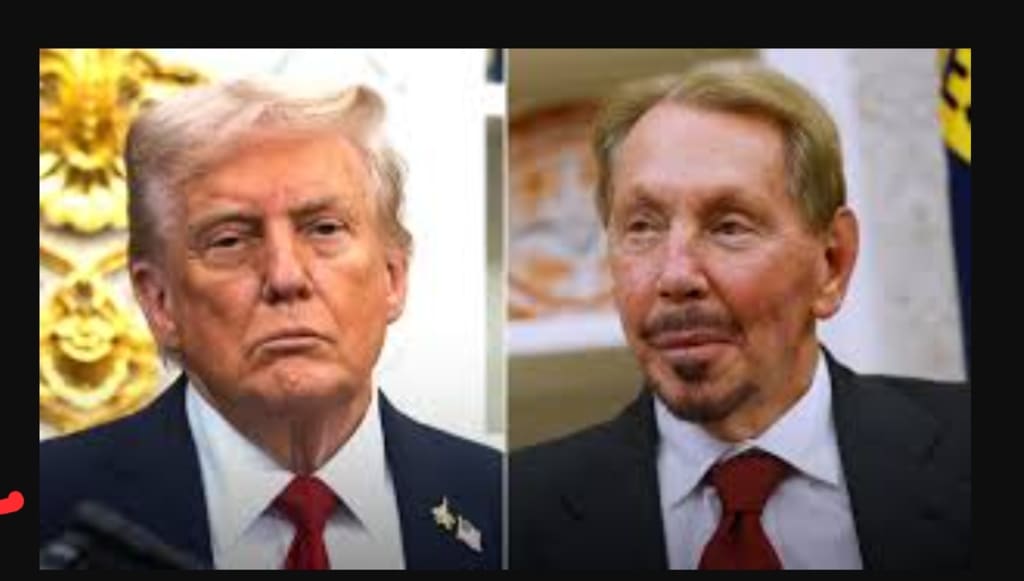
The American media landscape is undergoing another transformation—this time at the intersection of politics, technology, and corporate consolidation. As the Ellison family moves to expand its growing media footprint, allies of Donald Trump are framing the development as a strategic victory in the long-running battle over influence in news and entertainment.
The narrative emerging from conservative circles is clear: media power is shifting, and new ownership structures could reshape editorial direction, political narratives, and cultural positioning ahead of a critical election cycle.
But beyond the political rhetoric lies a broader story about consolidation, strategic investment, and the changing economics of modern media.
Who Are the Ellisons?
The Ellison name is best known in technology and finance circles. Larry Ellison, co-founder of Oracle Corporation, built one of the world’s largest enterprise software companies. Over time, his family has expanded its investments across industries, including real estate, healthcare, entertainment, and media.
The next generation—particularly David Ellison—has played an increasingly visible role in entertainment ventures. Through strategic acquisitions and partnerships, the family has steadily positioned itself within high-profile content production and distribution channels.
This latest expansion into media ownership marks a potentially consequential step—not merely financially, but politically.
The Political Framing: Why Trump Allies Are Celebrating
Supporters of Donald Trump argue that mainstream media institutions have long maintained a critical stance toward conservative political figures. Against that backdrop, any change in ownership structure is seen through a political lens.
Trump allies suggest that new media ownership aligned with business leaders who have shown openness to conservative viewpoints could rebalance what they perceive as editorial bias. While ownership does not automatically translate into editorial change, the perception of ideological recalibration carries weight in political messaging.
In an era when media narratives can significantly influence public opinion, the symbolism of new ownership alone can energize political bases.
Media Consolidation in a Competitive Era
Stepping back from political claims, the Ellisons’ expansion reflects a broader industry trend: consolidation amid financial pressure.
Traditional media companies face:
Declining cable subscriptions
Fragmented digital audiences
Increased competition from streaming platforms
Advertising revenue volatility
Rising content production costs
In response, large-scale investors and conglomerates have been acquiring or merging media assets to achieve scale and sustainability. Control over intellectual property libraries, production studios, and distribution platforms offers long-term strategic leverage.
The Ellisons’ expansion aligns with this logic. By strengthening their presence in content creation and distribution, they position themselves at the center of a reshaping entertainment economy.
Influence, Ownership, and Editorial Independence
A recurring question arises whenever major investors acquire media properties: How much influence will ownership exert over editorial content?
Historically, American media institutions have operated with varying degrees of independence from owners. Some maintain strict firewalls between corporate leadership and newsroom operations. Others evolve subtly over time as leadership priorities shift.
Political actors, however, often assume a more direct connection between ownership and narrative framing. That assumption fuels claims of “victory” from Trump allies, even before any observable editorial changes occur.
In reality, structural influence is complex. Financial investment may affect strategic direction, but newsroom cultures and journalistic standards also play a powerful role in shaping content.
The Business Case Behind Expansion
For the Ellisons, media expansion likely represents more than political alignment. It is also a business strategy rooted in:
Long-term content value
Global distribution potential
Cross-platform monetization
Technological integration opportunities
The convergence of technology and media creates powerful synergies. With deep experience in enterprise systems through Oracle, the family’s broader business ecosystem may offer operational advantages in data analytics, cloud infrastructure, and content delivery.
In a streaming-dominated era, tech-enabled efficiency can determine profitability.
Timing and Election-Year Dynamics
The political significance of media ownership becomes particularly pronounced during election cycles. As the United States approaches a highly charged political season, narratives around media influence intensify.
Trump allies portraying the Ellisons’ expansion as a victory may be engaging in strategic messaging designed to energize supporters and signal perceived momentum.
At the same time, critics warn against over-politicizing business transactions. They argue that conflating corporate investment with ideological alignment oversimplifies the economic motivations behind acquisitions.
Regardless of interpretation, the optics are powerful. Media ownership shifts rarely occur in a political vacuum.
Public Perception and Trust
Trust in media institutions has declined across political spectrums over the past decade. Accusations of bias—whether from the right or left—have contributed to fragmentation in audience loyalty.
New ownership structures present both risks and opportunities:
They can inject capital into struggling organizations.
They may modernize digital strategies.
They could alter brand perception among audiences.
Whether the Ellisons’ expansion increases trust among conservative audiences or raises skepticism among others will depend on how editorial decisions unfold over time.
The Broader Media Landscape
This development fits within a larger pattern of billionaire-backed media acquisitions. Across the political spectrum, wealthy investors have stepped into journalism and entertainment, reshaping ownership models once dominated by legacy publishing families or publicly traded conglomerates.
The long-term implications include:
Greater centralization of influence
Increased reliance on private capital
Potential tension between profitability and public interest journalism
In such an environment, every acquisition is scrutinized not just for financial viability, but for cultural and political consequence.
Victory or Symbolism?
Are Trump allies truly celebrating a tangible shift in influence—or is the celebration more symbolic than substantive?
The answer likely lies somewhere in between. Ownership changes can create opportunities for new strategic direction, but they rarely produce immediate ideological transformations.
Media institutions are shaped by market forces, audience demand, regulatory frameworks, and internal professional standards. While ownership matters, it is only one variable in a complex ecosystem.
For now, the claim of victory functions primarily as political messaging. The real impact will become clearer only as strategic decisions, programming choices, and editorial positioning evolve.
Conclusion: A New Chapter in Media Power
The expansion of the Ellisons’ media empire represents a significant business development in an industry undergoing rapid change. For Trump allies, it is framed as a turning point in the broader struggle over narrative control and political representation.
For investors and analysts, it is another example of consolidation aimed at survival and growth in a competitive digital marketplace.
As politics and media continue to intertwine, ownership shifts will remain headline events. Whether this moment ultimately reshapes the ideological balance of American media—or simply reflects ongoing consolidation—will depend not on political declarations, but on long-term strategy and execution.
In the evolving landscape of influence and information, perception often travels faster than proof.
About the Creator
Asad Ali
I'm Asad Ali, a passionate blogger with 3 years of experience creating engaging and informative content across various niches. I specialize in crafting SEO-friendly articles that drive traffic and deliver value to readers.
A Gathering of Evil Bosses
“I’m the queen of chin jutting while I smooth my hair, attacking, insulting, and deflecting to protect my appointer.” “Oh, please, Blondi, my hair is curled, highlighted, and longer than yours. I feature television commercials telling immigrants that we will give them a free plane ride home, and if they voluntarily turn themselves in, they will be allowed to legally apply for re-entry. It runs everywhere, and I look good in it! You can’t compete because of your blond hair. Mine is nicer, and my lips are prettier than yours.”
By Andrea Corwin 13 days ago in The Swamp
Review of 'Man on the Run'
My wife and I saw Man on the Run, a nearly 2-hour documentary on Amazon Prime, about Wings, Paul McCartney's group that flew around the world from shortly after The Beatles broke up in early 1970 to shortly after John Lennon was murdered at the end of 1980, making a Beatles reunion forever impossible.
By Paul Levinson3 days ago in Beat




Comments
There are no comments for this story
Be the first to respond and start the conversation.