
Chinese Navy Inducts Additional Type 903 Fleet Replenishment Ships
China expands its naval logistics with additional Type 903 replenishment ships, enhancing fleet endurance, blue-water operations, and humanitarian support capabilities.

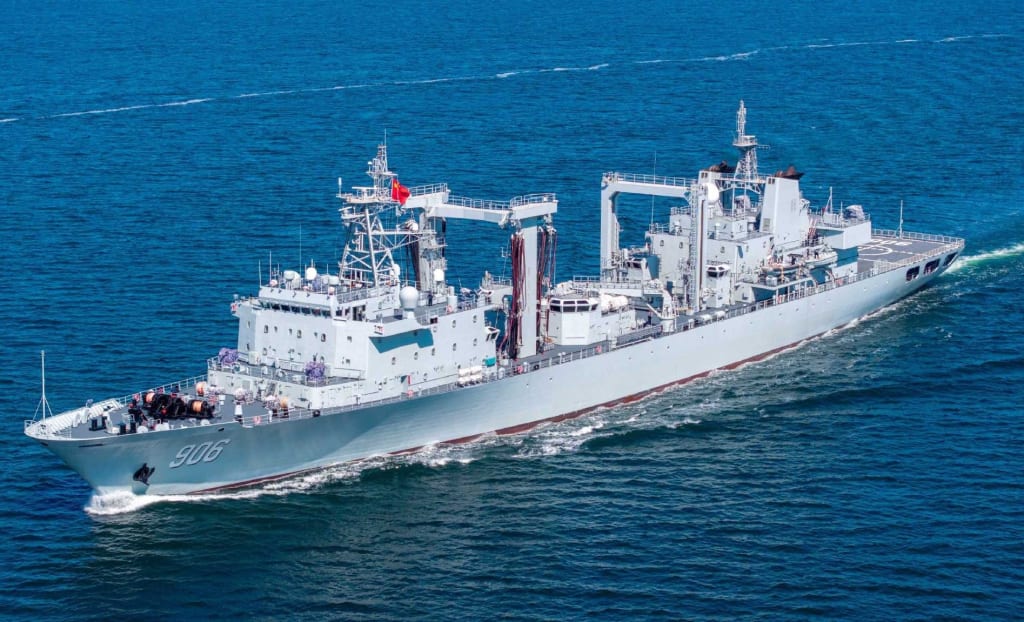
The People's Liberation Army Navy (PLAN) has officially inducted two more Type 903 fleet replenishment ships into service, marking a significant enhancement of China’s underway replenishment capabilities. The new vessels, designed to extend the reach and sustainability of PLAN task groups at sea, reflect Beijing’s ongoing efforts to modernize its naval logistics and support infrastructure in line with its expanding blue‑water aspirations.
Type 903 replenishment ships — officially designated the Fuchi class — are a critical component of modern naval operations. Unlike traditional supply ships limited to port resupply, these vessels are capable of underway replenishment (UNREP), providing fuel, food, ammunition, spare parts, and other essentials to warships while both are underway. This capability enables naval task forces to remain operational far from home ports for extended periods without returning to port for resupply.
The two latest additions, commissioned after rigorous sea trials and outfitting, join a growing fleet of Type 903s already serving with PLAN. The class has been continually upgraded since its introduction in the early 2000s, with enhancements to cargo handling, automation, and replenishment rigs to support coordinated supply operations with destroyers, frigates, and submarines. These improvements reflect a global trend toward logistics ships capable of integrating with advanced combat fleets in contested environments.
Chinese naval analysts argue that the expanded replenishment fleet will bolster PLAN’s ability to conduct sustained missions across distant theatres. In recent years, China has increased its naval presence beyond regional waters, deploying task groups to the Gulf of Aden for anti‑piracy operations, participating in multinational exercises, and conducting port calls as far as Europe and Africa. The ability to maintain a forward naval presence depends heavily on replenishment ships like the Type 903.
Strategic observers note that the enhanced logistics capacity also supports China’s evolving maritime strategy. As the PLAN transitions from a primarily coastal defense force to a more expeditionary blue‑water navy, reliable logistics become indispensable. Replenishment ships not only keep combatants supplied but also act as force multipliers by allowing carrier strike groups, amphibious assault vessels, and surface combatants to remain at sea for longer durations.
In addition to fuel and supplies, modern Type 903 vessels are equipped with medical facilities and can support humanitarian assistance and disaster relief (HADR) operations. During previous deployments, Chinese replenishment ships have played roles in delivering aid following natural disasters and in supporting evacuation efforts for Chinese nationals in crisis zones. Such missions underscore the dual‑use nature of logistics vessels in both military and civilian contexts.
Experts believe that the PLAN’s expanding fleet of Type 903s will complement China’s future naval infrastructure, including potential overseas support bases. While China maintains a formal logistics hub in Djibouti, additional forward support facilities would further enhance the PLAN’s global reach. Replenishment ships bridge gaps when overseas basing is limited or unavailable, allowing naval groups to sustain operations without relying solely on fixed installations.
The induction of these ships also conveys a message about China’s industrial and technological capabilities. Building complex, ocean‑going logistics vessels requires advanced shipbuilding infrastructure, sophisticated engineering, and integrated supply systems. Shipyards along the Chinese coast have now demonstrated an ability to produce these vessels at scale, supporting not only the PLAN but also commercial shipbuilding demand.
International reactions to China’s naval expansion have been mixed. Some observers view the strengthening of logistics capabilities as a natural evolution of a growing naval power. Others express concern about the implications for regional security dynamics, particularly in areas where China’s maritime interests intersect with those of rival powers or contested territorial claims. The debate often centers on whether increased logistical support signifies a shift toward power projection versus defensive posturing.
Regardless of interpretation, the operational impact is clear: replenishment ships enhance fleet endurance. In naval parlance, logisticians say that “amateurs talk tactics; professionals talk logistics.” This adage underscores the importance of supply chains and support vessels — assets that rarely make headlines but are indispensable to sustained naval operations.
As the PLAN incorporates these additional Type 903 ships into its order of battle, training and integration with existing formations will likely follow. Joint exercises, underway replenishment drills, and interoperability tests will ensure that the vessels can operate seamlessly with China’s surface combatants and submarines.
In summary, the induction of additional Type 903 fleet replenishment ships represents a strategic investment in naval logistics by the People’s Liberation Army Navy. These vessels will enhance China’s ability to sustain maritime operations far from its shores, support humanitarian missions, and project influence in distant waters. As naval competition continues in the Indo‑Pacific and beyond, logistics ships like the Type 903 will play a vital role in shaping how maritime power is exercised.
About the Creator
Fiaz Ahmed
I am Fiaz Ahmed. I am a passionate writer. I love covering trending topics and breaking news. With a sharp eye for what’s happening around the world, and crafts timely and engaging stories that keep readers informed and updated.
Keep reading
More stories from Fiaz Ahmed and writers in The Swamp and other communities.
Lufthansa Airbus A380 Becomes Most Tracked Flight in the World as First Departure From Abu Dhabi Following Airspace Closure
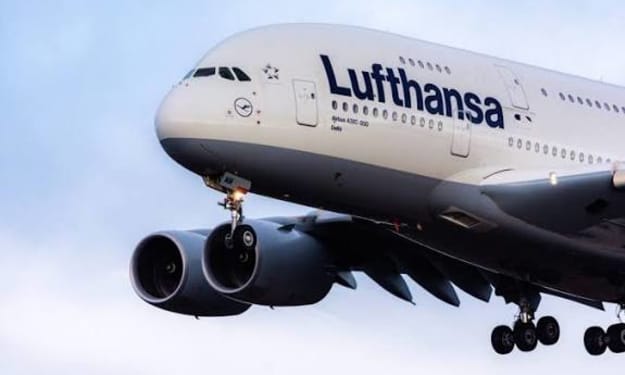
In the midst of ongoing turmoil in the Middle East that has dramatically disrupted global aviation, a Lufthansa Airbus A380 superjumbo has become the most tracked flight in the world after taking off from Abu Dhabi — marking the first departure from the emirate since widespread airspace closures paralyzed commercial aviation across the region. The aircraft’s unusual distinction stems from extraordinary circumstances: with much of the Gulf’s airspace shut or heavily restricted amid military conflict and safety concerns, aviation tracking platforms reported unprecedented attention from aviation enthusiasts and passengers alike as the A380 climbed out of Abu Dhabi’s skies. Flight trackers logged tens of thousands of simultaneous views of the aircraft’s transponder data, making it the most tracked flight globally in real‑time. Airspace Chaos and the First Takeoff The departure unfolded against the backdrop of one of the most severe aviation disruptions seen in decades. Following escalating regional tensions and military action involving United States and Israel operations against Iran, aviation authorities across the Gulf — including Iran, Kuwait, Qatar, Bahrain, and large parts of the United Arab Emirates — issued emergency Notices to Airmen (NOTAMs) closing or severely restricting airspace due to safety concerns. Major hubs such as Dubai International Airport and Abu Dhabi International Airport were among the hardest hit. Regional carriers including Etihad Airways, Emirates, and others suspended operations as a precautionary measure, leaving thousands of passengers stranded and grounding hundreds of flights. Despite these closures, special permissions were reportedly granted for select repositioning and evacuation flights to move aircraft and crews safely back to their home bases. The Lufthansa A380 departure was one such flight, executed under strict aviation safety protocols and arguably as part of a limited reinstatement of essential flights from Abu Dhabi’s airfield. Why It Became the Most Tracked Flight Under ordinary circumstances, an A380 departure would be notable for aviation fans but far from the most tracked flight globally. However, the unique situation in the Middle East — with most commercial routes suspended and millions of passengers and aviation observers glued to flight‑tracking websites — propelled this specific aircraft to the top of global tracking charts. Websites such as Flightradar24 and other flight‑monitoring platforms allow users worldwide to follow aircraft in real time via transponder data. The rarity of any large aircraft moving through the closed Gulf airspace, combined with heightened public and media interest in aviation developments during the crisis, drove record numbers of people to track the Lufthansa A380 as it climbed and vanished from the region’s constrained air In many cases, the aircraft was listed by trackers as a unique or “N/A” flight — a placeholder indicating limited public data due to airspace restrictions — which fueled curiosity and increased attention from users. This feedback loop of tracking activity made the flight one of the most‑viewed on global flight‑monitoring platforms. Broader Aviation Impact The A380’s tracking milestone illustrates just how deeply the Middle East crisis has impacted global aviation. With key air routes across the region closed, long‑haul airlines have been forced to reroute flights around the Gulf or suspend them entirely, significantly lengthening travel times and straining airline operations. Western carriers, including Lufthansa and others, have temporarily suspended flights to and from the UAE and surrounding states until at least early March, according to official aviation advisories. Even after limited departures resumed, the operation remained cautious and restricted, focusing on repositioning aircraft and assisting evacuation efforts for stranded passengers and crews. Reports indicate that some flights resumed to key cities like London and Munich, often with minimal crew onboard due to operational constraints. Public and Industry Reactions Travelers, aviation professionals, and flight‑tracking enthusiasts alike have reacted with curiosity and concern. For many on social media and tracking forums, the stark contrast between routine A380 operations in normal times and this extraordinary, almost symbolic departure underscores how geopolitical events can ripple through civilian domains like international travel. Aviation analysts point out that such disruptions highlight the vulnerabilities of global flight networks to geopolitical instability. Even carriers with large fleets and extensive international reach — like Lufthansa — must adapt to sudden airspace closures, route disruptions, and heightened risk environments. Looking Ahead While the Middle East situation remains fluid, the tracked A380 departure serves as both a hopeful sign of controlled resumption and a reminder of ongoing uncertainty in the global skies. As airspace authorities and airlines continue to assess safety, departures from impacted hubs may slowly increase — but each flight through the region will likely remain under heightened scrutiny by both the industry and the flying public.
By Fiaz Ahmed about 17 hours ago in The Swamp
A Gathering of Evil Bosses
“I’m the queen of chin jutting while I smooth my hair, attacking, insulting, and deflecting to protect my appointer.” “Oh, please, Blondi, my hair is curled, highlighted, and longer than yours. I feature television commercials telling immigrants that we will give them a free plane ride home, and if they voluntarily turn themselves in, they will be allowed to legally apply for re-entry. It runs everywhere, and I look good in it! You can’t compete because of your blond hair. Mine is nicer, and my lips are prettier than yours.”
By Andrea Corwin 13 days ago in The Swamp
Pearl
1980 something. we all hung out at Pearl and you and i were nothing special, or so i thought. i mean we all danced, drenched in our own sweat, our own saline solution of fear, too many beers, shots, laughter, tears, fucks in the bathroom and i don't know when we began to be afraid. do you?
By ROCK aka Andrea Polla (Simmons)5 days ago in Fiction



Comments
There are no comments for this story
Be the first to respond and start the conversation.