
Death Toll From School Bombing in Southern Iran Reportedly Rises to 165
A devastating strike on a girls’ school in Minab leaves scores of children dead, deepens national grief, and intensifies global concern over civilian casualties in the escalating Iran conflict.
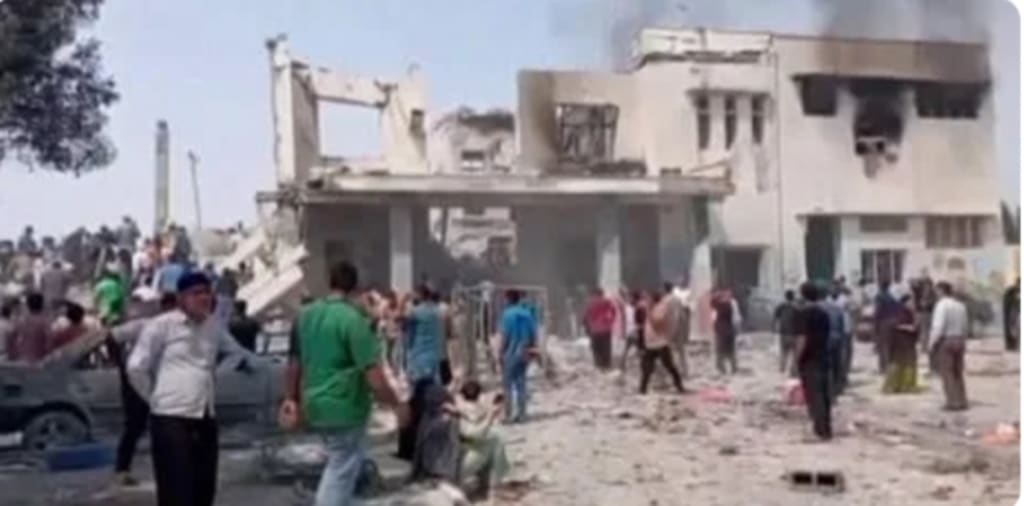
The quiet coastal city of Minab woke to horror.
On what should have been an ordinary school day, a missile strike tore through a girls’ elementary school in southern Iran, leaving devastation in its wake. According to Iranian officials, the death toll has reportedly climbed to 165, making it one of the deadliest single incidents since the outbreak of the current military confrontation involving Iran.
Most of the victims were children.
The strike hit the Shajareh Tayyebeh primary school in Hormozgan Province, a region that sits near the strategically sensitive Strait of Hormuz. Within minutes, classrooms were reduced to rubble, walls collapsed inward, and rescue workers rushed to pull survivors from the debris.
A Morning That Turned Into Tragedy
Witnesses described a powerful explosion that shook surrounding neighborhoods shortly after classes began. Parents who had just dropped off their daughters ran back toward the school when they saw smoke rising into the sky.
Rescue teams worked for hours, sometimes with bare hands, digging through crushed concrete slabs and twisted metal beams. Volunteers formed human chains to clear debris. Ambulances lined the streets, their sirens echoing through neighborhoods that had moments earlier been filled with the sounds of morning routine.
Local officials reported that the majority of those killed were schoolgirls between seven and twelve years old. Teachers, administrators, and several parents who had been on campus were also among the victims.
Hospitals in Minab and nearby cities quickly became overwhelmed. Medical staff treated dozens of wounded children for burns, fractures, and shrapnel injuries. Some remain in critical condition.
A Nation in Mourning
As news of the rising death toll spread, grief rippled across Iran.
Families gathered outside hospitals and temporary morgues, clutching photographs and calling the names of missing children. Social media filled with images of small shoes, schoolbooks dusted in gray ash, and rows of backpacks laid out for identification.
Iranian authorities condemned the strike in strong terms, describing it as a violation of international law and a direct attack on civilians. Officials stated that the area is near military facilities, but insisted that the school itself was a purely civilian institution.
Candlelight vigils were held in Tehran and other cities, where mourners lit candles and recited prayers for the children who lost their lives. In Minab, black banners were draped across public buildings as residents declared days of mourning.
The emotional toll has been profound. For many families, the school represented hope — education as a path to opportunity. Now, that hope lies shattered alongside broken classroom walls.
The Broader Conflict Context
The tragedy comes amid escalating hostilities between Iran and U.S.–Israeli forces, which have conducted coordinated strikes on Iranian military and strategic targets. Iran has responded with missile and drone attacks targeting military installations and allied facilities in the region.
While military operations have focused on infrastructure and defense systems, civilian areas have increasingly felt the impact of crossfire and retaliatory strikes. The Minab school bombing now stands as one of the most devastating civilian incidents reported since the conflict intensified.
Officials in Washington and Jerusalem have said they are reviewing reports of civilian casualties. Statements emphasize that military forces do not intentionally target schools or noncombatants, and investigations are underway to determine how the strike occurred.
However, questions remain about accountability, targeting procedures, and whether the proximity of military installations increases risks for surrounding civilian populations.
International Outcry
Global reaction has been swift and emotional.
At the United Nations, several representatives called for restraint and adherence to international humanitarian law. Education and child protection agencies stressed that schools must be safeguarded spaces, even during conflict.
Human rights organizations described the reported death toll as deeply alarming. They urged independent investigations to determine responsibility and ensure accountability.
Governments across Europe and the Middle East expressed concern over civilian casualties and called for immediate de-escalation. Some leaders warned that continued strikes risk further tragedies and long-term instability in the region.
Energy markets also reacted nervously, as tensions near the Strait of Hormuz — a critical global shipping route — raised fears of broader economic repercussions.
Conflicting Narratives and Uncertainty
While Iranian authorities have reported a death toll of 165, independent verification remains challenging due to limited access to the site and the ongoing security situation.
Some earlier reports cited lower casualty figures, but officials indicated that the number continued to rise as rescue teams uncovered additional bodies. The possibility that some victims remain buried has left families in agonizing uncertainty.
Military analysts note that densely populated areas near strategic facilities can become unintended flashpoints in modern warfare. Yet under international humanitarian law, all feasible precautions must be taken to avoid harm to civilians — particularly children.
The investigation into the strike’s origin and trajectory will likely become a focal point of diplomatic debate in the coming weeks.
The Human Cost Beyond Numbers
Statistics — 165 lives — can feel abstract. But behind each number is a child with dreams, a family with memories, a classroom seat now permanently empty.
Teachers described students who wanted to become doctors, engineers, artists. One parent said her daughter had been practicing a poem for a school recital. Another family shared that their child had just received top marks on a math exam.
Now, these stories are memorials.
The psychological impact on surviving classmates and the broader community will linger long after debris is cleared. Experts warn that children exposed to such trauma may face lasting emotional and mental health challenges.
A Call for Accountability and Peace
The bombing of a school strikes at the heart of global humanitarian principles. Educational institutions are widely regarded as protected civilian spaces. When they are destroyed, the sense of safety that communities rely on is profoundly shaken.
Calls for an independent investigation are growing louder. Many believe that determining responsibility is essential not only for justice but also to prevent future tragedies.
Diplomats continue to press for dialogue, even as military operations persist. Whether this devastating incident becomes a turning point toward de-escalation or another chapter in an intensifying conflict remains uncertain.
A World Watching
As Minab buries its children, the world watches with grief and unease.
The rising death toll — now reportedly 165 — underscores the brutal human cost of geopolitical confrontation. In the rubble of a once-bustling schoolyard, the consequences of war are painfully visible.
Beyond strategy and retaliation, beyond headlines and statistics, lies a universal truth: children should never become casualties of conflict.
For the families of Minab, the loss is immeasurable. For the international community, the tragedy serves as a stark reminder of the urgent need to protect civilians and pursue pathways to peace.
About the Creator
The Saddest Thing - The Billionaires Who Rule America Aren't Even Enjoying Themselves
This single post says more about our ruling class than a thousand policy papers. The saddest thing about today's system is that the men robbing the rest of us - sabotaging our economic prospects, our pensions, our access to affordable healthcare - are not even happy.
By Scott Christenson🌴24 days ago in The Swamp




Comments
There are no comments for this story
Be the first to respond and start the conversation.