
Trump Says “There Will Likely Be More” U.S. Deaths as Iran Strikes Continue Until “All” Goals Achieved
President Donald Trump acknowledges rising American casualties and vows to press forward with military operations against Iran, signaling a potentially prolonged and costly conflict.
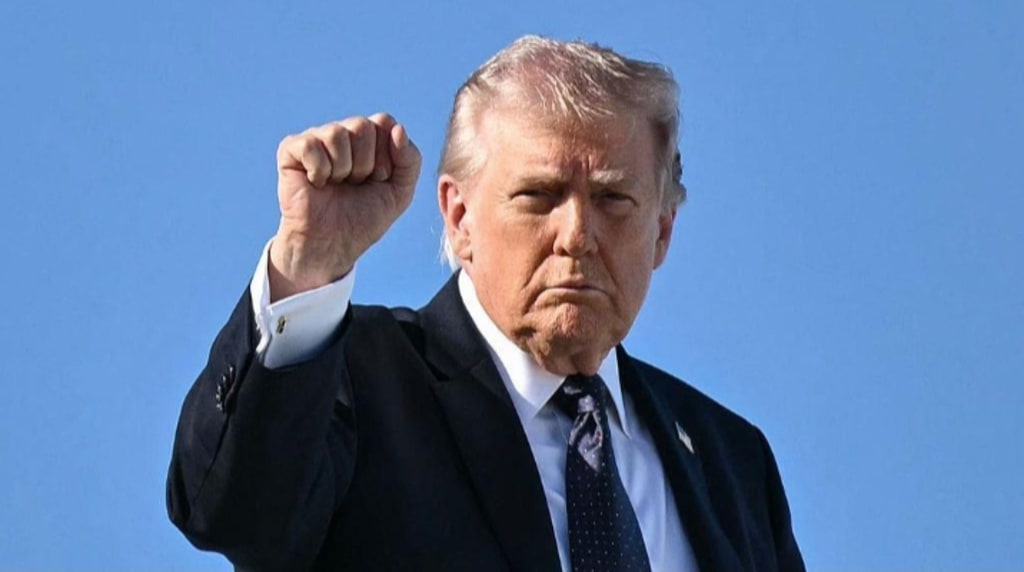
Washington — In one of his most direct and sobering statements since the escalation of U.S.–Iran hostilities, Donald Trump said that additional American service member deaths are likely as military operations continue.
“There will likely be more,” Trump stated in a video address, referring to U.S. casualties in the unfolding campaign. He added that combat operations will continue until “all of our objectives are achieved.”
The remarks followed confirmation from U.S. Central Command (CENTCOM) that at least three American service members have been killed and several others seriously wounded in ongoing operations tied to strikes against Iran.
The president’s blunt acknowledgment underscores the gravity of a conflict that has quickly evolved from targeted operations into a broader and increasingly dangerous confrontation.
A Shift in Tone
Trump’s statement marks a notable shift from earlier messaging that emphasized precision strikes and strategic deterrence. By publicly acknowledging that more American lives may be lost, he signaled that the administration expects sustained engagement rather than a quick resolution.
“We grieve for the true American patriots who have made the ultimate sacrifice,” Trump said, offering condolences to families of the fallen. At the same time, he made clear that operations would not be paused or scaled back in response to casualties.
For supporters, the president’s language reflects resolve and transparency. For critics, it raises alarm about the possibility of a prolonged military entanglement with no clearly defined end date.
What Are the Objectives?
While Trump reiterated that strikes will continue until “all objectives are achieved,” he provided limited detail on what those objectives fully entail.
Administration officials have previously outlined goals such as:
Degrading Iran’s missile capabilities
Disrupting command-and-control infrastructure
Reducing what Washington describes as threats to U.S. personnel and allies in the region
However, analysts note that such objectives can be difficult to measure conclusively. What constitutes success? When is a threat considered neutralized? And how will the U.S. determine when operations are complete?
The absence of a publicly defined endpoint has fueled debate in Congress and among policy experts.
Escalation and Retaliation
The current escalation began after coordinated U.S.–Israeli strikes on Iranian military targets. In response, Iran launched waves of missile and drone attacks against U.S. positions and allied facilities across the Gulf region.
Air defense systems intercepted many incoming projectiles, but some strikes caused damage and injuries. The back-and-forth has heightened fears of broader regional involvement.
Unlike previous proxy conflicts, this confrontation has produced direct American combat fatalities — a development that changes both political and public dynamics in the United States.
Each additional casualty intensifies scrutiny over strategy and increases pressure on policymakers.
Political Reactions at Home
Trump’s remarks have sparked immediate reactions across the political spectrum.
Some lawmakers praised the president’s commitment to protecting American interests and confronting perceived threats. They argue that backing down now could embolden adversaries and undermine U.S. credibility.
Others have expressed concern about the scale and duration of the mission. Critics question whether Congress has provided adequate authorization for sustained operations and warn against open-ended engagement.
Public opinion appears divided. While Americans broadly support service members and honor their sacrifice, there is visible unease about entering another extended Middle East conflict.
The memory of previous long-running wars continues to shape national sentiment.
International Concerns
Globally, Trump’s pledge to continue strikes has been met with mixed responses.
Some allies have voiced support for defensive measures but urge de-escalation to prevent further instability. Others have called for immediate diplomatic engagement to reduce the risk of wider war.
At international forums, leaders have emphasized the dangers of miscalculation. The Gulf region remains a vital hub for global energy and trade; sustained military confrontation could have far-reaching economic consequences.
Energy markets have already shown volatility in response to rising tensions.
The Human Cost
Behind the strategic discussions and geopolitical calculations lies a sobering reality: each escalation carries human consequences.
The confirmation of American deaths marks a turning point in the public perception of the conflict. Casualty announcements shift headlines from strategy to sacrifice.
Military families face renewed anxiety. Communities prepare to honor fallen service members. Flags at installations are lowered to half-staff.
Trump’s acknowledgment that more deaths are possible brings clarity — and gravity — to the situation. It signals that the administration views this campaign as a serious, sustained effort rather than a short-term operation.
What Comes Next?
Key questions now dominate policy discussions:
Will continued strikes achieve measurable results quickly?
Could diplomatic channels reopen amid ongoing hostilities?
How will additional casualties influence public and congressional support?
Defense officials indicate that operations remain active and that U.S. forces are prepared for further engagement. Meanwhile, diplomatic efforts behind the scenes may be ongoing, though little has been publicly disclosed.
The coming weeks will likely determine whether this phase of the conflict intensifies or stabilizes.
A Defining Moment
Trump’s declaration that “there will likely be more” U.S. deaths may come to define this chapter of the crisis. It reflects both determination and the stark acceptance of risk inherent in military action.
Whether that determination leads to decisive outcomes or prolonged conflict remains uncertain.
For now, the United States stands at a crossroads — balancing strategic objectives against the mounting human cost of war.
As operations continue, the nation — and the world — watches closely.
About the Creator
A Gathering of Evil Bosses
“I’m the queen of chin jutting while I smooth my hair, attacking, insulting, and deflecting to protect my appointer.” “Oh, please, Blondi, my hair is curled, highlighted, and longer than yours. I feature television commercials telling immigrants that we will give them a free plane ride home, and if they voluntarily turn themselves in, they will be allowed to legally apply for re-entry. It runs everywhere, and I look good in it! You can’t compete because of your blond hair. Mine is nicer, and my lips are prettier than yours.”
By Andrea Corwin 13 days ago in The Swamp
Top 50 English-Language News Sites in the World: Substack Leads YoY Growth for Seventh Month as Most Down in January
Subtitle: As traditional news platforms face declining traffic, independent publishing and newsletter-driven journalism are reshaping the global media landscape.
By Jameel Jamali3 days ago in The Swamp
A Historic Declaration
We the People of the Husbands of the United States of America, in Order to form a more perfect Union, and I mean you...with me...establish Justice, insure domestic Tranquility, provide for the common defence, promote the general Welfare, and secure the Blessings of Liberty to ourselves, after Puberty, do ordain and establish this Declaration of Co-Dependence.
By Gerard DiLeo5 days ago in Humans



Comments
There are no comments for this story
Be the first to respond and start the conversation.