
Missile Debris, Panic Buying Jolt Dubai’s Aura of Calm After Iran Attack
Falling fragments from intercepted missiles and a rush on supermarket shelves have shaken the UAE’s image of stability, exposing how quickly regional conflict can unsettle even the Gulf’s safest haven.
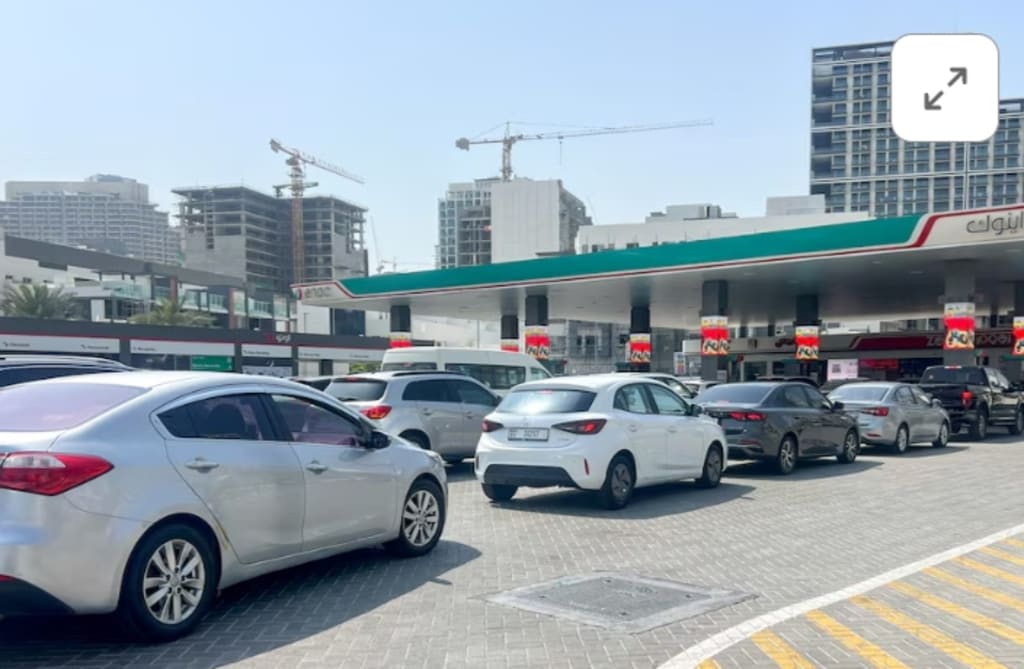
For decades, Dubai has sold itself — successfully — as an island of calm in a turbulent region. Its glittering skyline, luxury shopping malls, pristine beaches, and tax-free business environment have drawn millions of expatriates, investors, and tourists seeking stability in the Middle East.
But that sense of insulation was abruptly tested when Iranian missiles and drones, launched amid escalating regional conflict, streaked across Gulf skies. Although the majority were intercepted by air defense systems, falling debris and the sound of explosions above the city were enough to rattle residents and pierce Dubai’s carefully cultivated aura of invulnerability.
For many who call the city home, it was the first time war felt close.
A Night of Uncertainty
Late at night, flashes lit up the sky above landmarks such as Palm Jumeirah and near the iconic Burj Al Arab. Videos circulating on social media showed bright streaks followed by distant booms — interceptors striking incoming projectiles mid-air.
Authorities confirmed that most missiles were successfully neutralized before impact. However, debris from destroyed drones and rockets fell into parts of the emirate, sparking small fires and damaging property in limited areas.
No mass casualties were reported, but the symbolism was powerful: even a city famed for luxury and security is not immune to regional geopolitics.
For expatriates who moved to Dubai to escape instability elsewhere, the psychological impact was profound. Many described being awakened by the blasts, unsure at first whether what they were hearing was construction noise — a common soundtrack in Dubai — or something more alarming.
Panic at the Supermarket
Within hours of the interceptions, a different kind of shockwave rippled through the city: panic buying.
Supermarkets that normally overflow with imported goods and gourmet selections saw residents filling carts with bottled water, rice, canned food, and baby formula. Photos shared online showed thinning shelves and unusually long checkout lines.
The UAE government moved quickly to reassure the public that food supplies remained stable and logistics chains were functioning normally. Officials emphasized that there was no shortage of essential goods.
Yet the impulse to stockpile revealed something deeper than supply concerns — it reflected uncertainty. For a population accustomed to seamless services and predictable routines, even a hint of disruption felt unsettling.
Community forums lit up with debate. Some residents criticized hoarding behavior, urging neighbors to remain calm. Others defended their actions as prudent preparation in an unpredictable situation.
Business as Usual — Almost
Dubai’s leadership responded with a message of continuity. Offices encouraged remote work where possible. Schools and businesses monitored developments closely. Public events continued, signaling confidence in the emirate’s security systems.
Dubai International Airport, one of the world’s busiest travel hubs, briefly adjusted flight operations due to regional airspace restrictions. Airlines rerouted certain flights, but widespread shutdowns were avoided.
Financial markets showed brief volatility, reflecting investor anxiety about broader instability in the Gulf. Energy prices fluctuated amid concerns about potential supply disruptions.
Still, the city worked hard to project normalcy. Restaurants remained open. Tourists continued visiting malls and beaches. Construction cranes kept moving.
The contrast between calm streets and tense online discourse underscored a city balancing resilience with unease.
The Psychological Shift
For residents, the most lasting effect may not be physical damage but perception.
Dubai has long positioned itself as a neutral, business-first hub — a place where global tensions feel distant. The interception of missiles overhead challenged that narrative.
Some expatriates reported reconsidering contingency plans. Others checked evacuation policies or contacted embassies for guidance. Social media conversations included questions about air-raid shelters and emergency procedures — topics rarely discussed in the city before.
At the same time, many residents expressed trust in the UAE’s advanced defense capabilities. Online discussions praised interception systems and credited swift government communication with preventing widespread panic.
The dual reactions — fear and confidence — illustrate the complex psychology of a city encountering unexpected vulnerability.
A Regional Reality
Dubai’s experience highlights a broader truth about the Gulf: economic integration and security are deeply intertwined.
The United Arab Emirates hosts major international businesses, foreign military partnerships, and strategic infrastructure. Its geographic position places it within range of regional conflicts, even if it seeks neutrality.
The recent missile interceptions serve as a reminder that geopolitical escalation can quickly transcend borders. A confrontation elsewhere in the region can have immediate ripple effects in cities that depend on stability for prosperity.
For global investors and multinational companies, the episode underscores the importance of contingency planning — even in locations widely perceived as secure.
Resilience or Reassessment?
In the days following the incident, life in Dubai largely resumed its familiar rhythm. Traffic returned to normal patterns. Malls remained busy. Tourists continued posting beachside photos.
But beneath the surface, conversations shifted.
The event may not fundamentally alter Dubai’s long-term trajectory, but it has introduced a layer of realism to its narrative. The emirate’s reputation for safety remains strong, yet the illusion of complete detachment from regional conflict has been pierced.
Whether this moment becomes a temporary scare or a catalyst for deeper reassessment depends on how the broader geopolitical situation unfolds.
The Calm Tested
Dubai’s skyline still glitters. Its fountains still dance. Its luxury hotels remain full.
Yet the memory of missile streaks overhead and supermarket shelves briefly emptied lingers as a quiet reminder: even the world’s most meticulously curated cities are connected to larger forces beyond their control.
The aura of calm has not disappeared — but it has been tested.
And in that test lies a new chapter in Dubai’s evolving story — one shaped not only by ambition and prosperity, but also by resilience in the face of uncertainty.
About the Creator
A Gathering of Evil Bosses
“I’m the queen of chin jutting while I smooth my hair, attacking, insulting, and deflecting to protect my appointer.” “Oh, please, Blondi, my hair is curled, highlighted, and longer than yours. I feature television commercials telling immigrants that we will give them a free plane ride home, and if they voluntarily turn themselves in, they will be allowed to legally apply for re-entry. It runs everywhere, and I look good in it! You can’t compete because of your blond hair. Mine is nicer, and my lips are prettier than yours.”
By Andrea Corwin 13 days ago in The Swamp


Comments
There are no comments for this story
Be the first to respond and start the conversation.