
French far right makes first-round gains in municipal elections
Strong early results signal shifting political landscape as traditional parties face growing pressure across local governments

France’s far-right political movement has made notable gains in the first round of municipal elections, marking another moment in the country’s evolving political landscape. The results have strengthened the position of nationalist and anti-immigration parties at the local level while exposing continued struggles for France’s traditional political forces.
Although municipal elections often focus on local issues such as housing, transportation, and urban development, they frequently serve as a broader indicator of national political sentiment. The latest results suggest that the far right is continuing to expand its support base beyond national elections and into municipal leadership.
Across numerous towns and mid-sized cities, far-right candidates either led the first round or qualified for runoffs with strong vote shares. Political analysts say the results reflect both growing voter frustration with established parties and a broader shift in political identity among parts of the electorate.
Expanding local foothold
Far-right parties in France have historically performed strongest in presidential and European elections, where national debates about immigration, security, and sovereignty dominate the agenda. Municipal elections, however, present a different challenge because voters often prioritize local governance and the personal reputation of candidates.
In this election cycle, far-right candidates appear to have overcome some of those barriers. By focusing on neighborhood concerns such as crime prevention, public services, and economic development, they were able to appeal to voters who may not normally support them in national contests.
Several candidates also emphasized themes such as local identity, protection of cultural traditions, and criticism of national government policies. These messages resonated particularly in areas experiencing economic stagnation, rising housing costs, or concerns about public safety.
The party’s strategy of building grassroots networks over the past decade has also begun to pay dividends. Many candidates entered the race with years of local activism and community visibility, allowing them to compete more effectively with established political figures.
Pressure on traditional parties
The first-round results place France’s mainstream political parties under growing pressure. Both center-left and center-right movements have struggled in recent years to maintain consistent voter loyalty, and municipal elections are now reflecting that shift.
In many municipalities, traditional parties found themselves squeezed between the far right on one side and various local alliances or independent candidates on the other. Some incumbents were able to retain strong support thanks to their local record, but others saw significant declines compared with previous elections.
For the center-left, internal divisions and debates over economic policy and social reforms have weakened its ability to present a unified message. Meanwhile, the center-right has faced competition from the far right on issues such as immigration control and national identity.
Political observers note that municipal contests can be particularly unforgiving for parties experiencing national-level turbulence. When voters feel disconnected from national leadership, they sometimes express their dissatisfaction through local ballots.
Voter concerns driving support
One of the key factors behind the far right’s performance appears to be voter concern about security and social cohesion. In several cities where crime and urban disorder have become prominent topics, far-right candidates campaigned on promises to strengthen policing and enforce stricter local regulations.
Economic anxiety has also played a role. Rising living costs, pressure on public services, and uncertainty about future employment have created fertile ground for candidates who argue that national policies have failed ordinary citizens.
By linking local challenges to broader national debates, far-right campaigns were able to position themselves as both municipal problem-solvers and advocates for stronger national leadership.
In addition, the party’s messaging increasingly emphasizes practical governance rather than purely ideological rhetoric. Candidates highlighted infrastructure projects, business support programs, and urban development plans alongside their traditional political themes.
Runoff battles ahead
Despite the strong first-round results, the ultimate outcome of the elections will depend on the second round, where alliances and tactical voting often play a decisive role.
France’s two-round electoral system allows candidates who pass a certain threshold to compete again in a runoff vote. In many municipalities, this means that far-right candidates will face coalitions of other parties seeking to block their victory.
Such alliances have been a common feature of French politics for decades. Parties across the ideological spectrum sometimes join forces in runoff rounds to prevent the far right from gaining power.
However, analysts say this strategy has become more complicated in recent years. Some voters are increasingly skeptical of tactical alliances, viewing them as political maneuvering rather than genuine cooperation.
If those voters refuse to shift their support in the second round, far-right candidates could convert their first-round momentum into municipal victories.
Long-term implications
The significance of the municipal elections extends beyond local governance. Winning mayoralties and council seats gives political parties valuable administrative experience, financial resources, and increased visibility.
For the far right, expanding its local presence could help normalize its role in French politics. Mayors often become influential national figures, and successful municipal administrations can reshape public perceptions of a party’s governing ability.
Local governments also provide opportunities to test policy ideas on a smaller scale. Initiatives related to security, urban planning, or cultural programming implemented at the municipal level may later influence national debates.
At the same time, critics warn that far-right leadership in cities could deepen political polarization or lead to controversial policy decisions. Questions about immigration policies, cultural initiatives, and relations with national authorities may become flashpoints in municipalities governed by nationalist parties.
A changing political map
France’s political landscape has been undergoing significant transformation over the past decade. Traditional parties that once dominated the system have lost ground, while newer movements and outsider candidates have gained influence.
Municipal elections reflect this transformation in a particularly visible way because they reshape the political map town by town and city by city.
In some areas, long-standing political traditions are being challenged as new parties attract younger voters and previously disengaged communities. In others, local leaders with strong personal reputations continue to hold their ground regardless of national trends.
The first-round gains by the far right highlight the dynamic and uncertain nature of this transition.
The road to the final results
As France prepares for the runoff round, campaign activity is expected to intensify. Candidates will seek endorsements, negotiate alliances, and attempt to mobilize voters who stayed home during the first round.
Turnout could prove decisive. Municipal elections often experience lower participation than national contests, meaning that small changes in voter engagement can significantly affect results.
For the far right, the challenge will be maintaining momentum while persuading undecided voters that its candidates are capable of managing complex municipal responsibilities.
For traditional parties, the task is to convince voters that local governance should remain in experienced hands and that broad alliances are necessary to maintain political balance.
Whatever the final outcome, the first-round results have already delivered a clear message: France’s political landscape continues to evolve, and the competition for influence at every level of government is becoming more intense.
About the Creator
The Forsyth House Fire
Since 1851, Forsyth House has stood on the corner of Union Street and Gordon Street in the heart of Glasgow. Its iconic, or was... because on Sunday 8th of March, 2026, a fire broke out in a small, seemingly un-named shop in the building and tore all that history down. As I write, the rubble is still unsettled and the street is still blocked off. Central Station is quiet on the upper level, and around 30 small businesses have quite literally gone up in smoke.
By S. A. Crawford3 days ago in The Swamp
U.S. Navy to increase production of anti-submarine mines
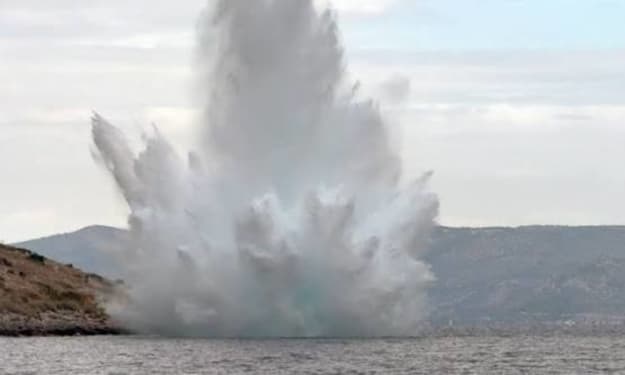
Washington, D.C. — The United States Navy has confirmed plans to expand the production of advanced anti‑submarine mine systems as part of an intensified effort to bolster its undersea warfare capabilities amid growing global competition below the waves. Officials say the move reflects mounting concerns about the expanding submarine fleets of peer competitors and the need to strengthen maritime deterrence and denial strategies. According to a recent presolicitation notice issued by the Naval Sea Systems Command, the Navy intends to modify an existing contract with General Dynamics Mission Systems that increases the number of units of the Hammerhead anti‑submarine mine to be procured over the next several fiscal cycles. The contract adjustment is designed to rapidly accelerate deliveries while ensuring operational demands are met beginning in fiscal year 2027. Senior Navy officials said that expanding Hammerhead production is a priority because the system provides a mobile, autonomous capability to detect, classify and engage hostile submarines — a capability that is increasingly vital in contested littoral and open‑ocean environments. The mines are designed to be deployed from unmanned underwater vehicles, surface vessels or aircraft, and operate in waters where traditional anti‑submarine warfare (ASW) assets may be vulnerable or limited. “We are rapidly adjusting our undersea capabilities to address the realities of great‑power competition,” a senior defense official involved in the procurement process told reporters on condition of anonymity. “The expansion of anti‑submarine mine production — particularly systems like Hammerhead — provides us with a crucial asymmetric advantage in waters where adversary submarine activity is increasing.” Why Mines Again? Naval mines have a long history as cost‑effective tools of maritime control and denial. During the Cold War, systems such as the Mark 60 CAPTOR mine were designed to disrupt Soviet submarine operations in critical chokepoints and served as part of layered ASW strategies. These weapons combined a torpedo killer with a stationary mine casing to detect and destroy submarines autonomously. Despite periods of diminished emphasis in the post‑Cold War era, mine warfare has regained attention within U.S. naval strategy as peer competitors modernize their undersea forces. The marked growth of adversary submarine fleets — particularly the rapid expansion of the People’s Liberation Army Navy nuclear and diesel‑electric submarine fleets — has renewed emphasis on tools that can impose area denial or complicate hostile maneuvers in strategic waters. Mine systems like Hammerhead are seen as force multipliers: they can extend ASW reach into denied areas, channel adversary submarines into predictable paths, and serve as persistent sensors and shooters long after initial deployment. Their autonomy also reduces risk to manned ASW platforms, which are vulnerable to advanced anti‑access systems and modern torpedoes. Industrial and Strategic Challenges Increasing production of advanced mines presents both industrial and strategic challenges. In its notice, the Navy acknowledged that General Dynamics Mission Systems is currently the only vendor capable of meeting the accelerated timeline for additional Hammerhead units, which is why the contract modification will proceed without full and open competition. This approach, while expedient, highlights broader constraints in the defense industrial base for undersea systems, where capable producers are limited and highly specialized. Supporters of the expanded program argue that concentrating production with an experienced contractor will avoid delays and preserve continuity, but some defense analysts have raised concerns about dependence on single suppliers for niche yet critical capabilities. Diversifying the industrial base, they say, could hedge against supply chain disruptions and reduce bottlenecks for future undersea programs. The increased production mandate comes at a time when the Navy is simultaneously stretched across a wide range of modernization and recapitalization efforts, including submarine construction, unmanned undersea systems and expanded mine countermeasure capabilities. Last year’s push for expanded procurement reflected similar pressures on the submarine industrial base, where funding boosts are being applied to sustain construction rates and address workforce constraints. Operational Context The strategic rationale for accelerating anti‑submarine mine production stems from the evolving global maritime environment. Analysts note that Russia’s modernization of its submarine fleet — as well as China’s rapid deployment of new nuclear and conventionally powered submarines — has placed increased pressure on U.S. undersea dominance. Submarines are a central element of both offensive and deterrent naval operations, making investments in tools that can detect and counter them a priority for defense planners. Complicating matters further, developments in autonomous underwater vehicles (UUVs) and unmanned surface vehicles (USVs) have reshaped mine warfare. Modern mines can be integrated with these platforms to achieve quicker, more precise deployment in contested or denied waters while complicating an adversary’s ability to detect and neutralize them. These advances signal a renewed era of undersea competition where traditional concepts are being blended with emerging technologies. Looking Ahead As the Navy prepares to issue and implement the contract modification for expanded Hammerhead supplies, officials emphasize that the program is just one part of a broader, multi‑domain approach to undersea warfare. Investments in detection systems, advanced torpedoes, and layered ASW networks — including manned and unmanned platforms — are moving forward in parallel to ensure that U.S. forces maintain a competitive edge beneath the surface. In an era defined by competition with near‑peer naval powers, the resurgence of mine warfare — once considered a legacy capability — underscores the complexity and adaptability of modern maritime strategy. The expanded anti‑submarine mine production effort reflects not only tactical considerations, but the Navy’s long‑term commitment to securing undersea superiority across critical sea lanes and contested regions.
By Fiaz Ahmed 2 days ago in The Swamp



Comments
There are no comments for this story
Be the first to respond and start the conversation.