
U.S. Navy to increase production of anti-submarine mines
Washington accelerates underwater mine production to counter growing submarine threats. Expanded Hammerhead mine program enhances U.S. Navy’s undersea warfare capabilities. Increased anti-submarine mine output aims to strengthen maritime denial and deterrence. Navy boosts mine production amid intensifying global submarine competition. Advanced autonomous mines to be deployed to secure strategic sea lanes and chokepoints.

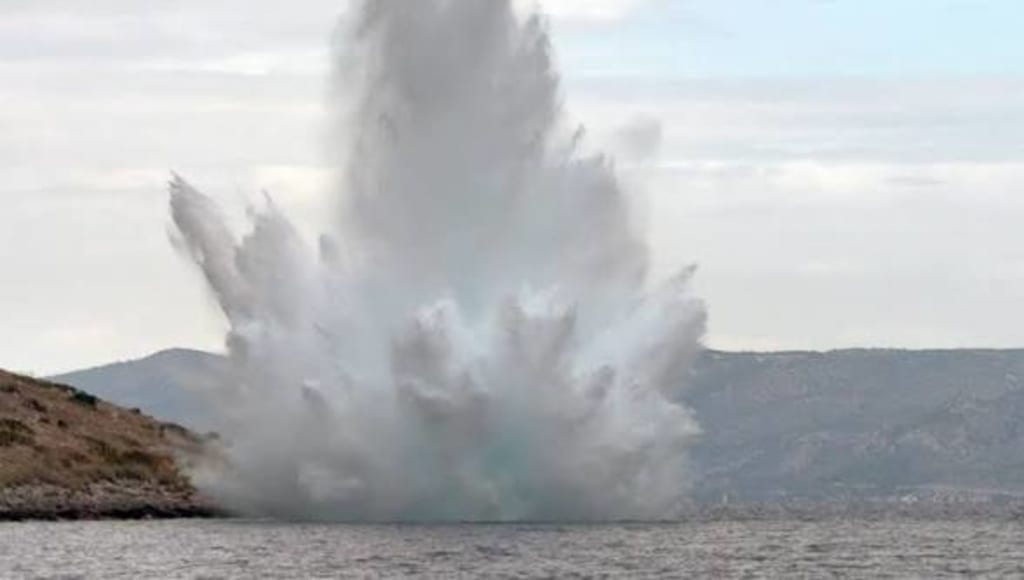
Washington, D.C. — The United States Navy has confirmed plans to expand the production of advanced anti‑submarine mine systems as part of an intensified effort to bolster its undersea warfare capabilities amid growing global competition below the waves. Officials say the move reflects mounting concerns about the expanding submarine fleets of peer competitors and the need to strengthen maritime deterrence and denial strategies.
According to a recent presolicitation notice issued by the Naval Sea Systems Command, the Navy intends to modify an existing contract with General Dynamics Mission Systems that increases the number of units of the Hammerhead anti‑submarine mine to be procured over the next several fiscal cycles. The contract adjustment is designed to rapidly accelerate deliveries while ensuring operational demands are met beginning in fiscal year 2027.
Senior Navy officials said that expanding Hammerhead production is a priority because the system provides a mobile, autonomous capability to detect, classify and engage hostile submarines — a capability that is increasingly vital in contested littoral and open‑ocean environments. The mines are designed to be deployed from unmanned underwater vehicles, surface vessels or aircraft, and operate in waters where traditional anti‑submarine warfare (ASW) assets may be vulnerable or limited.
“We are rapidly adjusting our undersea capabilities to address the realities of great‑power competition,” a senior defense official involved in the procurement process told reporters on condition of anonymity. “The expansion of anti‑submarine mine production — particularly systems like Hammerhead — provides us with a crucial asymmetric advantage in waters where adversary submarine activity is increasing.”
Why Mines Again?
Naval mines have a long history as cost‑effective tools of maritime control and denial. During the Cold War, systems such as the Mark 60 CAPTOR mine were designed to disrupt Soviet submarine operations in critical chokepoints and served as part of layered ASW strategies. These weapons combined a torpedo killer with a stationary mine casing to detect and destroy submarines autonomously.
Despite periods of diminished emphasis in the post‑Cold War era, mine warfare has regained attention within U.S. naval strategy as peer competitors modernize their undersea forces. The marked growth of adversary submarine fleets — particularly the rapid expansion of the People’s Liberation Army Navy nuclear and diesel‑electric submarine fleets — has renewed emphasis on tools that can impose area denial or complicate hostile maneuvers in strategic waters.
Mine systems like Hammerhead are seen as force multipliers: they can extend ASW reach into denied areas, channel adversary submarines into predictable paths, and serve as persistent sensors and shooters long after initial deployment. Their autonomy also reduces risk to manned ASW platforms, which are vulnerable to advanced anti‑access systems and modern torpedoes.
Industrial and Strategic Challenges
Increasing production of advanced mines presents both industrial and strategic challenges. In its notice, the Navy acknowledged that General Dynamics Mission Systems is currently the only vendor capable of meeting the accelerated timeline for additional Hammerhead units, which is why the contract modification will proceed without full and open competition. This approach, while expedient, highlights broader constraints in the defense industrial base for undersea systems, where capable producers are limited and highly specialized.
Supporters of the expanded program argue that concentrating production with an experienced contractor will avoid delays and preserve continuity, but some defense analysts have raised concerns about dependence on single suppliers for niche yet critical capabilities. Diversifying the industrial base, they say, could hedge against supply chain disruptions and reduce bottlenecks for future undersea programs.
The increased production mandate comes at a time when the Navy is simultaneously stretched across a wide range of modernization and recapitalization efforts, including submarine construction, unmanned undersea systems and expanded mine countermeasure capabilities. Last year’s push for expanded procurement reflected similar pressures on the submarine industrial base, where funding boosts are being applied to sustain construction rates and address workforce constraints.
Operational Context
The strategic rationale for accelerating anti‑submarine mine production stems from the evolving global maritime environment. Analysts note that Russia’s modernization of its submarine fleet — as well as China’s rapid deployment of new nuclear and conventionally powered submarines — has placed increased pressure on U.S. undersea dominance. Submarines are a central element of both offensive and deterrent naval operations, making investments in tools that can detect and counter them a priority for defense planners.
Complicating matters further, developments in autonomous underwater vehicles (UUVs) and unmanned surface vehicles (USVs) have reshaped mine warfare. Modern mines can be integrated with these platforms to achieve quicker, more precise deployment in contested or denied waters while complicating an adversary’s ability to detect and neutralize them. These advances signal a renewed era of undersea competition where traditional concepts are being blended with emerging technologies.
Looking Ahead
As the Navy prepares to issue and implement the contract modification for expanded Hammerhead supplies, officials emphasize that the program is just one part of a broader, multi‑domain approach to undersea warfare. Investments in detection systems, advanced torpedoes, and layered ASW networks — including manned and unmanned platforms — are moving forward in parallel to ensure that U.S. forces maintain a competitive edge beneath the surface.
In an era defined by competition with near‑peer naval powers, the resurgence of mine warfare — once considered a legacy capability — underscores the complexity and adaptability of modern maritime strategy. The expanded anti‑submarine mine production effort reflects not only tactical considerations, but the Navy’s long‑term commitment to securing undersea superiority across critical sea lanes and contested regions.
About the Creator
Fiaz Ahmed
I am Fiaz Ahmed. I am a passionate writer. I love covering trending topics and breaking news. With a sharp eye for what’s happening around the world, and crafts timely and engaging stories that keep readers informed and updated.
Keep reading
More stories from Fiaz Ahmed and writers in The Swamp and other communities.
New Research Challenges Long-Held Assumptions About Prediabetes Treatment
A growing body of research is challenging long-standing medical assumptions about how prediabetes should be treated. For decades, doctors and public-health campaigns have emphasized weight loss as the central strategy for preventing the progression from prediabetes to type 2 diabetes. However, new findings suggest that achieving normal blood-glucose levels—regardless of whether significant weight loss occurs—may be the key factor in reducing long-term health risks. Prediabetes occurs when blood sugar levels are higher than normal but not yet high enough to be diagnosed as diabetes. Globally, hundreds of millions of people are estimated to live with the condition, making it one of the most important early warning signs for metabolic disease. If left untreated, many individuals eventually develop type 2 diabetes, which significantly increases the risk of heart disease, kidney failure, nerve damage and other complications. Focus Shifting from Weight to Glucose Control In the new analysis, researchers examined long-term data from international diabetes-prevention studies. Their results indicate that people who returned their blood-glucose levels to a normal range dramatically reduced their risk of cardiovascular problems, including fatal heart disease and major cardiac events. What surprised scientists was that these benefits were observed even among participants who did not lose significant weight. Traditionally, weight reduction has been considered the main pathway for improving insulin sensitivity and preventing diabetes. But the new evidence suggests that metabolic improvements can occur independently of body weight changes. medizin.uni-tuebingen.de Researchers now believe that focusing on normalizing glucose regulation itself—through lifestyle changes, improved diet, physical activity, and targeted medical interventions—may be a more effective strategy than weight loss alone. Implications for Diabetes Prevention The findings could reshape how doctors approach early diabetes prevention. Current recommendations typically encourage patients with prediabetes to lose weight through diet and exercise. While these strategies remain important, experts say clinicians may need to shift attention toward monitoring and directly improving glucose metabolism. For example, lifestyle programs could focus more on stabilizing blood-sugar fluctuations, improving insulin sensitivity, and tailoring diet and activity plans to individual metabolic responses. Researchers are also exploring technologies such as continuous glucose monitoring and personalized nutrition to help patients better understand how different foods and activities affect their blood-sugar levels. A New Perspective on Metabolic Health Another key takeaway from the research is that metabolic health is more complex than previously believed. Two people with similar body weights may have very different metabolic responses to food, stress, sleep patterns, or physical activity. Because of this variability, experts increasingly believe that personalized prevention strategies may be more effective than one-size-fits-all recommendations. The study also reinforces the importance of early detection. Because prediabetes often has no obvious symptoms, many people remain unaware they have the condition. Routine screening—such as fasting glucose or HbA1c blood tests—can identify those at risk and allow interventions to begin before diabetes develops. Looking Ahead While more research is needed to refine treatment guidelines, the emerging evidence points toward a broader shift in how metabolic disease is managed. Instead of focusing exclusively on weight reduction, future prevention programs may prioritize restoring normal blood-sugar regulation and improving overall metabolic function. For millions of people living with prediabetes, this new perspective offers hope that the condition can be reversed or controlled more effectively—potentially preventing the onset of diabetes and reducing the risk of serious cardiovascular complications. Another important dimension highlighted by the research is the role of lifestyle quality rather than just calorie reduction. Scientists explain that diet composition, meal timing, and physical activity patterns can significantly influence how the body processes glucose. Foods rich in fiber, healthy fats, and complex carbohydrates may help stabilize blood sugar levels, while highly processed foods and sugary drinks tend to cause sharp spikes that strain insulin regulation. Regular physical activity—especially a mix of aerobic exercise and strength training—can also improve how muscles absorb glucose from the bloodstream. Researchers also emphasize the importance of sleep and stress management. Poor sleep and chronic stress are increasingly linked to impaired insulin sensitivity, which can worsen prediabetes even in individuals with normal body weight. By addressing these factors alongside traditional lifestyle interventions, doctors hope to develop more comprehensive prevention strategies. Ultimately, the emerging research suggests that managing prediabetes requires a holistic approach to metabolic health, rather than focusing on weight loss alone.
By Fiaz Ahmed about 9 hours ago in The Swamp
The Forsyth House Fire
Since 1851, Forsyth House has stood on the corner of Union Street and Gordon Street in the heart of Glasgow. Its iconic, or was... because on Sunday 8th of March, 2026, a fire broke out in a small, seemingly un-named shop in the building and tore all that history down. As I write, the rubble is still unsettled and the street is still blocked off. Central Station is quiet on the upper level, and around 30 small businesses have quite literally gone up in smoke.
By S. A. Crawforda day ago in The Swamp
Shadow Home Secretary Chris Philp Leads Charge on Starmer's Iran War Stance.
The Iran War has to be one of the most dangerous and unnecessary wars this century so far. Trump has changed the narrative of why he and his partner in crime, Netanyahu, attacked Iran. First, it was to liberate the Iranian people. Then Iran's support for Hezbollah, Hamas, the Houthis, etc. Then it's Iran enriching uranium and its ballistic missile programme. Since the war began, the Ayatollah Khamenei has been assassinated along with top military commanders. His son is now the new Ayatollah. A girl's school has been bombed, with 100 or so schoolgirls sent to Allah. Iran's infrastructure has been hit hard, as has its military and government. If they bombed the Founder of the Islamic Republic's mausoleum, Ayatollah Khomeini, it wouldn't surprise me. It seems the Americans and Israelis are hitting anything and everything across Iran. Similar to the levelling of Gaza by the IDF. Hundreds of Iranians have been killed and injured, civilian and military alike.
By Nicholas Bishop3 days ago in The Swamp




Comments
There are no comments for this story
Be the first to respond and start the conversation.