
Iran Retaliates After U.S.–Israel Strikes, Triggering Fallout Across the Middle East
Missiles, Markets, and Mounting Tensions: How Iran’s Response Reshaped the Region Overnight
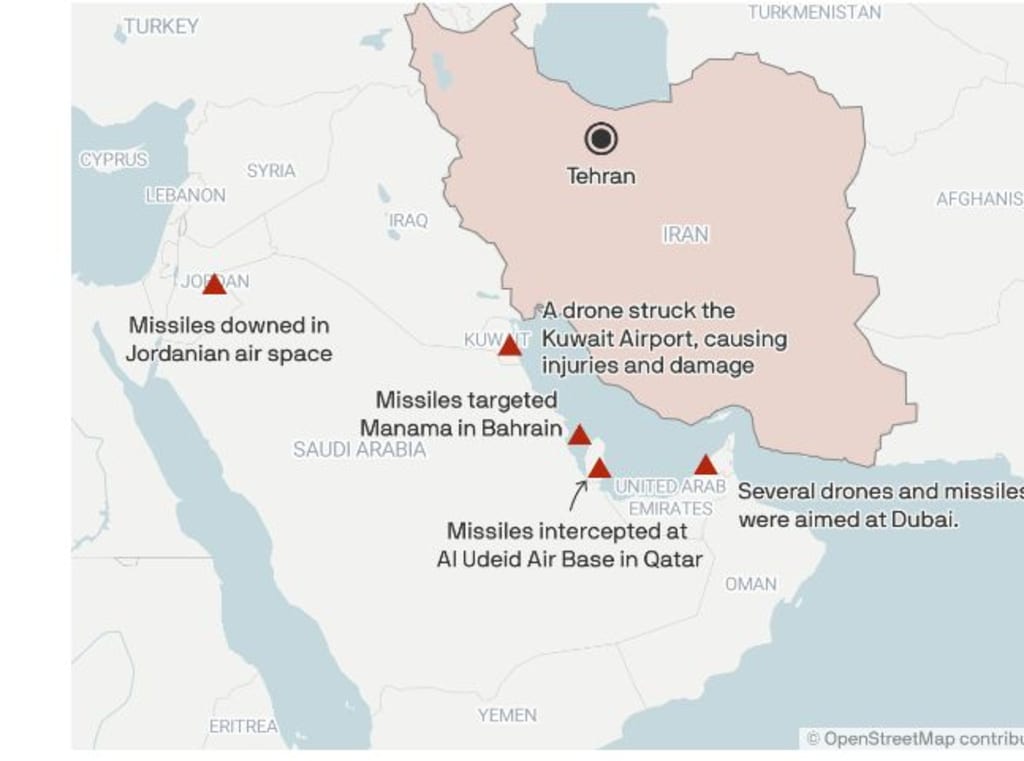
Following coordinated military strikes by the United States and Israel on Iranian targets, Tehran responded with sweeping retaliation that reverberated far beyond its borders. What began as a targeted military operation quickly spiraled into a multi-country security crisis, disrupting airspace, rattling oil markets, and reigniting fears of a broader regional war.
Here’s a full breakdown of what happened, why it matters, and what could come next.
What Sparked the Escalation?
Tensions had been building for months over Iran’s regional posture and military capabilities. That simmering friction reached a boiling point when the United States and Israel launched strikes on Iranian facilities they described as strategic and security-related targets.
According to officials, the strikes were intended to degrade military infrastructure and send a deterrent message. Iranian leaders, however, characterized the attacks as direct aggression and vowed immediate retaliation.
The result: a rapid escalation that extended across the region within hours.
Iran’s Retaliation: Missiles Across the Region
Iran responded with ballistic missiles and drone strikes targeting areas associated with U.S. military presence and allied infrastructure. Air defense systems were activated across multiple countries as intercepts lit up the night skies.
Countries impacted included:
Bahrain — home to the U.S. Navy’s Fifth Fleet
Qatar — host to major American air operations
Kuwait
United Arab Emirates
In the UAE, temporary airport disruptions caused flight suspensions, stranding travelers and raising global aviation concerns. Interceptions reportedly prevented larger-scale destruction, but debris and shockwaves caused injuries and localized damage.
Meanwhile, Israeli cities activated air-raid sirens as missiles were launched toward Israeli territory, most of which were reportedly intercepted.
The retaliation demonstrated Iran’s ability to project force regionally — not only toward Israel but toward American-aligned states hosting U.S. troops.
Civilian Fallout and Economic Ripples
Beyond the military headlines, the civilian impact has been immediate.
✈️ Airspace Closures
Major aviation corridors were temporarily shut down, forcing international carriers to reroute flights. This disruption affected travelers across Europe, Asia, and Africa.
📈 Energy Market Volatility
With the Strait of Hormuz remaining a key oil transit route, global energy markets reacted swiftly. Oil prices fluctuated amid fears of shipping disruptions or further escalation.
🏙 Public Fear
Residents in Gulf capitals described explosions in the sky as air defenses intercepted incoming projectiles. Schools closed in some districts. Businesses shortened hours.
Even where physical damage was limited, psychological shock was undeniable.
Regional Reactions: A Divided Middle East
Governments across the region responded with varying tones — some condemning Iran’s retaliation, others urging restraint on all sides.
Saudi officials expressed strong criticism of Tehran’s actions while emphasizing solidarity with Gulf allies. Meanwhile, Oman and other regional mediators called for urgent diplomatic engagement to prevent further bloodshed.
The situation underscores how intertwined Middle Eastern security has become. Countries hosting foreign military bases now find themselves caught between global powers.
Global Powers Weigh In
Major international players quickly entered the diplomatic conversation.
Russia criticized the original strikes as destabilizing.
European leaders urged de-escalation and warned of humanitarian consequences.
The United Nations convened emergency discussions.
The broader concern is not just the current exchange of fire — it’s the potential for miscalculation.
In volatile environments, even defensive actions can be interpreted as offensive signals.
Strategic Implications: A New Phase of Conflict?
This episode may represent a turning point.
1️⃣ Expansion of the Battlefield
Iran’s retaliation targeted multiple countries, not just Israel. That broadens the scope of confrontation.
2️⃣ Urban Warfare Risks
Missile exchanges near densely populated cities increase civilian vulnerability.
3️⃣ Proxy Escalation
Groups aligned with Iran across the region could become more active, potentially opening additional fronts.
4️⃣ Long-Term Militarization
Gulf states may accelerate defense investments and deepen security partnerships with Western allies.
Each of these shifts could reshape regional security for years.
Is There a Path to De-Escalation?
Diplomatic channels are reportedly active behind the scenes. Historically, backchannel negotiations have played a crucial role in cooling Middle Eastern crises.
However, public rhetoric on both sides remains firm.
De-escalation depends on:
Clear communication between governments
Avoiding further high-profile strikes
International mediation
Strategic restraint from regional actors
Without those elements, the cycle of retaliation could continue.
Why This Moment Matters
This isn’t just another regional flare-up.
It highlights:
The fragility of Middle East stability
The interconnected nature of modern alliances
The risks of rapid escalation in missile-era warfare
The global economic consequences of regional conflict
What happens next will influence not just regional politics, but global markets and diplomatic relationships.
Final Thoughts
The Middle East now stands at a critical juncture.
Iran’s retaliation after U.S.–Israel strikes has expanded the conflict beyond bilateral confrontation. Gulf states, civilian populations, and international markets are now part of the equation.
While air defense systems may intercept missiles, they cannot intercept mistrust or political calculation. The coming days will determine whether this episode becomes a contained exchange or the beginning of a deeper regional crisis.
For now, governments remain on high alert. Civilians brace for uncertainty. And the world watches closely, hoping diplomacy moves faster than missiles.
If you’d like, I can also provide:
A detailed timeline of events
An explainer on the key military capabilities involved
A geopolitical analysis of potential long-term outcomes
About the Creator
A Gathering of Evil Bosses
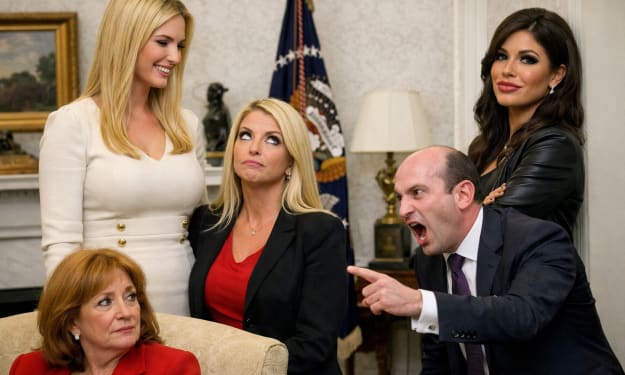
“I’m the queen of chin jutting while I smooth my hair, attacking, insulting, and deflecting to protect my appointer.” “Oh, please, Blondi, my hair is curled, highlighted, and longer than yours. I feature television commercials telling immigrants that we will give them a free plane ride home, and if they voluntarily turn themselves in, they will be allowed to legally apply for re-entry. It runs everywhere, and I look good in it! You can’t compete because of your blond hair. Mine is nicer, and my lips are prettier than yours.”
By Andrea Corwin 12 days ago in The Swamp
Trump Says He Is ‘Not Happy’ With Iran Nuclear Talks but Signals More Time for Diplomacy
Tensions surrounding Iran’s nuclear ambitions have once again taken center stage as former U.S. President Donald Trump publicly expressed dissatisfaction with ongoing negotiations while signaling a willingness to allow more time for diplomacy. His remarks highlight the delicate balance between pressure and patience that continues to define relations between the United States and Iran.
By Jameel Jamali3 days ago in The Swamp
Pearl
1980 something. we all hung out at Pearl and you and i were nothing special, or so i thought. i mean we all danced, drenched in our own sweat, our own saline solution of fear, too many beers, shots, laughter, tears, fucks in the bathroom and i don't know when we began to be afraid. do you?
By ROCK aka Andrea Polla (Simmons)5 days ago in Fiction

Comments
There are no comments for this story
Be the first to respond and start the conversation.